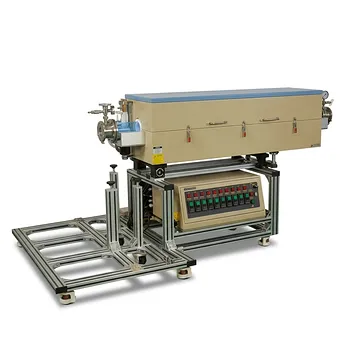
What are the advantages of high-purity quartz tubes for biochar? Achieve unmatched purity and precision in pyrolysis.
Updated 5 months ago
High-purity quartz tubes provide a chemically inert and thermally stable environment that prevents sample contamination during high-temperature pyrolysis. By resisting reactions with corrosive volatile gases and ensuring no metal ions leach into the biomass, these tubes maintain the integrity of the carbon skeleton. This results in biochar with higher purity and more accurately defined pore structures, which is essential for precise laboratory analysis.
High-purity quartz is the gold standard for biochar reaction chambers because it combines chemical neutrality with optical transparency. This ensures that the resulting biochar reflects the true properties of the feedstock rather than unintended interactions with the furnace hardware.
Chemical Purity and Sample Integrity
Eliminating External Contamination
High-purity quartz is specifically engineered to prevent the leaching of metal ions or other impurities into the reaction zone. In biochar production, this ensures that the chemical signature of the sample is derived solely from the biomass and not from the container walls.
Resistance to Corrosive Pyrolysis Byproducts
During the decomposition of biomass, various volatile components and corrosive gases are released. Quartz remains inert in the presence of these substances, preventing side reactions that could alter the biochar’s final chemical composition or the electronic characteristics of the sample.
Preservation of the Carbon Skeleton
When used in conjunction with an inert atmosphere (such as nitrogen), the quartz tube ensures that oxygen is completely excluded. This maximizes the preservation of the carbon skeleton, minimizing oxidation losses and producing biochar with more developed and stable pore structures.
Thermal Performance and Efficiency
Exceptional High-Temperature Stability
High-purity quartz maintains its structural integrity at temperatures typically required for biochar production, often ranging from 600°C to 900°C. It can withstand temperatures up to 1200°C without softening or releasing impurity gases, providing a stable environment for non-catalytic reactions.
Superior Thermal Shock Resistance
Laboratory processes often involve rapid heating or cooling cycles that can cause inferior materials to crack. Quartz tubes possess excellent thermal shock stability, allowing them to endure these temperature fluctuations without compromising the vacuum or atmosphere seal.
Efficient Radiation Heat Transfer
The transparent nature of quartz allows thermal radiation from the furnace heaters to pass directly to the sample surface. This ensures efficient and uniform heating, which is critical for simulating accurate thermophysical processes during the conversion of biomass to biochar.
Experimental Observation and Data Accuracy
Real-Time Monitoring of Physical Changes
Unlike opaque ceramic or metal tubes, quartz is transparent, allowing researchers to perform real-time visual observations. This enables the tracking of physical changes such as melting, bubble formation, and ignition as they occur during the pyrolysis process.
Minimizing Background Interference
In advanced research involving catalytic activity or gas capture, quartz eliminates background effects on measurements. Because it does not react with gases like CO2, CH4, or SO2, the experimental data accurately reflects the interactions of the biomass rather than the reaction chamber itself.
Understanding the Trade-offs
Temperature and Chemical Limitations
While quartz is highly resistant, it has a functional limit near 1100°C to 1200°C, above which it may begin to soften or undergo devitrification. Additionally, while it resists most acids and volatiles, it can be etched by strong alkalis or hydrofluoric acid, which may be present in certain specialized biomass feedstocks.
Fragility and Handling
Quartz is a brittle material and is significantly more susceptible to mechanical breakage than stainless steel or alloy tubes. This necessitates careful handling and precise mounting within the tube furnace to avoid stress fractures during thermal expansion.
Making the Right Choice for Your Goal
How to Apply This to Your Project
Selecting a high-purity quartz tube should be based on your specific analytical requirements and the nature of your biomass feedstock.
- If your primary focus is analytical precision: Use high-purity quartz to ensure that no metal contaminants or background reactions interfere with the chemical characterization of your biochar.
- If your primary focus is visual kinetics: Leverage the transparency of quartz to record and analyze the physical transition of biomass particles during the heating cycle.
- If your primary focus is extreme high-temperature synthesis (above 1200°C): Consider alumina or other ceramic liners, as quartz may lose structural integrity at these extreme thermal ranges.
The use of high-purity quartz tubes transforms the tube furnace into a high-precision instrument, ensuring that the resulting biochar is a pure representation of the intended thermochemical process.
Summary Table:
| Feature | Advantage | Impact on Biochar Quality |
|---|---|---|
| Chemical Inertness | Prevents metal ion leaching & side reactions | Ensures a pure carbon skeleton for analysis |
| Optical Transparency | Allows real-time visual monitoring | Enables precise tracking of physical transitions |
| Thermal Stability | Resists shock & heat up to 1200°C | Maintains structural integrity during rapid cycles |
| Radiation Efficiency | Direct thermal radiation to sample | Ensures uniform heating and efficient conversion |
| Inert Atmosphere | Prevents unintended oxidation | Develops superior and stable pore structures |
Elevate Your Material Research with THERMUNITS
Precision in high-temperature pyrolysis requires equipment designed for excellence. THERMUNITS is a leading manufacturer of high-temperature laboratory equipment for material science and industrial R&D. We provide the high-performance tools you need to ensure sample integrity and data accuracy.
Our comprehensive range of thermal processing solutions includes:
- Tube & Atmosphere Furnaces: Optimized for biochar production with high-purity quartz chambers.
- Specialized Systems: Muffle, Vacuum, Rotary, and Hot Press furnaces, plus CVD/PECVD systems.
- Advanced Equipment: Vacuum induction melting (VIM), Dental Furnaces, and high-quality Thermal Elements.
Don't let hardware limitations compromise your research outcomes. Partner with THERMUNITS for superior thermal uniformity and durability.
Contact Our Experts Today to find the perfect heat treatment solution for your lab!
References
- Anjon Kumar Mondal, Unnikrishnan Kuzhiumparambil. Macroalgae-based biochar: preparation and characterization of physicochemical properties for potential applications. DOI: 10.1039/d4su00008k
Mentioned Products
- Vertical 1700C Vacuum and Atmosphere Tube Furnace with 80mm Alumina Tube
- 1750°C High Temperature Benchtop Vacuum Atmosphere Tube Furnace with Kanthal Super 1800 Heating Elements and 60mm Alumina Processing Tube
- 1200C Hybrid Muffle and Tube Furnace for Material Research with Dual Atmosphere Control Quartz Tubes
- Compact Hybrid Muffle and Tube Furnace for 1000C Controlled Atmosphere Laboratory Material Sintering
- Three Zone Tube Furnace with 11 Inch or 15 Inch Quartz Tube and Hinged Flanges for Vacuum Atmosphere Heat Treatment
People Also Ask
- How is an industrial-grade vertical tube furnace utilized in smelting leaching residues? Enhance Metal Recovery Efficiency
- What is the function of a laboratory-grade vertical tube furnace in fast pyrolysis? Optimize Composite Research.
- How does a vertical tube furnace facilitate thermoelectric alloy melting? Precision synthesis for material homogeneity.
- Why is a thermocouple sensor indispensable for monitoring the vertical tube furnace during gallium oxide nanowire production? Optimize VLS Growth
- What are the advantages of a Vertical Tube Furnace for iron coke testing? | Achieve High-Precision CRI Analysis

Tech Team · ThermUnits
Last updated on Apr 14, 2026
Related Products

Vertical 1700C Vacuum and Atmosphere Tube Furnace with 80mm Alumina Tube
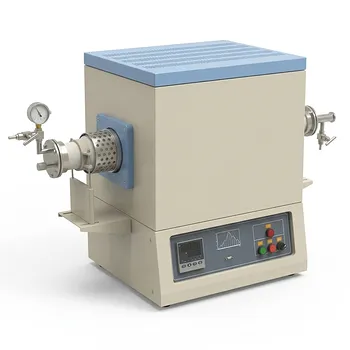
1750°C High Temperature Benchtop Vacuum Atmosphere Tube Furnace with Kanthal Super 1800 Heating Elements and 60mm Alumina Processing Tube
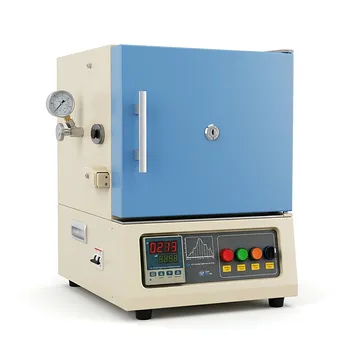
1200C Hybrid Muffle and Tube Furnace for Material Research with Dual Atmosphere Control Quartz Tubes
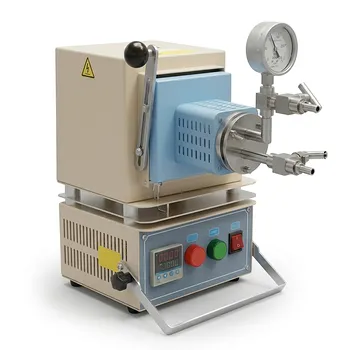
Compact Hybrid Muffle and Tube Furnace for 1000C Controlled Atmosphere Laboratory Material Sintering
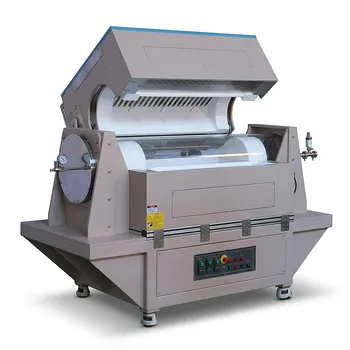
Three Zone Tube Furnace with 11 Inch or 15 Inch Quartz Tube and Hinged Flanges for Vacuum Atmosphere Heat Treatment
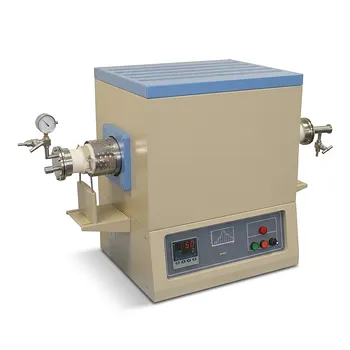
1700C High Temperature Alumina Tube Furnace with 18 Inch Heated Zone and Vacuum Sealing Flanges
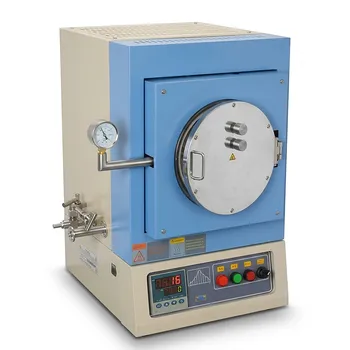
1100°C High Temperature Quartz Chamber Furnace 8 Inch OD with 7.6 Liter Capacity and Vacuum Atmosphere Capability
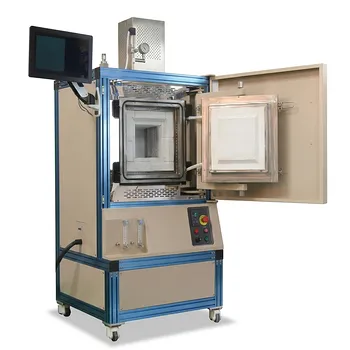
High Temperature Hydrogen Atmosphere Box Furnace 1650C Max Reducing Environment Material Synthesis System 8x8x8 Chamber

1200°C 5 Inch Vertical Quartz Tube Furnace with Stainless Steel Vacuum Flanges
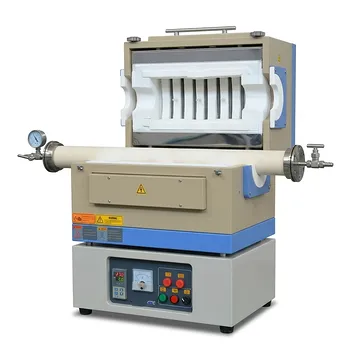
High Temperature 1600C Split Tube Furnace Vacuum Flanges Valves Optional 60mm 80mm Alumina Tube

High Temperature 1700C Tube Furnace with High Vacuum Turbomolecular Pump System and Multi Channel Mass Flow Controller Gas Mixer
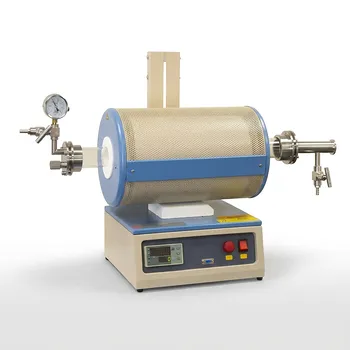
1100C Tube Furnace with Vacuum Flange and Programmable Temperature Controller for Material Science and Industrial Heat Treatment

High Temperature 1700C Vertical Tube Furnace for Powder Spherification and Material Sintering

Compact High Temperature 1600C Tube Furnace with 50mm Alumina Tube and Vacuum Flanges for Material Sintering

High Temperature 1700C Six Zone Split Tube Furnace with Alumina Tube and Water Cooled Flanges

1800C High Temperature Compact Vacuum Tube Furnace with 60mm OD Alumina Tube and Kanthal MoSi2 Heating Elements
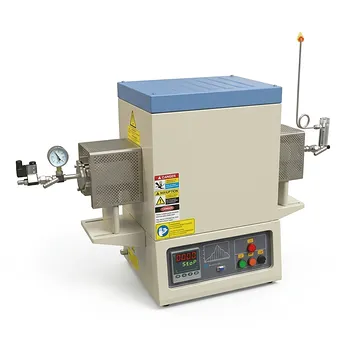
1700C Hydrogen Gas Tube Furnace with 60mm Alumina Process Tube and Integrated Hydrogen Safety Detector

High Temperature 1700C Benchtop Tube Furnace with 5 Inch Heating Zone High Purity Alumina Tube and Vacuum Sealing Flanges

High Temperature Automated 5 Inch Tube Furnace for Autonomous Material Research and Advanced Laboratory R&D