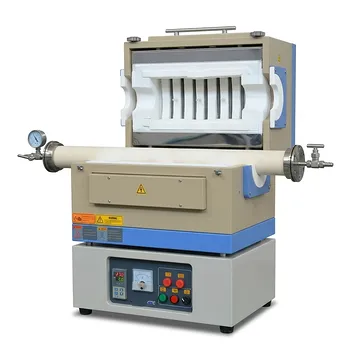
What are the advantages of SAC regeneration via tube furnace? Boost surface area from 106 to nearly 1000 m2/g.
Updated 3 months ago
Regenerating Saturated Activated Carbon (SAC) through high-temperature tube furnace treatment combined with carbon dioxide ($CO_2$) activation offers a highly efficient path to restoring and even enhancing the material's adsorption capacity. By utilizing precise atmosphere control and thermal profiles, this method can increase the specific surface area of waste carbon from approximately 106 $m^2/g$ to nearly 1000 $m^2/g$. This process achieves superior pore restoration at lower temperatures and shorter durations compared to traditional physical regeneration methods.
This technology transforms spent carbon from a waste product into a high-performance resource by leveraging controlled chemical etching and pyrolysis. The combination of a stable thermal environment and $CO_2$ activation ensures uniform pore distribution and the maximum recovery of active surface sites.
The Mechanics of Pore Restoration and Enhancement
Chemical Etching and Disproportionation
The introduction of carbon dioxide at high temperatures (typically 800–850 °C) triggers a disproportionation reaction between the $CO_2$ and the carbon atoms. This reaction acts as a chemical etching agent, precisely carving out new micropores and mesopores within the carbon framework.
Pyrolysis of Adsorbed Contaminants
During the heating phase, organic pollutants trapped within the SAC pores undergo pyrolysis and carbonization. The high-temperature environment breaks down these complex molecules, effectively clearing the "blockages" that rendered the original carbon inactive.
Dramatic Surface Area Recovery
The core advantage of this specific method is the scale of restoration. By combining thermal treatment with $CO_2$ activation, the carbon’s internal architecture is not just cleaned but materially enhanced, often resulting in a specific surface area that rivals or exceeds virgin activated carbon.
Precision Control via Tube Furnace Technology
Advanced Atmosphere Management
A tube furnace provides a sealed, controlled environment essential for preventing unwanted combustion. By using nitrogen ($N_2$) as a protective gas during the initial ramp-up, the system ensures that the carbon does not react with oxygen and burn away before the activation phase begins.
Programmable Thermal Profiles
The ability to set precise heating rates (such as 10 °C/min) and specific holding times allows for a uniform reaction. This precision prevents "over-activation," which can weaken the structural integrity of the carbon, and ensures that the activation agent penetrates deep into the carbon granules.
Stable Gas Switching
Modern tube furnaces allow for automated switching between inert and reactive gases. This enables the operator to maintain a stable environment while introducing $CO_2$ only when the optimal activation temperature is reached, maximizing process efficiency and gas utilization.
Understanding the Trade-offs
Energy Intensity vs. Material Value
While highly effective, high-temperature regeneration is energy-intensive, requiring sustained temperatures of 800 °C or higher. However, this cost is often offset by the high market value of the regenerated high-surface-area carbon compared to the cost of purchasing new media and disposing of SAC.
Gas Consumption and Safety
The use of $CO_2$ and $N_2$ requires a constant supply of pressurized gases and proper ventilation systems. Managing the exhaust gases, which may contain the carbonized byproducts of the original contaminants, is a necessary technical requirement for the facility.
Potential for Mass Loss
During the activation process, a portion of the original carbon material is consumed by the chemical etching reaction. While this creates the desired pore structure, there is an inherent yield trade-off; achieving a higher surface area usually results in a lower total mass of regenerated product.
How to Apply This to Your Project
The decision to use a tube furnace with $CO_2$ activation depends on your specific performance requirements and the nature of the saturated carbon.
- If your primary focus is Maximum Surface Area: Use $CO_2$ activation at temperatures between 800–850 °C with a slow heating rate to allow for deep pore etching.
- If your primary focus is Operational Cost: Optimize the holding time to the minimum required for pore clearance, as excessive time in the furnace increases energy and gas consumption without proportional gains in surface area.
- If your primary focus is Material Longevity: Ensure the tube furnace maintains a strict inert atmosphere during cool-down to prevent the carbon from oxidizing and becoming brittle.
By precisely controlling the thermal and chemical environment, you can effectively close the loop on carbon usage, turning a disposal problem into a high-value manufacturing asset.
Summary Table:
| Feature | Traditional Physical Regeneration | Tube Furnace + $CO_2$ Activation |
|---|---|---|
| Surface Area | Limited restoration | Dramatic increase (up to 1000 $m^2/g$) |
| Atmosphere | Basic/Ambient control | Precision $N_2$ and $CO_2$ management |
| Pore Recovery | Surface cleaning | Deep chemical etching & restoration |
| Temperature | Variable/Less stable | Highly programmable (800–850 °C) |
Maximize Your Material Recovery with THERMUNITS
Are you looking to achieve superior results in material science or industrial R&D? THERMUNITS is a leading manufacturer of high-performance thermal processing solutions. Our advanced Tube Furnaces, along with our Muffle, Vacuum, and Atmosphere systems, are engineered to provide the precise atmosphere and temperature control required for elite applications like SAC regeneration and CVD/PECVD processes.
Whether you need an electric rotary kiln or a vacuum induction melting furnace, our equipment ensures uniform results and maximum efficiency for your laboratory or production line. Contact us today to explore our full range of heat treatment solutions and see how we can enhance your research outcomes.
References
- Yizhong Li, Guidong Yang. Design and Preparation of Activated Carbon with High Specific Surface Area and Porosity Through an Organic Activator Coupled with CO<sub>2</sub> Activation. DOI: 10.1002/admi.202400450
Mentioned Products
- High Temperature Dual Zone Rotating Tube Furnace 1500C Silicon Carbide Heating for Advanced Material Synthesis
- High Temperature 1200C Split Tube Furnace for CVD Research and Vacuum Atmosphere Heat Treatment
- High Temperature Tube Furnace 1500C with Sliding Flanges and 50mm OD for Rapid Thermal Processing Fast Heating and Cooling
- High Temperature 1700C Vertical Tube Furnace for Powder Spherification and Material Sintering
- Compact High Temperature 1600C Tube Furnace with 50mm Alumina Tube and Vacuum Flanges for Material Sintering
People Also Ask
- What is the function of CVD furnaces in graphene prep? Enhancing Photodetector Charge Transport
- Why use CVD and a tube furnace for Pd3P0.95/NC catalyst phosphidation? Ensure high phase purity and performance.
- CVD Tube Furnace Advantages for Pd-P Catalyst Durability: Precision Control for 40,000+ Cycles
- How does a rotary tube furnace improve the processing of granular materials? Enhance Uniformity and Reaction Kinetics
- How does a Chemical Vapor Deposition (CVD) tube furnace facilitate synchronized nitridation? Precision Nano-Engineering.

Tech Team · ThermUnits
Last updated on Jun 03, 2026
Related Products
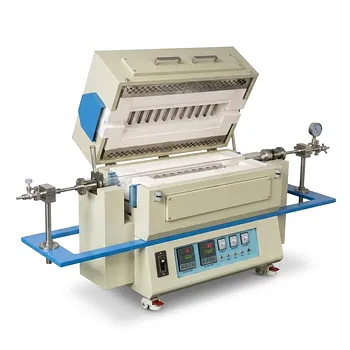
High Temperature Dual Zone Rotating Tube Furnace 1500C Silicon Carbide Heating for Advanced Material Synthesis
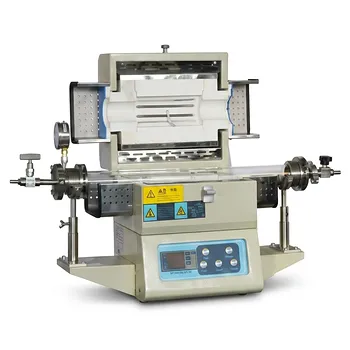
High Temperature 1200C Split Tube Furnace for CVD Research and Vacuum Atmosphere Heat Treatment

High Temperature Tube Furnace 1500C with Sliding Flanges and 50mm OD for Rapid Thermal Processing Fast Heating and Cooling

High Temperature 1700C Vertical Tube Furnace for Powder Spherification and Material Sintering

Compact High Temperature 1600C Tube Furnace with 50mm Alumina Tube and Vacuum Flanges for Material Sintering

High Temperature 1700C Tube Furnace with High Vacuum Turbomolecular Pump System and Multi Channel Mass Flow Controller Gas Mixer

High Temperature 1700C Benchtop Tube Furnace with 5 Inch Heating Zone High Purity Alumina Tube and Vacuum Sealing Flanges
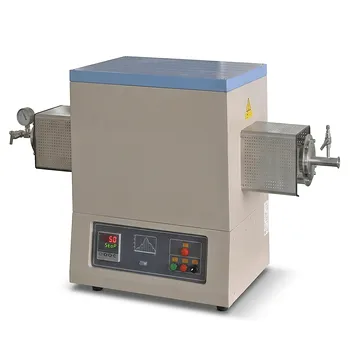
High Temperature 1700C Tube Furnace with 4 Inch OD Alumina Tube and Vacuum Sealing Flanges

1700C High Temperature Alumina Tube Furnace with 18 Inch Heated Zone and Vacuum Sealing Flanges
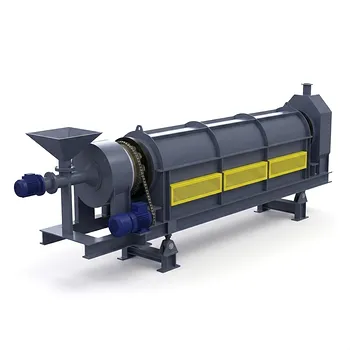
Electric Rotary Kiln Small Rotary Furnace for Activated Carbon Regeneration

1800C High Temperature Compact Vacuum Tube Furnace with 60mm OD Alumina Tube and Kanthal MoSi2 Heating Elements
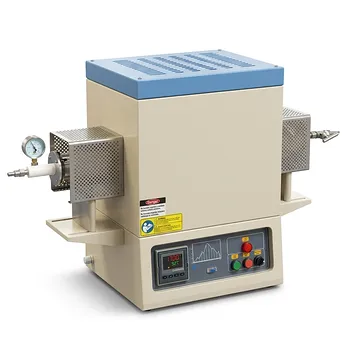
High Temperature Three Zone Tube Furnace 1700C with Alumina Tube and Water Cooled Flanges
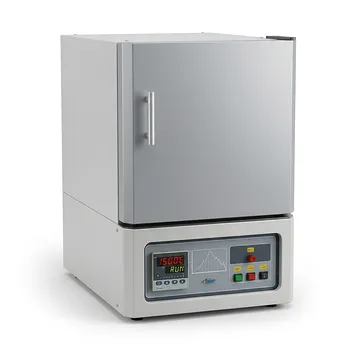
High Temperature 1500C Benchtop Muffle Furnace 3.6L Alumina Fiber Chamber Programmable Controller Sintering Annealing Carbonization Thermal Processing System
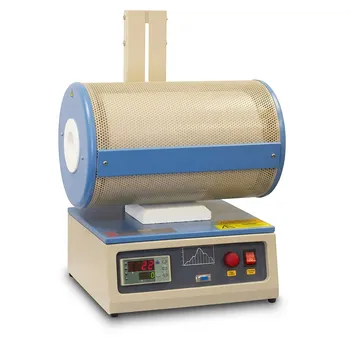
Multi Position Tube Furnace 1100C for Laboratory Material Research and Advanced Industrial Thermal Processing

1750°C High Temperature Benchtop Vacuum Atmosphere Tube Furnace with Kanthal Super 1800 Heating Elements and 60mm Alumina Processing Tube
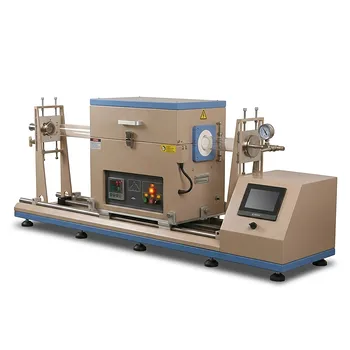
1200C Sliding Tube Furnace for Rapid Thermal Processing and CVD Graphene Growth with 100mm OD Capacity

High Temperature Automated 5 Inch Tube Furnace for Autonomous Material Research and Advanced Laboratory R&D
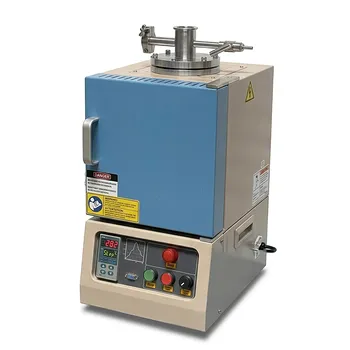
High Temperature Hybrid Muffle and Tube Furnace with Vacuum Capability and PID Control
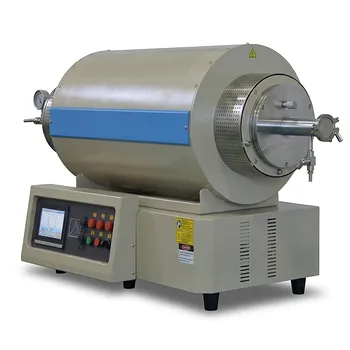
1200C Max Three Zone Tube Furnace 6 Inch OD Max with Tube and Flange