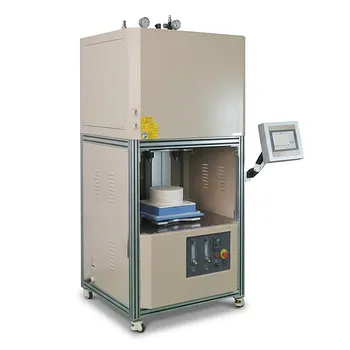
What are the advantages of using a vacuum hot-press furnace to convert powders into bulk thermoelectric materials? (High ZT)
Updated 3 months ago
Vacuum hot-press furnaces (VHP) provide a superior method for converting polycrystalline powders into bulk thermoelectric materials by simultaneously applying high axial pressure and high temperature. This dual-action process facilitates plastic deformation and diffusion bonding, resulting in near-theoretical density and the elimination of internal pores that would otherwise degrade electrical conductivity and Hall coefficient accuracy.
Core Takeaway: A vacuum hot-press furnace enables the fabrication of high-density thermoelectric materials at lower temperatures than conventional sintering, which preserves fine-grained microstructures and prevents the oxidation of sensitive grain boundaries.
Enhancing Material Density and Homogeneity
Elimination of Internal Porosity
Unlike pressureless sintering, hot pressing uses mechanical pressure (often 100 MPa or higher) to force particles together. This effectively eliminates internal closed pores, ensuring the final bulk sample accurately reflects the material’s intrinsic physical properties rather than being skewed by air gaps.
Accelerated Diffusion Bonding
The combination of heat and pressure reduces the sintering activation energy. This thermal-mechanical coupling accelerates the rearrangement of powder particles and promotes faster diffusion bonding at the interfaces.
Improved Mechanical Integrity
By consolidating metal and carbide powders into a single, dense body, the process increases transverse rupture strength and fatigue resistance. This creates a robust bulk material capable of withstanding the thermal stresses common in thermoelectric applications.
Preserving Thermoelectric Performance
Inhibition of Grain Growth
High-performance thermoelectrics often rely on fine-grained structures to scatter phonons and reduce thermal conductivity. Because VHP achieves densification at lower sintering temperatures, it inhibits the abnormal grain growth that typically occurs during prolonged exposure to high heat.
Optimized Electrical Transport
Achieving a high density is critical for obtaining reliable measurements of electrical conductivity and Hall coefficients. VHP ensures that the charge carrier mobility is not hindered by boundary voids, allowing the material to reach its maximum potential figure of merit (ZT).
Control of Interfacial Reactions
In composite thermoelectric materials, lower processing temperatures prevent harmful interfacial chemical reactions. This prevents the formation of brittle secondary phases, such as carbides, that can act as thermal or electrical barriers.
Technical Advantages of the Vacuum Environment
Prevention of Boundary Oxidation
Thermoelectric properties are highly sensitive to the chemistry of grain boundaries. The high-vacuum environment prevents the oxidation of these boundaries, ensuring that oxygen does not infiltrate the lattice and disrupt electron flow.
Removal of Volatile Impurities
The vacuum effectively removes adsorbed gases and outgassed volatiles from the powder surfaces. This leads to superior material purity and ensures that the final chemistry of the alloy remains exactly as intended.
Surface Integrity and Consistency
Vacuum processing produces scale-free surfaces and reduces part distortion during the cooling phase. This consistency is essential for repeatable manufacturing in industrial electronics and aerospace applications.
Understanding the Trade-offs
Equipment and Operational Costs
Vacuum hot-press furnaces represent a significant capital investment compared to simple tube furnaces or cold-pressing setups. The requirement for precision hydraulic systems and high-vacuum pumps increases both initial and maintenance costs.
Throughput and Scalability
VHP is typically a batch process rather than a continuous one, which can limit production volume. Additionally, the heating and cooling cycles within a vacuum can be time-consuming, affecting the overall turnaround time for material fabrication.
Tooling Limitations
The process requires high-strength graphite or refractory dies that can withstand simultaneous heat and pressure. These dies are subject to wear over time and may react with certain powders, necessitating protective liners or specific material considerations.
How to Apply This to Your Project
When deciding whether to utilize a vacuum hot-press furnace for your thermoelectric materials, consider your primary performance metrics.
- If your primary focus is maximizing the ZT figure of merit: Use VHP to ensure near-theoretical density and to protect grain boundaries from oxidation, which is vital for high electrical conductivity.
- If your primary focus is structural durability: Prioritize the simultaneous application of high pressure to eliminate internal voids that act as stress concentrators in bulk samples.
- If your primary focus is nanostructuring: Utilize the lower sintering temperatures enabled by VHP's thermal-mechanical coupling to prevent the coarsening of fine grains.
Ultimately, vacuum hot-pressing is the definitive choice for researchers and engineers who require high-purity, fully dense bulk materials with optimized transport properties.
Summary Table:
| Feature | Advantage for Thermoelectrics | Impact on Material Quality |
|---|---|---|
| High Axial Pressure | Eliminates internal porosity | Enables near-theoretical density and conductivity. |
| Lower Temps | Inhibits abnormal grain growth | Maintains fine-grained structure to lower thermal conductivity. |
| High Vacuum | Prevents boundary oxidation | Ensures high purity and optimized charge carrier mobility. |
| Diffusion Bonding | Accelerated sintering kinetics | Increases transverse rupture strength and mechanical integrity. |
Maximize Your Material Performance with THERMUNITS
Are you looking to achieve the ultimate ZT figure of merit in your thermoelectric research? THERMUNITS is a leading global manufacturer of high-precision thermal equipment for material science and industrial R&D. Our advanced Vacuum Hot Press Furnaces are designed to provide the rigorous pressure and temperature control necessary for superior bulk material fabrication.
Why Choose THERMUNITS?
- Comprehensive Solutions: We offer a full range of equipment including Muffle, Vacuum, Atmosphere, Tube, and Hot Press furnaces, plus CVD/PECVD systems and Rotary Kilns.
- Unmatched Precision: Our systems ensure scale-free surfaces and uniform density for semiconductors, carbides, and advanced alloys.
- Expert Support: We help labs and manufacturers worldwide optimize their sintering and heat treatment workflows.
Don't settle for subpar density or contaminated samples. Contact our experts today to find the perfect thermal processing solution for your project!
References
- Zhixiong Yin, Pierre F. P. Poudeu. Native Defects Hybridization and Electronic Transport in Cu<sub>2</sub>Se‐CuGaSe<sub>2</sub> Hierarchical Composites. DOI: 10.1002/adfm.202408063
Mentioned Products
- High Pressure 600T Vacuum Induction Hot Press Furnace for Advanced Material Heat Treatment and Sintering
- High Temperature Vacuum Lamination Hot Press Furnace Machine for Semiconductor Wafer Bonding and Advanced Composite Thermal Processing
- Industrial Vacuum Hot Press Furnace Machine and High Temperature Heated Vacuum Press for Advanced Material Sintering
- Industrial High Temperature Vacuum Hot Press Furnace and Heated Vacuum Press Machine for Material Science Sintering
- Ultrafast Thermal Pressing Furnace 2900C Max Temperature 200K per Second Heating Rate Vacuum Atmosphere Rapid Processing System
People Also Ask
- What is a Vacuum Hot Press Furnace and what are its primary industrial applications? Achieve Maximum Material Density
- What are the structural features of the furnace body and chamber in a Vacuum Hot Press Furnace? Master Material Density
- What types of heating systems and insulation are used in Vacuum Hot Press Furnaces? Optimize Your Thermal Processing
- Why is graphite the preferred material for dies and heating elements in Vacuum Hot Press Furnaces? High-Temp Solutions
- What are the primary operational components and mechanisms of a vacuum hot press furnace? A Technical Breakdown

Tech Team · ThermUnits
Last updated on Jun 02, 2026
Related Products
High Pressure 600T Vacuum Induction Hot Press Furnace for Advanced Material Heat Treatment and Sintering
High Temperature Vacuum Lamination Hot Press Furnace Machine for Semiconductor Wafer Bonding and Advanced Composite Thermal Processing
Industrial Vacuum Hot Press Furnace Machine and High Temperature Heated Vacuum Press for Advanced Material Sintering
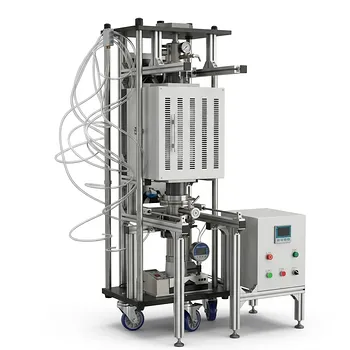
Industrial High Temperature Vacuum Hot Press Furnace and Heated Vacuum Press Machine for Material Science Sintering
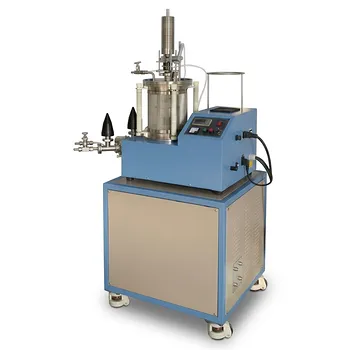
Ultrafast Thermal Pressing Furnace 2900C Max Temperature 200K per Second Heating Rate Vacuum Atmosphere Rapid Processing System
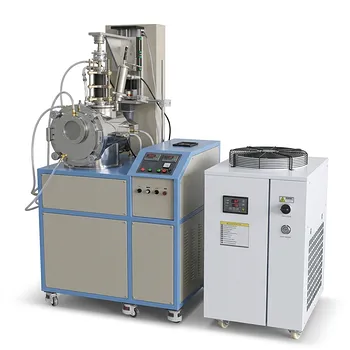
High Temperature Ultrafast Heating Pressing Furnace 2900C Max 100kgf Rapid Thermal Processing System
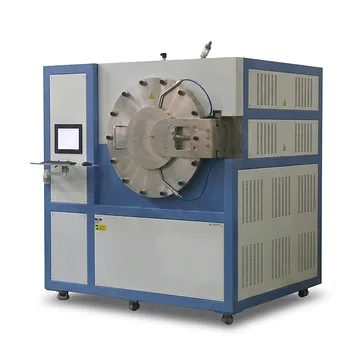
High Vacuum Pressure Chamber Furnace 800C 3.5 Bar Sintering System for Superconducting Materials
2500C High Vacuum Ultrafast Heating Pellet Press with Automated 8 Sample Loading System
Ultra High Temperature Induction Heated Vacuum Furnace with Molten Salt Electrolysis Capability and 3000 Degree Precision Control
High Temperature 1000C Vacuum Furnace with 8 Inch ID Chamber for Material Sintering and Research Annealing
1100C High Temperature Vacuum Crucible Furnace with Quartz Chamber for Thermal Processing and Sintering
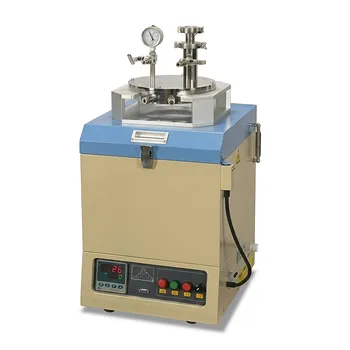
Vertical Vacuum Furnace 1100C High Temperature 8 Inch Quartz Chamber Water Cold Flange System
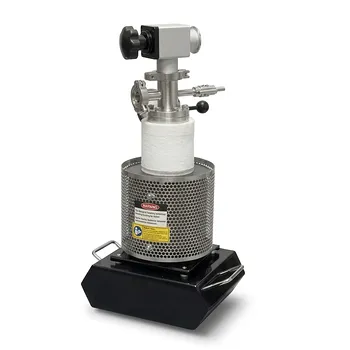
High Temperature 1100C Compact Top Loading Vertical Vacuum Tube Furnace for High Vacuum Noble Metal Melting and Material Research

1800C High Temperature Compact Vacuum Tube Furnace with 60mm OD Alumina Tube and Kanthal MoSi2 Heating Elements

1750°C High Temperature Benchtop Vacuum Atmosphere Tube Furnace with Kanthal Super 1800 Heating Elements and 60mm Alumina Processing Tube
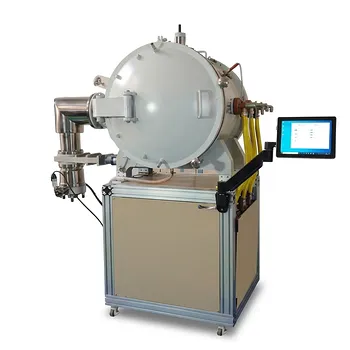
High Temperature Cold Wall Vacuum Furnace for Advanced Material Sintering and Annealing 1600C Heating Area 200x200x300mm
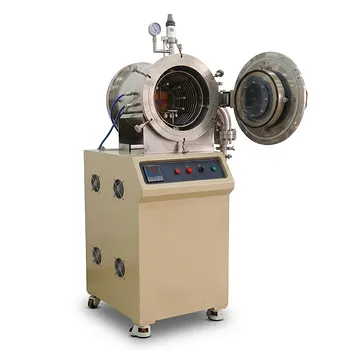
High Temperature Cold Wall High Vacuum Chamber Furnace 1400C for Advanced Material Processing
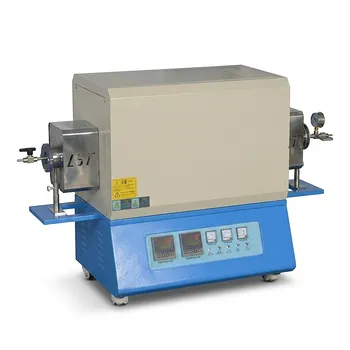
High Temperature Dual Zone Vacuum Tube Furnace for Material Research and CVD Processing
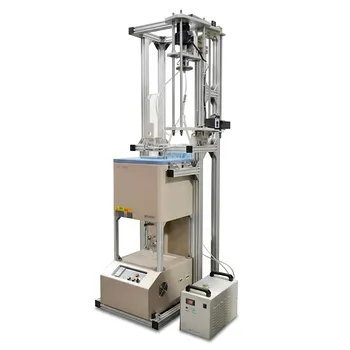
500C Vacuum Vertical Tube Furnace 84mm OD Sample Rotation Lifting System