What are the advantages of using an industrial-grade tube furnace for carbonization? Precision Biomass Material Synthesis
Updated 3 months ago
Industrial-grade tube furnaces are the gold standard for biomass carbonization because they provide the dual requirement of a strictly inert atmosphere and high-precision thermal profiles. These systems prevent the combustion of organic matter while facilitating the transformation of biomass into high-surface-area biochar and the simultaneous synthesis of functional metal-oxide nanoparticles.
Core Takeaway: The primary advantage of an industrial-grade tube furnace lies in its ability to decouple temperature from atmospheric oxygen, allowing for the precise control of dehydrogenation and aromatization reactions that define the final carbon structure's conductivity and porosity.
Achieving Precise Material Transformation
Strict Inert Atmosphere Protection
The furnace chamber allows for the continuous introduction of high-purity nitrogen, creating a strictly oxygen-free environment. This is critical for preventing the biomass from oxidizing or burning at high temperatures, ensuring that organic components are preserved and converted into a carbon skeleton.
Efficient Removal of Volatile Impurities
The tubular design facilitates a constant gas flow that effectively sweeps away volatile components generated during pyrolysis. This removal is essential for promoting a complete transformation of the precursor and preventing unwanted side reactions that could degrade the material quality.
Prevention of Oxidative Burnout
By maintaining an anaerobic environment, the furnace enables the polymer framework of the biomass to undergo anaerobic pyrolysis. This process converts the organic material into a stable carbon structure without the risk of the material being consumed by fire at temperatures exceeding 800°C.
Precision Thermal Regulation
Regulation of Reaction Kinetics
The use of programmable control systems allows for specific heating rates, such as 5°C/min, which are vital for controlling the kinetics of the carbonization reaction. A stable heating curve prevents the sudden closure of pores, leading to self-doped porous carbon with ultra-high specific surface areas.
Multi-Stage Temperature Control
Industrial furnaces offer precise control over a wide range of temperatures, typically between 500°C and 1000°C. This flexibility allows researchers to target specific stages of material development, such as preliminary dehydration at 400°C followed by deep graphitization at higher temperatures.
Enhancement of Electrical Conductivity
High-temperature environments exceeding 1000°C facilitate the formation of a graphitized carbon structure. This transformation is necessary to increase the elemental carbon content and significantly enhance the electrical conductivity and mechanical strength of the resulting biochar.
Synthesizing Functional Nanoparticles
Prevention of Particle Agglomeration
The uniform temperature field within a tube furnace is critical for synthesizing magnetite (Fe3O4) nanoparticles within specific size ranges, such as 30-50 nm. Stable thermal environments prevent excessive sintering, ensuring that nanoparticles retain a high specific surface area.
Transformation of Metal Components
During the carbonization process, the furnace transforms loaded metal hydroxides into magnetic bimetallic oxide nanoparticles. This simultaneous reaction creates a composite material where the carbon carrier and the magnetic particles are integrated into a single, functional unit.
Tuning Electronic Properties
Precise temperature control allows for the adjustment of the electronic band gap of the generated nanoparticles. In a controlled environment, these particles can achieve an expected band gap of 2-3 eV, which is essential for specific catalytic or electronic applications.
Understanding the Trade-offs
Operational Complexity and Cost
Maintaining a strictly inert atmosphere requires a constant supply of high-purity gases and sophisticated sealing mechanisms, which increases operational costs compared to simple muffle furnaces. Additionally, the heating and cooling cycles must be managed carefully to avoid damaging the ceramic or quartz tubes.
Throughput and Scaling Limitations
Tube furnaces are typically designed for batch processing, which can limit the volume of biomass treated at one time compared to continuous industrial kilns. While they offer superior precision, scaling the process to mass production requires significant capital investment in larger-diameter tubes or multi-tube systems.
How to Apply This to Your Project
When selecting your carbonization parameters, your specific material goals should dictate your furnace settings and gas flow rates.
- If your primary focus is maximizing surface area: Utilize a slow heating rate (e.g., 5°C/min) to allow for the steady development of a microporous structure without pore collapse.
- If your primary focus is electrical conductivity: Aim for higher carbonization temperatures (900°C–1000°C) to promote a higher degree of graphitization in the carbon skeleton.
- If your primary focus is nanoparticle uniformity: Ensure the furnace provides a uniform heat distribution field to prevent the sintering and agglomeration of metal oxides.
By mastering the balance between atmosphere purity and thermal kinetics, you can engineer biomass-derived materials with highly specific electrochemical and structural properties.
Summary Table:
| Feature | Benefit | Material Outcome |
|---|---|---|
| Inert Atmosphere | Prevents oxidative burnout | High-purity carbon skeleton preservation |
| Precise Heating Rates | Controlled reaction kinetics | Optimized porosity and surface area |
| Tubular Gas Flow | Efficient removal of volatiles | Higher material purity and quality |
| High-Temp Range | Facilitates graphitization | Enhanced electrical conductivity |
| Uniform Heat Field | Prevents particle sintering | Uniform 30-50nm nanoparticle synthesis |
Elevate Your Research with THERMUNITS Thermal Solutions
Precision is the key to breakthrough material science. THERMUNITS is a leading manufacturer of high-performance thermal equipment designed to meet the rigorous demands of industrial R&D and material synthesis.
Our comprehensive range of thermal processing solutions includes:
- Tube & Rotary Furnaces for precise biomass carbonization and pyrolysis.
- Muffle, Vacuum, & Atmosphere Furnaces for controlled heat treatments.
- CVD/PECVD Systems for advanced coating and thin-film research.
- Hot Press & Vacuum Induction Melting (VIM) Furnaces for specialized metallurgy.
- Dental Furnaces & Thermal Elements for laboratory-scale precision.
Whether you are optimizing self-doped porous carbon or synthesizing magnetic nanoparticles, our equipment provides the stability and atmospheric integrity your project requires.
Contact Our Experts Today to Find Your Perfect Heating Solution
References
- Tong Liu, Qiang Wei. Magnetic MgFeO@BC Derived from Rice Husk as Peroxymonosulfate Activator for Sulfamethoxazole Degradation: Performance and Reaction Mechanism. DOI: 10.3390/ijms252111768
Mentioned Products
- 900°C Max Rotary Tube Furnace with 8 Inch 310S Alloy Tube and Optional Multi Zone Heating for Industrial Material Calcination
- High Temperature Dual Zone Rotating Tube Furnace 1500C Silicon Carbide Heating for Advanced Material Synthesis
- 1100C Tube Furnace with Vacuum Flange and Programmable Temperature Controller for Material Science and Industrial Heat Treatment
- Continuous Feeding Rotary Tube Furnace for Industrial Powder Heat Treatment and Material Research
- High Temperature 1700C Vertical Tube Furnace for Powder Spherification and Material Sintering
People Also Ask
- How does a rotary tube furnace improve the processing of granular materials? Enhance Uniformity and Reaction Kinetics
- Why use a rotary tube furnace for FACS carbonization? Ensure uniform morphology and prevent sphere agglomeration.
- Why is the precise optimization of residence time essential in the catalyst calcination process? Maximize Your Yields.
- In what ways do rotary tube furnaces enhance chemical and specialty mineral processing? Drive Precision and Uniformity.
- What parameters must operators control to maintain product quality in a rotary furnace? Master Your Heat Treatment.

Tech Team · ThermUnits
Last updated on Jun 02, 2026
Related Products
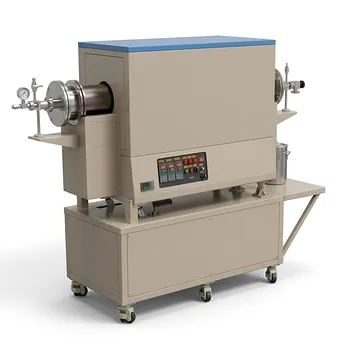
900°C Max Rotary Tube Furnace with 8 Inch 310S Alloy Tube and Optional Multi Zone Heating for Industrial Material Calcination
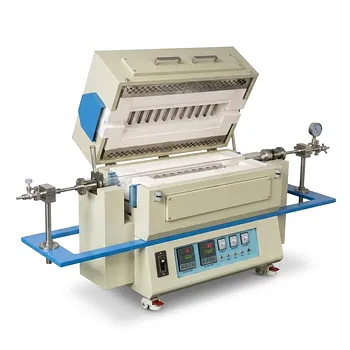
High Temperature Dual Zone Rotating Tube Furnace 1500C Silicon Carbide Heating for Advanced Material Synthesis

1100C Tube Furnace with Vacuum Flange and Programmable Temperature Controller for Material Science and Industrial Heat Treatment
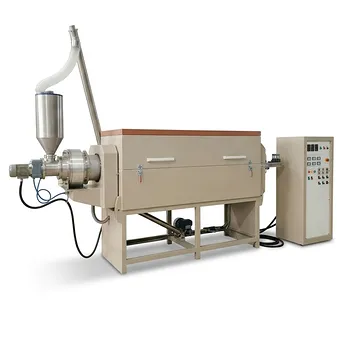
Continuous Feeding Rotary Tube Furnace for Industrial Powder Heat Treatment and Material Research

High Temperature 1700C Vertical Tube Furnace for Powder Spherification and Material Sintering

Compact High Temperature 1600C Tube Furnace with 50mm Alumina Tube and Vacuum Flanges for Material Sintering

High Temperature Tube Furnace 1500C with Sliding Flanges and 50mm OD for Rapid Thermal Processing Fast Heating and Cooling
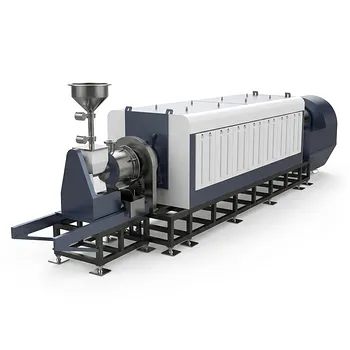
Electric Rotary Kiln Small Rotary Furnace Biomass Pyrolysis Plant
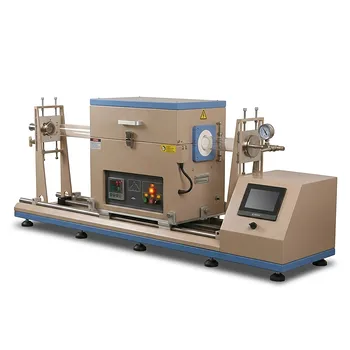
1200C Sliding Tube Furnace for Rapid Thermal Processing and CVD Graphene Growth with 100mm OD Capacity
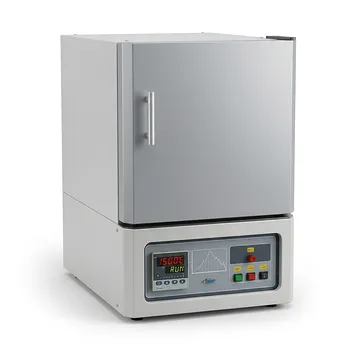
High Temperature 1500C Benchtop Muffle Furnace 3.6L Alumina Fiber Chamber Programmable Controller Sintering Annealing Carbonization Thermal Processing System
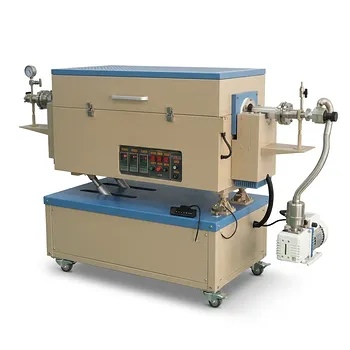
Three Zone Rotary Tube Furnace for High Temperature Powder Processing and Material Research

High Temperature 1700C Tube Furnace with High Vacuum Turbomolecular Pump System and Multi Channel Mass Flow Controller Gas Mixer
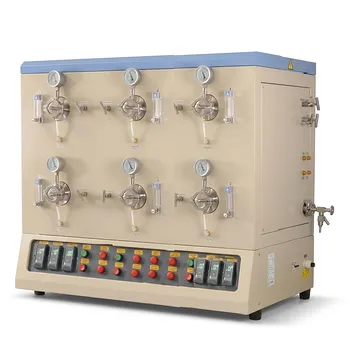
1200C High Throughput Multi Channel Tube Furnace with 50mm Quartz Tubes for Annealing and Material Phase Diagram Research

Vertical 1700C Vacuum and Atmosphere Tube Furnace with 80mm Alumina Tube
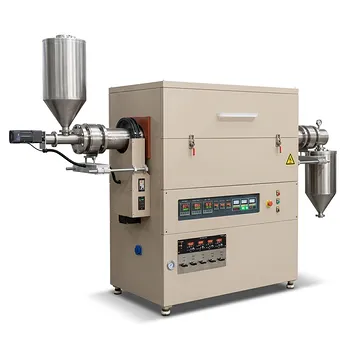
High Temperature Tilting Rotary Tube Furnace with Integrated Mass Flow Control and Multi Zone Heating

1800C High Temperature Compact Vacuum Tube Furnace with 60mm OD Alumina Tube and Kanthal MoSi2 Heating Elements
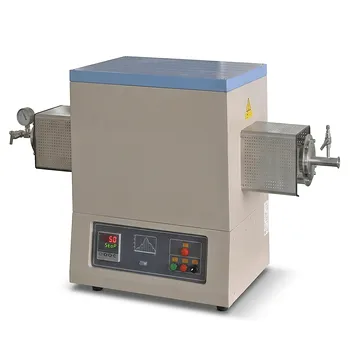
High Temperature 1700C Tube Furnace with 4 Inch OD Alumina Tube and Vacuum Sealing Flanges

1200°C 5 Inch Vertical Quartz Tube Furnace with Stainless Steel Vacuum Flanges
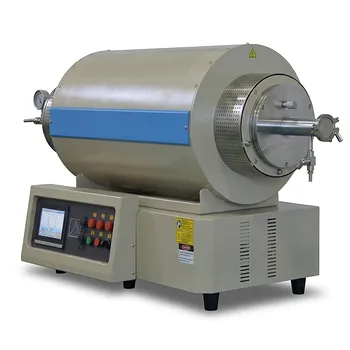
1200C Max Three Zone Tube Furnace 6 Inch OD Max with Tube and Flange
