Advantages of 4-wire measurement & multi-channel DAQ in tube furnaces? Master High-Precision Monitoring.
Updated 6 months ago
The four-wire resistance measurement method, when integrated with multi-channel data acquisition cards, provides unparalleled accuracy by completely isolating lead and contact resistance from the sensor signal. This combination is essential for tube furnaces, where high-precision RTDs must capture delicate temperature gradients across multiple heating zones to ensure the integrity of high-temperature reactions.
This methodology ensures that the measured resistance reflects only the RTD's state, enabling the precise mapping of vertical temperature fields required for stable thermal environments up to 1700°C.
Overcoming the Limitations of Lead Resistance
Eliminating Parasitic Resistance
The primary advantage of the four-wire method is its ability to separate the current-carrying wires from the voltage-sensing wires. This configuration ensures that the resistance of the lead wires and the contact points does not interfere with the voltage reading.
Ensuring Signal Integrity in High-Temp RTDs
In tube furnaces, Resistance Temperature Detectors (RTDs) are often placed deep within heating zones, requiring long lead wires. The four-wire method cancels out the fluctuating resistance of these leads, which can change significantly as the furnace heats up.
Precision in Dynamic Environments
By isolating the measurement from connection variables, you achieve high-precision acquisition of resistance values. This is critical for maintaining the accuracy of temperature readings in environments that reach between 1500°C and 1700°C.
Mapping Complex Temperature Field Gradients
Simultaneous Multi-Point Monitoring
Using multi-channel data acquisition (DAQ) cards allows for the simultaneous tracking of multiple sensors distributed across different heating zones. This provides a real-time "snapshot" of the furnace's internal thermal state.
Analyzing Vertical Temperature Distribution
High-temperature tube furnaces often rely on a uniform hot zone with a specific vertical distribution. Multi-channel acquisition is the only reliable way to accurately measure and verify this gradient.
Supporting Sensitive Chemical Reactions
Accurate gradient measurements are vital for determining the equilibrium constants and mass transfer coefficients of slag-metal interface reactions. Without high-precision multi-channel data, these subtle chemical calculations would be compromised by thermal noise.
Understanding the Trade-offs
Increased Wiring Complexity
The most significant drawback is the doubling of the wiring requirement, as each sensor requires four wires instead of two. This can lead to cable management challenges and requires DAQ cards with higher port densities.
Hardware and Integration Costs
Implementing a four-wire, multi-channel system is generally more expensive than traditional two-wire setups. The specialized DAQ cards and higher-grade sensors represent a higher initial capital investment.
Signal Processing Overhead
Managing data from multiple high-precision channels increases the computational load on the monitoring software. Systems must be robust enough to process these signals without introducing latency into the temperature control loop.
How to Apply This to Your Project
Making the Right Choice for Your Goal
- If your primary focus is extreme thermal precision: Use the four-wire method to eliminate lead resistance errors, ensuring your RTD readings are technically absolute.
- If your primary focus is mapping furnace uniformity: Prioritize multi-channel DAQ cards with high sampling rates to capture the temperature gradient across all heating zones simultaneously.
- If your primary focus is metallurgical research: Ensure your system is calibrated for the 1500°C to 1700°C range to accurately study reaction kinetics at the slag-metal interface.
By combining the physical accuracy of four-wire sensing with the logistical power of multi-channel data acquisition, you create a definitive system for rigorous thermal analysis.
Summary Table:
| Feature | Advantage | Ideal Application |
|---|---|---|
| Four-Wire Method | Eliminates lead/contact resistance | High-precision RTD sensing up to 1700°C |
| Multi-Channel DAQ | Simultaneous multi-zone tracking | Mapping vertical temperature distributions |
| High Signal Integrity | Isolates voltage from current paths | Studying slag-metal interface reactions |
Elevate Your R&D Precision with THERMUNITS
As a global leader in high-temperature laboratory equipment, THERMUNITS provides researchers in material science and industrial R&D with industry-leading thermal solutions. Our comprehensive range—including Tube, Muffle, Vacuum, and Atmosphere furnaces, as well as CVD/PECVD systems—is engineered to support high-precision monitoring methodologies like four-wire sensing for absolute thermal control.
Ready to achieve unparalleled accuracy and optimize your material synthesis? Contact our technical experts today to find the perfect heat treatment solution for your laboratory's specific needs.
References
- Zhenyin Hai, Suying Luo. Printed Thick Film Resistance Temperature Detector for Real-Time Tube Furnace Temperature Monitoring. DOI: 10.3390/s24102999
Mentioned Products
- High Temperature Tube Furnace 1500C with Sliding Flanges and 50mm OD for Rapid Thermal Processing Fast Heating and Cooling
- Vertical 1700C Vacuum and Atmosphere Tube Furnace with 80mm Alumina Tube
- 1100C Tube Furnace with Vacuum Flange and Programmable Temperature Controller for Material Science and Industrial Heat Treatment
- Compact High Temperature 1600C Tube Furnace with 50mm Alumina Tube and Vacuum Flanges for Material Sintering
- 900°C Max Rotary Tube Furnace with 8 Inch 310S Alloy Tube and Optional Multi Zone Heating for Industrial Material Calcination
People Also Ask
- How are high-temperature tube furnaces utilized to repair etching damage? Precision Lattice Restoration Solutions
- What role does a high-temperature tube furnace play in the sulfidation heat treatment of CoS@C/MXene nanocomposites? Guide
- How does precision tube furnace control influence CoFe nanoparticle formation? Master Your Bimetallic Synthesis.
- What core conditions does a high-temperature tube furnace provide for rGO aerogels? Mastering Precision Synthesis.
- What role does a high-temperature tube furnace play in CVD synthesis of silicon nanowires? Master VLS Growth Precision.

Tech Team · ThermUnits
Last updated on Apr 14, 2026
Related Products
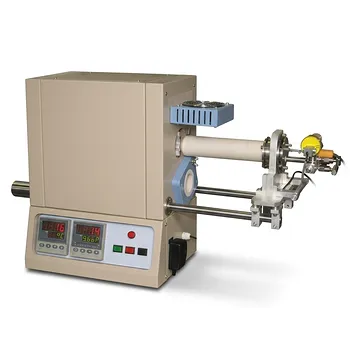
High Temperature Tube Furnace 1500C with Sliding Flanges and 50mm OD for Rapid Thermal Processing Fast Heating and Cooling
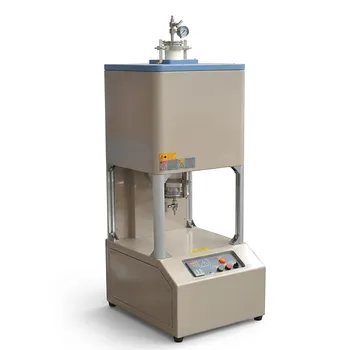
Vertical 1700C Vacuum and Atmosphere Tube Furnace with 80mm Alumina Tube
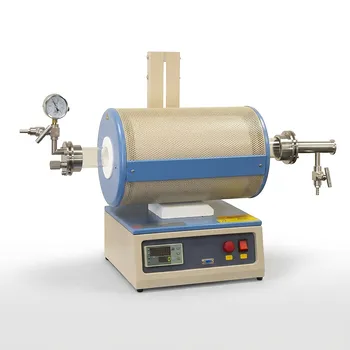
1100C Tube Furnace with Vacuum Flange and Programmable Temperature Controller for Material Science and Industrial Heat Treatment
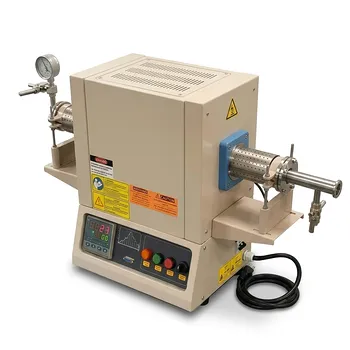
Compact High Temperature 1600C Tube Furnace with 50mm Alumina Tube and Vacuum Flanges for Material Sintering
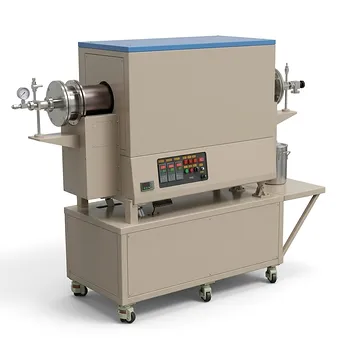
900°C Max Rotary Tube Furnace with 8 Inch 310S Alloy Tube and Optional Multi Zone Heating for Industrial Material Calcination
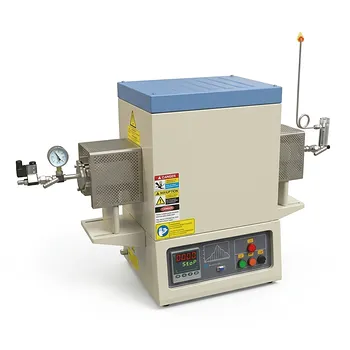
1700C Hydrogen Gas Tube Furnace with 60mm Alumina Process Tube and Integrated Hydrogen Safety Detector
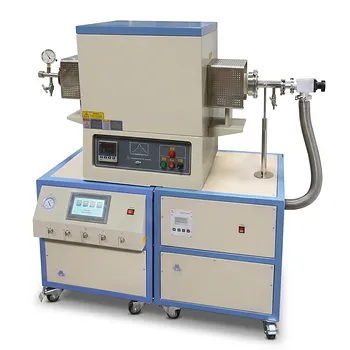
High Temperature 1700C Tube Furnace with High Vacuum Turbomolecular Pump System and Multi Channel Mass Flow Controller Gas Mixer
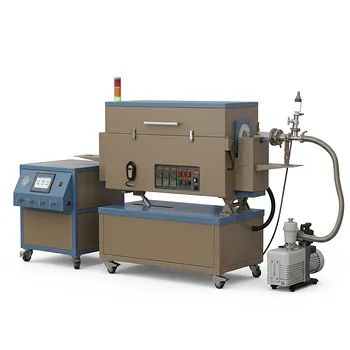
5 Inch Three Zone Rotary Tube Furnace with Integrated Gas Delivery System and 1200C Capability for Advanced Material CVD Processing
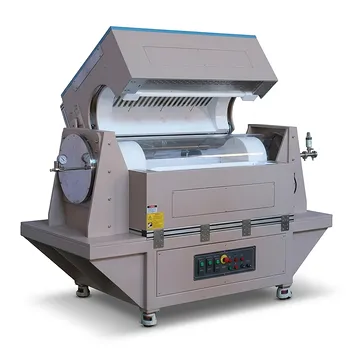
Three Zone Tube Furnace with 11 Inch or 15 Inch Quartz Tube and Hinged Flanges for Vacuum Atmosphere Heat Treatment
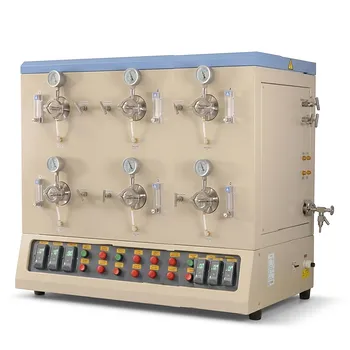
1200C High Throughput Multi Channel Tube Furnace with 50mm Quartz Tubes for Annealing and Material Phase Diagram Research
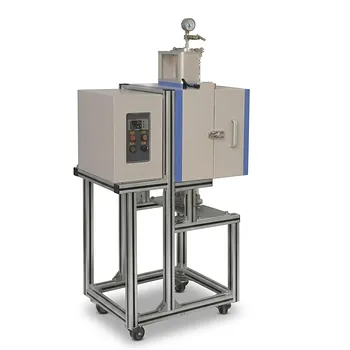
1200°C 5 Inch Vertical Quartz Tube Furnace with Stainless Steel Vacuum Flanges
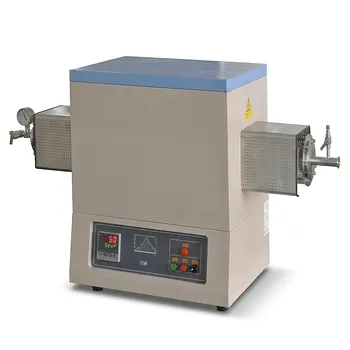
High Temperature 1700C Tube Furnace with 4 Inch OD Alumina Tube and Vacuum Sealing Flanges
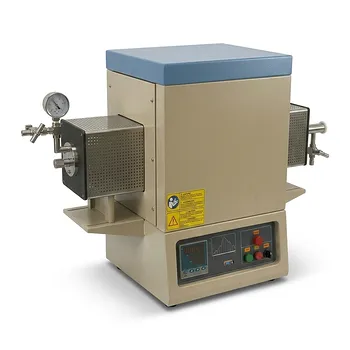
High Temperature 1700C Benchtop Tube Furnace with 5 Inch Heating Zone High Purity Alumina Tube and Vacuum Sealing Flanges
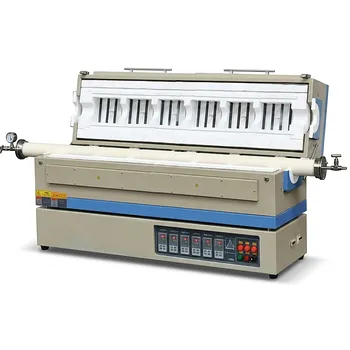
High Temperature 1700C Six Zone Split Tube Furnace with Alumina Tube and Water Cooled Flanges
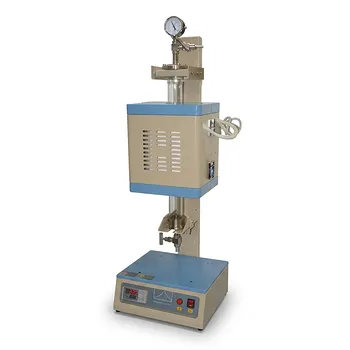
Compact Vertical Split Quartz Tube Furnace with Stainless Steel Vacuum Flanges for Rapid Thermal Quenching and Controlled Atmosphere Material Processing
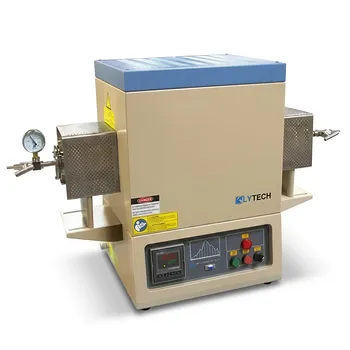
1800C High Temperature Compact Vacuum Tube Furnace with 60mm OD Alumina Tube and Kanthal MoSi2 Heating Elements
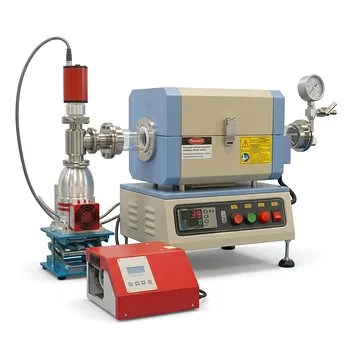
High Vacuum Compact Tube Furnace 1200C with Integrated Turbo Pump System and 8 Inch Heating Zone
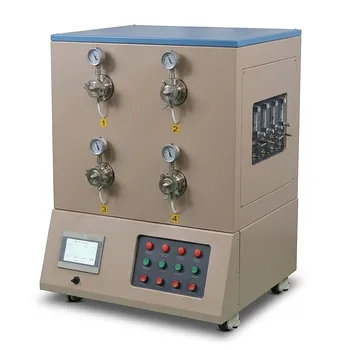
High Throughput 1200C Four Channel Tube Furnace with 3 Inch Quartz Tubes for Multi Zone Annealing and Material Research
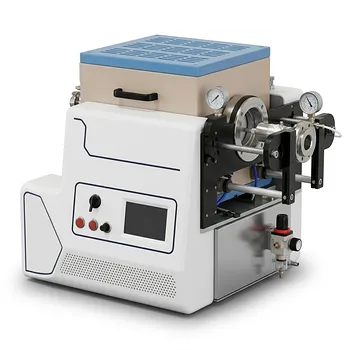
High Temperature Automated 5 Inch Tube Furnace for Autonomous Material Research and Advanced Laboratory R&D