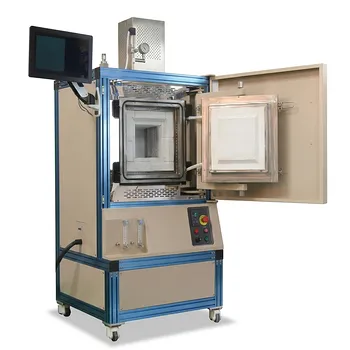
What are the benefits of using an atmosphere annealing furnace to treat tungsten diselenide? Restore Peak Performance.
Updated 3 months ago
Atmosphere annealing serves as a restorative process for oxidized tungsten diselenide ($WSe_2$). By reheating the material to 200°C under a high-purity argon environment, the furnace facilitates the removal of surface-adsorbed impurities and enables oxidized tungsten elements to return to their normal valence states. This chemical restoration is essential for reclaiming the material's original fluorescence and Raman spectral characteristics.
Atmosphere annealing in a controlled argon environment restores the chemical and optical integrity of $WSe_2$ by reversing oxidation and removing surface contaminants. This process effectively resets the material's valence states, ensuring high-quality crystal performance for sensitive applications.
Chemical and Structural Restoration
Reversing Tungsten Oxidation
During long-term storage, tungsten atoms in $WSe_2$ can react with oxygen, altering their valence states and degrading the material's performance. The annealing furnace provides the thermal energy required to break these unwanted oxygen bonds, allowing the tungsten to return to its normal chemical state.
Removal of Surface Impurities
The heating process effectively "cleans" the material by desorbing surface-adsorbed impurities that accumulate over time. The use of high-purity argon as a protective atmosphere ensures that these impurities are carried away without introducing new reactive gases to the sample.
Improving Crystal Quality
Heat treatment promotes the rearrangement of atoms within the lattice, which improves the overall crystal quality. This structural refinement is crucial for ensuring that the $WSe_2$ behaves consistently in electronic or optical devices.
Impact on Optical and Physical Properties
Enhancing Fluorescence Properties
Oxidation typically quenches or distorts the fluorescence of 2D materials like $WSe_2$, making them less effective for optoelectronic use. Annealing restores the material's ability to emit light efficiently by neutralizing the defects caused by oxygen atoms.
Recovery of Raman Spectral Characteristics
The Raman spectrum of a material acts as its structural "fingerprint," which becomes blurred or shifted when oxidation occurs. By returning the tungsten to its proper state, the annealing furnace ensures the Raman peaks return to their sharp, characteristic positions.
Homogenization and Stress Relief
Drawing parallels from broader tungsten metallurgy, thermal treatment in a controlled environment helps in the homogenization of the material structure. While $WSe_2$ restoration occurs at lower temperatures (200°C), the principle of using heat to stabilize the internal phase remains a core benefit of the annealing process.
Understanding the Trade-offs
Temperature Sensitivity
Maintaining a precise temperature of 200°C is critical for $WSe_2$, as excessive heat could lead to further degradation or structural changes. Unlike bulk alloys that require 1100°C for stress relief, 2D semiconductors like $WSe_2$ require a more delicate thermal balance.
Atmosphere Purity vs. Vacuum
While a vacuum environment is excellent for preventing secondary oxidation in heavy alloys, an argon atmosphere is often preferred for $WSe_2$ to maintain pressure stability while providing a chemically inert shield. Any compromise in argon purity can result in "re-oxidation" during the heating cycle, negating the benefits of the treatment.
How to Apply This to Your Project
Making the Right Choice for Your Goal
- If your primary focus is restoring optical clarity: Utilize atmosphere annealing at 200°C to specifically target the recovery of fluorescence and Raman signatures.
- If your primary focus is chemical purity: Ensure the use of high-purity argon to strip surface contaminants without introducing new chemical defects.
- If your primary focus is structural stability: Use controlled cooling following the annealing process to prevent the re-adsorption of moisture or oxygen.
Properly executed atmosphere annealing transforms degraded $WSe_2$ back into a high-performance semiconductor, ensuring your research or production is based on material with peak structural and optical integrity.
Summary Table:
| Key Benefit | Restoration Mechanism | Impact on Material |
|---|---|---|
| Chemical Restoration | Reverses tungsten oxidation & valence states | Reclaims original chemical purity |
| Surface Cleaning | Desorbs impurities via high-purity argon | Ensures contamination-free samples |
| Optical Recovery | Neutralizes oxygen-induced defects | Restores fluorescence & Raman peaks |
| Structural Quality | Thermal rearrangement of lattice atoms | Improves crystal consistency & stability |
Optimize Your Advanced Material Research with THERMUNITS
Precise thermal processing is vital for sensitive 2D materials like tungsten diselenide. THERMUNITS is a leading manufacturer of high-temperature laboratory equipment, providing the accuracy and atmosphere control required for material science and industrial R&D.
Our comprehensive range of thermal solutions—including Atmosphere, Vacuum, Tube, and Muffle Furnaces, as well as advanced CVD/PECVD systems—is designed to help you achieve peak material integrity and repeatable results. Whether you are restoring oxidized samples or developing new semiconductors, our technical expertise ensures your success.
Ready to enhance your lab’s thermal capabilities? Contact THERMUNITS Today for a Custom Solution
References
- Xuemin Luo, Yong Liu. Impact of Carrier Gas Flow Rate on the Synthesis of Monolayer WSe2 via Hydrogen-Assisted Chemical Vapor Deposition. DOI: 10.3390/ma17102190
Mentioned Products
- Rapid Thermal Processing Atmosphere Controlled Bottom Loading Furnace 1100C with 50C Per Second Heating Rate for Wafer Annealing
- High Temperature Vertical Atmosphere Controlled Furnace with Automatic Bottom Loading and 1700°C Capacity for Advanced Material Research
- Rapid Thermal Processing Furnace 1100C Atmosphere Controlled Bottom Loading RTP System for Wafer Annealing and Catalysis Research
- Compact Atmosphere Controlled Rapid Thermal Processing RTP Furnace with 4 Inch ID Quartz Tube 1100C
- Roller Table Atmosphere Furnace 1500C High Temperature Battery Material Sintering System 112L Capacity
People Also Ask
- What role does a SiC-coated graphite susceptor play in H2Se selenization? Boost RTP Thermal Uniformity & Film Purity.
- What are the advantages of using a Bottom-Loading High-Temperature Furnace in Barium Titanate Fast Firing? Superior Microstructure
- What are the functional advantages of an RTP system for surface deposition? Enhance Heterojunction Interface Integrity
- Why is an atmosphere-controlled annealing furnace required for the post-treatment of synthesized KTiOPO4 thin films? KTP
- What is the purpose of coating ceramic sheets with platinum paste? Achieve Stable High-Temp Ohmic Contacts

Tech Team · ThermUnits
Last updated on Jun 02, 2026
Related Products
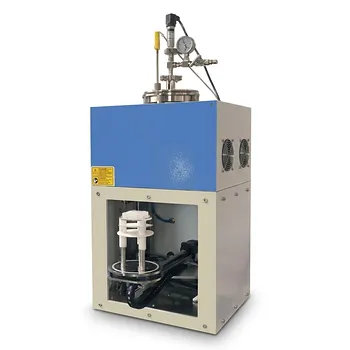
Rapid Thermal Processing Atmosphere Controlled Bottom Loading Furnace 1100C with 50C Per Second Heating Rate for Wafer Annealing
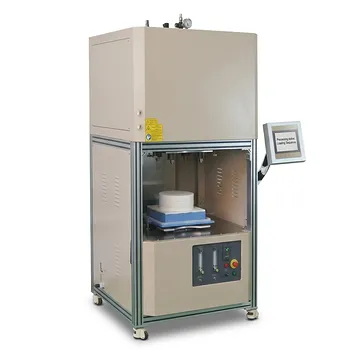
High Temperature Vertical Atmosphere Controlled Furnace with Automatic Bottom Loading and 1700°C Capacity for Advanced Material Research
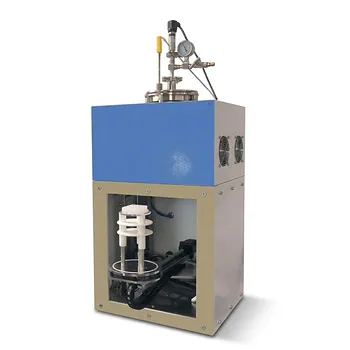
Rapid Thermal Processing Furnace 1100C Atmosphere Controlled Bottom Loading RTP System for Wafer Annealing and Catalysis Research
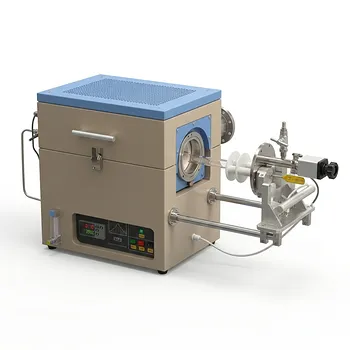
Compact Atmosphere Controlled Rapid Thermal Processing RTP Furnace with 4 Inch ID Quartz Tube 1100C
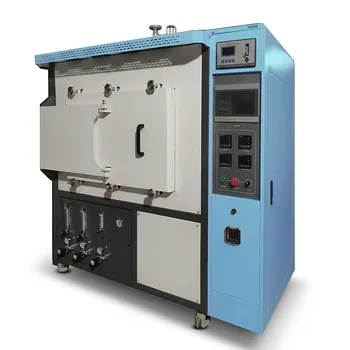
Roller Table Atmosphere Furnace 1500C High Temperature Battery Material Sintering System 112L Capacity
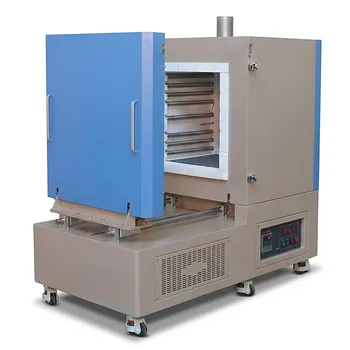
1200C Five Side Heating Muffle Furnace with Sliding Door 125L Volume High Temperature Heat Treatment System for Large Scale Sintering and Annealing
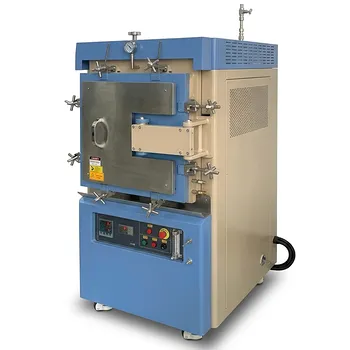
Atmosphere Controlled Muffle Furnace 1700C Maximum Temperature 80L High Capacity Vacuum Inert Gas Box Furnace
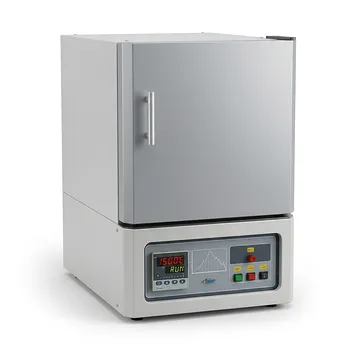
High Temperature 1500C Benchtop Muffle Furnace 3.6L Alumina Fiber Chamber Programmable Controller Sintering Annealing Carbonization Thermal Processing System
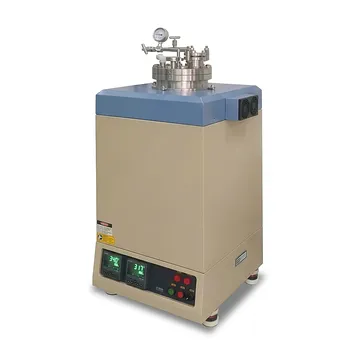
High Temperature 1000C Vacuum Furnace with 8 Inch ID Chamber for Material Sintering and Research Annealing
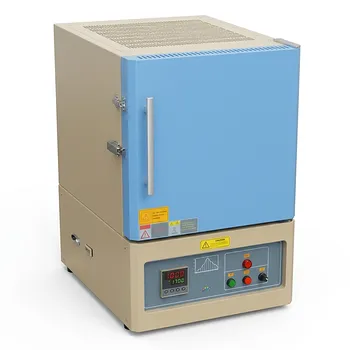
Large Bench Top 1700C High Temperature Muffle Furnace with 19L Chamber for Advanced Material Sintering and Annealing
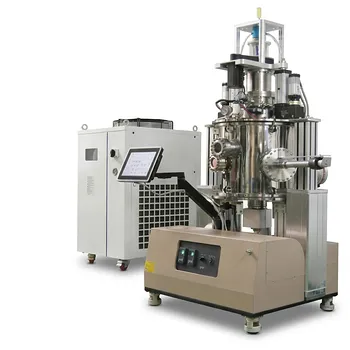
950C Rapid Thermal Processing Furnace for 12 Inch Wafer CSS Coating with Rotating Substrate Holder
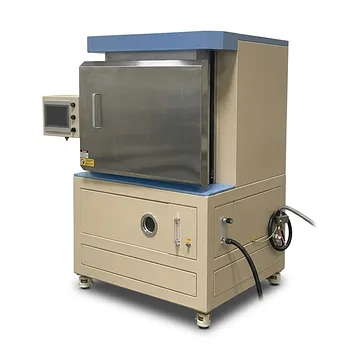
1650C High Temperature Atmosphere Controlled Box Furnace with 65L Chamber for Advanced Material Sintering and Industrial Heat Treatment
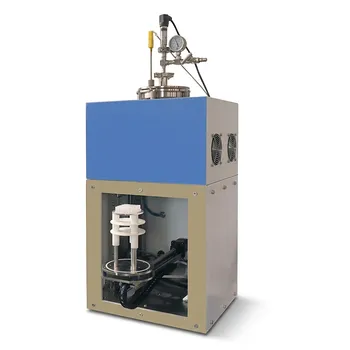
Rapid Thermal Processing RTP Atmosphere Controlled Bottom Loading Furnace 1100C High Throughput 50C per Second Heating Rate
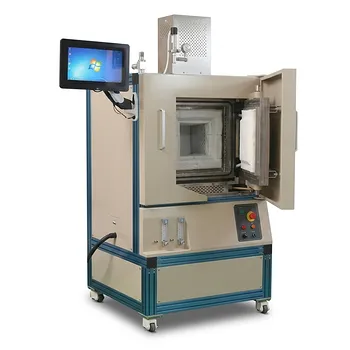
High Temperature Oxygen and Inert Atmosphere Controlled Furnace 8 Liter 1700C Sintering System for Advanced Materials RD
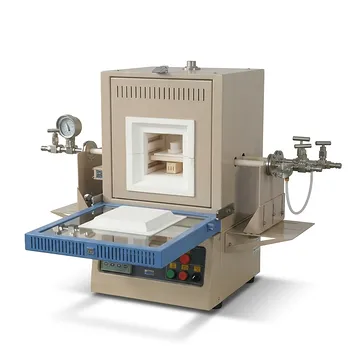
1700C Compact Hybrid Furnace with Dual Layer Box Sintering and Controlled Atmosphere Alumina Tubes
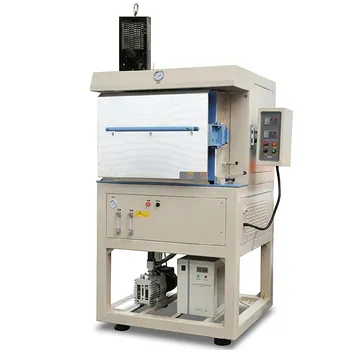
1200C Hydrogen Atmosphere Box Furnace with 5 Heated Sides and 64L Chamber

Vertical 1700C Vacuum and Atmosphere Tube Furnace with 80mm Alumina Tube
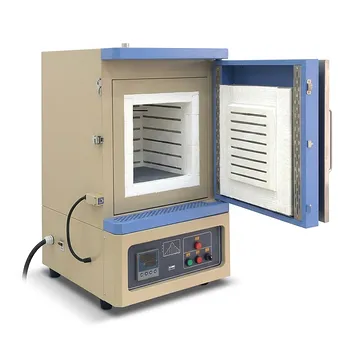
Five Side Heating Muffle Furnace High Purity Alumina Fiber 27L Chamber 1200C High Temperature Thermal Processing System for Sintering Annealing and Materials Research

1200C High Throughput Multi Channel Tube Furnace with 50mm Quartz Tubes for Annealing and Material Phase Diagram Research