Why is a high-temperature tube furnace required for assessing the reactivity of biocoke? Essential for CRI Validation
Updated 3 months ago
Evaluating biocoke reactivity demands a high-temperature tube furnace to simulate the rigorous chemical reduction processes found in industrial metallurgical furnaces. By providing a stable thermal environment reaching 1100°C and allowing for the controlled introduction of carbon dioxide, this equipment enables the precise calculation of the Coke Reactivity Index (CRI). This measurement is the definitive metric used to determine if biocoke is a technically viable substitute for petrochemical coke in sectors such as copper smelting.
Core Takeaway: A high-temperature tube furnace is essential because it bridges the gap between laboratory testing and industrial application, providing the precision and atmospheric control required to validate biocoke performance under extreme metallurgical conditions.
Simulating Industrial Metallurgical Environments
Replicating High-Heat Reduction
Industrial furnaces, particularly those used in copper smelting, operate at extreme temperatures where chemical reduction occurs. The tube furnace can reach and maintain 1100°C, creating a localized environment that mirrors these industrial conditions. Without this level of heat, the chemical reactions specific to metallurgical processing cannot be accurately observed.
Precise Atmospheric Control
Assessing reactivity is not just about heat; it requires a specific chemical atmosphere. The tube furnace allows for the introduction of carbon dioxide ($CO_2$) or inert gases like nitrogen to simulate the gas-solid reactions occurring in a blast furnace. This precision ensures that the mass loss measured is a result of the intended chemical etching rather than uncontrolled oxidation.
Quantifying Performance through the Coke Reactivity Index (CRI)
Measuring Mass Loss at Scale
The Coke Reactivity Index (CRI) is calculated by measuring the mass loss of a biocoke sample after exposure to high temperatures and reactive gases. The tube furnace provides the stability needed to ensure that mass changes are recorded accurately over specific residence times. This index serves as a benchmark for comparing biocoke to traditional petrochemical alternatives.
Determining Technical Feasibility
For industries looking to decarbonize, biocoke must prove it can perform as well as coal-based coke. High-temperature verification allows researchers to determine if the carbon framework of the biocoke can withstand industrial loads. If the reactivity is too high or too low, the biocoke may not be suitable for specific metallurgical applications.
The Role of Precision in Material Integrity
Managing Heating Rates
The tube furnace allows for exact heating rates, such as 5°C/min, which are critical for the pyrolysis and activation phases of biocoke production. Controlling the speed at which the material heats prevents structural failure and ensures a uniform pore structure. This consistency is vital for repeatable experimental data.
Preventing Cross-Contamination
High-quality tube furnaces include a self-purification capability, often by heating the empty tube to 900°C. This process oxidizes and removes residual tars, soot, or carbon deposits from previous tests. Ensuring a clean internal environment is necessary to prevent contamination that could skew reactivity results.
Understanding the Trade-offs
Equipment Maintenance and Longevity
While tube furnaces provide unmatched precision, operating them consistently at 1100°C places significant stress on heating elements and ceramic tubes. Frequent high-temperature cycles require a strict maintenance schedule to prevent tube cracking or element burnout. Failure to maintain the equipment can lead to thermal gradients that compromise the accuracy of the CRI measurement.
Throughput vs. Precision
Tube furnaces are designed for high precision rather than high volume. While they offer the best control over the activation atmosphere and temperature, they can typically only process small batches of material at a time. Researchers must balance the need for precise reactivity data with the longer timeframes required for testing multiple biocoke formulations.
How to Apply This to Your Project
Assessing the reactivity of biocoke is a critical step in transitioning to greener industrial fuels. Your choice of furnace parameters should align with your specific research or production goals.
- If your primary focus is industrial metallurgical suitability: Prioritize a furnace capable of maintaining 1100°C with precise $CO_2$ flow meters to calculate the Coke Reactivity Index (CRI) accurately.
- If your primary focus is maximizing surface area and adsorption: Focus on a furnace that offers a strictly controlled nitrogen atmosphere and fine-tuned heating rates to optimize the chemical etching of the carbon framework.
- If your primary focus is material purity and consistency: Ensure your protocol includes a high-temperature "burn-out" cycle at 900°C between samples to eliminate tar and soot residuals.
Selecting the right thermal environment is the most decisive factor in proving that biocoke can meet the rigorous demands of heavy industry.
Summary Table:
| Feature | Function in Biocoke Testing | Industrial Benefit |
|---|---|---|
| High Temp (1100°C) | Replicates industrial reduction environments | Accurate Coke Reactivity Index (CRI) calculation |
| Atmosphere Control | Precise introduction of $CO_2$ and $N_2$ | Simulates gas-solid reactions in blast furnaces |
| Controlled Heating | Maintains specific rates (e.g., 5°C/min) | Ensures uniform pore structure and material integrity |
| Self-Purification | 900°C burn-out cycle | Eliminates tar/soot to prevent cross-contamination |
Optimize Your Biocoke Research with THERMUNITS
As a leading manufacturer of high-temperature laboratory equipment for material science and industrial R&D, THERMUNITS provides the precision thermal solutions required to validate next-generation fuels. Our comprehensive range—including Tube, Muffle, Vacuum, and Atmosphere furnaces, as well as CVD/PECVD and Hot Press systems—is designed to meet the rigorous demands of metallurgical testing.
Ensure your biocoke meets industrial standards with equipment that offers unmatched atmospheric control and thermal stability. Contact us today to find the perfect furnace for your application!
References
- Christopher Kick, Markus Ortner. Feasibility of using phytoremediation biomass for sustainable biofuel production via thermochemical conversion. DOI: 10.1002/bbb.2656
Mentioned Products
- High Temperature Tube Furnace 1500C with Sliding Flanges and 50mm OD for Rapid Thermal Processing Fast Heating and Cooling
- High Temperature 1700C Tube Furnace with High Vacuum Turbomolecular Pump System and Multi Channel Mass Flow Controller Gas Mixer
- 1750°C High Temperature Benchtop Vacuum Atmosphere Tube Furnace with Kanthal Super 1800 Heating Elements and 60mm Alumina Processing Tube
- High Temperature 1700C Benchtop Tube Furnace with 5 Inch Heating Zone High Purity Alumina Tube and Vacuum Sealing Flanges
- High Temperature Split Tube Furnace 1500C for Material Research Vacuum and Atmosphere Thermal Processing
People Also Ask
- How are high-temperature tube furnaces utilized to repair etching damage? Precision Lattice Restoration Solutions
- What core conditions does a high-temperature tube furnace provide for rGO aerogels? Mastering Precision Synthesis.
- What role does a high-temperature tube furnace play in CVD synthesis of silicon nanowires? Master VLS Growth Precision.
- How does precision tube furnace control influence CoFe nanoparticle formation? Master Your Bimetallic Synthesis.
- What role does a high-temperature tube furnace play in the sulfidation heat treatment of CoS@C/MXene nanocomposites? Guide

Tech Team · ThermUnits
Last updated on Jun 03, 2026
Related Products

High Temperature Tube Furnace 1500C with Sliding Flanges and 50mm OD for Rapid Thermal Processing Fast Heating and Cooling

High Temperature 1700C Tube Furnace with High Vacuum Turbomolecular Pump System and Multi Channel Mass Flow Controller Gas Mixer

1750°C High Temperature Benchtop Vacuum Atmosphere Tube Furnace with Kanthal Super 1800 Heating Elements and 60mm Alumina Processing Tube

High Temperature 1700C Benchtop Tube Furnace with 5 Inch Heating Zone High Purity Alumina Tube and Vacuum Sealing Flanges
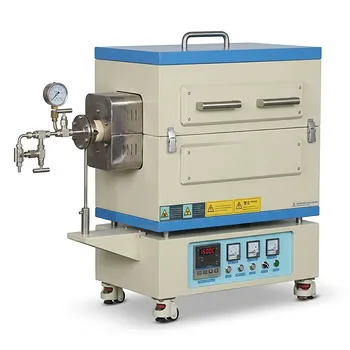
High Temperature Split Tube Furnace 1500C for Material Research Vacuum and Atmosphere Thermal Processing
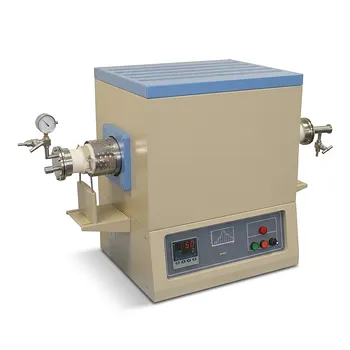
1700C High Temperature Alumina Tube Furnace with 18 Inch Heated Zone and Vacuum Sealing Flanges

1800C High Temperature Compact Vacuum Tube Furnace with 60mm OD Alumina Tube and Kanthal MoSi2 Heating Elements

Compact High Temperature 1600C Tube Furnace with 50mm Alumina Tube and Vacuum Flanges for Material Sintering
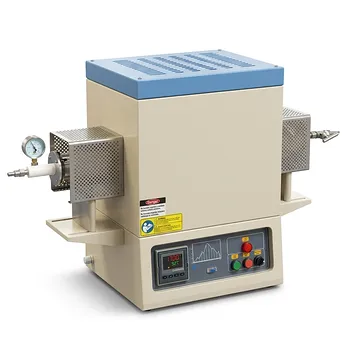
High Temperature Three Zone Tube Furnace 1700C with Alumina Tube and Water Cooled Flanges
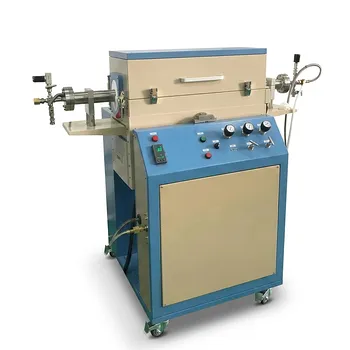
High Temperature Rocking Tube Furnace 1700°C Alumina Processing Tube with Precision Oscillation for Material Synthesis
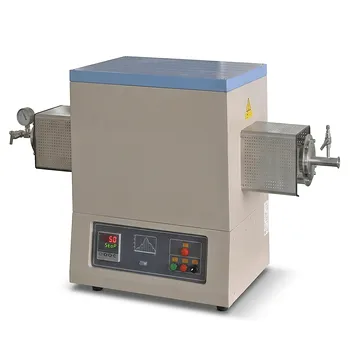
High Temperature 1700C Tube Furnace with 4 Inch OD Alumina Tube and Vacuum Sealing Flanges

High Temperature 1700C Vertical Tube Furnace for Powder Spherification and Material Sintering
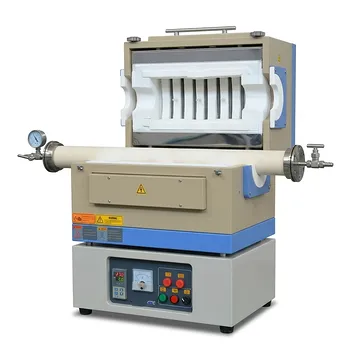
High Temperature 1600C Split Tube Furnace Vacuum Flanges Valves Optional 60mm 80mm Alumina Tube

High Temperature Automated 5 Inch Tube Furnace for Autonomous Material Research and Advanced Laboratory R&D

High Temperature 1700C Six Zone Split Tube Furnace with Alumina Tube and Water Cooled Flanges
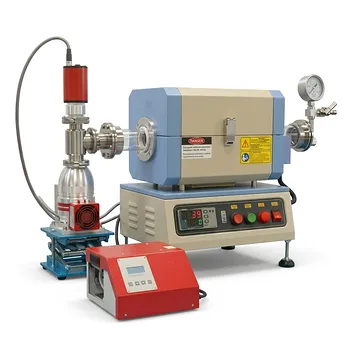
High Vacuum Compact Tube Furnace 1200C with Integrated Turbo Pump System and 8 Inch Heating Zone
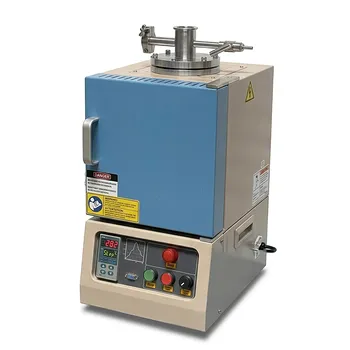
High Temperature Hybrid Muffle and Tube Furnace with Vacuum Capability and PID Control
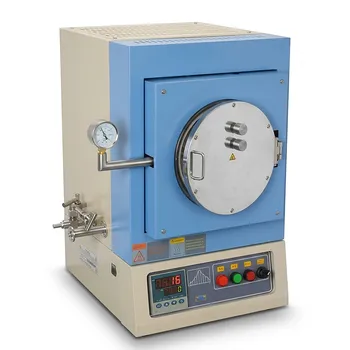
1100°C High Temperature Quartz Chamber Furnace 8 Inch OD with 7.6 Liter Capacity and Vacuum Atmosphere Capability

1100C Tube Furnace with Vacuum Flange and Programmable Temperature Controller for Material Science and Industrial Heat Treatment