What are the functions of high-temperature ceramic boats and tin foil in tube furnace pyrolysis? Enhance Lab Precision
Updated 5 months ago
High-temperature ceramic evaporating boats and tin foil wrapping serve as the critical interface between raw precursors and the thermal environment of a tube furnace. The ceramic boat acts as a chemically inert, refractory vessel that stabilizes materials during intense heating cycles, while the tin foil creates a localized "micro-atmosphere" that prevents premature oxidation and ensures precise carbonization.
Core Takeaway: This combination allows for dual-layer protection: the ceramic boat provides structural and chemical stability at extreme temperatures, while the tin foil regulates the immediate chemical environment to prevent the degradation of functional groups during the critical initial heating phases.
The Role of the High-Temperature Ceramic Boat
A Chemically Inert Refractory Vessel
The primary function of the ceramic boat is to act as a refractory container capable of withstanding extreme temperature fluctuations without deforming. Because it is chemically stable, it ensures that the raw materials do not react with the container itself, which would otherwise contaminate the resulting biochar or catalyst.
Thermal Stability During Heating Cycles
Ceramic materials are chosen for their ability to maintain integrity during high-temperature heating cycles. This stability is essential for processes like lignin carbonization or the synthesis of carbon quantum dots, where the material must remain stationary and undisturbed under consistent heat.
Support for Precise Surface Reactions
By providing a flat, stable surface, the boat allows for the controlled decomposition and reduction of metal complexes. This is vital for applications where atoms, such as copper, must be successfully anchored to a carbon substrate to create highly dispersed active sites.
The Strategic Function of Tin Foil Wrapping
Creating a Localized Micro-Atmosphere
Wrapping the boat in tin foil establishes a micro-local reducing or low-oxygen atmosphere. Even when the wider tube furnace is being vacuumed or purged with gas, this foil barrier maintains a specific environment immediately surrounding the sample.
Prevention of Excessive Oxidation
During the initial heating phase, samples are particularly vulnerable to trace oxygen. The tin foil prevents "intense aerobic combustion," ensuring the material undergoes pyrolysis rather than burning, which is necessary to stay within the precise weak carbonization range.
Retention of Functional Groups
By limiting oxygen access, the foil helps the material retain specific functional groups and optimizes its surface physicochemical characteristics. This is a critical step when transforming precursors from an organic state to an inorganic or amorphous ceramic state.
Synergistic Effects in the Tube Furnace
Bridging Macro and Micro Environments
The tube furnace provides the macro-environment (stable temperature fields and inert gas protection), while the boat-and-foil setup manages the micro-environment. This dual control is what allows for the formation of stable carbon skeletons and the conversion of salts into nano-scale particles.
Managing Transition Phases
As precursors transition from organic polymers to inorganic networks (like silicon carbide), the uniformity of the temperature field provided by the furnace works with the foil's protection to ensure microstructural consistency. This synergy prevents carbon phase segregation and ensures the final product is high-quality.
Understanding the Trade-offs and Limitations
Temperature Constraints of Foil
While the ceramic boat can handle extreme heat (often exceeding 1000°C), the metallic foil used for wrapping has a much lower melting point. If the process temperature exceeds the foil's thermal limit, the foil may melt or alloy with the sample, potentially contaminating the precursor.
Gas Exchange Impedance
While the foil protects the sample, it also creates a physical barrier that can slow down the escape of volatile gasses (devolatilization). If gas pressure builds up too rapidly within the wrapped boat, it may rupture the foil or alter the morphology of the carbonized material.
Potential for Incomplete Reduction
In some cases, an overly restrictive micro-atmosphere created by the foil might prevent the full reduction of metal oxides. This can lead to a final product with mixed oxidation states rather than the pure metallic particles or oxides intended for the catalyst.
How to Apply This to Your Process
Choosing the right containment strategy depends on your specific material goals and the thermal profile of your experiment.
- If your primary focus is preserving functional groups: Wrap the ceramic boat securely in foil to ensure an oxygen-limited environment that prevents aerobic combustion during the ramp-up phase.
- If your primary focus is high-purity metal anchoring: Prioritize the ceramic boat’s chemical stability and ensure the foil does not melt at your target temperature, as metallic contamination will ruin the active sites.
- If your primary focus is devolatilization of coal or biomass: Use the ceramic boat without tight foil wrapping to allow the furnace's inert gas purge to effectively carry away evolved tars and gases.
The precise coordination of container stability and atmospheric shielding is the foundation of high-performance material synthesis in a tube furnace.
Summary Table:
| Component | Primary Function | Key Benefit |
|---|---|---|
| Ceramic Boat | Refractory Vessel | Provides chemical inertness and structural stability at extreme temperatures. |
| Tin Foil Wrapping | Micro-atmosphere Control | Prevents oxidation and retains functional groups during initial heating. |
| Tube Furnace | Macro-environment | Delivers stable temperature fields and inert gas protection for the process. |
Elevate Your Material Research with THERMUNITS
Achieving precise carbonization and high-purity synthesis requires more than just high-quality consumables; it requires a reliable thermal environment. THERMUNITS is a leading manufacturer of high-temperature laboratory equipment for material science and industrial R&D. We empower your research with a comprehensive range of thermal processing solutions, including:
- Advanced Furnaces: Muffle, Vacuum, Atmosphere, Tube, Rotary, and Hot Press furnaces.
- Specialized Systems: CVD/PECVD systems, Dental Furnaces, and Vacuum Induction Melting (VIM) furnaces.
- Industrial Solutions: Electric rotary kilns and high-performance Thermal Elements.
Whether you are performing complex pyrolysis or scale-up R&D, our equipment ensures microstructural consistency and superior heat treatment results.
Contact our technical team today to find the perfect solution for your lab!
References
- Tao-Tao Shi, Jin‐Gang Yu. Garlic Peel-Based Biochar Prepared under Weak Carbonation Conditions for Efficient Removal of Methylene Blue from Wastewater. DOI: 10.3390/molecules29194772
Mentioned Products
- High Temperature Tube Furnace 1500C with Sliding Flanges and 50mm OD for Rapid Thermal Processing Fast Heating and Cooling
- Vertical 1700C Vacuum and Atmosphere Tube Furnace with 80mm Alumina Tube
- 1100C Tube Furnace with Vacuum Flange and Programmable Temperature Controller for Material Science and Industrial Heat Treatment
- Compact High Temperature 1600C Tube Furnace with 50mm Alumina Tube and Vacuum Flanges for Material Sintering
- 900°C Max Rotary Tube Furnace with 8 Inch 310S Alloy Tube and Optional Multi Zone Heating for Industrial Material Calcination
People Also Ask
- How are high-temperature tube furnaces utilized to repair etching damage? Precision Lattice Restoration Solutions
- What role does a high-temperature tube furnace play in CVD synthesis of silicon nanowires? Master VLS Growth Precision.
- What core conditions does a high-temperature tube furnace provide for rGO aerogels? Mastering Precision Synthesis.
- What role does a high-temperature tube furnace play in the sulfidation heat treatment of CoS@C/MXene nanocomposites? Guide
- How does precision tube furnace control influence CoFe nanoparticle formation? Master Your Bimetallic Synthesis.

Tech Team · ThermUnits
Last updated on Apr 14, 2026
Related Products

High Temperature Tube Furnace 1500C with Sliding Flanges and 50mm OD for Rapid Thermal Processing Fast Heating and Cooling

Vertical 1700C Vacuum and Atmosphere Tube Furnace with 80mm Alumina Tube

1100C Tube Furnace with Vacuum Flange and Programmable Temperature Controller for Material Science and Industrial Heat Treatment

Compact High Temperature 1600C Tube Furnace with 50mm Alumina Tube and Vacuum Flanges for Material Sintering
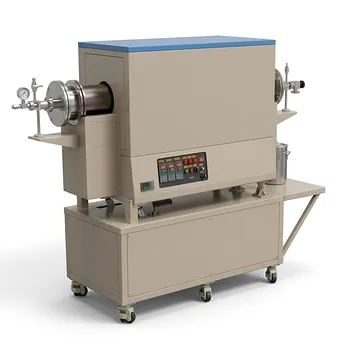
900°C Max Rotary Tube Furnace with 8 Inch 310S Alloy Tube and Optional Multi Zone Heating for Industrial Material Calcination

1700C Hydrogen Gas Tube Furnace with 60mm Alumina Process Tube and Integrated Hydrogen Safety Detector

High Temperature 1700C Tube Furnace with High Vacuum Turbomolecular Pump System and Multi Channel Mass Flow Controller Gas Mixer

5 Inch Three Zone Rotary Tube Furnace with Integrated Gas Delivery System and 1200C Capability for Advanced Material CVD Processing

Three Zone Tube Furnace with 11 Inch or 15 Inch Quartz Tube and Hinged Flanges for Vacuum Atmosphere Heat Treatment

1200C High Throughput Multi Channel Tube Furnace with 50mm Quartz Tubes for Annealing and Material Phase Diagram Research
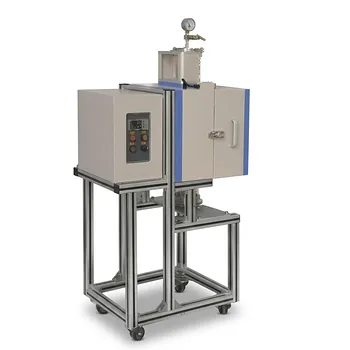
1200°C 5 Inch Vertical Quartz Tube Furnace with Stainless Steel Vacuum Flanges
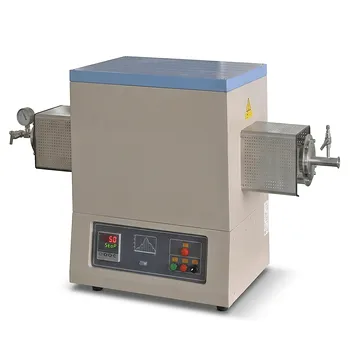
High Temperature 1700C Tube Furnace with 4 Inch OD Alumina Tube and Vacuum Sealing Flanges

High Temperature 1700C Benchtop Tube Furnace with 5 Inch Heating Zone High Purity Alumina Tube and Vacuum Sealing Flanges

High Temperature 1700C Six Zone Split Tube Furnace with Alumina Tube and Water Cooled Flanges

Compact Vertical Split Quartz Tube Furnace with Stainless Steel Vacuum Flanges for Rapid Thermal Quenching and Controlled Atmosphere Material Processing

1800C High Temperature Compact Vacuum Tube Furnace with 60mm OD Alumina Tube and Kanthal MoSi2 Heating Elements
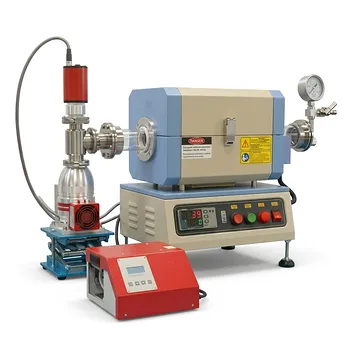
High Vacuum Compact Tube Furnace 1200C with Integrated Turbo Pump System and 8 Inch Heating Zone
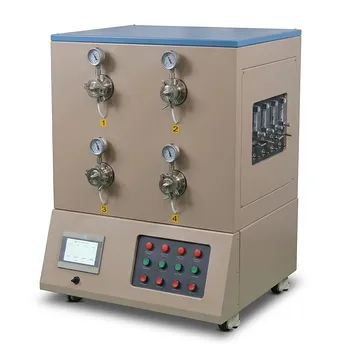
High Throughput 1200C Four Channel Tube Furnace with 3 Inch Quartz Tubes for Multi Zone Annealing and Material Research

High Temperature Automated 5 Inch Tube Furnace for Autonomous Material Research and Advanced Laboratory R&D
