What are the primary objectives of using a tube furnace with a flowing oxygen environment for Yb123 sintering?: Guide
Updated 3 months ago
Sintering Yb123 in a tube furnace with flowing oxygen is essential for achieving superconductivity through precise chemical and structural control. This environment provides the necessary high-temperature space for synthesis while the oxygen acts as a critical reactant. Most importantly, the flowing gas removes carbon dioxide and enables the material to transition from a non-superconducting tetragonal phase to a high-critical-temperature orthorhombic phase.
The use of a flowing oxygen environment in Yb123 sintering is a dual-purpose process: it acts as a chemical cleaning agent to remove impurities and a structural catalyst that facilitates the phase transition required for high-temperature superconductivity.
The Chemical Role of Flowing Oxygen
Oxygen as a Primary Reactant
A tube furnace provides the controlled high-temperature environment required to initiate the synthesis of Yb123. In this setting, the oxygen gas is not just an atmosphere but a direct chemical reactant necessary for the formation of the ceramic compound.
Removal of Carbon Dioxide
During the synthesis of intermediate products, carbon dioxide is often released as a byproduct. The continuous flow of oxygen is vital for sweeping these gases away from the material, preventing contamination and ensuring the chemical purity of the final superconductor.
Structural Transformation and Superconductivity
Phase Conversion during Cooling
The cooling stage is the most critical phase for achieving superconducting properties. As the Yb123 cools, it must absorb oxygen atoms from the environment to reach the correct stoichiometry.
Tetragonal to Orthorhombic Transition
This oxygen absorption facilitates a structural shift from a non-superconducting tetragonal phase to a high-critical-temperature (high-Tc) orthorhombic phase. Without a sufficient oxygen supply during cooling, the material will lack the crystal structure required to conduct electricity without resistance.
Carrier Concentration Control
The density of charge carriers within the crystal lattice is directly dictated by the oxygen content. By using a controlled flowing environment, researchers can precisely tune the carrier concentration, optimizing the material's performance and its transition temperature.
Understanding the Trade-offs
The Impact of Flow Rate
Maintaining the correct flow rate is a delicate balance. If the flow is too low, carbon dioxide may linger, poisoning the reaction; however, excessively high flow rates can cause thermal instability or uneven temperature distribution within the furnace tube.
Cooling Rate Dependencies
Because the transition to the orthorhombic phase relies on the diffusion of oxygen into the lattice, the cooling rate must be carefully synchronized with the oxygen flow. Cooling too rapidly can "trap" the material in the tetragonal phase, even if oxygen is present in the furnace.
Applying These Principles to Your Project
When configuring your tube furnace for Yb123 synthesis, your specific goals will dictate how you manage the oxygen environment.
- If your primary focus is Chemical Purity: Prioritize a consistent oxygen flow during the initial heating stages to ensure the total removal of carbon dioxide and other volatile impurities.
- If your primary focus is Maximizing Critical Temperature ($T_c$): Concentrate on the cooling protocol, ensuring a slow, oxygen-rich environment that allows the crystal lattice to fully transition to the orthorhombic phase.
By mastering the interaction between temperature and oxygen stoichiometry, you can consistently produce high-quality superconducting materials.
Summary Table:
| Objective | Role/Function | Impact on Yb123 Superconductivity |
|---|---|---|
| Chemical Reactant | Direct participation in synthesis | Necessary for forming the ceramic Yb123 compound |
| Impurity Removal | Sweeps away byproduct CO2 | Ensures chemical purity and prevents crystal poisoning |
| Phase Transition | Facilitates oxygen absorption | Transitions material to the superconducting orthorhombic phase |
| Carrier Control | Tunes oxygen stoichiometry | Optimizes charge carrier density and critical temperature ($T_c$) |
Elevate Your Superconductor Research with THERMUNITS
As a leading manufacturer of high-temperature laboratory equipment for material science, THERMUNITS provides the precision and reliability needed for advanced sintering applications. Our specialized Tube Furnaces, Atmosphere Furnaces, and CVD/PECVD systems offer the exact thermal and gas flow control required to achieve the perfect orthorhombic phase in Yb123 synthesis.
From industrial R&D to academic material science, we offer a comprehensive range of thermal solutions including:
- High-Precision Tube & Muffle Furnaces
- Vacuum & Atmosphere Controlled Systems
- Rotary & Hot Press Furnaces
- Vacuum Induction Melting (VIM) & Thermal Elements
Don't let uneven oxygen flow or thermal instability compromise your superconducting materials. Contact our experts today to find the ideal heat treatment solution for your lab's unique requirements!
References
- Yanan Wang, Qiuliang Wang. Exploring the preparation of YbBa2Cu3O7−y superconductor in flowing oxygen atmosphere. DOI: 10.1038/s41598-024-59829-3
Mentioned Products
- High Temperature Tube Furnace 1500C with Sliding Flanges and 50mm OD for Rapid Thermal Processing Fast Heating and Cooling
- Vertical 1700C Vacuum and Atmosphere Tube Furnace with 80mm Alumina Tube
- 1100C Tube Furnace with Vacuum Flange and Programmable Temperature Controller for Material Science and Industrial Heat Treatment
- Compact High Temperature 1600C Tube Furnace with 50mm Alumina Tube and Vacuum Flanges for Material Sintering
- 900°C Max Rotary Tube Furnace with 8 Inch 310S Alloy Tube and Optional Multi Zone Heating for Industrial Material Calcination
People Also Ask
- How are high-temperature tube furnaces utilized to repair etching damage? Precision Lattice Restoration Solutions
- What core conditions does a high-temperature tube furnace provide for rGO aerogels? Mastering Precision Synthesis.
- What role does a high-temperature tube furnace play in CVD synthesis of silicon nanowires? Master VLS Growth Precision.
- How does precision tube furnace control influence CoFe nanoparticle formation? Master Your Bimetallic Synthesis.
- What role does a high-temperature tube furnace play in the sulfidation heat treatment of CoS@C/MXene nanocomposites? Guide

Tech Team · ThermUnits
Last updated on Jun 02, 2026
Related Products

High Temperature Tube Furnace 1500C with Sliding Flanges and 50mm OD for Rapid Thermal Processing Fast Heating and Cooling

Vertical 1700C Vacuum and Atmosphere Tube Furnace with 80mm Alumina Tube

1100C Tube Furnace with Vacuum Flange and Programmable Temperature Controller for Material Science and Industrial Heat Treatment

Compact High Temperature 1600C Tube Furnace with 50mm Alumina Tube and Vacuum Flanges for Material Sintering
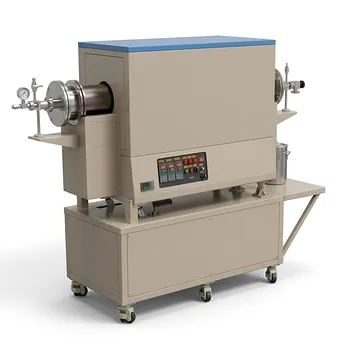
900°C Max Rotary Tube Furnace with 8 Inch 310S Alloy Tube and Optional Multi Zone Heating for Industrial Material Calcination
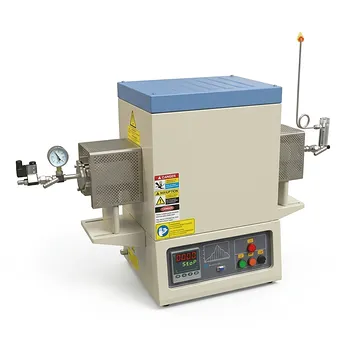
1700C Hydrogen Gas Tube Furnace with 60mm Alumina Process Tube and Integrated Hydrogen Safety Detector

High Temperature 1700C Tube Furnace with High Vacuum Turbomolecular Pump System and Multi Channel Mass Flow Controller Gas Mixer
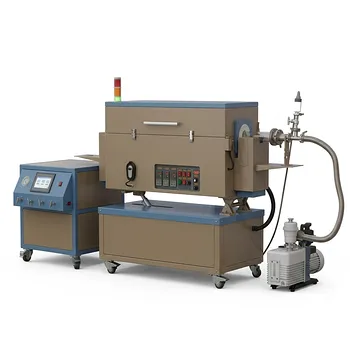
5 Inch Three Zone Rotary Tube Furnace with Integrated Gas Delivery System and 1200C Capability for Advanced Material CVD Processing
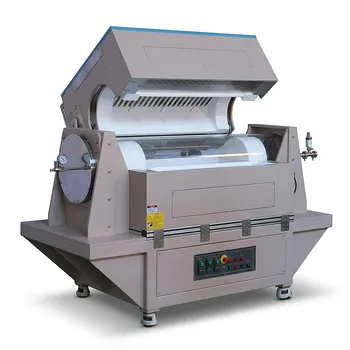
Three Zone Tube Furnace with 11 Inch or 15 Inch Quartz Tube and Hinged Flanges for Vacuum Atmosphere Heat Treatment
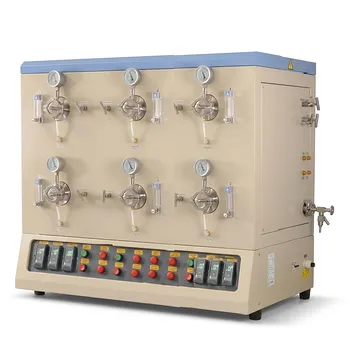
1200C High Throughput Multi Channel Tube Furnace with 50mm Quartz Tubes for Annealing and Material Phase Diagram Research
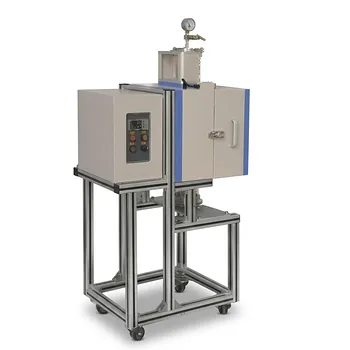
1200°C 5 Inch Vertical Quartz Tube Furnace with Stainless Steel Vacuum Flanges

High Temperature 1700C Tube Furnace with 4 Inch OD Alumina Tube and Vacuum Sealing Flanges

High Temperature 1700C Benchtop Tube Furnace with 5 Inch Heating Zone High Purity Alumina Tube and Vacuum Sealing Flanges

High Temperature 1700C Six Zone Split Tube Furnace with Alumina Tube and Water Cooled Flanges
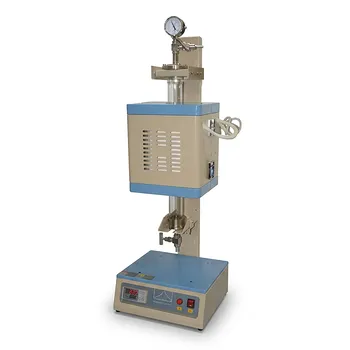
Compact Vertical Split Quartz Tube Furnace with Stainless Steel Vacuum Flanges for Rapid Thermal Quenching and Controlled Atmosphere Material Processing

1800C High Temperature Compact Vacuum Tube Furnace with 60mm OD Alumina Tube and Kanthal MoSi2 Heating Elements
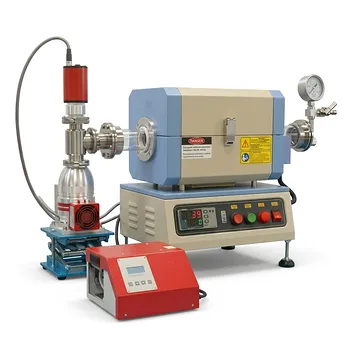
High Vacuum Compact Tube Furnace 1200C with Integrated Turbo Pump System and 8 Inch Heating Zone
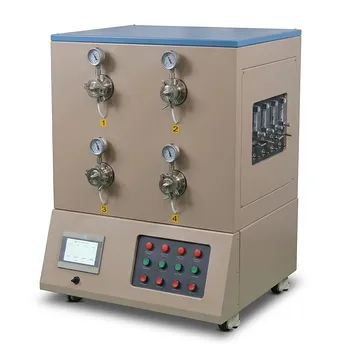
High Throughput 1200C Four Channel Tube Furnace with 3 Inch Quartz Tubes for Multi Zone Annealing and Material Research

High Temperature Automated 5 Inch Tube Furnace for Autonomous Material Research and Advanced Laboratory R&D
