What are the primary reasons for choosing high-purity quartz boats for WS2 sulfurization? Enhance Purity & Stability
Updated 3 months ago
High-purity quartz boats are the industry standard for $WS_2$ synthesis because they provide an ultra-clean, thermally stable environment. They can withstand the extreme temperatures required for sulfurization—often exceeding 1050°C—without deforming or leaching metallic contaminants into the reaction. By remaining chemically inert in the presence of corrosive sulfur vapors, these boats ensure the resulting tungsten disulfide films maintain the precise electronic properties required for advanced semiconductor applications.
Core Takeaway: Choosing high-purity quartz is a strategic decision to eliminate "impurity noise" in 2D material growth. Its combination of thermal resilience and chemical passivity ensures that the final $WS_2$ crystal lattice remains free of metallic defects that would otherwise degrade semiconductor performance.
Ensuring Structural Stability Under Extreme Thermal Stress
Resistance to High-Temperature Deformation
The sulfurization of tungsten often requires process temperatures reaching or exceeding 1050°C. At these levels, standard materials may soften or warp, potentially shifting the substrate or disrupting the flow of precursor gases. High-purity quartz maintains its mechanical integrity, providing a stable, level platform for the precise growth of large-scale thin films.
Management of Thermal Shock
Synthesis processes frequently involve rapid heating and cooling cycles to control crystal grain size. High-purity quartz possesses a low coefficient of thermal expansion, which grants it exceptional thermal shock resistance. This prevents the boat from cracking or shedding particulates during the cooling phase, safeguarding both the equipment and the synthesized product.
Preserving Chemical and Electronic Purity
Inertness in Corrosive Sulfurizing Atmospheres
Sulfurization involves highly reactive precursors, including sulfur powder and potentially corrosive gases like carbon disulfide ($CS_2$). Unlike lower-grade materials, high-purity quartz does not react with these sulfurizing agents or the metal oxide precursors (such as $WO_3$). This ensures that the chemical reaction is confined strictly to the intended precursors, resulting in a predictable and repeatable synthesis.
Mitigation of Metallic Impurity Diffusion
Even trace amounts of iron, nickel, or other metals can act as unintended dopants in the $WS_2$ lattice, significantly altering its electrical and optical characteristics. High-purity quartz acts as a barrier, preventing impurity ion diffusion from the boat material into the tungsten film. This is critical for producing high-mobility, low-noise semiconductor devices.
Understanding the Trade-offs
Temperature Limits and Devitrification
While quartz is excellent up to approximately 1100°C, it approaches its physical limits at higher ranges where devitrification (crystallization of the glass) can occur. For reactions consistently exceeding 1200°C, materials like high-purity alumina may be necessary, though they may offer different surface chemistry challenges.
Fragility and Maintenance
Quartz is inherently brittle and sensitive to surface contaminants, such as skin oils, which can accelerate failure at high temperatures. These boats require stringent handling protocols and regular acid cleaning to maintain their high-purity advantages over multiple synthesis runs.
How to Apply This to Your Synthesis Process
High-purity quartz is the optimal choice for most $WS_2$ applications, but your specific process parameters should guide your final selection.
- If your primary focus is electronic device performance: Prioritize the highest purity quartz available (99.99%+) to eliminate metallic defects in the $WS_2$ lattice.
- If your primary focus is high-throughput production: Focus on quartz boats with reinforced geometries to withstand repeated thermal cycling without warping.
- If your primary focus is ultra-high temperature synthesis (>1150°C): Consider evaluating high-purity alumina boats, while carefully monitoring for potential chemical interactions with your specific precursors.
The integration of high-purity quartz boats is a fundamental requirement for achieving the structural and electronic precision necessary for high-quality tungsten disulfide production.
Summary Table:
| Key Feature | Benefit for WS2 Synthesis |
|---|---|
| Thermal Stability | Maintains structural integrity up to 1050°C+ without warping |
| Chemical Inertness | Resists corrosion from sulfur vapors and reactive precursors |
| High Purity | Prevents metallic ion diffusion and unintended semiconductor doping |
| Thermal Shock Resistance | Withstands rapid heating/cooling cycles without cracking |
Elevate Your Material Research with THERMUNITS
Precision in WS2 synthesis requires more than just high-quality consumables; it requires a perfectly controlled thermal environment. THERMUNITS is a leading manufacturer of high-temperature laboratory equipment, offering a comprehensive range of solutions including CVD/PECVD systems, Tube furnaces, and Muffle furnaces designed specifically for material science and industrial R&D.
Our equipment ensures the thermal stability and chemical purity necessary for advanced semiconductor applications. Whether you need an electric rotary kiln, vacuum induction melting furnace (VIM), or specialized dental furnaces, we provide the tools to optimize your heat treatment processes.
Ready to achieve superior synthesis results? Contact our experts today to discuss your laboratory's needs!
References
- Yuxin Zhang, Yue Wang. WS2 with Controllable Layer Number Grown Directly on W Film. DOI: 10.3390/nano14161356
Mentioned Products
- 1100°C High Temperature Quartz Chamber Furnace 8 Inch OD with 7.6 Liter Capacity and Vacuum Atmosphere Capability
- 1200°C 5 Inch Vertical Quartz Tube Furnace with Stainless Steel Vacuum Flanges
- High Temperature 1200C Split Tube Furnace with Hinged Vacuum Flanges and 4 Inch Quartz Tube for Laboratory Research
- High Temperature Vertical Atmosphere Controlled Furnace with Automatic Bottom Loading and 1700°C Capacity for Advanced Material Research
- High Temperature Cold Wall High Vacuum Chamber Furnace 1400C for Advanced Material Processing
People Also Ask
- Why is a quartz tube furnace necessary for phosphorus-doped MoS2/GO preparation? Ensure Purity & Precise Synthesis
- Benefits of high-vacuum quartz tube furnaces with N2 for Co3O4 nanosheets: Purity and Structural Integrity.
- What conditions does a quartz tube furnace provide for AlxCoCrFeNi steam corrosion tests? Achieve Precise R&D Control.
- Why is high-temperature annealing in a quartz tube furnace done after HfO2 deposition? Unlock peak film performance.
- Why is a high-purity quartz tube used for SP-Fe3O4-C? Ensure Chemical Purity & Catalytic Stability

Tech Team · ThermUnits
Last updated on Jun 02, 2026
Related Products
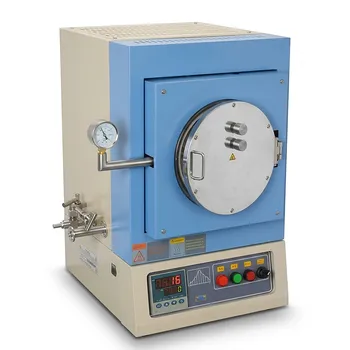
1100°C High Temperature Quartz Chamber Furnace 8 Inch OD with 7.6 Liter Capacity and Vacuum Atmosphere Capability
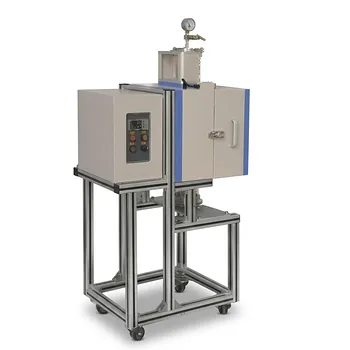
1200°C 5 Inch Vertical Quartz Tube Furnace with Stainless Steel Vacuum Flanges
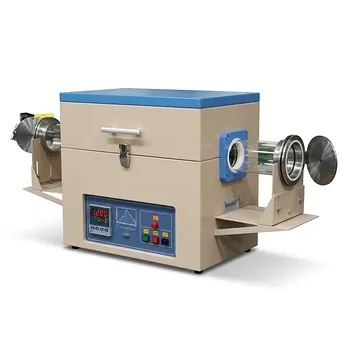
High Temperature 1200C Split Tube Furnace with Hinged Vacuum Flanges and 4 Inch Quartz Tube for Laboratory Research
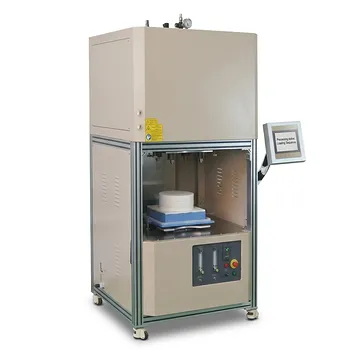
High Temperature Vertical Atmosphere Controlled Furnace with Automatic Bottom Loading and 1700°C Capacity for Advanced Material Research
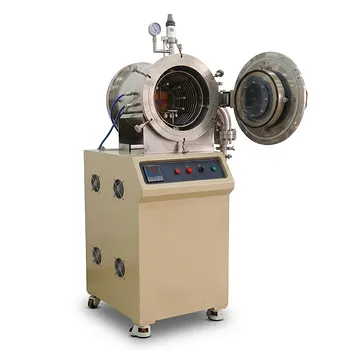
High Temperature Cold Wall High Vacuum Chamber Furnace 1400C for Advanced Material Processing
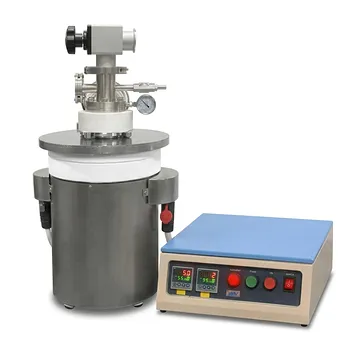
1100C High Temperature Vacuum Crucible Furnace with Quartz Chamber for Thermal Processing and Sintering
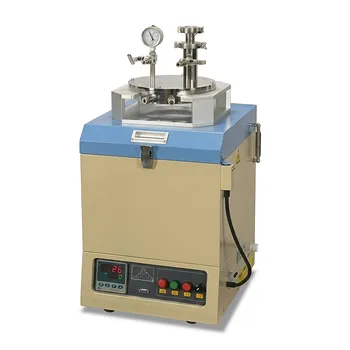
Vertical Vacuum Furnace 1100C High Temperature 8 Inch Quartz Chamber Water Cold Flange System
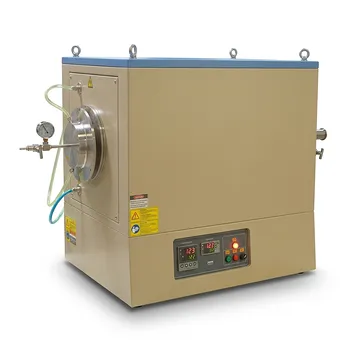
1100°C Large Diameter Quartz Tube Furnace with 24 Inch Heating Zone and Water Cooled Flanges
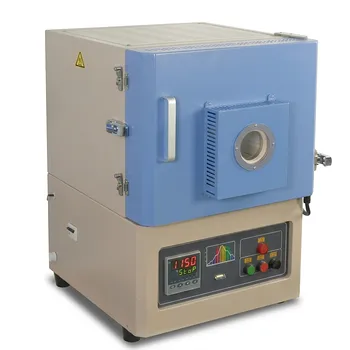
High Temperature Benchtop Muffle Furnace with Quartz Observation Window for Thermal Imaging and Material Analysis
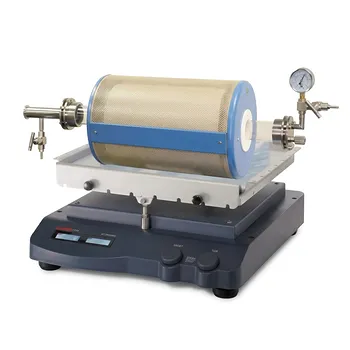
High Temperature Rocking Tube Furnace with Quartz Tube and Vacuum Flange for Materials Synthesis
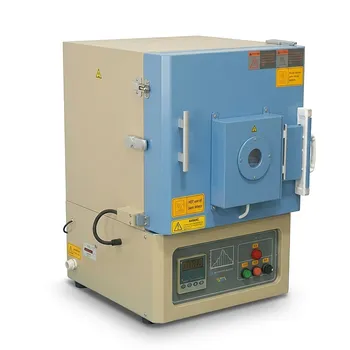
High Temperature Benchtop Muffle Furnace 1500C with 3.6L Chamber and Quartz Observation Window

High Temperature Automated 5 Inch Tube Furnace for Autonomous Material Research and Advanced Laboratory R&D