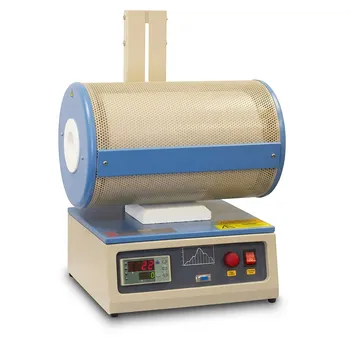
What are the technical advantages of using a preheated Tube Furnace for annealing 100 μm TiNi wires? Optimize Superelasticity
Updated 3 months ago
For the annealing of 100 μm ultra-fine TiNi wires, a preheated Tube Furnace provides the critical advantage of immediate thermal equilibrium and precise phase control. This setup ensures that the wire reaches a constant target temperature (typically 300°C to 600°C) the moment it enters the chamber, which is essential for short-duration processes lasting only five minutes. This instantaneous heating is the primary driver for achieving consistent superelasticity and stabilizing transformation temperatures in fine-gauge shape memory alloys.
Core Takeaway: Preheating a Tube Furnace eliminates the "ramp-up" period, allowing for precise control over secondary phase precipitation and grain growth, which are the fundamental determinants of a TiNi wire's mechanical performance.
Precision Thermal Management for Ultra-Fine Materials
Instantaneous Temperature Achievement
When working with 100 μm wires, the high surface-area-to-volume ratio makes the material extremely sensitive to thermal fluctuations. Preheating the furnace allows the wire to reach the target temperature immediately upon entry, ensuring that the entire five-minute annealing cycle occurs at a constant, intended heat level.
High Thermal Efficiency and Uniformity
A Tube Furnace provides a stable thermal environment where heat distribution is exceptionally uniform throughout the chamber. This uniformity prevents localized overheating or under-annealing, which could otherwise cause variations in mechanical properties along the length of the ultra-fine wire.
Precise Control of Heating and Cooling Rates
The design of the Tube Furnace allows for rapid thermal transitions, which are necessary for customizing the constitutive behavior of shape memory alloys. By controlling these rates, engineers can precisely manage the recovery of dislocation density and adjust the final phase transformation temperatures.
Metallurgical Optimization and Phase Stability
Management of Secondary Phase Precipitation
Technical performance in TiNi alloys is largely governed by the presence of secondary phases like Ti3Ni4. The stable environment of a preheated furnace facilitates the intentional precipitation of these phases, which are critical for enhancing the superelasticity of the wire.
Stabilization of R-Phase Transformations
Annealing within the 300°C to 600°C range is used specifically to stabilize R-phase transformation temperatures. This stabilization ensures that the wire performs predictably during its intended application, providing the necessary "memory" effect or superelastic response.
Grain Growth and Stress Management
By maintaining a strict temperature window, the furnace prevents excessive grain growth that could weaken the ultra-fine structure. This process also aids in the removal of residual stresses accumulated during previous cold-working stages, restoring the material's toughness without compromising its shape.
Understanding the Trade-offs
Atmospheric Protection Requirements
While the heat treatment is effective, TiNi wires are highly reactive to oxygen at elevated temperatures. To prevent oxidation that can degrade the wire's surface and performance, the furnace must maintain a stable argon flow, which adds complexity to the equipment setup.
Limitations of Short-Duration Cycles
Short annealing cycles (approx. 5 minutes) require perfect timing and placement. Any delay in the insertion or extraction of the wire can lead to significant variations in the microstructural results, as the preheated environment is unforgiving of procedural errors.
Temperature Constraints
While Tube Furnaces can reach up to 1000°C for stress relief in plates, ultra-fine wires must be kept in lower ranges (300-600°C) to avoid melting or extreme brittleness. Operating at the upper limits of the furnace's capability for these fine materials increases the risk of irreparable structural damage.
How to Apply This to Your Project
When utilizing a Tube Furnace for TiNi wire annealing, your specific technical goals should dictate your operational parameters:
- If your primary focus is maximizing superelasticity: Target a temperature between 400°C and 500°C with an immediate soak time to encourage Ti3Ni4 precipitation.
- If your primary focus is stress relief after cold drawing: Utilize a slightly higher temperature range (towards 600°C) while ensuring a strictly controlled argon atmosphere to prevent surface oxidation.
- If your primary focus is stabilizing transformation temperatures: Ensure the furnace is fully stabilized at the target temperature for at least 30 minutes before introducing the wire to guarantee absolute thermal uniformity.
By leveraging the immediate thermal equilibrium of a preheated furnace, you can achieve the precise microstructural control necessary for high-performance ultra-fine TiNi wires.
Summary Table:
| Technical Feature | Advantage for TiNi Wire Annealing | Material Impact |
|---|---|---|
| Immediate Equilibrium | Eliminates ramp-up time for short 5-min cycles | Ensures consistent superelasticity |
| Precise Temp Control | Stable range between 300°C and 600°C | Stabilizes R-phase transformation |
| Thermal Uniformity | Prevents localized overheating/under-annealing | Uniform mechanical properties along length |
| Atmosphere Stability | Controlled argon flow environment | Prevents surface oxidation and degradation |
| Phase Management | Facilitates Ti3Ni4 secondary precipitation | Enhances shape memory performance |
Elevate Your Material Research with THERMUNITS
Achieving precise phase transformation in ultra-fine wires requires world-class thermal stability. THERMUNITS is a leading manufacturer of high-temperature laboratory equipment specifically designed for material science and industrial R&D. We provide the precision tools necessary to stabilize microstructures and optimize mechanical performance.
Our comprehensive range of thermal processing solutions includes:
- Precision Furnaces: Tube, Muffle, Vacuum, Atmosphere, and Rotary Furnaces.
- Advanced Systems: CVD/PECVD systems, Hot Press furnaces, and Vacuum Induction Melting (VIM).
- Specialized Equipment: Dental Furnaces, electric rotary kilns, and premium Thermal Elements.
Ready to enhance your lab's efficiency and metallurgical accuracy? Contact our expert engineering team today to find the perfect furnace solution for your specific application!
References
- Екатерина Марченко, Kirill M. Dubovikov. Superelasticity and mechanical properties of tini thin wire after heat treatment. DOI: 10.15593/rjbiomech/2024.4.04
Mentioned Products
- High Temperature 1700C 4 Channel Tube Furnace 1 Inch Alumina Tube for Hi-Throughput Annealing
- High Temperature 1800C Atmosphere Tube Furnace for CVD Research and Vacuum Sintering Precision Heat Treatment
- 1200C High Throughput Multi Channel Tube Furnace with 50mm Quartz Tubes for Annealing and Material Phase Diagram Research
- 1200C High Temperature 5 Inch Sliding Tube Furnace for Rapid Thermal Processing RTP and Wafer Annealing
- 900 ºC Max Sliding RTP Tube Furnace with Rapid IR Heating and 4 Inch OD Quartz Tube
People Also Ask
- Why use a tube furnace for oxygen annealing LaCrO3/LaMnO3? Optimize Phase Transition & Magnetic Performance.
- What key role does a laboratory high-temperature tube furnace play in the production of carbon nanofibers? Guide
- How is a laboratory high-temperature tube furnace utilized to research the products of aluminothermic reduction? Advanced Metallurgical Solutions
- What critical conditions does an industrial high-temperature tube furnace provide for annealing (GaAl)2O3 thin films?
- What role does a high-temperature tube furnace play in the annealing modification of Miscanthus Biochar fillers? Boost graphitization.

Tech Team · ThermUnits
Last updated on Jun 02, 2026
Related Products
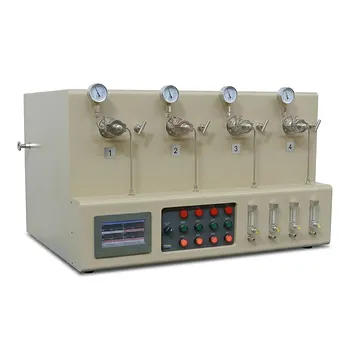
High Temperature 1700C 4 Channel Tube Furnace 1 Inch Alumina Tube for Hi-Throughput Annealing
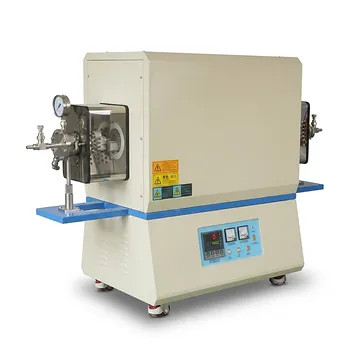
High Temperature 1800C Atmosphere Tube Furnace for CVD Research and Vacuum Sintering Precision Heat Treatment

1200C High Throughput Multi Channel Tube Furnace with 50mm Quartz Tubes for Annealing and Material Phase Diagram Research
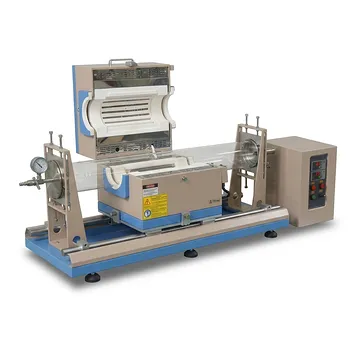
1200C High Temperature 5 Inch Sliding Tube Furnace for Rapid Thermal Processing RTP and Wafer Annealing
900 ºC Max Sliding RTP Tube Furnace with Rapid IR Heating and 4 Inch OD Quartz Tube
Gas Pre-Heating Tube Furnace for High Temperature Pyrolysis Reactors and Material Science Research

High Temperature 1700C Vertical Tube Furnace for Powder Spherification and Material Sintering

High Temperature Tube Furnace 1500C with Sliding Flanges and 50mm OD for Rapid Thermal Processing Fast Heating and Cooling

Compact High Temperature 1600C Tube Furnace with 50mm Alumina Tube and Vacuum Flanges for Material Sintering
High Temperature 1700C Tube Furnace with 4 Inch OD Alumina Tube and Vacuum Sealing Flanges
1700C High Temperature Alumina Tube Furnace with 18 Inch Heated Zone and Vacuum Sealing Flanges

High Temperature 1700C Benchtop Tube Furnace with 5 Inch Heating Zone High Purity Alumina Tube and Vacuum Sealing Flanges

1800C High Temperature Compact Vacuum Tube Furnace with 60mm OD Alumina Tube and Kanthal MoSi2 Heating Elements
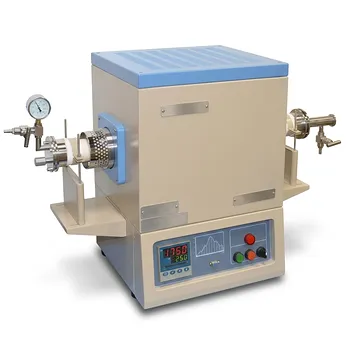
High Temperature Compact Vacuum Tube Furnace 1750C Max 60mm OD Alumina Tube
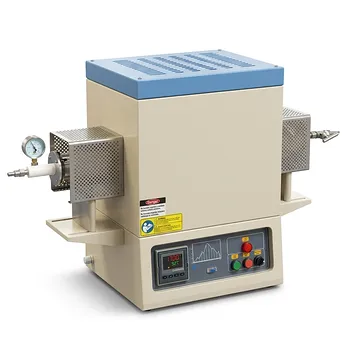
High Temperature Three Zone Tube Furnace 1700C with Alumina Tube and Water Cooled Flanges

Three Zone Tube Furnace with 11 Inch or 15 Inch Quartz Tube and Hinged Flanges for Vacuum Atmosphere Heat Treatment

Vertical 1700C Vacuum and Atmosphere Tube Furnace with 80mm Alumina Tube
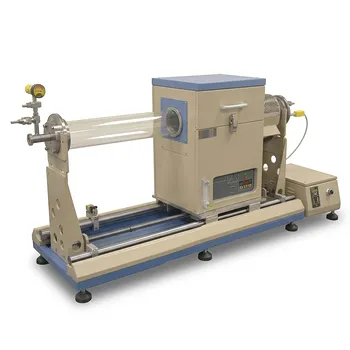
Rapid Thermal Processing Sliding Tube Furnace with 4 Inch OD Quartz Tube and 900C IR Heating
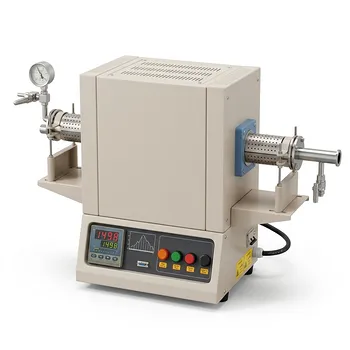
1500C High Temperature Compact Tube Furnace 2 Inch OD with Vacuum Flanges and Complete Accessories