What are the technical advantages of using a programmed temperature control tube furnace for catalyst reduction? Precision Synthesis.
Updated 3 months ago
The programmed temperature control tube furnace is a cornerstone of advanced catalyst synthesis. It offers the dual capability of high-precision thermal ramping and strict atmospheric management, essential for reducing metal precursors into active sites without compromising surface area. This technology allows researchers to dictate the exact valence distribution of metals—such as achieving a specific Cu0/Cu+ ratio—while preventing the thermal sintering that typically plagues bulk heating methods.
Programmed tube furnaces enable the creation of highly dispersed, stable catalysts by providing a synchronized environment where heating rates and gas compositions are tuned to prevent particle aggregation. This precision ensures that metal species remain atomically dispersed or nano-sized, maximizing the catalytic activity and structural longevity of the material.
Superior Control Over Metal State and Dispersion
Precision in Valence Distribution
The ability to maintain stable temperatures at specific setpoints, such as 300°C, is critical for achieving the desired oxidation states of active centers. In systems like Cu/LOC:Nd catalysts, this precision ensures a controlled distribution of Cu0 and Cu+ species. This specific balance is often the deciding factor in a catalyst's selectivity and overall efficiency.
Preventing Thermal Sintering and Aggregation
Rapid or uncontrolled heating can cause active metal particles to migrate and fuse, a process known as sintering. Programmed furnaces use controlled heating rates (e.g., 5°C/min) to ensure the reduction occurs gradually. This prevents the excessive thermal growth of nanoparticles, preserving the high surface area required for active sites.
Atomic Dispersion and Anchoring
High-temperature treatments facilitate the dynamic migration of metal atoms to specific carrier sites, such as nitrogen vacancies in carbon supports. This allows for the production of atomically dispersed catalysts with exceptionally high metal loading capacities, sometimes reaching 20 wt%. This level of dispersion is nearly impossible to achieve without the stable high-temperature field provided by a tube furnace.
Atmospheric Integrity and Surface Engineering
Specialized Reducing Environments
The sealed quartz tube chamber allows for the introduction of high-purity gas mixtures, such as 5% H2 in Argon or Nitrogen. This environment effectively converts metal oxides into nano-sized metallic particles while preventing unintended oxidation. The result is a high-purity reduction process that serves as a foundation for complex structures like carbon nanotubes.
Generation of Oxygen Vacancies
For catalysts like Pt/CeO2, the accuracy of the reduction temperature directly determines the density of oxygen vacancies on the carrier surface. These vacancies are vital for creating a strong metal-support interaction (SMSI). A precise thermal field ensures that sub-nanometer platinum clusters are stabilized by these vacancies rather than agglomerating.
Structural Ordering and Graphitization
At extreme temperatures, such as 1100°C, the tube furnace promotes the structural ordering and graphitization of nitrogen-doped carbon. This significantly enhances the material's electrical conductivity and methanol tolerance in electrochemical applications. While high heat is required, the furnace ensures the resulting Co-N cluster sites are uniformly distributed and stable.
Understanding the Trade-offs
Throughput vs. Precision
Static tube furnaces provide exceptional control but are typically limited to small batch sizes. In a static bed, the material in the center of the boat may not experience the same atmospheric contact as the surface layer. This can lead to minor inconsistencies in reduction levels across a large sample.
Nitrogen Loss at Extreme Temperatures
While high-temperature treatments improve stability and conductivity, they can lead to a reduction in total nitrogen content. Researchers must balance the need for graphitization with the risk of losing active nitrogen-doping sites. Finding the "sweet spot" requires rigorous optimization of the programmed temperature curve.
Uniformity in Bulk Powders
In standard horizontal furnaces, powder materials remain stationary, which can lead to local "dead zones" where the reducing gas does not penetrate. For larger batches, a rotary tube furnace is often preferred. The rotation ensures that every particle has uniform contact with the heat source and the reaction atmosphere.
Tailoring Furnace Parameters to Your Objectives
- If your primary focus is maximum surface area: Utilize slow heating rates (under 5°C/min) and lower reduction temperatures to prevent nanoparticle sintering and preserve active sites.
- If your primary focus is electrochemical stability: Prioritize high-temperature treatments (up to 1100°C) to ensure structural ordering and the graphitization of the support material.
- If your primary focus is batch consistency: Opt for a rotary tube furnace to ensure uniform contact between the reducing gas and the powder material, avoiding local overheating.
Mastering the thermal and atmospheric variables of a programmed tube furnace is the most reliable way to bridge the gap between theoretical catalyst design and high-performance material synthesis.
Summary Table:
| Feature | Technical Advantage | Impact on Catalyst |
|---|---|---|
| Temperature Precision | Exact valence distribution control (e.g., Cu0/Cu+) | Maximizes catalytic activity and selectivity |
| Controlled Ramping | Prevention of rapid thermal growth and migration | Avoids sintering; maintains high surface area |
| Atmosphere Integrity | Sealed quartz chamber for H2/Ar/N2 mixtures | Ensures high-purity reduction & oxygen vacancies |
| Thermal Field Stability | Facilitates atomic migration to carrier sites | Enables stable, atomically dispersed catalysts |
| High-Temp Capability | Supports graphitization and structural ordering | Enhances electrochemical stability & conductivity |
Elevate Your Material Research with THERMUNITS
As a leading manufacturer of high-temperature laboratory equipment, THERMUNITS specializes in providing the precision thermal processing solutions required for cutting-edge material science and industrial R&D. Whether you are working on atomic dispersion or structural graphitization, our equipment is designed to bridge the gap between theoretical design and high-performance synthesis.
Our Comprehensive Thermal Solutions Include:
- Furnaces: Tube, Rotary, Muffle, Vacuum, Atmosphere, and Hot Press furnaces.
- Specialized Systems: CVD/PECVD systems, Vacuum Induction Melting (VIM) furnaces, and Electric Rotary Kilns.
- Laboratory Essentials: Dental Furnaces and high-quality Thermal Elements.
Ready to achieve superior dispersion and stability in your catalyst production? Contact our technical experts today to find the perfect thermal configuration for your laboratory.
References
- Rui Zhang, Hongjie Zhang. Synthesis of defect-rich La <sub>2</sub> O <sub>2</sub> CO <sub>3</sub> supports for enhanced CO <sub>2</sub> -to-methanol conversion efficiency. DOI: 10.1126/sciadv.adr3332
Mentioned Products
- 1100C Tube Furnace with Vacuum Flange and Programmable Temperature Controller for Material Science and Industrial Heat Treatment
- 1250C Compact Split Tube Furnace with 8 Inch Heating Zone and Programmable Controller
- 1200C High Temperature Atmosphere Controlled Vertical Quenching Tube Furnace with 4 Inch Quartz Tube
- High Temperature Three Temperature Zone Tube Furnace for Advanced Material Science Sintering and Chemical Vapor Deposition Applications
- High Temperature 1700C Vertical Tube Furnace for Powder Spherification and Material Sintering
People Also Ask
- What are the advantages of 1100°C tube furnaces for ORR catalysts? Boost Conductivity and Structural Stability.
- What role does a tube furnace play in PS template removal? Ensure ZnO/SiO2 Structural Integrity & High Performance.
- What core functions does a high-temperature vacuum tube furnace provide? Optimize np-CuSn Sintering & Joint Integrity
- What impact does the heating rate of a tube furnace have on biochar microstructure? Optimize Your Material R&D.
- What is the role of a high-temperature tube furnace in the calcination process of ZnO/In2O3 nanocomposites?

Tech Team · ThermUnits
Last updated on Jun 03, 2026
Related Products

1100C Tube Furnace with Vacuum Flange and Programmable Temperature Controller for Material Science and Industrial Heat Treatment
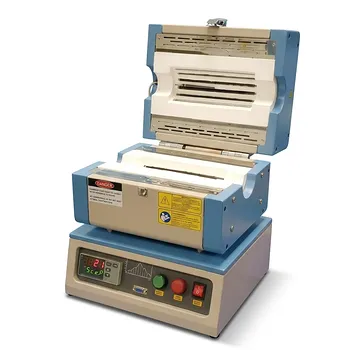
1250C Compact Split Tube Furnace with 8 Inch Heating Zone and Programmable Controller
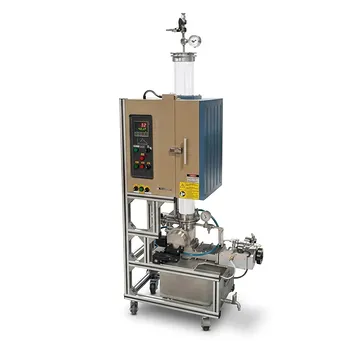
1200C High Temperature Atmosphere Controlled Vertical Quenching Tube Furnace with 4 Inch Quartz Tube
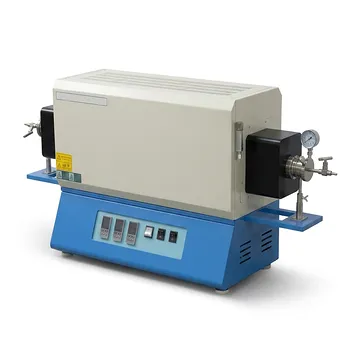
High Temperature Three Temperature Zone Tube Furnace for Advanced Material Science Sintering and Chemical Vapor Deposition Applications

High Temperature 1700C Vertical Tube Furnace for Powder Spherification and Material Sintering
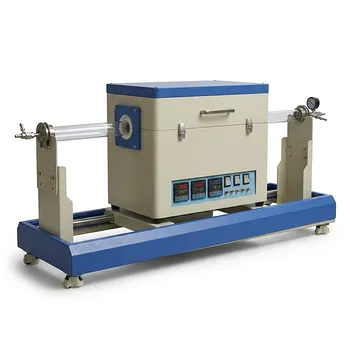
Double Temperature Zone Double Cover Tube Furnace for High Temperature CVD and Vacuum Annealing
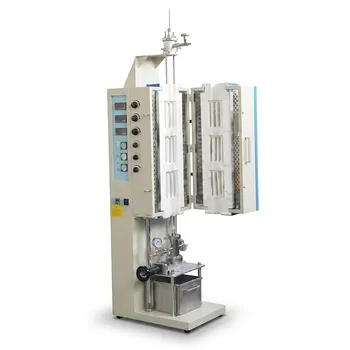
High Temperature Dual Zone Tube Furnace for Material Science Research and Professional Thermal Processing

High Temperature Automated 5 Inch Tube Furnace for Autonomous Material Research and Advanced Laboratory R&D
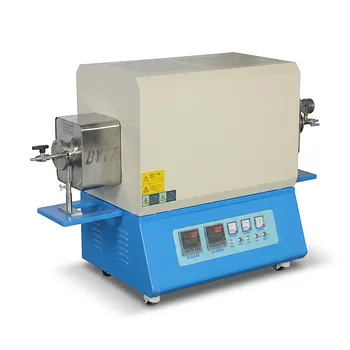
High Temperature Dual Zone Split Tube Furnace for Advanced Atmosphere Sintering and Vacuum CVD Applications
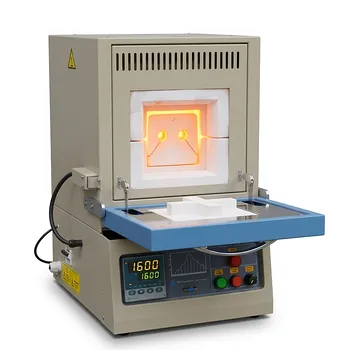
High Temperature Compact Muffle Furnace 1700 C with 30 Segment Programmable Controller and 1.7L Cubic Chamber

Compact High Temperature 1600C Tube Furnace with 50mm Alumina Tube and Vacuum Flanges for Material Sintering
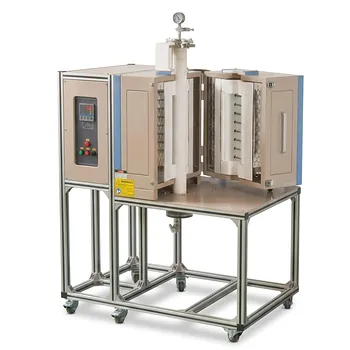
High Temperature 1700C Vertical Split Tube Furnace for Material Quenching and Single Crystal Growth
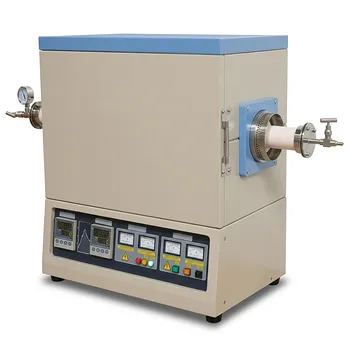
High Temperature 1700C Dual Zone Tube Furnace for Material Science and Industrial Chemical Vapor Deposition Research

Compact Vertical Split Quartz Tube Furnace with Stainless Steel Vacuum Flanges for Rapid Thermal Quenching and Controlled Atmosphere Material Processing
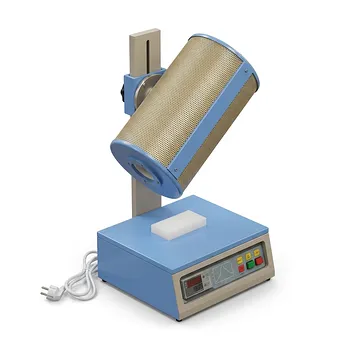
1100°C Vertical Laboratory Furnace for DIY Tubular Reactors with PID Temperature Controller
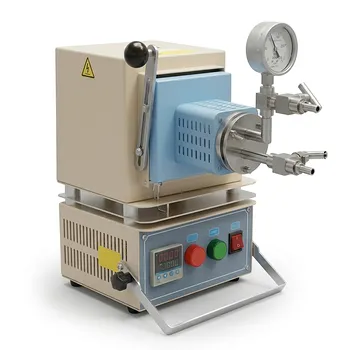
Compact Hybrid Muffle and Tube Furnace for 1000C Controlled Atmosphere Laboratory Material Sintering

High Temperature Tube Furnace 1500C with Sliding Flanges and 50mm OD for Rapid Thermal Processing Fast Heating and Cooling
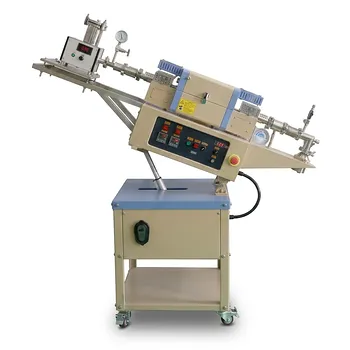
1100°C Dual Zone Rotary Tube Furnace with Automatic Feeding and Collection System for Continuous Powder Processing
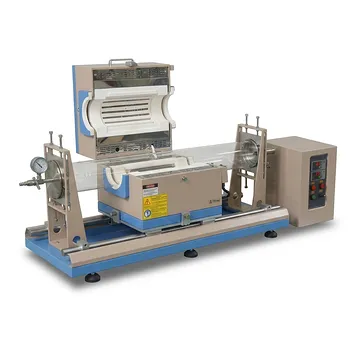
1200C High Temperature 5 Inch Sliding Tube Furnace for Rapid Thermal Processing RTP and Wafer Annealing
