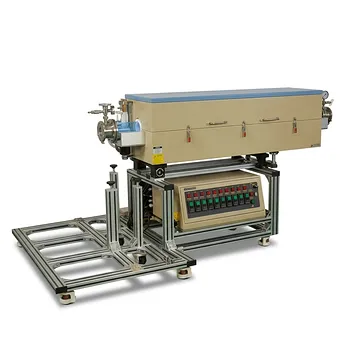
What critical conditions does an atmosphere tube furnace provide during the synthesis of L10-NiCo? Mastering L10 Phase Control.
Updated 3 months ago
The synthesis of $L1_0$-NiCo intermetallic compounds depends on a dual-environment strategy that combines chemical reduction with precise thermal energy. An atmosphere tube furnace provides a stable reducing atmosphere (typically 90% Ar + 10% $H_2$) and precise high temperatures reaching up to 780 °C. These specific conditions enable the thermal decomposition of precursors and the subsequent in-situ reduction required to transform disordered atomic arrangements into a highly ordered $L1_0$ crystalline structure.
Core Takeaway: An atmosphere tube furnace facilitates the transition from precursor chemicals to ordered intermetallics by providing a controlled reducing environment that prevents oxidation while supplying the thermal energy necessary for atomic-scale diffusion.
The Role of Controlled Atmospheres
Maintaining a Stable Reducing Environment
The furnace creates a precise chemical environment, typically utilizing a mixture of 90% Argon and 10% Hydrogen. This specific ratio is critical for the in-situ reduction of precursors, ensuring that metal ions are converted to their metallic states during the heating process.
Prevention of Unwanted Oxidation
Intermetallic compounds like NiCo are highly sensitive to oxygen at elevated temperatures. By maintaining a continuous flow of high-purity inert or reducing gases, the furnace excludes oxygen, preventing the formation of metal oxides that would otherwise disrupt the formation of the intermetallic phase.
Ensuring Stoichiometric Integrity
The sealed nature of the tube furnace allows for a precisely controlled gas environment. This ensures that the chemical reactions occur at specific stoichiometric ratios, which is a prerequisite for synthesizing complex functional materials and alloys with predictable properties.
Thermal Dynamics and Structural Transformation
High-Temperature Energy for Atomic Diffusion
The furnace provides a precise high-temperature environment, often optimized at 780 °C for NiCo synthesis. This thermal energy acts as the primary driving force for atomic diffusion, allowing nickel and cobalt atoms to migrate into their proper positions within the lattice.
Achieving the Ordered $L1_0$ Phase Transition
The core of the heat treatment step is the transformation of disordered atomic arrangements into ordered structures. Without the sustained and uniform heat provided by the furnace, the atoms would lack the kinetic energy required to overcome the activation barrier necessary to reach the $L1_0$-type configuration.
Thermal Uniformity and Repeatability
Atmosphere tube furnaces are designed with high temperature field uniformity across the heating zone. This ensures that the entire sample experiences identical conditions, resulting in a consistent phase transition and a narrow particle size distribution in the final material.
Understanding the Trade-offs
Temperature Overshoot and Control
While high temperatures are necessary for diffusion, excessive heating or temperature overshoot can lead to unwanted grain growth or sintering. Precise multi-stage programmable controllers are required to manage the ramp rates and prevent the loss of nanostructured features.
Gas Flow and Precursor Volatility
The flow rate of the reducing gas must be carefully balanced. If the flow is too low, the reduction may be incomplete; however, a flow rate that is too high can lead to the volatilization of certain precursors or cause temperature gradients within the tube.
Cooling Rate Limitations
Tube furnaces often have significant thermal mass, which can make rapid cooling difficult unless specialized quenching mechanisms are used. The rate of cooling can impact the final degree of ordering in the $L1_0$ structure, as slow cooling might allow for further rearrangement or unwanted phase separation.
Applying These Conditions to Your Synthesis Goal
How to Apply This to Your Project
To achieve high-quality $L1_0$-NiCo intermetallic compounds, you must tailor the furnace parameters to the specific requirements of your precursor chemistry.
- If your primary focus is Maximum Magnetic Anisotropy: Prioritize the precision of the 780 °C dwell time to ensure the highest possible degree of $L1_0$ ordering through complete atomic diffusion.
- If your primary focus is Nanoparticle Size Control: Utilize multi-stage programmable temperature profiles to strictly control the ramp rate and prevent grain growth during the reduction phase.
- If your primary focus is Chemical Purity: Ensure a high-purity gas supply and verify the integrity of the tube seals to prevent even trace amounts of oxygen from entering the system.
A properly configured atmosphere tube furnace is the indispensable tool for bridging the gap between raw chemical precursors and the sophisticated atomic architecture of ordered intermetallic alloys.
Summary Table:
| Critical Condition | Requirement | Primary Function |
|---|---|---|
| Atmosphere | 90% Ar + 10% H₂ | Prevents oxidation; facilitates in-situ reduction |
| Temperature | Stable 780 °C | Provides energy for atomic-scale diffusion |
| Control | Programmable Ramp Rates | Prevents grain growth and temperature overshoot |
| Uniformity | High Thermal Field Uniformity | Ensures consistent phase transition and particle size |
Transform Your Material Research with THERMUNITS
THERMUNITS is a leading manufacturer of high-temperature laboratory equipment for material science and industrial R&D. Our high-precision Atmosphere Tube Furnaces are specifically engineered to meet the rigorous demands of $L1_0$ intermetallic synthesis, providing the stable reducing environments and superior thermal uniformity your project requires.
From Muffle, Vacuum, and Tube furnaces to advanced CVD/PECVD systems and Hot Press solutions, we deliver the comprehensive thermal technology needed to achieve predictable, high-quality results in every heat treatment cycle.
Ready to optimize your synthesis process? Contact THERMUNITS Today to discuss your specific furnace requirements and receive a customized solution for your laboratory or industrial application.
References
- Chun Wu, Wenli Pei. Design and fabrication of intermetallic NiCo electrocatalysts for the alkaline HER. DOI: 10.1039/d4nr02519a
Mentioned Products
- Vertical 1700C Vacuum and Atmosphere Tube Furnace with 80mm Alumina Tube
- 1750°C High Temperature Benchtop Vacuum Atmosphere Tube Furnace with Kanthal Super 1800 Heating Elements and 60mm Alumina Processing Tube
- 1200C Hybrid Muffle and Tube Furnace for Material Research with Dual Atmosphere Control Quartz Tubes
- Compact Hybrid Muffle and Tube Furnace for 1000C Controlled Atmosphere Laboratory Material Sintering
- Three Zone Tube Furnace with 11 Inch or 15 Inch Quartz Tube and Hinged Flanges for Vacuum Atmosphere Heat Treatment
People Also Ask
- How is an industrial-grade vertical tube furnace utilized in smelting leaching residues? Enhance Metal Recovery Efficiency
- What is the function of a laboratory-grade vertical tube furnace in fast pyrolysis? Optimize Composite Research.
- How does a vertical tube furnace facilitate thermoelectric alloy melting? Precision synthesis for material homogeneity.
- Why is a thermocouple sensor indispensable for monitoring the vertical tube furnace during gallium oxide nanowire production? Optimize VLS Growth
- What are the advantages of using a vertical tube furnace for crucible experiments simulating steel-slag interactions?

Tech Team · ThermUnits
Last updated on Jun 02, 2026
Related Products

Vertical 1700C Vacuum and Atmosphere Tube Furnace with 80mm Alumina Tube

1750°C High Temperature Benchtop Vacuum Atmosphere Tube Furnace with Kanthal Super 1800 Heating Elements and 60mm Alumina Processing Tube
1200C Hybrid Muffle and Tube Furnace for Material Research with Dual Atmosphere Control Quartz Tubes
Compact Hybrid Muffle and Tube Furnace for 1000C Controlled Atmosphere Laboratory Material Sintering

Three Zone Tube Furnace with 11 Inch or 15 Inch Quartz Tube and Hinged Flanges for Vacuum Atmosphere Heat Treatment
1700C High Temperature Alumina Tube Furnace with 18 Inch Heated Zone and Vacuum Sealing Flanges
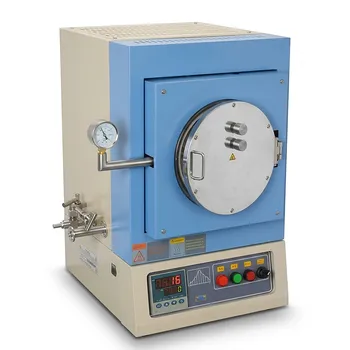
1100°C High Temperature Quartz Chamber Furnace 8 Inch OD with 7.6 Liter Capacity and Vacuum Atmosphere Capability
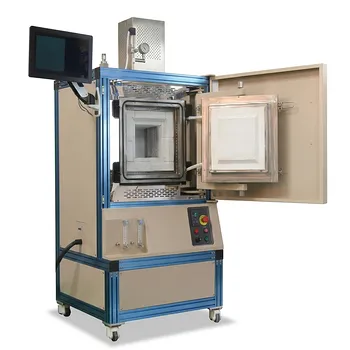
High Temperature Hydrogen Atmosphere Box Furnace 1650C Max Reducing Environment Material Synthesis System 8x8x8 Chamber

1200°C 5 Inch Vertical Quartz Tube Furnace with Stainless Steel Vacuum Flanges
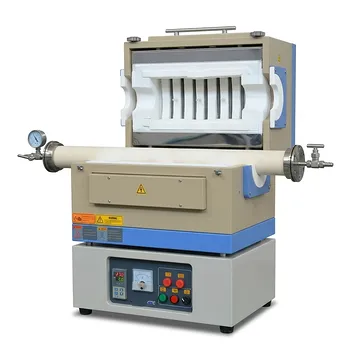
High Temperature 1600C Split Tube Furnace Vacuum Flanges Valves Optional 60mm 80mm Alumina Tube

High Temperature 1700C Tube Furnace with High Vacuum Turbomolecular Pump System and Multi Channel Mass Flow Controller Gas Mixer

1100C Tube Furnace with Vacuum Flange and Programmable Temperature Controller for Material Science and Industrial Heat Treatment

High Temperature 1700C Vertical Tube Furnace for Powder Spherification and Material Sintering

Compact High Temperature 1600C Tube Furnace with 50mm Alumina Tube and Vacuum Flanges for Material Sintering

High Temperature 1700C Six Zone Split Tube Furnace with Alumina Tube and Water Cooled Flanges

1800C High Temperature Compact Vacuum Tube Furnace with 60mm OD Alumina Tube and Kanthal MoSi2 Heating Elements
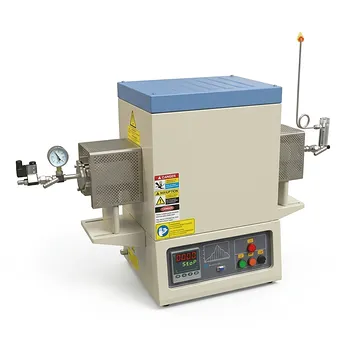
1700C Hydrogen Gas Tube Furnace with 60mm Alumina Process Tube and Integrated Hydrogen Safety Detector

High Temperature 1700C Benchtop Tube Furnace with 5 Inch Heating Zone High Purity Alumina Tube and Vacuum Sealing Flanges

High Temperature Automated 5 Inch Tube Furnace for Autonomous Material Research and Advanced Laboratory R&D