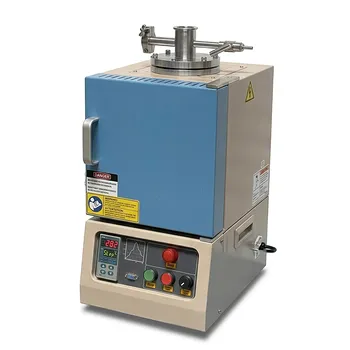
What critical processing conditions does a high-temperature Tube Furnace provide for the solid-state reaction of Iron Fluoride (FeF2)? Master 600°C Synthesis & Purity
Updated 3 months ago
To synthesize Iron Fluoride ($\text{FeF}_2$), a high-temperature Tube Furnace provides two critical processing conditions: a sustained thermal environment of 600 °C and a strict, inert argon atmosphere. These conditions work in tandem to trigger the solid-state chemical reaction between precursors while isolating the material from oxygen and moisture that would otherwise degrade the final product.
Core Takeaway: The high-temperature tube furnace acts as a controlled micro-environment that provides the activation energy necessary for synthesis while enforcing chemical purity through an oxygen-free, inert gas shield.
The Role of Precision Thermal Energy
The synthesis of $\text{FeF}_2$ is a temperature-sensitive process that requires a stable thermal field to ensure uniform reaction kinetics across the precursor material.
Achieving Activation Energy at 600 °C
The primary function of the furnace is to maintain a constant 600 °C environment, which serves as the threshold for the solid-state reaction. This specific temperature provides the necessary kinetic energy for atoms within the precursor powders to redistribute and form the target fluoride compound.
Promoting Desired Crystal Structure
Beyond simply triggering a reaction, the tube furnace allows for the development of the specific crystal structure of Iron Fluoride. Controlled heating ensures the material reaches high crystallinity, which is a fundamental requirement for its performance in electrochemical or magnetic applications.
Managing Heating Rates and Uniformity
Modern tube furnaces allow for precise programmed heating, which prevents thermal shock and ensures that the transformation from amorphous precursors to stable crystal phases occurs gradually. This level of control is essential for preventing the random aggregation of atoms during the heating phase.
Atmospheric Isolation and Chemical Integrity
Because iron-based compounds are highly reactive when exposed to the environment at high temperatures, the furnace's ability to maintain a sealed, flowing atmosphere is vital.
Argon Protection Against Oxidation
A flowing argon atmosphere is used to displace all oxygen within the reaction tube. Without this inert shield, the iron ions would readily react with oxygen to form iron oxides rather than the desired Iron Fluoride, leading to significant impurities.
Exclusion of Moisture
The tube furnace configuration effectively excludes moisture from the reaction zone. Water vapor can lead to the production of unwanted byproducts and interfere with the fluoride formation, making the gas-tight seals of the tube furnace a critical barrier for maintaining phase purity.
Continuous Removal of Gaseous Impurities
The design of the tube furnace allows for a continuous flow of high-purity gas, which helps sweep away any gaseous byproducts that might evolve during the reaction. By maintaining a low partial pressure of these byproducts, the furnace drives the chemical equilibrium toward the successful synthesis of $\text{FeF}_2$.
Understanding the Trade-offs
While the tube furnace is the gold standard for this synthesis, there are technical limitations and risks that must be managed.
Atmospheric Integrity Risks
The most significant pitfall in $\text{FeF}_2$ synthesis is a compromised seal. Even a microscopic leak can introduce enough oxygen or moisture at 600 °C to cause the iron precursors to oxidize, resulting in a failed batch that lacks the required fluoride purity.
Temperature Gradient Limitations
Materials located at the edges of the furnace's "hot zone" may experience lower temperatures than the center. This temperature gradient can lead to incomplete reactions or non-uniform crystal growth, requiring careful placement of the precursor boat within the tube.
Gas Flow Management
If the argon flow rate is too low, it may fail to effectively purge contaminants; if it is too high, it can cause localized cooling of the sample. Striking the right balance is necessary to maintain both the thermal setpoint and the inert environment.
How to Apply This to Your Project
To achieve high-purity Iron Fluoride, your furnace protocol should be tailored to the specific goals of your material's end-use.
- If your primary focus is Phase Purity: Ensure the tube is purged with argon for at least 30 minutes prior to heating to eliminate all traces of oxygen and moisture.
- If your primary focus is High Crystallinity: Use a slower heating ramp (e.g., 5–10 °C/min) and extend the soak time at 600 °C to allow the crystal lattice to organize fully.
- If your primary focus is Scalability: Monitor the gas exhaust to ensure that byproduct removal remains efficient as you increase the mass of the precursor material.
By mastering the balance between thermal activation and atmospheric isolation, you can consistently produce high-quality Iron Fluoride for advanced technical applications.
Summary Table:
| Processing Condition | Specification | Impact on FeF2 Synthesis |
|---|---|---|
| Temperature | 600 °C | Provides activation energy & ensures crystallinity |
| Atmosphere | Inert Argon Flow | Prevents oxidation & moisture-induced impurities |
| Thermal Control | Programmed Ramping | Prevents thermal shock & manages kinetics |
| Environment | Sealed Tube | Isolates precursors from oxygen & sweeps byproducts |
Elevate Your Material Research with THERMUNITS Precision
Achieving high-purity Iron Fluoride requires the uncompromising atmospheric integrity and thermal stability that only professional-grade equipment can provide. THERMUNITS is a leading manufacturer of high-temperature laboratory equipment, specialized in supporting material science and industrial R&D.
Whether you are performing solid-state synthesis, CVD/PECVD, or advanced heat treatments, our comprehensive range of Tube, Atmosphere, Vacuum, and Muffle furnaces—including specialized Rotary and Hot Press systems—ensures your research meets the highest standards of phase purity and crystallinity.
Ready to optimize your thermal processing? Contact our experts today to find the perfect furnace solution for your laboratory’s unique requirements.
References
- Chiwon Choi, Minkyung Kim. Achieving High Stability and Capacity in Micron‐Sized Conversion‐Type Iron Fluoride Li‐Metal Batteries. DOI: 10.1002/advs.202410114
Mentioned Products
- High Temperature 1700C Vertical Tube Furnace for Powder Spherification and Material Sintering
- High Temperature Tube Furnace 1500C with Sliding Flanges and 50mm OD for Rapid Thermal Processing Fast Heating and Cooling
- High Temperature 1700C Vertical Split Tube Furnace for Material Quenching and Single Crystal Growth
- Vertical Hybrid High Temperature Furnace 1500C Alumina Tube SOFC Fuel Cell Testing Laboratory Heat Treatment Research Equipment
- Compact High Temperature 1600C Tube Furnace with 50mm Alumina Tube and Vacuum Flanges for Material Sintering
People Also Ask
- What role does a high-temperature vertical tube furnace play in simulating high-carbon ferromanganese slag formation?
- What functions does a vertical high-temperature tube furnace perform? Master Industrial Sintering & R&D Simulation
- What is the primary function of a high-temperature tube furnace in Cu1-N-C synthesis? Precision Thermal Control.
- High-Temp Tube Furnace Role in Converting Microbial Proteins to Iron Single-Atom Sites: Expert Synthesis Guide
- What impact does the heating rate of a tube furnace have on biochar microstructure? Optimize Your Material R&D.

Tech Team · ThermUnits
Last updated on Jun 03, 2026
Related Products

High Temperature 1700C Vertical Tube Furnace for Powder Spherification and Material Sintering

High Temperature Tube Furnace 1500C with Sliding Flanges and 50mm OD for Rapid Thermal Processing Fast Heating and Cooling
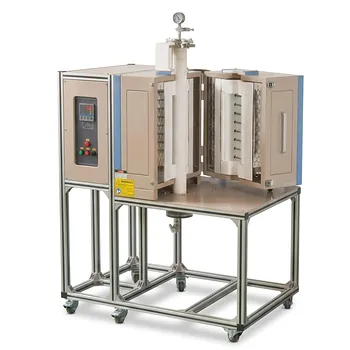
High Temperature 1700C Vertical Split Tube Furnace for Material Quenching and Single Crystal Growth
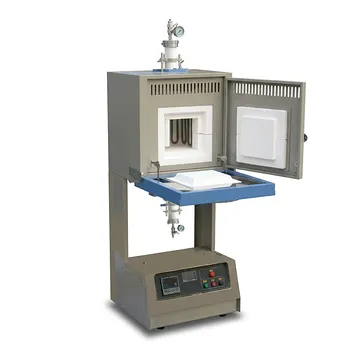
Vertical Hybrid High Temperature Furnace 1500C Alumina Tube SOFC Fuel Cell Testing Laboratory Heat Treatment Research Equipment

Compact High Temperature 1600C Tube Furnace with 50mm Alumina Tube and Vacuum Flanges for Material Sintering

High Temperature 1700C Tube Furnace with High Vacuum Turbomolecular Pump System and Multi Channel Mass Flow Controller Gas Mixer
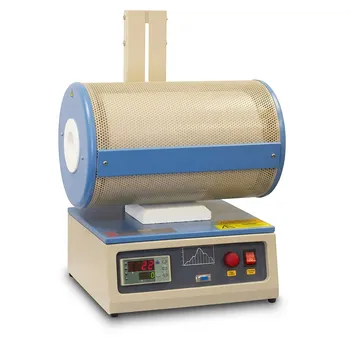
Multi Position Tube Furnace 1100C for Laboratory Material Research and Advanced Industrial Thermal Processing

High Temperature Automated 5 Inch Tube Furnace for Autonomous Material Research and Advanced Laboratory R&D
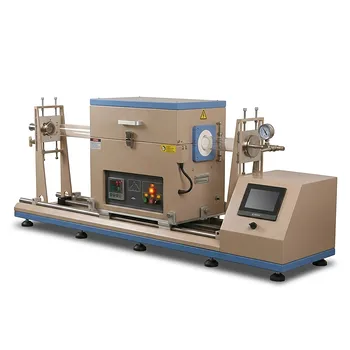
1200C Sliding Tube Furnace for Rapid Thermal Processing and CVD Graphene Growth with 100mm OD Capacity

High Temperature 1700C Benchtop Tube Furnace with 5 Inch Heating Zone High Purity Alumina Tube and Vacuum Sealing Flanges

1750°C High Temperature Benchtop Vacuum Atmosphere Tube Furnace with Kanthal Super 1800 Heating Elements and 60mm Alumina Processing Tube

1100C Tube Furnace with Vacuum Flange and Programmable Temperature Controller for Material Science and Industrial Heat Treatment
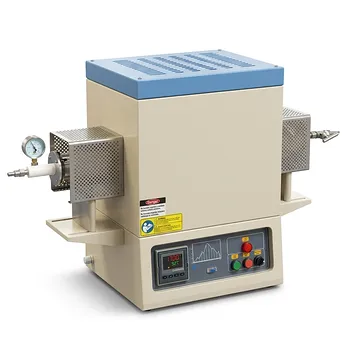
High Temperature Three Zone Tube Furnace 1700C with Alumina Tube and Water Cooled Flanges

1800C High Temperature Compact Vacuum Tube Furnace with 60mm OD Alumina Tube and Kanthal MoSi2 Heating Elements
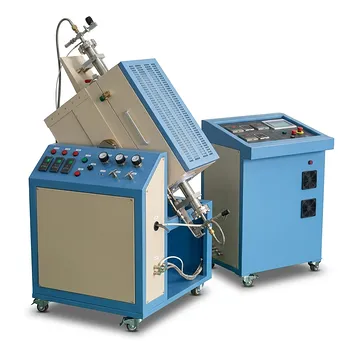
1100C High Pressure Rocking Tube Furnace with 2 Inch Super Alloy Processing Tube for Material Synthesis
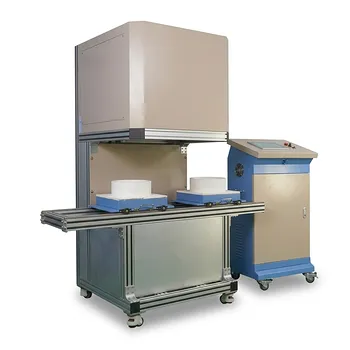
High Temperature Bottom Loading Vertical Furnace 1700C Dual Stage Sample Processing System 18L Large Capacity Thermal Treatment Equipment
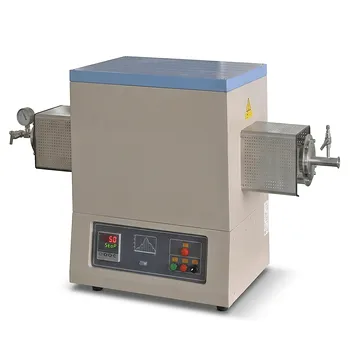
High Temperature 1700C Tube Furnace with 4 Inch OD Alumina Tube and Vacuum Sealing Flanges
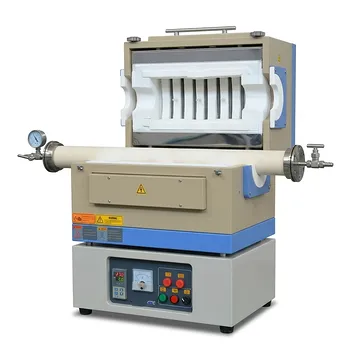
High Temperature 1600C Split Tube Furnace Vacuum Flanges Valves Optional 60mm 80mm Alumina Tube
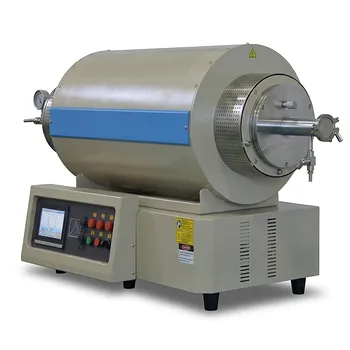
1200C Max Three Zone Tube Furnace 6 Inch OD Max with Tube and Flange