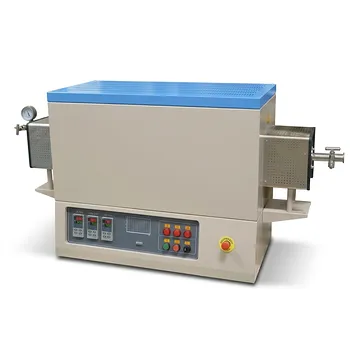
What Dual Role Do Metal Substrates Play in CVD Graphene? Catalytic & Structural Duo for Quality Growth
Updated 3 months ago
Metal substrates like copper and nickel foil serve as both the catalytic engine and the physical template in the Chemical Vapor Deposition (CVD) process. They are responsible for lowering the energy required to decompose precursor gases and providing the atomic scaffolding necessary for carbon atoms to nucleate into high-quality graphene layers.
Core Takeaway: In CVD graphene synthesis, metal foils act as a "dual-purpose foundation" that chemically drives the decomposition of carbon sources while physically dictating the resulting graphene's thickness, crystallinity, and uniformity.
The Catalytic Role: Lowering the Energy Barrier
Driving Precursor Decomposition
High-purity metal substrates act as a catalyst to reduce the decomposition energy of carbon-containing gas molecules, such as methane. Without this catalytic intervention, the temperatures required to break carbon-hydrogen bonds would be prohibitively high for standard manufacturing.
Facilitating Atom Rearrangement
Once the precursor gas is decomposed, the metal surface promotes the rearrangement and nucleation of liberated carbon atoms. The substrate effectively guides these atoms to bond together in the hexagonal lattice structure characteristic of graphene.
Controlling Reaction Kinetics
The specific metal used determines how carbon atoms behave after decomposition. For instance, copper has extremely low carbon solubility, which forces growth to occur almost exclusively on the surface, whereas nickel allows carbon to dissolve into the bulk metal before precipitating out.
The Structural Role: The Physical Growth Template
Defining Layer Count and Uniformity
The lattice structure of the metal substrate is the primary factor that determines the number of graphene layers produced. While copper typically facilitates self-limiting growth (producing monolayers), nickel often leads to multilayer graphene due to its higher carbon solubility and segregation process.
Influencing Electrical Performance
The surface smoothness and material type of the foil directly impact the electron mobility of the synthesized graphene. A smoother substrate reduces defects and grain boundaries, which are critical for maintaining high conductivity in the final film.
The Impact of Substrate Thickness
The thickness of the foil, ranging from 9 to 250 micrometers, influences the internal grain size and microstrain of the material. Research suggests that a thickness of approximately 150 micrometers often provides the optimal surface conditions for growing large-area, high-quality monolayer graphene.
Understanding the Trade-offs and Pitfalls
Carbon Solubility Challenges
The choice between copper and nickel involves a trade-off in control versus complexity. Copper’s low solubility makes it easier to produce uniform monolayers, but nickel’s ability to dissolve carbon makes it harder to prevent unwanted thick spots or non-uniform layers.
Surface Morphology and Microstrain
Even if a metal is high-purity, its surface morphology (flatness) and internal microstrain can create localized defects. These imperfections in the metal template are "mirrored" in the graphene, leading to structural integrity issues that reduce carrier mobility.
Contamination and Purity
Any impurities on the metal foil can act as unintended nucleation sites. This leads to random growth patterns and decreased crystallinity, making the "high-purity" aspect of the foil just as important as the metal type itself.
How to Choose a Substrate for Your Goal
When selecting a metal substrate for CVD graphene preparation, your choice should align with the intended application of the material.
- If your primary focus is high-mobility monolayers: Use high-purity copper foil (ideally ~150μm thick) to leverage its low carbon solubility and self-limiting growth characteristics.
- If your primary focus is multilayer graphene or composites: Opt for nickel foil, which facilitates carbon dissolution and segregation to form thicker, multi-layered structures.
- If your primary focus is large-scale industrial uniformity: Prioritize the surface flatness and microstrain state of the foil over its specific crystal orientation to ensure consistent film quality across large areas.
The synergy between the metal's catalytic chemistry and its physical surface properties is the fundamental requirement for transforming raw carbon gases into high-performance graphene.
Summary Table:
| Feature | Copper (Cu) Foil | Nickel (Ni) Foil |
|---|---|---|
| Primary Role | Catalyst & Structural Template | Catalyst & Structural Template |
| Carbon Solubility | Extremely Low (Surface Growth) | High (Dissolution/Segregation) |
| Growth Result | Uniform Monolayer (Self-limiting) | Multilayer Graphene (Precipitation) |
| Main Advantage | Precision thickness control | Facilitates thicker/composite films |
| Ideal Application | High-mobility electronics | Industrial composites |
Master Your Graphene Synthesis with THERMUNITS
At THERMUNITS, we understand that high-quality material science depends on precision thermal environments. As a leading manufacturer of high-temperature laboratory equipment, we provide the advanced CVD and PECVD systems necessary to leverage the catalytic and structural roles of metal substrates effectively.
Our comprehensive range of thermal processing solutions—including Tube, Muffle, Vacuum, and Atmosphere furnaces, as well as Hot Press and Rotary kilns—is designed to meet the rigorous demands of industrial R&D. Whether you are optimizing monolayer graphene on copper or developing complex structures, we bring unmatched expertise to your laboratory.
Contact our technical experts today to discover how THERMUNITS can enhance your heat treatment capabilities and accelerate your research breakthroughs.
References
- Mohamed El‐Sakhawy, Hebat‐Allah S. Tohamy. A Greener Future: Carbon Nanomaterials from Lignocellulose. DOI: 10.32604/jrm.2024.058603
Mentioned Products
- Dual Tube 100mm 80mm CVD Sliding Furnace with 4 Channel Gas Mixing and Vacuum System
- Two Zone Rotary Tube Furnace for Powder CVD Coating and Core Shell Material Synthesis 1100C
- 5 Inch Two Zone Rotary Tube Furnace 1100C for Powder CVD and Material Synthesis
- Three Zone Quartz Tube Furnace with 3 Channel Gas Mixer Vacuum Pump and Anti Corrosive Vacuum Gauge
- 1500C 3-Zone Rotary Tube Furnace 60mm with Automatic Powder Feeding and Receiving System for Continuous Material Synthesis
People Also Ask
- How does the Sweet Spot region within a chemical vapor deposition reactor influence the morphology control of VOx particles?
- What is the purpose of placing quartz crystals at the inlet and outlet of a CVD reaction tube? Optimize MoS2 Synthesis
- Why is a double-zone tube furnace required for CVD of WS2? Master Thermal Precision for High-Quality 2D Materials
- What are the temperature control requirements for a tube furnace used in pyrolysis and CVD? Master Thermal Precision
- What is the primary function of a dual-zone tube furnace in CVD MoS2 synthesis? Achieve Precise Thermal Control

Tech Team · ThermUnits
Last updated on Jun 02, 2026
Related Products
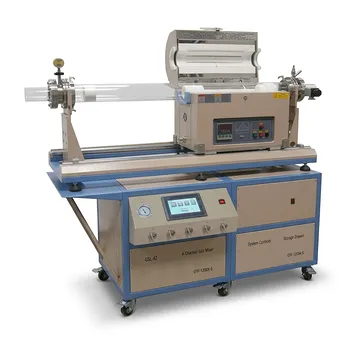
Dual Tube 100mm 80mm CVD Sliding Furnace with 4 Channel Gas Mixing and Vacuum System
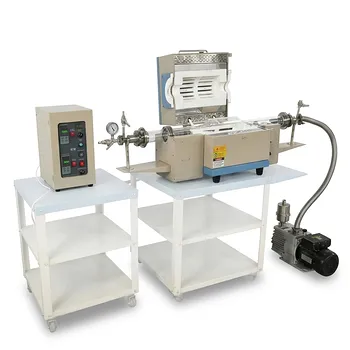
Two Zone Rotary Tube Furnace for Powder CVD Coating and Core Shell Material Synthesis 1100C
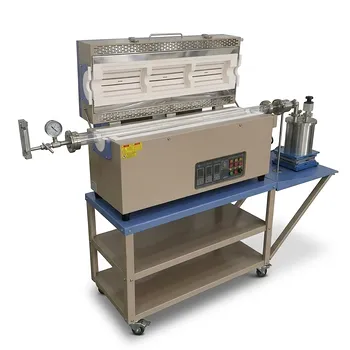
5 Inch Two Zone Rotary Tube Furnace 1100C for Powder CVD and Material Synthesis
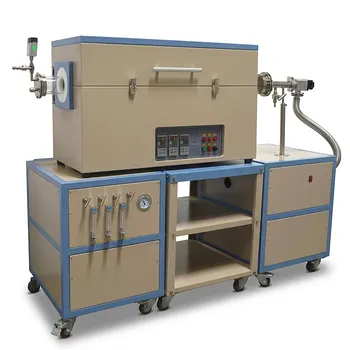
Three Zone Quartz Tube Furnace with 3 Channel Gas Mixer Vacuum Pump and Anti Corrosive Vacuum Gauge
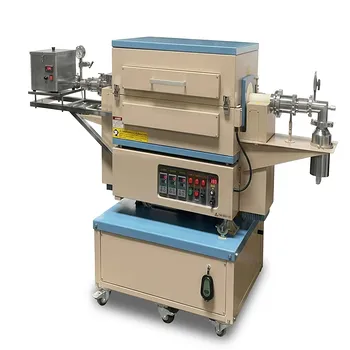
1500C 3-Zone Rotary Tube Furnace 60mm with Automatic Powder Feeding and Receiving System for Continuous Material Synthesis
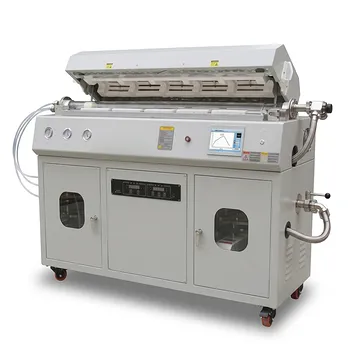
Multi Heating Zones CVD Tube Furnace System for Precision Chemical Vapor Deposition and Advanced Material Synthesis
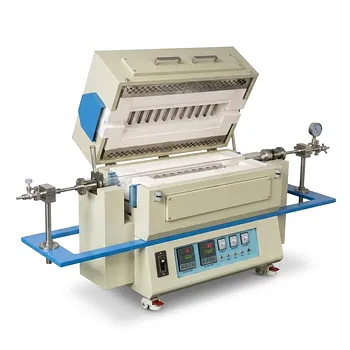
High Temperature Dual Zone Rotating Tube Furnace 1500C Silicon Carbide Heating for Advanced Material Synthesis
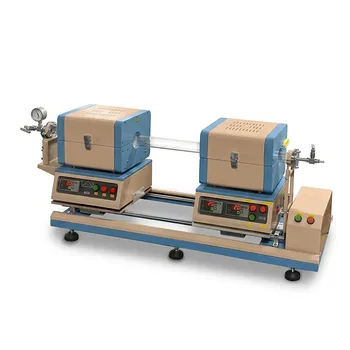
High Temperature 1200C Automatic Sliding Dual Zone Tube Furnace for 2D Transition Metal Dichalcogenides Growth and Material Sublimation Research
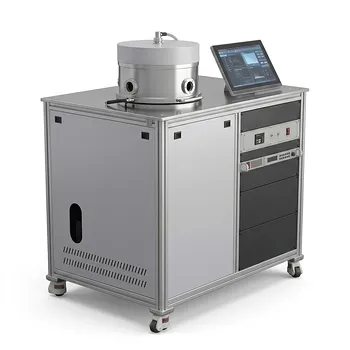
Inclined Rotary Plasma Enhanced Chemical Vapor Deposition PECVD System for Thin Film Deposition and Nanomaterial Synthesis
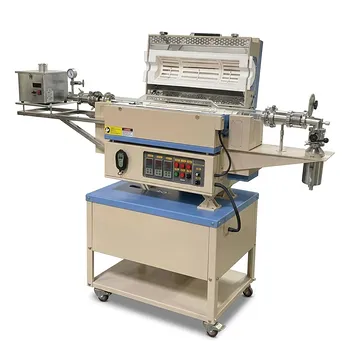
5 Inch Rotary Tube Furnace with Automatic Feeding and Receiving System 1200C Three Zone CVD Powder Processing
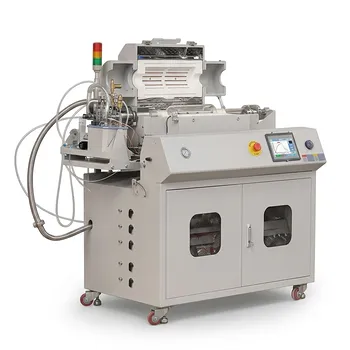
Versatile Chemical Vapor Deposition Tube Furnace System for Advanced Material Research and Industrial Coating Processes

5 Inch Three Zone Rotary Tube Furnace with Integrated Gas Delivery System and 1200C Capability for Advanced Material CVD Processing
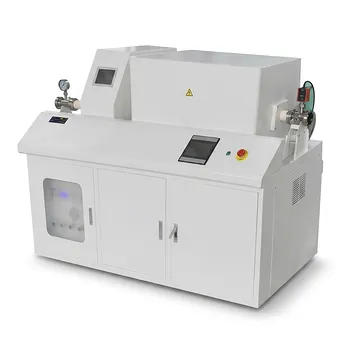
Chemical Vapor Deposition CVD System Slide PECVD Tube Furnace with Liquid Gasifier PECVD Machine
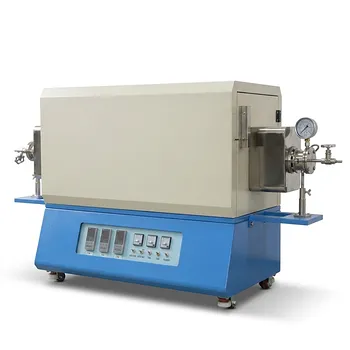
Three Temperature Zone High Temperature Vacuum Tube Furnace for CVD and Material Sintering
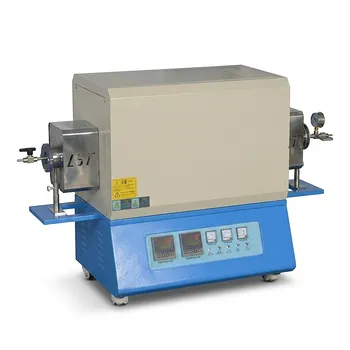
High Temperature Dual Zone Vacuum Tube Furnace for Material Research and CVD Processing
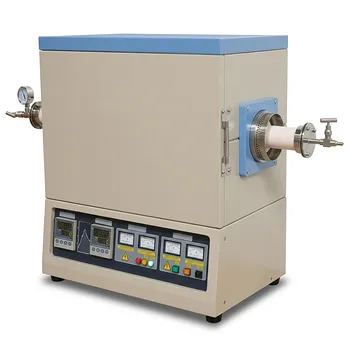
High Temperature 1700C Dual Zone Tube Furnace for Material Science and Industrial Chemical Vapor Deposition Research
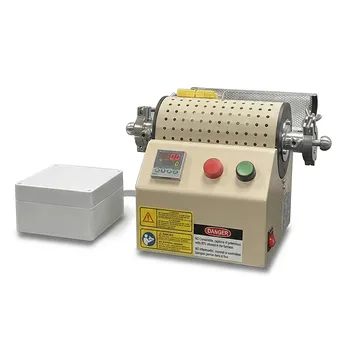
1000C Mini Tube Furnace with 20mm Quartz Tube and Vacuum Flanges for Material Science Research and Controlled Atmosphere Small Sample Processing
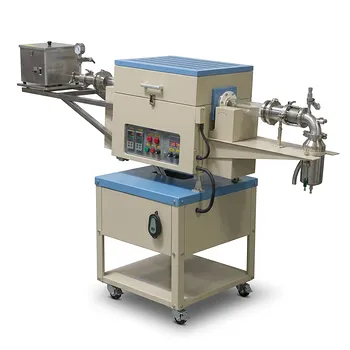
Two Zone Rotary CVD Furnace with Automatic Feeding and Receiving System for Powder Processing