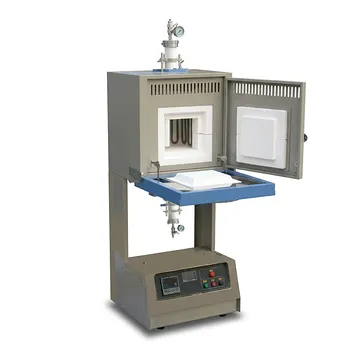
What function does a high-temperature tube furnace serve in IrRuOx/Ta2O5 synthesis? Optimize OER Catalyst Stability
Updated 3 months ago
The high-temperature tube furnace acts as the critical thermal reactor for the final stabilization and interfacial engineering of $\text{IrRuO}_x/\text{Ta}_2\text{O}_5$ catalysts. By maintaining a precise 350 °C environment under an air atmosphere, it facilitates the formation of essential interfacial interactions between the active iridium-ruthenium oxides and the tantalum oxide support. This specific stage is vital for optimizing the catalyst's electronic structure and ensuring long-term structural integrity during the demanding acidic oxygen evolution reaction (OER).
The tube furnace transforms a precursor mixture into a robust, integrated catalytic system by driving interfacial bonding and electronic optimization. Its primary value lies in providing the precise thermal energy required to anchor active species to the support, thereby maximizing both catalytic activity and chemical stability in harsh electrochemical environments.
Engineering the Active Interface
Facilitating Strong Interfacial Interactions
The furnace provides the kinetic energy necessary for the active $\text{IrRuO}_x$ components to bond chemically with the $\text{Ta}_2\text{O}_5$ support. This "anchoring" process is fundamental, as it prevents the active metal sites from leaching or aggregating when subjected to high electrochemical stress.
Optimizing Electronic Structure
Thermal treatment in the tube furnace modifies the electron density at the junction of the metal oxide and the support material. This electronic tuning is a sophisticated method of lowering the energy barriers of the OER process, which directly improves the efficiency of the catalyst.
Ensuring Phase Transformation
The controlled heat serves to finalize the chemical identity of the catalyst components. It ensures that the precursors are fully converted into their active oxide states, which is essential for achieving the specific catalytic properties required for water electrolysis.
Enhancing Catalyst Longevity and Performance
Strengthening Structural Integrity
The heat treatment densifies the catalyst structure, creating a more resilient physical framework. This prevents the physical degradation and "flaking" often observed in catalysts exposed to high-potential acidic conditions over extended periods.
Chemical Stability in Acidic Media
By ensuring the complete formation of stable oxide phases, the tube furnace minimizes the presence of unstable or unreacted precursors. This results in a catalyst that maintains its chemical composition despite the corrosive nature of the acidic electrolytes used in OER.
Defining Active Site Dispersion
The precise temperature control of the furnace allows for the development of highly dispersed active sites. Uniform heat distribution ensures that the $\text{IrRuO}_x$ is spread evenly across the $\text{Ta}_2\text{O}_5$ carrier, preventing the formation of inactive "dead zones" within the material.
Understanding the Critical Trade-offs
Temperature Sensitivity vs. Surface Area
Operating at the specific $350\text{ °C}$ threshold is a calculated compromise between stability and activity. While higher temperatures (often used for other catalysts like $\text{ZrO}_2$ or $\text{IrO}_2$ at $650\text{–}1000\text{ °C}$) can enhance crystallinity, they risk sintering the $\text{IrRuO}_x$ particles, which would drastically reduce the available active surface area.
Atmospheric Influence on Oxidation States
The choice of an air atmosphere is non-negotiable for this specific catalyst synthesis. Using a reducing atmosphere (like $\text{H}_2/\text{N}_2$) would likely reduce the metal oxides to their metallic states, completely stripping the catalyst of its OER functionality.
Heating Rate and Structural Defects
A rapid heating rate can induce internal stresses and structural defects that compromise long-term durability. A slow, controlled ramp-up within the tube furnace is necessary to allow for orderly atomic rearrangement and a more stable lattice structure.
How to Apply This to Your Synthesis Protocol
Making the Right Choice for Your Goal
- If your primary focus is maximum OER activity: Strictly adhere to the $350\text{ °C}$ setpoint to ensure strong interfacial bonding without sacrificing active surface area through particle sintering.
- If your primary focus is long-term durability: Ensure uniform air flow and a consistent thermal field within the furnace to promote stable oxide formation across the entire catalyst batch.
- If your primary focus is catalyst reproducibility: Use a programmable furnace to maintain a precise heating ramp rate, as this dictates the final dispersion and anchoring of the $\text{IrRuO}_x$ species.
The high-temperature tube furnace is the indispensable tool that bridges the gap between raw chemical precursors and a high-performance, acid-stable electrocatalyst.
Summary Table:
| Key Function | Mechanism | Catalyst Benefit |
|---|---|---|
| Interfacial Engineering | Driving interfacial bonding | Prevents active site leaching |
| Electronic Tuning | Modifying electron density | Lowers energy barriers for OER |
| Phase Transformation | Oxidizing precursor mixtures | Ensures active catalytic states |
| Thermal Control | Precise 350°C regulation | Balances surface area vs. stability |
| Structural Stability | Densifying the framework | Prevents degradation in acidic media |
Elevate Your Material Synthesis with THERMUNITS
As a leading manufacturer of high-temperature laboratory equipment for material science and industrial R&D, THERMUNITS provides the precision thermal solutions required for advanced catalyst development. Our high-performance Tube Furnaces and Atmosphere Furnaces ensure the exact 350°C stability and atmospheric control needed to optimize IrRuOx/Ta2O5 interfaces.
From Muffle, Vacuum, and Rotary Furnaces to specialized CVD/PECVD systems, Hot Press furnaces, and Vacuum Induction Melting (VIM) units, we offer a comprehensive range of heat treatment solutions designed for reliability and reproducibility.
Ready to enhance your lab's research efficiency? Contact us today to find the perfect thermal processing solution!
References
- Yanrong Liu, Hao Wang. An IrRuO<sub><i>x</i></sub> catalyst supported by oxygen-vacant Ta oxide for the oxygen evolution reaction and proton exchange membrane water electrolysis. DOI: 10.1039/d3nr06211b
Mentioned Products
- High Temperature 1700C Vertical Tube Furnace for Powder Spherification and Material Sintering
- 1100C High Pressure Rocking Tube Furnace with 2 Inch Super Alloy Processing Tube for Material Synthesis
- High Temperature Tube Furnace 1500C with Sliding Flanges and 50mm OD for Rapid Thermal Processing Fast Heating and Cooling
- High Temperature Rocking Tube Furnace 1700°C Alumina Processing Tube with Precision Oscillation for Material Synthesis
- 1500C Max Dual Zone Rotary Tube Furnace with 60 mm OD Alumina Tube for High Temperature Material Synthesis
People Also Ask
- What role does a high-temperature vertical tube furnace play in simulating high-carbon ferromanganese slag formation?
- What functions does a vertical high-temperature tube furnace perform? Master Industrial Sintering & R&D Simulation
- What is the primary function of a high-temperature tube furnace in Cu1-N-C synthesis? Precision Thermal Control.
- High-Temp Tube Furnace Role in Converting Microbial Proteins to Iron Single-Atom Sites: Expert Synthesis Guide
- What impact does the heating rate of a tube furnace have on biochar microstructure? Optimize Your Material R&D.

Tech Team · ThermUnits
Last updated on Jun 02, 2026
Related Products

High Temperature 1700C Vertical Tube Furnace for Powder Spherification and Material Sintering
1100C High Pressure Rocking Tube Furnace with 2 Inch Super Alloy Processing Tube for Material Synthesis

High Temperature Tube Furnace 1500C with Sliding Flanges and 50mm OD for Rapid Thermal Processing Fast Heating and Cooling
High Temperature Rocking Tube Furnace 1700°C Alumina Processing Tube with Precision Oscillation for Material Synthesis
1500C Max Dual Zone Rotary Tube Furnace with 60 mm OD Alumina Tube for High Temperature Material Synthesis

Compact High Temperature 1600C Tube Furnace with 50mm Alumina Tube and Vacuum Flanges for Material Sintering
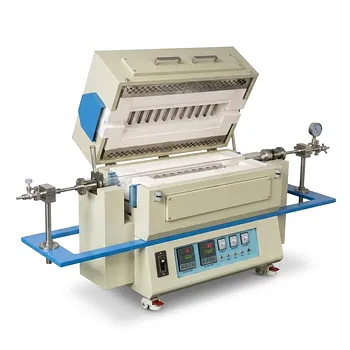
High Temperature Dual Zone Rotating Tube Furnace 1500C Silicon Carbide Heating for Advanced Material Synthesis
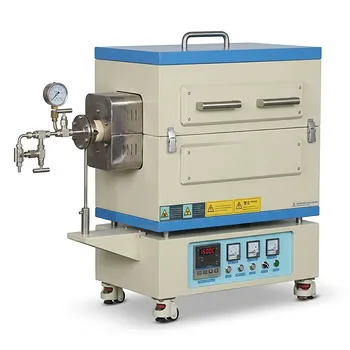
High Temperature Split Tube Furnace 1500C for Material Research Vacuum and Atmosphere Thermal Processing
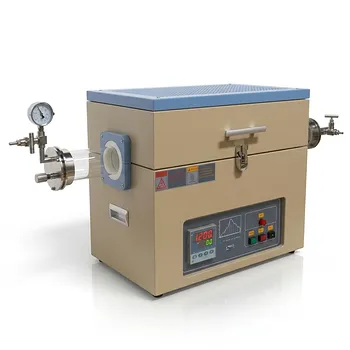
High Temperature 1200C Split Tube Furnace with Optional Quartz Tube Sizes and Vacuum Sealing Flanges for Material Science Research

High Temperature Automated 5 Inch Tube Furnace for Autonomous Material Research and Advanced Laboratory R&D
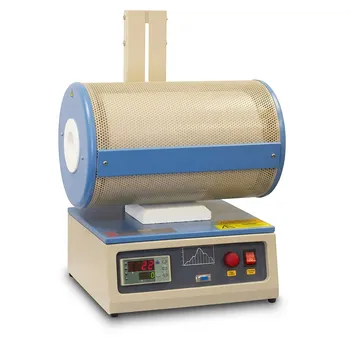
Multi Position Tube Furnace 1100C for Laboratory Material Research and Advanced Industrial Thermal Processing

High Temperature 1700C Tube Furnace with High Vacuum Turbomolecular Pump System and Multi Channel Mass Flow Controller Gas Mixer

1800C High Temperature Compact Vacuum Tube Furnace with 60mm OD Alumina Tube and Kanthal MoSi2 Heating Elements

1750°C High Temperature Benchtop Vacuum Atmosphere Tube Furnace with Kanthal Super 1800 Heating Elements and 60mm Alumina Processing Tube

High Temperature 1700C Benchtop Tube Furnace with 5 Inch Heating Zone High Purity Alumina Tube and Vacuum Sealing Flanges
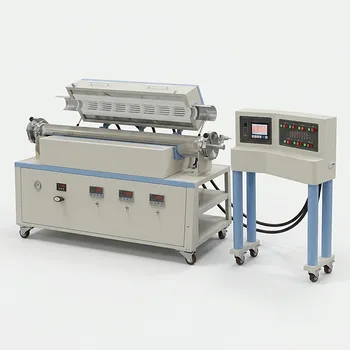
1100C Eight Zone High Pressure Super Alloy Tube Furnace with Integrated High Pressure Gas Control System
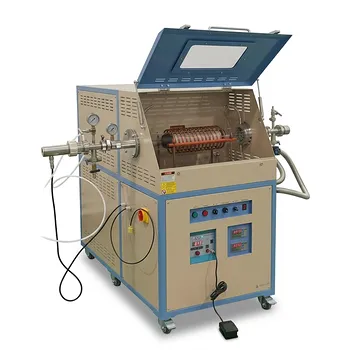
Ultra High Temperature 2300C Induction Heated Graphite Tube Furnace with Infrared Control

1700C Hydrogen Gas Tube Furnace with 60mm Alumina Process Tube and Integrated Hydrogen Safety Detector
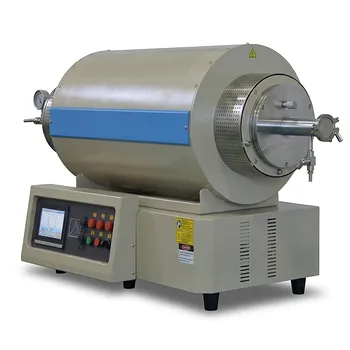
1200C Max Three Zone Tube Furnace 6 Inch OD Max with Tube and Flange