In-situ Hydrogen Heat Treatment in Tube Furnaces: Boosting Metal Carbide Catalyst Surface Properties & Activity
Updated 5 months ago
Hydrogen heat treatment acts as a precision cleaning agent for metal carbide catalysts. By utilizing the reductive properties of pure hydrogen at elevated temperatures, this process selectively removes inhibitory surface species. This restoration is critical for achieving the full catalytic potential of materials such as supported beta-molybdenum carbide ($\beta-Mo_2C$).
In-situ hydrogen treatment effectively restores catalyst performance by converting excess surface carbon into gaseous hydrocarbons. This process unblocks pore channels and exposes active sites, significantly increasing the effective specific surface area and overall catalytic activity.
The Mechanism of Surface Purification
Removal of Residual Free Carbon
During the carburization process, excess free carbon often deposits on the catalyst surface, shielding the active phases. Hydrogen heat treatment targets these deposits, utilizing high temperatures to initiate a chemical cleaning phase.
Conversion to Gaseous Hydrocarbons
The pure hydrogen atmosphere reacts with the solid carbon deposits to form gaseous hydrocarbons. These gases are then purged from the system, effectively "washing" the solid surface at a molecular level.
Restoration of Active Sites
By removing the carbon layers, the treatment clears the active sites necessary for chemical reactions. This ensures that reactants have direct access to the metal carbide surface, which is essential for catalysts like $\beta-Mo_2C/AlPO_4-18$.
Enhancing Physicochemical Properties
Unblocking Pore Structures
Excess carbon can physically plug the pores of the catalyst support, limiting mass transfer. The hydrogen treatment clears these pore blockages, allowing for better diffusion of reactants and products through the catalyst framework.
Increasing Specific Surface Area
As the pores are cleared and the surface is cleaned, the effective specific surface area of the catalyst increases. This measurement reflects the true amount of surface available for catalysis, which is often significantly higher after the treatment.
Optimization of Oxidation States
In a controlled tube furnace environment, the reducing atmosphere can also fine-tune the oxidation states of the metal components. This creates a more favorable electronic environment, such as generating oxygen vacancies or specific ion ratios (e.g., $Cu^+$ or $Fe^{2+}$), which further drives catalytic performance.
Understanding the Trade-offs
Risk of Decarburization
While the goal is to remove "free" carbon, excessive hydrogen treatment can potentially attack the lattice carbon within the metal carbide itself. If the temperature or duration is not strictly controlled, the catalyst may begin to revert to a pure metal state, losing its unique carbide properties.
Potential for Thermal Sintering
High-temperature treatments in a tube furnace carry the inherent risk of sintering, where small catalyst particles fuse together. If the cleaning duration exceeds the optimal window (typically around one hour), the loss of surface area due to sintering may outweigh the gains from carbon removal.
Applying Treatment Strategies to Your Project
Proper execution of in-situ hydrogen treatment requires balancing cleaning efficiency with structural preservation.
- If your primary focus is maximizing reactant access: Prioritize a thorough hydrogen soak at the specified carburization temperature to ensure all pore blockages are converted to gaseous hydrocarbons.
- If your primary focus is maintaining phase purity: Closely monitor the treatment duration to prevent the hydrogen from reacting with the structural carbon within the metal carbide lattice.
- If your primary focus is low-temperature activity: Use the tube furnace’s programmed control to achieve precise reduction states and maximize the creation of beneficial oxygen vacancies.
By precisely controlling the reductive environment of the tube furnace, you can transform a fouled surface into a highly accessible and active catalytic platform.
Summary Table:
| Process Phase | Mechanism | Catalyst Benefit |
|---|---|---|
| Surface Purification | H2 reacts with free carbon to form gaseous hydrocarbons | Unmasks active metal sites for reactions |
| Pore Restoration | Clears carbon blockages in support structures | Enhances reactant diffusion and mass transfer |
| Electronic Tuning | Precise reduction of metal oxidation states | Creates beneficial oxygen vacancies (e.g., Cu+, Fe2+) |
| Structure Control | Managed temperature and H2 soak duration | Prevents sintering and lattice decarburization |
Elevate Your Catalyst Research with THERMUNITS Precision Furnaces
Achieving peak catalytic activity requires absolute control over reductive environments. THERMUNITS is a leading manufacturer of high-temperature laboratory equipment, providing the precision needed to restore and optimize advanced materials.
Why choose THERMUNITS for your R&D?
- Comprehensive Solutions: We offer a full range of equipment including Tube Furnaces, CVD/PECVD systems, Vacuum Atmosphere furnaces, and Rotary Kilns.
- Unmatched Precision: Our furnaces ensure uniform heating and exact gas atmosphere control, critical for preventing sintering or lattice damage during hydrogen treatment.
- Industrial-Grade Reliability: From Hot Press Furnaces to Vacuum Induction Melting (VIM) systems, our tools are built for rigorous material science applications.
Ready to transform your surface treatment results? Contact THERMUNITS today to find the perfect thermal processing solution for your laboratory!
References
- Zinnabu Tassew Redda, Asnakech Laß‐Seyoum. Synthesis and Characterization of AlPO4-18 Supported Mesoporous and Crystalline β-Mo2C, Ni3C, and WC Nanoparticles. DOI: 10.1007/s10562-024-04791-y
Mentioned Products
- High Temperature Tube Furnace 1500C with Sliding Flanges and 50mm OD for Rapid Thermal Processing Fast Heating and Cooling
- Vertical 1700C Vacuum and Atmosphere Tube Furnace with 80mm Alumina Tube
- Compact High Temperature 1600C Tube Furnace with 50mm Alumina Tube and Vacuum Flanges for Material Sintering
- 900°C Max Rotary Tube Furnace with 8 Inch 310S Alloy Tube and Optional Multi Zone Heating for Industrial Material Calcination
- 1100C Tube Furnace with Vacuum Flange and Programmable Temperature Controller for Material Science and Industrial Heat Treatment
People Also Ask
- How are high-temperature tube furnaces utilized to repair etching damage? Precision Lattice Restoration Solutions
- What role does a high-temperature tube furnace play in the sulfidation heat treatment of CoS@C/MXene nanocomposites? Guide
- What core conditions does a high-temperature tube furnace provide for rGO aerogels? Mastering Precision Synthesis.
- How does precision tube furnace control influence CoFe nanoparticle formation? Master Your Bimetallic Synthesis.
- What role does a high-temperature tube furnace play in CVD synthesis of silicon nanowires? Master VLS Growth Precision.

Tech Team · ThermUnits
Last updated on Apr 14, 2026
Related Products

High Temperature Tube Furnace 1500C with Sliding Flanges and 50mm OD for Rapid Thermal Processing Fast Heating and Cooling

Vertical 1700C Vacuum and Atmosphere Tube Furnace with 80mm Alumina Tube

Compact High Temperature 1600C Tube Furnace with 50mm Alumina Tube and Vacuum Flanges for Material Sintering
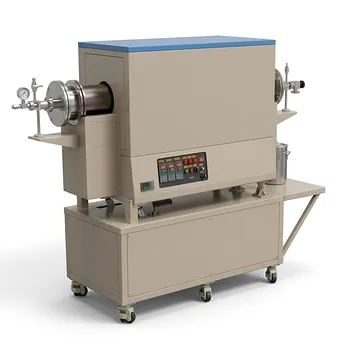
900°C Max Rotary Tube Furnace with 8 Inch 310S Alloy Tube and Optional Multi Zone Heating for Industrial Material Calcination

1100C Tube Furnace with Vacuum Flange and Programmable Temperature Controller for Material Science and Industrial Heat Treatment

High Temperature 1700C Tube Furnace with High Vacuum Turbomolecular Pump System and Multi Channel Mass Flow Controller Gas Mixer
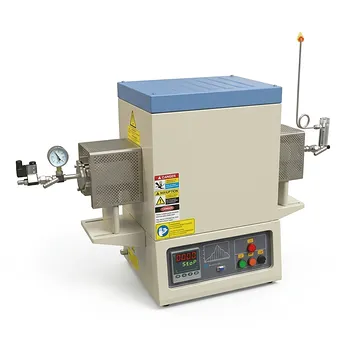
1700C Hydrogen Gas Tube Furnace with 60mm Alumina Process Tube and Integrated Hydrogen Safety Detector
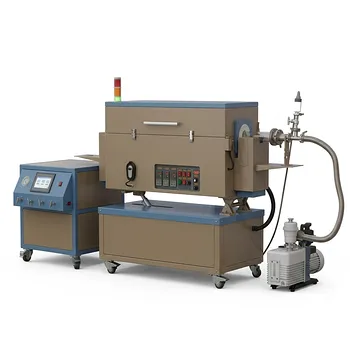
5 Inch Three Zone Rotary Tube Furnace with Integrated Gas Delivery System and 1200C Capability for Advanced Material CVD Processing

1200°C 5 Inch Vertical Quartz Tube Furnace with Stainless Steel Vacuum Flanges

High Temperature 1700C Six Zone Split Tube Furnace with Alumina Tube and Water Cooled Flanges

Compact Vertical Split Quartz Tube Furnace with Stainless Steel Vacuum Flanges for Rapid Thermal Quenching and Controlled Atmosphere Material Processing
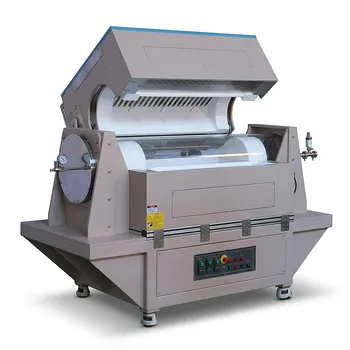
Three Zone Tube Furnace with 11 Inch or 15 Inch Quartz Tube and Hinged Flanges for Vacuum Atmosphere Heat Treatment
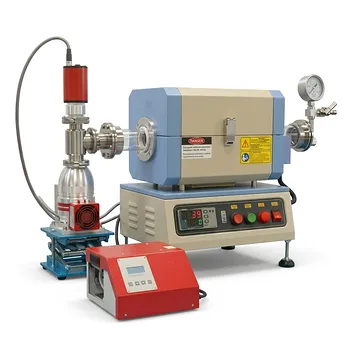
High Vacuum Compact Tube Furnace 1200C with Integrated Turbo Pump System and 8 Inch Heating Zone

High Temperature 1700C Benchtop Tube Furnace with 5 Inch Heating Zone High Purity Alumina Tube and Vacuum Sealing Flanges
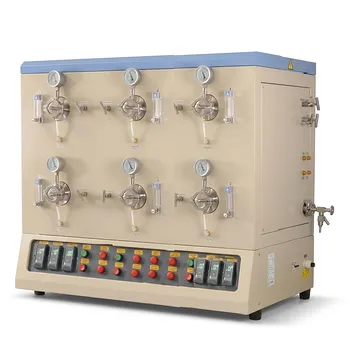
1200C High Throughput Multi Channel Tube Furnace with 50mm Quartz Tubes for Annealing and Material Phase Diagram Research

1800C High Temperature Compact Vacuum Tube Furnace with 60mm OD Alumina Tube and Kanthal MoSi2 Heating Elements
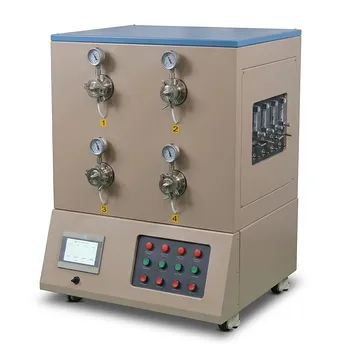
High Throughput 1200C Four Channel Tube Furnace with 3 Inch Quartz Tubes for Multi Zone Annealing and Material Research

High Temperature 1700C Vertical Tube Furnace for Powder Spherification and Material Sintering
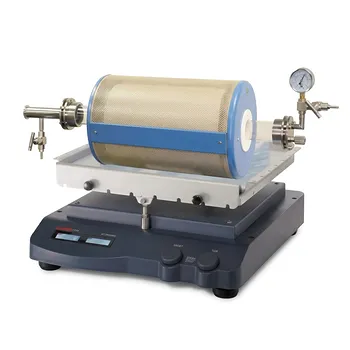
High Temperature Rocking Tube Furnace with Quartz Tube and Vacuum Flange for Materials Synthesis
