What is the effect of introducing camphor as a carbon source in a tube furnace CVD? Boost CNT Density and Growth
Updated 5 months ago
The introduction of camphor acts as a high-yield carbon booster. By sublimating in the high-temperature zone of a tube furnace, camphor significantly raises the concentration of carbon atoms available for reaction. This shift directly results in accelerated growth rates and the formation of dense, "forest-like" carbon nanotube (CNT) structures on the surface of microfibers.
Introducing camphor transforms the CVD environment from a carbon-lean state into a carbon-rich state. This transition allows for the rapid synthesis of high-density carbon nanotube arrays that are otherwise impossible to achieve through fiber pyrolysis alone.
Enhancing Carbon Precursor Concentration
Sublimation and Gas-Phase Transport
In its solid state, camphor is placed within the tube furnace where it undergoes sublimation upon reaching specific high-temperature zones. Once in a vapor state, it is efficiently moved through the reaction chamber by a carrier gas, ensuring a steady supply of precursors to the growth site.
Surpassing Pyrolysis Limits
Standard localized CVD often relies on the gases released from fiber pyrolysis, which can be inconsistent or insufficient for dense growth. Adding camphor provides an external carbon source that supplements these gases, ensuring the reaction chamber remains saturated with the necessary building blocks for nanotubes.
Impact on Nanostructure Morphology
Accelerated Growth Kinetics
The surge in carbon atom concentration directly correlates with the speed of the chemical reaction on the catalyst surface. Because more carbon is available to precipitate out of the catalyst, the growth rate of the nanotubes increases dramatically compared to processes without external carbon sources.
Formation of CNT Forests
As the concentration of carbon rises, the distribution density of the nanotubes on the microfiber surface becomes much higher. This proximity forces the nanotubes to grow in a self-aligned, vertical orientation, creating what is known as a dense carbon nanotube forest.
Understanding the Trade-offs
The Risk of Over-Saturating the Environment
While high carbon concentration drives density, an excess of camphor vapor can lead to the formation of amorphous carbon or soot. If the carbon supply exceeds the catalyst's ability to process it, the quality of the nanotubes may degrade, leading to structural defects.
Controlling Thermal Uniformity
Introducing a solid source like camphor requires precise temperature management across the furnace zones. Fluctuations in the sublimation zone can lead to inconsistent vapor pressure, resulting in an uneven distribution of CNTs across the microfiber substrate.
How to Apply This to Your Process
When integrating camphor into your localized CVD workflow, your approach should depend on your specific material requirements:
- If your primary focus is maximizing CNT density: Increase the camphor volume and carrier gas flow to ensure the reaction chamber reaches peak carbon saturation.
- If your primary focus is structural purity: Closely calibrate the furnace temperature to the sublimation point of camphor to prevent the accumulation of non-tubular amorphous carbon.
- If your primary focus is uniform coating: Ensure the microfiber substrate is positioned optimally relative to the carrier gas stream to allow for even vapor deposition.
By strategically supplementing your process with camphor, you gain the ability to engineer complex, high-density nanostructures with significantly improved efficiency.
Summary Table:
| Feature | Impact of Camphor Introduction | Key Result/Benefit |
|---|---|---|
| Carbon Concentration | Transitions from carbon-lean to carbon-rich | High-yield precursor saturation |
| Growth Kinetics | Significantly accelerated reaction speed | Faster synthesis of nanostructures |
| CNT Morphology | High-density vertical alignment | Formation of "CNT forests" |
| Process Stability | Supplemented external carbon source | Overcomes fiber pyrolysis limits |
| Quality Risk | Potential for amorphous carbon if over-saturated | Requires precise temperature control |
Elevate Your Nanomaterial Synthesis with THERMUNITS
Precision is the difference between a failed experiment and a breakthrough in carbon nanotube synthesis. THERMUNITS is a leading manufacturer of high-performance laboratory equipment designed for the most demanding material science and industrial R&D applications. Our advanced Tube Furnaces and CVD/PECVD systems provide the exceptional thermal uniformity and atmosphere control required for complex processes like camphor-boosted deposition.
Why choose THERMUNITS for your lab?
- Comprehensive Thermal Solutions: We offer Muffle, Vacuum, Atmosphere, Tube, Rotary, and Hot Press furnaces, as well as vacuum induction melting furnaces (VIM) and dental furnaces.
- Precision Engineering: Our equipment ensures stable sublimation zones and consistent carrier gas flow for uniform CNT coating.
- Expert Support: We provide the tools and expertise to help you transition from standard pyrolysis to high-yield, localized CVD processes.
Ready to achieve superior heat treatment results? Contact our technical team today to find the perfect thermal processing solution for your research goals.
References
- Sura Nguyen, Sergio O. Martínez‐Chapa. Synthesis and characterization of hierarchical suspended carbon fiber structures decorated with carbon nanotubes. DOI: 10.1007/s10853-024-09359-0
Mentioned Products
- High Temperature Tube Furnace 1500C with Sliding Flanges and 50mm OD for Rapid Thermal Processing Fast Heating and Cooling
- Vertical 1700C Vacuum and Atmosphere Tube Furnace with 80mm Alumina Tube
- 1100C Tube Furnace with Vacuum Flange and Programmable Temperature Controller for Material Science and Industrial Heat Treatment
- Compact High Temperature 1600C Tube Furnace with 50mm Alumina Tube and Vacuum Flanges for Material Sintering
- 900°C Max Rotary Tube Furnace with 8 Inch 310S Alloy Tube and Optional Multi Zone Heating for Industrial Material Calcination
People Also Ask
- How are high-temperature tube furnaces utilized to repair etching damage? Precision Lattice Restoration Solutions
- What core conditions does a high-temperature tube furnace provide for rGO aerogels? Mastering Precision Synthesis.
- What role does a high-temperature tube furnace play in CVD synthesis of silicon nanowires? Master VLS Growth Precision.
- How does precision tube furnace control influence CoFe nanoparticle formation? Master Your Bimetallic Synthesis.
- What role does a high-temperature tube furnace play in the sulfidation heat treatment of CoS@C/MXene nanocomposites? Guide

Tech Team · ThermUnits
Last updated on Apr 14, 2026
Related Products

High Temperature Tube Furnace 1500C with Sliding Flanges and 50mm OD for Rapid Thermal Processing Fast Heating and Cooling

Vertical 1700C Vacuum and Atmosphere Tube Furnace with 80mm Alumina Tube

1100C Tube Furnace with Vacuum Flange and Programmable Temperature Controller for Material Science and Industrial Heat Treatment

Compact High Temperature 1600C Tube Furnace with 50mm Alumina Tube and Vacuum Flanges for Material Sintering
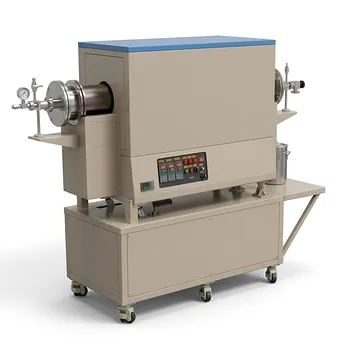
900°C Max Rotary Tube Furnace with 8 Inch 310S Alloy Tube and Optional Multi Zone Heating for Industrial Material Calcination
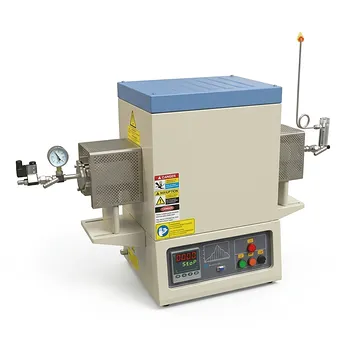
1700C Hydrogen Gas Tube Furnace with 60mm Alumina Process Tube and Integrated Hydrogen Safety Detector

High Temperature 1700C Tube Furnace with High Vacuum Turbomolecular Pump System and Multi Channel Mass Flow Controller Gas Mixer
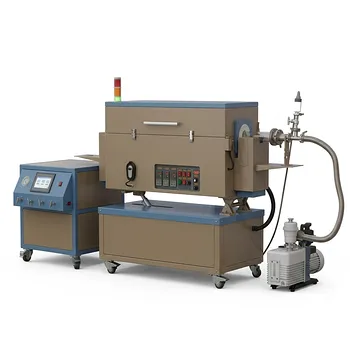
5 Inch Three Zone Rotary Tube Furnace with Integrated Gas Delivery System and 1200C Capability for Advanced Material CVD Processing
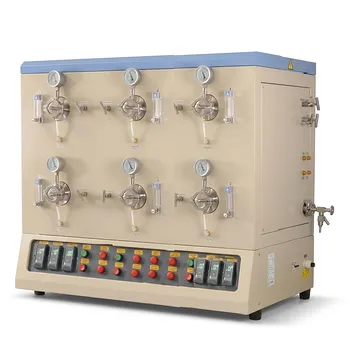
1200C High Throughput Multi Channel Tube Furnace with 50mm Quartz Tubes for Annealing and Material Phase Diagram Research
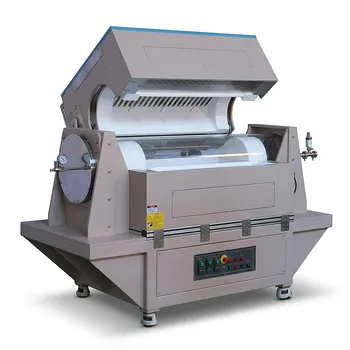
Three Zone Tube Furnace with 11 Inch or 15 Inch Quartz Tube and Hinged Flanges for Vacuum Atmosphere Heat Treatment
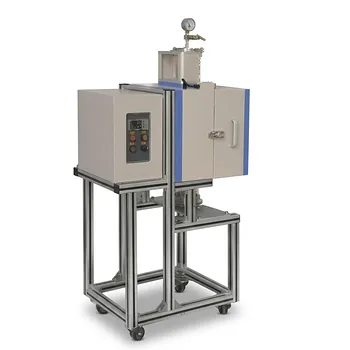
1200°C 5 Inch Vertical Quartz Tube Furnace with Stainless Steel Vacuum Flanges

High Temperature 1700C Tube Furnace with 4 Inch OD Alumina Tube and Vacuum Sealing Flanges

High Temperature 1700C Six Zone Split Tube Furnace with Alumina Tube and Water Cooled Flanges

High Temperature 1700C Benchtop Tube Furnace with 5 Inch Heating Zone High Purity Alumina Tube and Vacuum Sealing Flanges
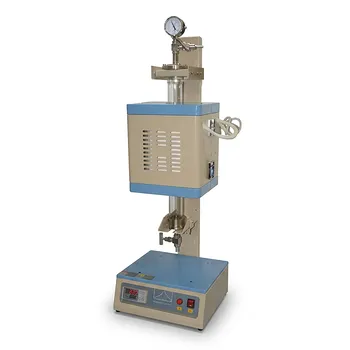
Compact Vertical Split Quartz Tube Furnace with Stainless Steel Vacuum Flanges for Rapid Thermal Quenching and Controlled Atmosphere Material Processing

1800C High Temperature Compact Vacuum Tube Furnace with 60mm OD Alumina Tube and Kanthal MoSi2 Heating Elements
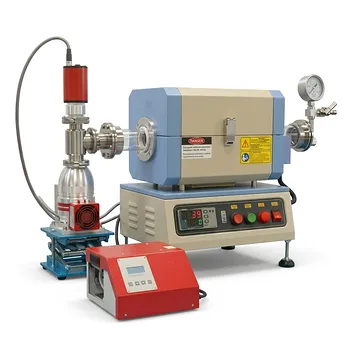
High Vacuum Compact Tube Furnace 1200C with Integrated Turbo Pump System and 8 Inch Heating Zone
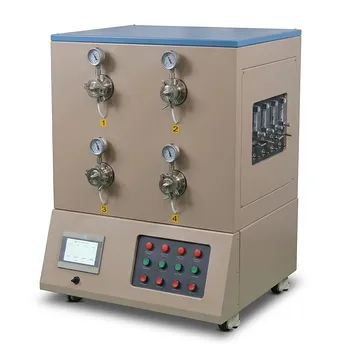
High Throughput 1200C Four Channel Tube Furnace with 3 Inch Quartz Tubes for Multi Zone Annealing and Material Research

High Temperature Automated 5 Inch Tube Furnace for Autonomous Material Research and Advanced Laboratory R&D
