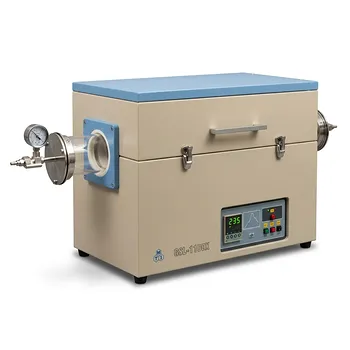
What is the function of a high-temperature Tube Resistance Furnace in the homogenization annealing of Mo-Ti-Cr-Al alloys?
Updated 3 months ago
The high-temperature tube resistance furnace serves as the critical thermal environment required to eliminate chemical inhomogeneities and transform the raw, as-cast state of Mo-Ti-Cr-Al alloys into a uniform microstructure. By maintaining precise temperatures (typically 1473 K to 1773 K) for extended durations under a protective argon atmosphere, the furnace provides the thermal energy necessary for atomic diffusion to dissolve dendritic structures and establish a single solid solution.
Core Takeaway: A high-temperature tube resistance furnace is the primary tool for homogenization annealing because it provides the dual control of extreme thermal stability and atmospheric purity, which are prerequisites for transforming segregated as-cast Mo-Ti-Cr-Al alloys into uniform, single-phase materials.
Overcoming Structural Inhomogeneity
Eliminating Dendritic Casting Structures
During the initial casting of Mo-Ti-Cr-Al alloys, the rapid cooling of the melt often results in the formation of dendritic structures. These tree-like formations represent a non-equilibrium state where elements are not distributed evenly throughout the metal matrix.
The tube resistance furnace applies sustained thermal energy to break down these patterns. This process facilitates the transition from a disorganized as-cast state to a consistent internal architecture, which is essential for any subsequent mechanical testing or industrial application.
Driving Atomic Diffusion and Solute Distribution
Homogenization relies entirely on thermal activation diffusion effects. At the high operating temperatures of 1473 K or 1773 K, the atoms of Molybdenum, Titanium, Chromium, and Aluminum gain sufficient kinetic energy to overcome local energy barriers.
This mobility allows solute elements to migrate from areas of high concentration to areas of low concentration. The furnace acts as the "engine" for this migration, effectively erasing compositional segregation and ensuring the alloy's properties are identical throughout the entire specimen.
Creating a Controlled Metallurgical Environment
Maintaining Atmospheric Purity with Argon
Molybdenum-based alloys are highly sensitive to oxidation when exposed to high temperatures in an open environment. The tube furnace configuration allows for a strictly controlled flow of protective argon gas, which displaces oxygen and nitrogen.
This inert environment ensures that the alloy undergoes internal structural changes without suffering from surface degradation or internal contamination. Without this atmospheric protection, the alloy would oxidize long before the homogenization process could be completed.
Enabling Solid-State Phase Transformation Studies
Modern tube resistance furnaces feature programmable temperature controllers that allow for highly specific cooling rates. By precisely managing the transition from peak heat (e.g., 1773 K) back to room temperature, researchers can observe how the single solid solution behaves.
This capability is vital for studying solid-state phase transformations. It allows for the controlled precipitation of specific phases, which helps engineers understand how to tailor the alloy's final properties for high-stress environments.
Understanding the Trade-offs and Limitations
Temporal and Energy Costs
Homogenization of high-melting-point alloys like Mo-Ti-Cr-Al is not an instantaneous process; it requires long-duration heat treatment. Maintaining temperatures above 1400 K for dozens or even hundreds of hours consumes significant energy and limits throughput in a production or research cycle.
Thermal Gradient Challenges
While the furnace is designed for precision, thermal gradients can exist along the length of the ceramic tube. If the sample is not placed within the "constant temperature zone," the degree of homogenization may vary, leading to inconsistent experimental results.
Material Compatibility and Contamination
At the temperatures required for Mo-Ti-Cr-Al (1773 K), the furnace tube itself (often alumina) faces extreme stress. Cross-contamination can occur if residues from previous experiments are present on the tube walls, potentially altering the chemical profile of the alloy during the long annealing cycle.
How to Apply These Insights to Your Research
Making the Right Choice for Your Goal
- If your primary focus is fundamental microstructure analysis: Utilize the furnace’s programmed cooling features to capture specific phase transformation snapshots during the transition from solid solution.
- If your primary focus is optimizing mechanical strength: Prioritize long-duration soaking at the highest safe temperature (e.g., 1773 K) to ensure the total elimination of brittle dendritic boundaries.
- If your primary focus is economic efficiency: Determine the minimum viable homogenization time by sampling the alloy at intervals to see when a single solid solution is first achieved.
By mastering the thermal and atmospheric variables of the tube resistance furnace, you ensure the Mo-Ti-Cr-Al alloy reaches its full theoretical potential as a high-performance material.
Summary Table:
| Key Function | Strategic Impact on Alloys | Technical Requirement |
|---|---|---|
| Structural Homogenization | Eliminates weak as-cast dendritic patterns | Sustained 1473 K - 1773 K heat |
| Atomic Diffusion | Erases compositional segregation for uniformity | High thermal activation energy |
| Atmosphere Control | Prevents oxidation and internal contamination | High-purity Argon flow |
| Phase Monitoring | Enables study of solid-state transformations | Programmable cooling rates |
Elevate Your Metallurgical Research with THERMUNITS
Achieve unmatched precision in your alloy development with THERMUNITS, a leading manufacturer of high-temperature laboratory equipment for material science and industrial R&D. Our specialized Tube Furnaces, Atmosphere Furnaces, and Vacuum Systems provide the extreme thermal stability and atmospheric purity essential for transforming segregated Mo-Ti-Cr-Al alloys into high-performance materials.
Our Core Solutions Include:
- Advanced Furnaces: Muffle, Vacuum, Tube, Rotary, and Hot Press models.
- Specialized Systems: CVD/PECVD, Vacuum Induction Melting (VIM), and Dental Furnaces.
- Thermal Components: High-quality Thermal Elements and heat treatment accessories.
Whether you are refining microstructures or exploring phase transformations, THERMUNITS delivers the reliability your research demands.
Contact Us Today to Optimize Your Thermal Processes
References
- Stephan Laube, Martin Heilmaier. Strength of Disordered and Ordered Al‐Containing Refractory High‐Entropy Alloys. DOI: 10.1002/adem.202301797
Mentioned Products
- High Throughput 1200C Four Channel Tube Furnace with 3 Inch Quartz Tubes for Multi Zone Annealing and Material Research
- 1200C High Throughput Multi Channel Tube Furnace with 50mm Quartz Tubes for Annealing and Material Phase Diagram Research
- High Temperature 1700C 4 Channel Tube Furnace 1 Inch Alumina Tube for Hi-Throughput Annealing
- 900 ºC Max Sliding RTP Tube Furnace with Rapid IR Heating and 4 Inch OD Quartz Tube
- High Temperature Rocking Tube Furnace with Quartz Tube and Vacuum Flange for Materials Synthesis
People Also Ask
- Why is high-purity alumina selected for sample trays? Key to High-Throughput Sintering Success
- How does a high-throughput tube furnace achieve precise sulfurization? Expert Control for CoS2–Co(OH)F Nanostructures
- Why is a quartz tube furnace necessary for phosphorus-doped MoS2/GO preparation? Ensure Purity & Precise Synthesis
- Why is high-purity argon used as a flowing atmosphere during the catalyst carbonization process in a tube furnace? Role
- What role does an industrial programmable tube furnace play in preparing MXene/MWCNTs@C-Co microspheres? Expert Guide

Tech Team · ThermUnits
Last updated on Jun 02, 2026
Related Products
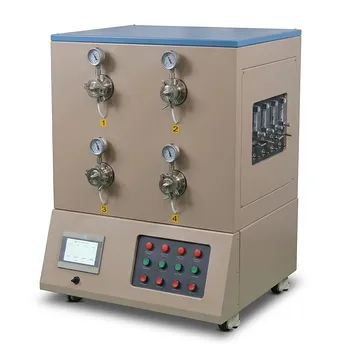
High Throughput 1200C Four Channel Tube Furnace with 3 Inch Quartz Tubes for Multi Zone Annealing and Material Research
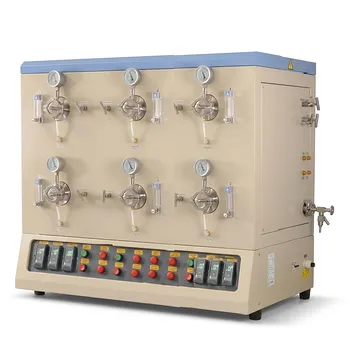
1200C High Throughput Multi Channel Tube Furnace with 50mm Quartz Tubes for Annealing and Material Phase Diagram Research
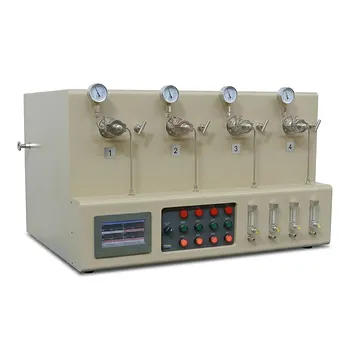
High Temperature 1700C 4 Channel Tube Furnace 1 Inch Alumina Tube for Hi-Throughput Annealing
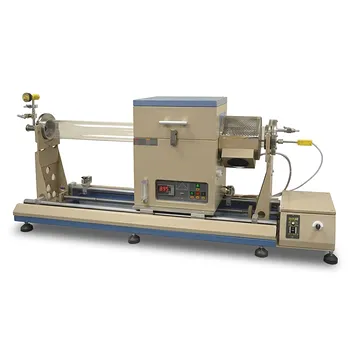
900 ºC Max Sliding RTP Tube Furnace with Rapid IR Heating and 4 Inch OD Quartz Tube
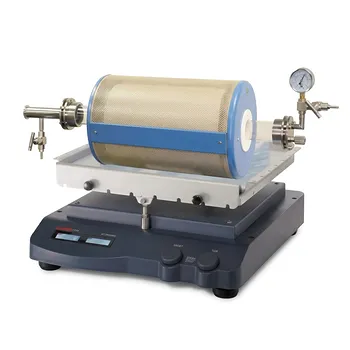
High Temperature Rocking Tube Furnace with Quartz Tube and Vacuum Flange for Materials Synthesis

Compact High Temperature 1600C Tube Furnace with 50mm Alumina Tube and Vacuum Flanges for Material Sintering

High Temperature 1700C Vertical Tube Furnace for Powder Spherification and Material Sintering
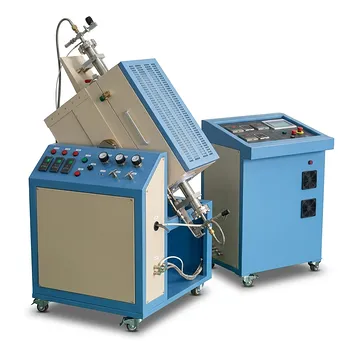
1100C High Pressure Rocking Tube Furnace with 2 Inch Super Alloy Processing Tube for Material Synthesis
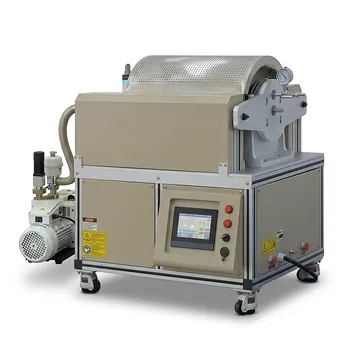
Automated 1200 C Tube Furnace for AI Material Research with 6 Inch OD and Sliding Flange

1800C High Temperature Compact Vacuum Tube Furnace with 60mm OD Alumina Tube and Kanthal MoSi2 Heating Elements
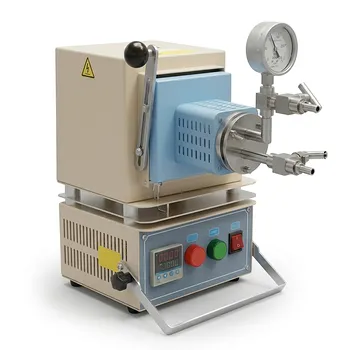
Compact Hybrid Muffle and Tube Furnace for 1000C Controlled Atmosphere Laboratory Material Sintering
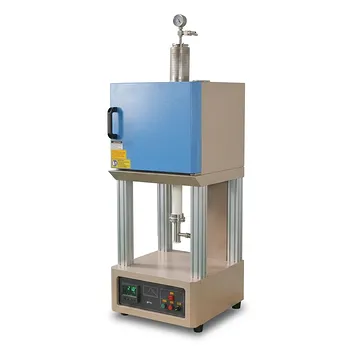
Hybrid High Temperature Tube and Box Furnace 1700C with 2 Inch Alumina Tube for Material Research
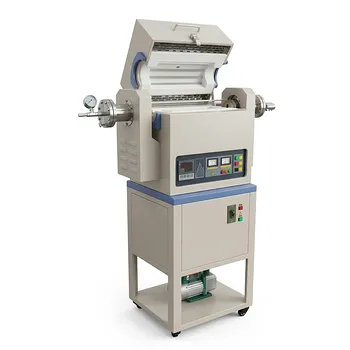
High Temperature Rotary Tilt Tubular Furnaces for Advanced Powder Sintering and Material Processing
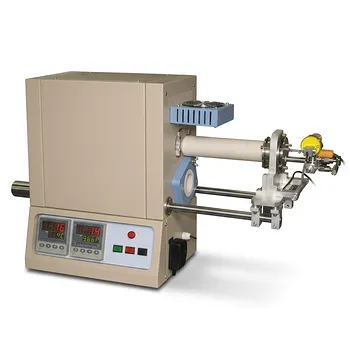
High Temperature Tube Furnace 1500C with Sliding Flanges and 50mm OD for Rapid Thermal Processing Fast Heating and Cooling

High Temperature Automated 5 Inch Tube Furnace for Autonomous Material Research and Advanced Laboratory R&D
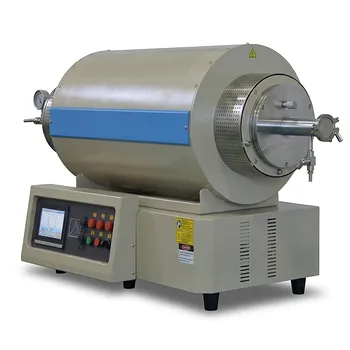
1200C Max Three Zone Tube Furnace 6 Inch OD Max with Tube and Flange
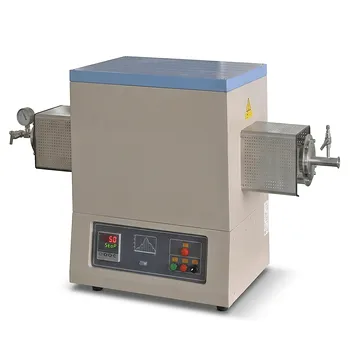
High Temperature 1700C Tube Furnace with 4 Inch OD Alumina Tube and Vacuum Sealing Flanges
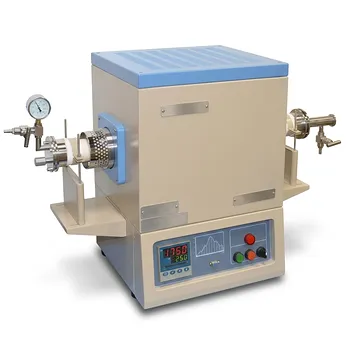
High Temperature Compact Vacuum Tube Furnace 1750C Max 60mm OD Alumina Tube

High Temperature 1700C Benchtop Tube Furnace with 5 Inch Heating Zone High Purity Alumina Tube and Vacuum Sealing Flanges