What role does an industrial programmable tube furnace play in preparing MXene/MWCNTs@C-Co microspheres? Expert Guide
Updated 3 months ago
The industrial programmable tube furnace serves as the critical thermal reactor for the multi-stage transformation of precursor materials into MXene/MWCNTs@C-Co hollow microspheres. It provides a strictly controlled nitrogen atmosphere and precise temperature profiles necessary to decompose templates, carbonize organic frameworks, and catalyze the growth of reinforcing nanotubes.
The tube furnace acts as both a chemical reactor and a structural architect, enabling the simultaneous removal of temporary templates and the synthesis of a conductive carbon matrix. By maintaining a stable, inert environment, it ensures that the delicate 2D structure of MXenes is preserved while building a robust internal support network.
Facilitating Structural and Phase Transformations
Thermal Decomposition of the Polystyrene Template
The furnace initiates the creation of the "hollow" architecture by inducing the thermal decomposition of polystyrene (PS) templates. As the temperature rises under a controlled ramp, the solid PS core evaporates, leaving behind the spherical shell structure that defines the final material morphology.
Carbonization of the ZIF-67 Framework
The tube furnace provides the high-temperature environment required to convert the ZIF-67 metal-organic framework into a stable carbon matrix. This carbonization process is essential for transforming organic ligands into a conductive support system for the cobalt and MXene components.
Reduction of Cobalt Ions
Under the inert nitrogen atmosphere, the furnace facilitates the chemical reduction of cobalt ions into metallic cobalt. This metallic cobalt is not just a structural component; it serves as the essential catalyst for the subsequent stages of nanotube growth.
Inducing In-Situ Reinforcement and Conductivity
Catalytic Growth of Multi-Walled Carbon Nanotubes (MWCNTs)
By precisely adjusting the heating rate and holding time, the furnace triggers the in-situ growth of MWCNTs from available carbon sources. This growth is catalyzed by the newly reduced metallic cobalt, resulting in a complex, interwoven network.
Strengthening the MXene Spherical Shell
The furnace ensures that the grown MWCNTs form an embedded network that physically supports the MXene shell. This internal scaffolding prevents the hollow microspheres from collapsing and significantly enhances the overall mechanical and electrical integrity of the composite.
Preservation of Two-Dimensional Properties
A critical role of the furnace is maintaining the metallic-grade conductivity and two-dimensional structure of the MXenes. By using inert gases like nitrogen or argon, the furnace prevents oxidation, ensuring the polymer scaffold converts to a highly conductive carbon matrix without degrading the MXene layers.
Understanding the Trade-offs and Pitfalls
The Risk of Morphology Deformation
While high temperatures are necessary for carbonization, excessive heat or improper gradients can lead to the sintering or deformation of the microspheres. If the temperature is not strictly mapped, the morphology-controlled supports may collapse, reducing the specific surface area and effectiveness of the material.
Atmospheric Sensitivity
The success of the calcination depends entirely on the purity of the protective atmosphere. Any leakage of oxygen into the tube furnace during the high-temperature phase can result in the unwanted oxidation of MXenes or metallic cobalt, potentially ruining the catalytic properties and electrical conductivity of the final product.
Precision vs. Throughput
Programmable tube furnaces offer high precision with specific heating rates (such as 5°C/min or 10°C/min), but these slow ramps are time-consuming. Attempting to increase throughput by accelerating the heating phase can lead to uneven carbonization and structural cracks in the hollow microspheres.
How to Optimize Calcination for Your Research Goals
When configuring your programmable tube furnace for the preparation of MXene-based composites, your primary objective should dictate your thermal profile:
- If your primary focus is Structural Integrity: Use a slower heating rate (e.g., 2-5°C/min) and extended dwell times to ensure the PS template decomposes completely without rupturing the MXene shell.
- If your primary focus is Maximum Conductivity: Prioritize a strictly inert argon atmosphere and optimize the carbonization temperature to ensure the full conversion of the polymer scaffold into a graphitic carbon matrix.
- If your primary focus is MWCNT Density: Focus on the precise "holding time" at the cobalt reduction temperature to allow sufficient time for the in-situ catalytic growth of the nanotube network.
By mastering the programmable parameters of the tube furnace, you can precisely engineer the microscopic architecture and macroscopic performance of MXene/MWCNTs@C-Co hollow microspheres.
Summary Table:
| Calcination Stage | Function in Synthesis | Critical Control Parameter |
|---|---|---|
| Template Removal | Decomposes PS core to create the hollow architecture | Precise heating ramp rate |
| Carbonization | Converts ZIF-67 into a conductive carbon matrix | Peak temperature & dwell time |
| Cobalt Reduction | Reduces ions to metallic cobalt for catalysis | Oxygen-free inert atmosphere |
| MWCNT Growth | Facilitates in-situ growth of reinforcing nanotubes | Accurate holding time |
| MXene Preservation | Maintains 2D structure and metallic conductivity | High-purity gas flow (N2/Ar) |
Elevate Your Advanced Material R&D with THERMUNITS Precision
Achieving the complex microscopic architecture of MXene/MWCNTs@C-Co microspheres requires absolute thermal precision and atmospheric integrity. THERMUNITS is a leading manufacturer of high-temperature laboratory equipment specifically designed for material science and industrial R&D.
We offer a comprehensive range of thermal processing solutions to ensure your synthesis success, including:
- Tube & Vacuum Furnaces: For precise atmospheric control and catalytic growth.
- CVD/PECVD Systems: For advanced thin-film and nanotube deposition.
- Specialized Equipment: Muffle, Atmosphere, Rotary, Hot Press, Dental Furnaces, and Vacuum Induction Melting (VIM) furnaces.
Whether you are refining battery materials or developing new catalysts, our equipment provides the stability and uniformity your research demands.
Contact THERMUNITS today to find the perfect furnace for your lab
References
- Ze Wu, Lei Liu. MXene Hollow Spheres Supported by a C–Co Exoskeleton Grow MWCNTs for Efficient Microwave Absorption. DOI: 10.1007/s40820-024-01326-3
Mentioned Products
- High Temperature Tube Furnace 1500C with Sliding Flanges and 50mm OD for Rapid Thermal Processing Fast Heating and Cooling
- Vertical 1700C Vacuum and Atmosphere Tube Furnace with 80mm Alumina Tube
- 1100C Tube Furnace with Vacuum Flange and Programmable Temperature Controller for Material Science and Industrial Heat Treatment
- Compact High Temperature 1600C Tube Furnace with 50mm Alumina Tube and Vacuum Flanges for Material Sintering
- 900°C Max Rotary Tube Furnace with 8 Inch 310S Alloy Tube and Optional Multi Zone Heating for Industrial Material Calcination
People Also Ask
- How are high-temperature tube furnaces utilized to repair etching damage? Precision Lattice Restoration Solutions
- What role does a high-temperature tube furnace play in CVD synthesis of silicon nanowires? Master VLS Growth Precision.
- What core conditions does a high-temperature tube furnace provide for rGO aerogels? Mastering Precision Synthesis.
- What role does a high-temperature tube furnace play in the sulfidation heat treatment of CoS@C/MXene nanocomposites? Guide
- How does precision tube furnace control influence CoFe nanoparticle formation? Master Your Bimetallic Synthesis.

Tech Team · ThermUnits
Last updated on Jun 02, 2026
Related Products
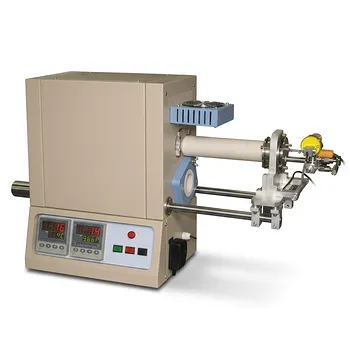
High Temperature Tube Furnace 1500C with Sliding Flanges and 50mm OD for Rapid Thermal Processing Fast Heating and Cooling

Vertical 1700C Vacuum and Atmosphere Tube Furnace with 80mm Alumina Tube

1100C Tube Furnace with Vacuum Flange and Programmable Temperature Controller for Material Science and Industrial Heat Treatment

Compact High Temperature 1600C Tube Furnace with 50mm Alumina Tube and Vacuum Flanges for Material Sintering
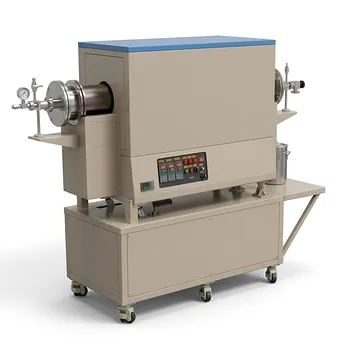
900°C Max Rotary Tube Furnace with 8 Inch 310S Alloy Tube and Optional Multi Zone Heating for Industrial Material Calcination
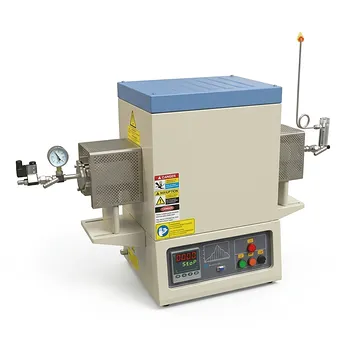
1700C Hydrogen Gas Tube Furnace with 60mm Alumina Process Tube and Integrated Hydrogen Safety Detector

High Temperature 1700C Tube Furnace with High Vacuum Turbomolecular Pump System and Multi Channel Mass Flow Controller Gas Mixer
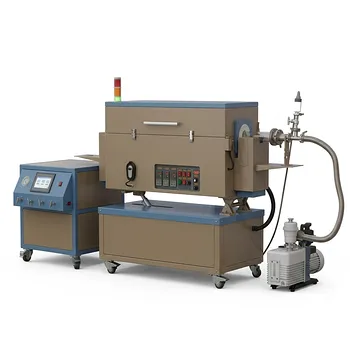
5 Inch Three Zone Rotary Tube Furnace with Integrated Gas Delivery System and 1200C Capability for Advanced Material CVD Processing
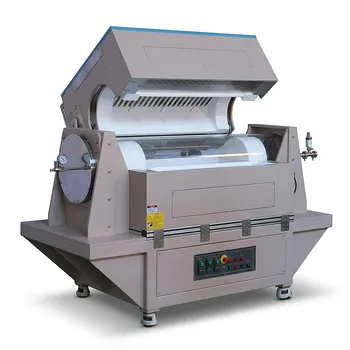
Three Zone Tube Furnace with 11 Inch or 15 Inch Quartz Tube and Hinged Flanges for Vacuum Atmosphere Heat Treatment
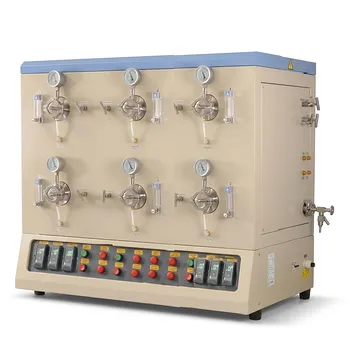
1200C High Throughput Multi Channel Tube Furnace with 50mm Quartz Tubes for Annealing and Material Phase Diagram Research
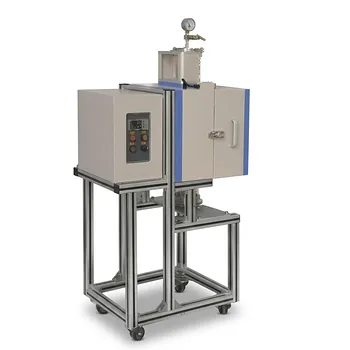
1200°C 5 Inch Vertical Quartz Tube Furnace with Stainless Steel Vacuum Flanges
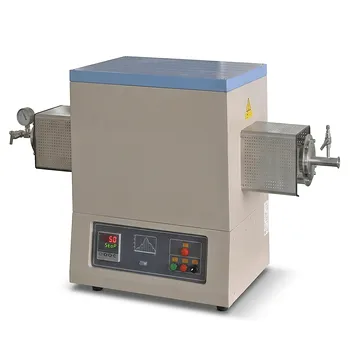
High Temperature 1700C Tube Furnace with 4 Inch OD Alumina Tube and Vacuum Sealing Flanges

Compact Vertical Split Quartz Tube Furnace with Stainless Steel Vacuum Flanges for Rapid Thermal Quenching and Controlled Atmosphere Material Processing

High Temperature 1700C Benchtop Tube Furnace with 5 Inch Heating Zone High Purity Alumina Tube and Vacuum Sealing Flanges

High Temperature 1700C Six Zone Split Tube Furnace with Alumina Tube and Water Cooled Flanges

1800C High Temperature Compact Vacuum Tube Furnace with 60mm OD Alumina Tube and Kanthal MoSi2 Heating Elements
High Vacuum Compact Tube Furnace 1200C with Integrated Turbo Pump System and 8 Inch Heating Zone
High Throughput 1200C Four Channel Tube Furnace with 3 Inch Quartz Tubes for Multi Zone Annealing and Material Research

High Temperature Automated 5 Inch Tube Furnace for Autonomous Material Research and Advanced Laboratory R&D
