Why is high-purity argon used as a flowing atmosphere during the catalyst carbonization process in a tube furnace? Role
Updated 3 months ago
High-purity argon is used during carbonization to create an inert, oxygen-free environment that prevents the carbon framework and metal active sites from undergoing oxidative combustion. Beyond simple protection, the continuous flow of argon acts as a mechanical broom, sweeping away volatile decomposition byproducts that would otherwise contaminate the catalyst or obstruct the development of its internal pore structure.
Core Takeaway: Argon serves a dual role as both a chemical shield and a structural refiner, ensuring the catalyst retains its intended metallic valence states and microscopic morphology by isolating it from reactive gases and removing inhibitory byproducts.
Prevention of Oxidative Degradation
Protecting the Carbon Skeleton
At the extreme temperatures required for carbonization (often 700°C to 1300°C), carbon-based materials are highly susceptible to ablation and oxidative combustion. High-purity argon displaces oxygen and moisture, ensuring the carbon precursor undergoes pyrolysis—a controlled thermal decomposition—rather than simply burning away.
Preserving Metal Active Sites
Catalysts often rely on metals being in specific valence or metallic states to remain chemically active. An argon atmosphere prevents the formation of undesirable coarse metal oxides or brittle oxide films, which would otherwise diminish the catalyst's performance and mechanical integrity.
Maintaining Structural Integrity
By excluding oxygen, argon ensures that the final product maintains its microscopic morphology, such as the delicate structure of nanofibers or carbon skeletons. This preservation is critical for maximizing material yield and ensuring the final catalyst possesses a highly conductive carbon framework.
Management of Reaction Byproducts
Continuous Removal of Volatiles
As polymer ligands and precursors decompose, they release volatile organic compounds (VOCs) and nitrogen gas. The flowing nature of the argon atmosphere effectively carries these gases away from the reaction zone, preventing them from interfering with the carbonization process.
Preventing Byproduct Condensation
If gaseous byproducts are allowed to remain in the furnace, they may undergo condensation as temperatures fluctuate, leading to the contamination of the catalyst surface. Continuous argon flow ensures these impurities are exhausted, maintaining the purity of the final material.
Engineering Pore Networks
The movement of argon gas promotes the opening of the material's pore structure and the formation of closed pores. This precise regulation of the carbon framework, including graphitic interlayer spacing, is essential for applications like sodium-ion storage and high-surface-area catalysis.
Understanding the Trade-offs
Purity vs. Cost
While argon is highly effective, the requirement for high-purity grades is absolute; even trace amounts of oxygen can lead to significant mass loss in carbon materials. This makes the process more expensive than using lower-grade inert gases or nitrogen, which may be unsuitable if the material is sensitive to nitridation.
Flow Rate Optimization
The velocity of the argon flow must be carefully balanced. A flow that is too slow fails to remove byproducts effectively, while a flow that is too fast can cause temperature instabilities within the tube furnace or physically displace lightweight precursors.
Thermal Gradients
Inert gas flow can introduce convective cooling, potentially creating thermal gradients across the sample. These gradients may lead to non-uniform carbonization, requiring precise control over the furnace heating elements to ensure a stable high-temperature field.
How to Apply This to Your Project
Making the Right Choice for Your Goal
- If your primary focus is maximum surface area: Maintain a consistent, moderate flow of argon to ensure all volatile decomposition products are removed, preventing pore blockage.
- If your primary focus is precise metal valence states: Use the highest purity argon available (99.999%+) and ensure the system is thoroughly purged before heating to prevent any trace oxidation.
- If your primary focus is structural morphology (e.g., nanofibers): Optimize the flow rate to be high enough for byproduct removal but low enough to avoid mechanical disturbance of the delicate carbon structures.
Utilizing a flowing argon atmosphere is the definitive method for transforming raw precursors into high-performance catalysts with predictable chemical and structural properties.
Summary Table:
| Function | Primary Mechanism | Benefit to Catalyst |
|---|---|---|
| Inert Shielding | Displaces oxygen and moisture | Prevents oxidation of carbon and metal sites |
| Byproduct Removal | Sweeps away volatile VOCs and gases | Prevents surface contamination and pore blockage |
| Structural Control | Maintains specific valence states | Ensures high conductivity and desired morphology |
| Pore Engineering | Facilitates gas exchange | Optimizes internal surface area and pore networks |
Achieve peak precision in material synthesis with THERMUNITS, a leading manufacturer of high-temperature laboratory equipment for material science and industrial R&D. Our specialized Tube Furnaces are designed for exact atmosphere control, ensuring your catalysts maintain their structural integrity and active states. Beyond tube furnaces, we offer a comprehensive range of solutions, including Muffle, Vacuum, Atmosphere, Rotary, and Hot Press furnaces, CVD/PECVD systems, Dental Furnaces, electric rotary kilns, and Vacuum Induction Melting (VIM) furnaces. Partner with us to leverage our expertise in thermal processing and high-quality Thermal Elements. Contact the THERMUNITS team today to discover how our equipment can enhance your laboratory's R&D capabilities and deliver superior material outcomes.
References
- Arseniy Y. Kalnin, Elena V. Alekseeva. Impact of Metal Source Structure on the Electrocatalytic Properties of Polyacrylonitrile-Derived Co-N-Doped Oxygen Reduction Reaction Catalysts. DOI: 10.3390/nano14231924
Mentioned Products
- High Temperature Tube Furnace 1500C with Sliding Flanges and 50mm OD for Rapid Thermal Processing Fast Heating and Cooling
- Vertical 1700C Vacuum and Atmosphere Tube Furnace with 80mm Alumina Tube
- 1100C Tube Furnace with Vacuum Flange and Programmable Temperature Controller for Material Science and Industrial Heat Treatment
- Compact High Temperature 1600C Tube Furnace with 50mm Alumina Tube and Vacuum Flanges for Material Sintering
- 900°C Max Rotary Tube Furnace with 8 Inch 310S Alloy Tube and Optional Multi Zone Heating for Industrial Material Calcination
People Also Ask
- How are high-temperature tube furnaces utilized to repair etching damage? Precision Lattice Restoration Solutions
- What core conditions does a high-temperature tube furnace provide for rGO aerogels? Mastering Precision Synthesis.
- What role does a high-temperature tube furnace play in CVD synthesis of silicon nanowires? Master VLS Growth Precision.
- How does precision tube furnace control influence CoFe nanoparticle formation? Master Your Bimetallic Synthesis.
- What role does a high-temperature tube furnace play in the sulfidation heat treatment of CoS@C/MXene nanocomposites? Guide

Tech Team · ThermUnits
Last updated on Jun 02, 2026
Related Products
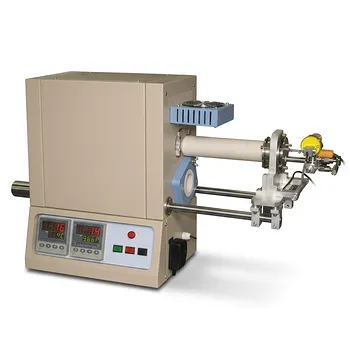
High Temperature Tube Furnace 1500C with Sliding Flanges and 50mm OD for Rapid Thermal Processing Fast Heating and Cooling

Vertical 1700C Vacuum and Atmosphere Tube Furnace with 80mm Alumina Tube

1100C Tube Furnace with Vacuum Flange and Programmable Temperature Controller for Material Science and Industrial Heat Treatment

Compact High Temperature 1600C Tube Furnace with 50mm Alumina Tube and Vacuum Flanges for Material Sintering
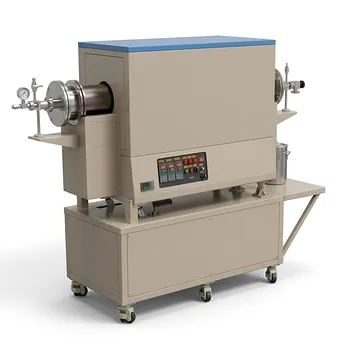
900°C Max Rotary Tube Furnace with 8 Inch 310S Alloy Tube and Optional Multi Zone Heating for Industrial Material Calcination

1700C Hydrogen Gas Tube Furnace with 60mm Alumina Process Tube and Integrated Hydrogen Safety Detector

High Temperature 1700C Tube Furnace with High Vacuum Turbomolecular Pump System and Multi Channel Mass Flow Controller Gas Mixer
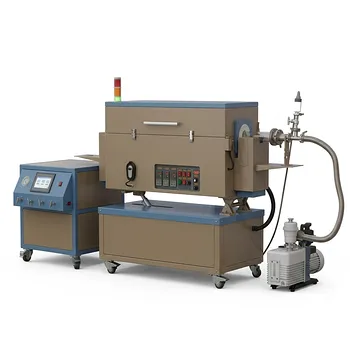
5 Inch Three Zone Rotary Tube Furnace with Integrated Gas Delivery System and 1200C Capability for Advanced Material CVD Processing
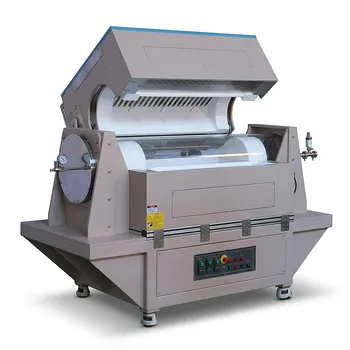
Three Zone Tube Furnace with 11 Inch or 15 Inch Quartz Tube and Hinged Flanges for Vacuum Atmosphere Heat Treatment

1200C High Throughput Multi Channel Tube Furnace with 50mm Quartz Tubes for Annealing and Material Phase Diagram Research

1200°C 5 Inch Vertical Quartz Tube Furnace with Stainless Steel Vacuum Flanges

1800C High Temperature Compact Vacuum Tube Furnace with 60mm OD Alumina Tube and Kanthal MoSi2 Heating Elements

High Temperature 1700C Benchtop Tube Furnace with 5 Inch Heating Zone High Purity Alumina Tube and Vacuum Sealing Flanges
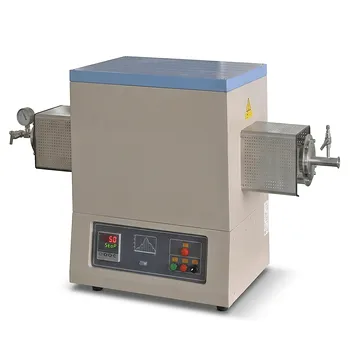
High Temperature 1700C Tube Furnace with 4 Inch OD Alumina Tube and Vacuum Sealing Flanges

High Temperature 1700C Six Zone Split Tube Furnace with Alumina Tube and Water Cooled Flanges

Compact Vertical Split Quartz Tube Furnace with Stainless Steel Vacuum Flanges for Rapid Thermal Quenching and Controlled Atmosphere Material Processing
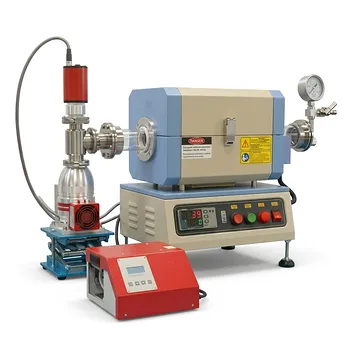
High Vacuum Compact Tube Furnace 1200C with Integrated Turbo Pump System and 8 Inch Heating Zone
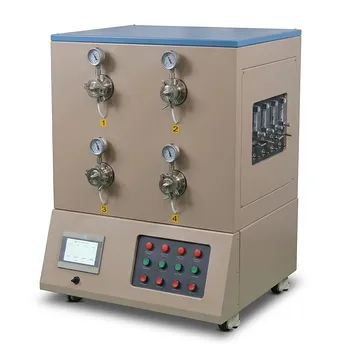
High Throughput 1200C Four Channel Tube Furnace with 3 Inch Quartz Tubes for Multi Zone Annealing and Material Research

High Temperature Automated 5 Inch Tube Furnace for Autonomous Material Research and Advanced Laboratory R&D
