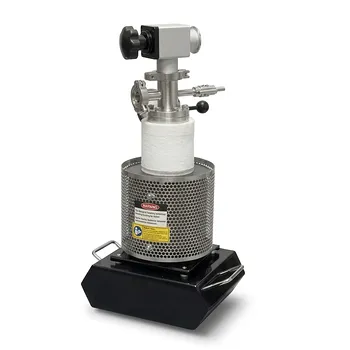
What is the function of a laboratory tube furnace in seaweed molten salt activation? Create High-Performance Carbon
Updated 5 months ago
The primary function of a laboratory tube furnace in seaweed molten salt activation is to provide a strictly controlled, oxygen-free thermal environment that melts eutectic salts to transform biomass into porous carbon. The furnace ensures that temperatures exceed the melting point of the salt activator while maintaining an inert atmosphere—typically nitrogen or argon—to prevent sample combustion. This specific environment allows liquid salts to physically and chemically restructure the seaweed into a high-performance mesoporous material.
A tube furnace acts as a high-precision chemical reactor that enables molten salt to act as both a liquid template and a catalyst, ensuring uniform carbonization and pore development while preventing sample oxidation.
Achieving the Molten State for Deep Penetration
Thermal Precision for Eutectic Melting
The tube furnace provides the precise temperature control necessary to exceed the melting point of specific salt mixtures, such as ZnCl2-NaCl-KCl eutectic mixtures. Maintaining a stable, uniform temperature is critical for ensuring the activator remains in a consistent liquid phase throughout the reaction.
Liquid-Phase Penetration of Biomass
By liquefying the activator, the tube furnace allows the salts to fully penetrate the initial cellular structure of the seaweed. This liquid-phase interaction is more thorough than solid-state mixing, leading to a more uniform distribution of the catalyst within the biomass precursor.
Facilitating the Physical Template Effect
Once molten, the salts act as a physical template within the carbonizing seaweed matrix. As the furnace drives the carbonization process, the space occupied by these liquid salts defines the mesoporous structures that remain after the salts are eventually washed away.
Atmosphere Control and Chemical Transformation
Preventing Oxidation with Inert Gas
The sealed environment of a tube furnace allows for the continuous flow of nitrogen or argon, displacing all oxygen. This is vital because, at the high temperatures required for activation (often 400°C to 1000°C), the presence of even trace oxygen would cause the seaweed to combust into ash rather than carbonizing into a functional material.
Driving Lewis Acid Catalysis
The high-temperature environment enables the Lewis acid catalytic properties of molten salts to actively decompose the seaweed's organic components. This chemical etching of the carbon skeleton is what ultimately creates the high surface area and developed pore structures required for advanced applications.
Conversion to Graphitized Frameworks
At elevated temperatures, typically above 700°C, the tube furnace facilitates the transition from amorphous biochar to a graphitized carbon framework. This structural evolution significantly improves the electrical conductivity and mechanical stability of the resulting seaweed-derived carbon.
Technical Challenges and Trade-offs
Equipment Corrosion and Maintenance
Molten salts, particularly chlorides, can become highly corrosive to the furnace's internal components at high temperatures. Vaporized salts may attack quartz work tubes or heating elements, requiring the use of specialized liners or sacrificial materials to protect the equipment.
Throughput and Scaling Limitations
While tube furnaces offer superior atmospheric control and temperature uniformity, they are generally designed for small-scale batch processing. Scaling the molten salt activation process from a laboratory tube furnace to industrial volumes requires significant engineering to maintain the same level of environmental precision.
Thermal Gradients and Sample Placement
Despite their uniform radial heating, tube furnaces can have longitudinal temperature gradients near the ends of the tube. Precise sample placement within the "hot zone" is mandatory to ensure that the molten salt activation occurs at the exact temperature intended.
How to Apply This to Your Research
Implementing the Right Strategy for Your Goal
To achieve the best results with seaweed activation, your furnace settings should align with your material requirements:
- If your primary focus is Maximizing Surface Area: Use a lower temperature (approx. 400°C-600°C) with a high salt-to-biomass ratio to emphasize the physical templating effect.
- If your primary focus is Electrical Conductivity: Increase the furnace temperature to 800°C or higher to promote the formation of a graphitized carbon framework.
- If your primary focus is Equipment Longevity: Utilize a high-purity alumina tube rather than quartz when working with aggressive chloride or fluoride molten salts.
By mastering the balance between inert atmosphere flow and precise thermal ramping, you can effectively leverage the tube furnace to dictate the microscopic architecture of seaweed-derived carbon.
Summary Table:
| Process Phase | Furnace Function | Key Outcome |
|---|---|---|
| Melting | Thermal Precision | Achieves eutectic state for deep biomass penetration |
| Carbonization | Inert Atmosphere | Prevents combustion; ensures oxygen-free transformation |
| Templating | Liquid-Phase Control | Defines mesoporous structures within carbon matrix |
| Graphitization | High-Temp Stability | Enhances electrical conductivity and material strength |
Advanced Thermal Solutions for Material Science
THERMUNITS is a leading manufacturer of high-temperature laboratory equipment, providing the precision required for complex biomass transformations. Our high-performance Tube, Muffle, Vacuum, and Atmosphere furnaces are designed to meet the rigorous demands of material science and industrial R&D.
Whether you are working on seaweed-derived carbon, CVD/PECVD systems, or advanced heat treatments, we offer tailored solutions including Rotary furnaces, Hot Press systems, and Vacuum Induction Melting (VIM) furnaces to ensure your research success.
Unlock the full potential of your research.
Contact THERMUNITS today to find the ideal thermal processing equipment for your laboratory!
References
- Jonas De Smedt, Frederik Ronsse. The feasibility of activated carbon derived from waste seaweed via molten salt activation in a eutectic mixture of ZnCl2-NaCl-KCl for adsorption of anionic dyes. DOI: 10.1007/s13399-024-06117-9
Mentioned Products
- Multi Position Tube Furnace 1100C for Laboratory Material Research and Advanced Industrial Thermal Processing
- High Temperature 1200C Split Tube Furnace with Hinged Vacuum Flanges and 4 Inch Quartz Tube for Laboratory Research
- Ten Zone Multi Orientation Laboratory Tube Furnace for 1200C High Temperature Gradient Thermal Processing
- 1200C Max Dual Sliding Tube Furnace with 50 mm Tube Flanges for CVD
- High Temperature 1700C Vertical Tube Furnace for Powder Spherification and Material Sintering
People Also Ask
- Why use a tube furnace for oxygen annealing LaCrO3/LaMnO3? Optimize Phase Transition & Magnetic Performance.
- What key role does a laboratory high-temperature tube furnace play in the production of carbon nanofibers? Guide
- How is a laboratory high-temperature tube furnace utilized to research the products of aluminothermic reduction? Advanced Metallurgical Solutions
- What is the role of a laboratory tube furnace in the carbonization process of porous carbon foam (PCF)? Master 3D Synthesis
- What role does a laboratory tube furnace play in the pyrolysis and carbonization of biomass? Optimize Thermal Research.

Tech Team · ThermUnits
Last updated on Apr 14, 2026
Related Products
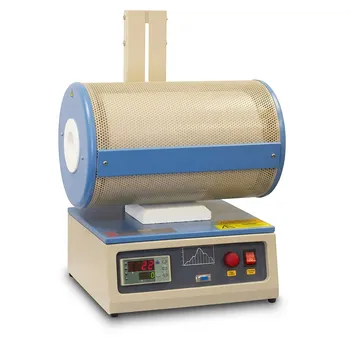
Multi Position Tube Furnace 1100C for Laboratory Material Research and Advanced Industrial Thermal Processing
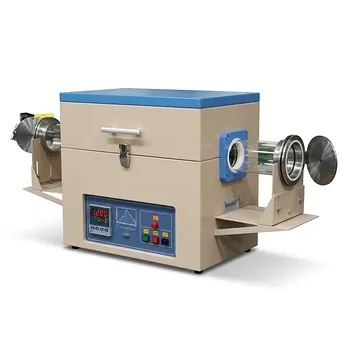
High Temperature 1200C Split Tube Furnace with Hinged Vacuum Flanges and 4 Inch Quartz Tube for Laboratory Research
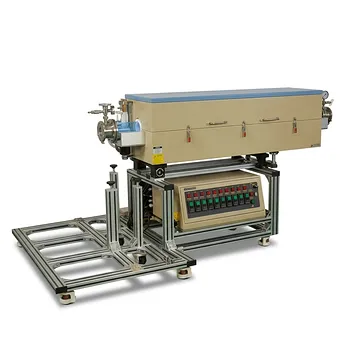
Ten Zone Multi Orientation Laboratory Tube Furnace for 1200C High Temperature Gradient Thermal Processing
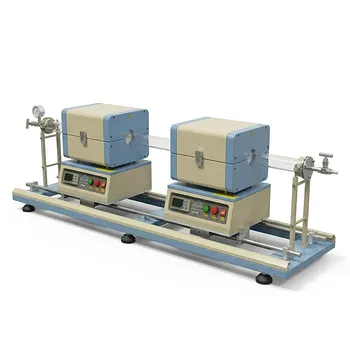
1200C Max Dual Sliding Tube Furnace with 50 mm Tube Flanges for CVD

High Temperature 1700C Vertical Tube Furnace for Powder Spherification and Material Sintering
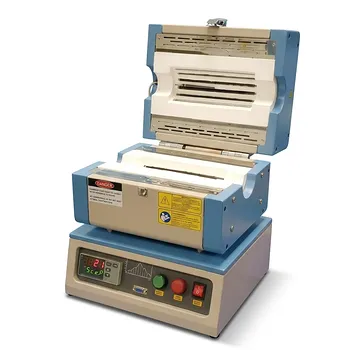
1250C Compact Split Tube Furnace with 8 Inch Heating Zone and Programmable Controller

1800C High Temperature Compact Vacuum Tube Furnace with 60mm OD Alumina Tube and Kanthal MoSi2 Heating Elements
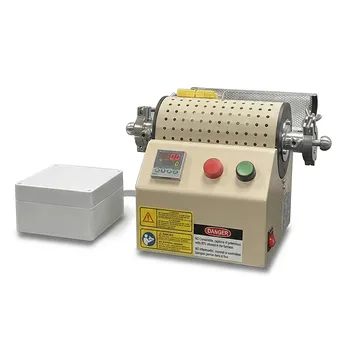
1000C Mini Tube Furnace with 20mm Quartz Tube and Vacuum Flanges for Material Science Research and Controlled Atmosphere Small Sample Processing
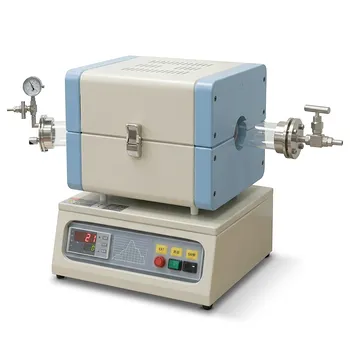
1200C Tube Furnace with Internal Magnetic Sample Sliding for Direct Vaporizing Deposition and Rapid Thermal Processing
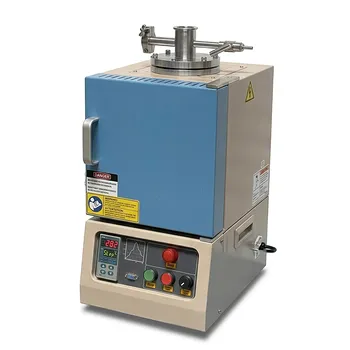
High Temperature Hybrid Muffle and Tube Furnace with Vacuum Capability and PID Control
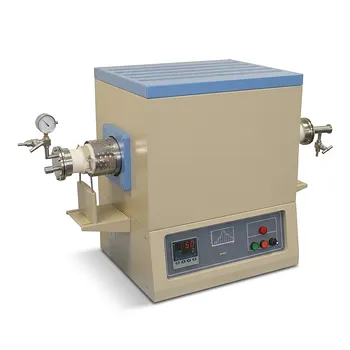
1700C High Temperature Alumina Tube Furnace with 18 Inch Heated Zone and Vacuum Sealing Flanges
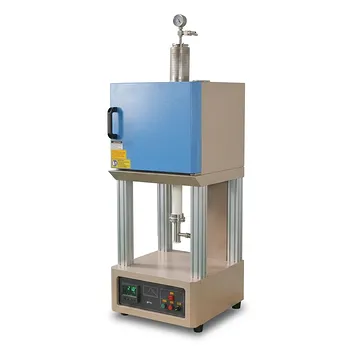
Hybrid High Temperature Tube and Box Furnace 1700C with 2 Inch Alumina Tube for Material Research
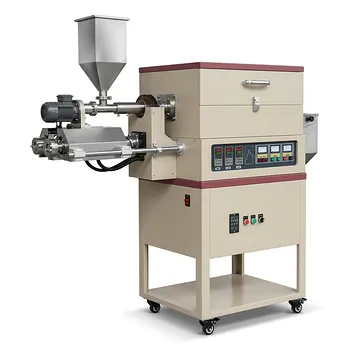
Laboratory Tilting Rotary Tubular Furnaces for Material Science and Industrial Heat Treatment
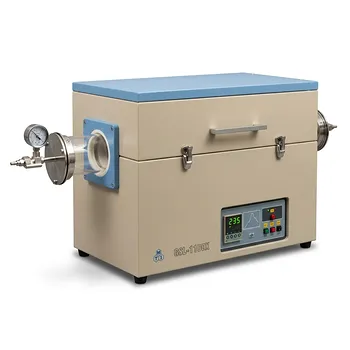
Single Zone Tube Furnace 5 Inch Quartz Tube 36 Inch Heating Zone Vacuum Flanges
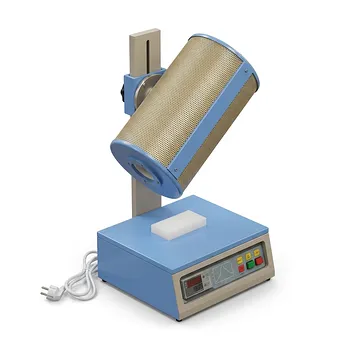
1100°C Vertical Laboratory Furnace for DIY Tubular Reactors with PID Temperature Controller
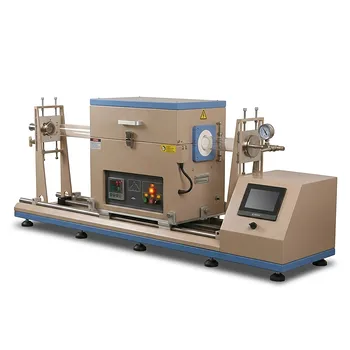
1200C Sliding Tube Furnace for Rapid Thermal Processing and CVD Graphene Growth with 100mm OD Capacity
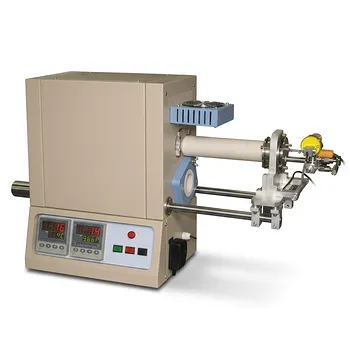
High Temperature Tube Furnace 1500C with Sliding Flanges and 50mm OD for Rapid Thermal Processing Fast Heating and Cooling

Compact Vertical Split Quartz Tube Furnace with Stainless Steel Vacuum Flanges for Rapid Thermal Quenching and Controlled Atmosphere Material Processing

Vertical 1700C Vacuum and Atmosphere Tube Furnace with 80mm Alumina Tube