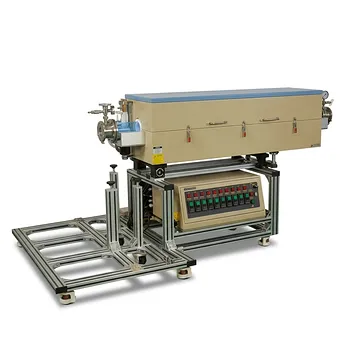
What is the function of an atmosphere tube furnace? Achieving Precision and Purity in Advanced Material Synthesis
Updated 3 months ago
An atmosphere tube furnace is a specialized thermal processing tool designed to create a sealed, highly controlled environment for material transformation. It functions by integrating precise temperature regulation with a customized gaseous atmosphere—such as inert, reducing, or oxidizing—to ensure chemical reactions occur at exact stoichiometric ratios. This dual control allows researchers to synthesize high-purity materials, including superconductors, advanced ceramics, and functional nanomaterials, while preventing unwanted contamination or oxidation.
The core function of an atmosphere tube furnace is to act as a stable, isolated micro-reactor that maintains absolute control over the chemical and thermal variables of a reaction. By eliminating environmental interference, it enables the repeatable synthesis of materials with precise crystalline structures and phase purity.
Managing the Chemical Environment
Isolation from Contaminants
The furnace utilizes a sealed tube to effectively isolate raw materials from oxygen and moisture in the ambient air. This isolation is critical for preventing the oxidation or hydrolysis of sensitive precursors during high-temperature processing.
Controlled Gaseous Interaction
By introducing high-purity gases like Argon, Nitrogen, or Hydrogen, the furnace can create neutral, oxidizing, or reducing environments. This allows for specific chemical pathways, such as pyrolysis or reduction, to occur under set physical conditions.
Elimination of Reaction Byproducts
The enclosed space and regulated gas flow help to effectively remove byproduct gases generated during synthesis. This prevents impurity contamination and ensures that the final product maintains its intended chemical composition.
Precision Thermal Processing
High Temperature Uniformity
A defining feature of the tube furnace is its ability to provide a highly uniform thermal zone. This ensures that all reactants undergo an even transformation, which is essential for obtaining consistent morphologies and precise grain sizes in the final material.
Multi-Stage Programmable Control
Advanced furnaces feature multi-stage programmable temperature control to manage complex heating curves. This allows for the precise regulation of heating rates, holding times, and cooling phases, facilitating sufficient diffusion for solid-phase reactions.
Support for Vapor Deposition
These furnaces are foundational for Chemical Vapor Deposition (CVD) and chemical vapor transport. By maintaining a constant temperature and specific atmosphere, they enable precursors to transform into thin films or nanomaterials with specific crystal structures.
Understanding the Trade-offs
Geometry and Throughput Constraints
The primary limitation of a tube furnace is its cylindrical geometry, which restricts the volume and shape of the materials being processed. This makes it ideal for research and small-batch production but less suitable for large-scale industrial throughput compared to box furnaces.
Operational Complexity and Safety
Operating under specific atmospheres, particularly reducing gases like Hydrogen, introduces significant safety risks. These systems require rigorous monitoring of gas seals, pressure levels, and exhaust venting to prevent leaks or combustion.
Thermal Gradient Sensitivity
While the center of the tube offers high uniformity, thermal gradients naturally occur toward the ends of the tube. Users must carefully place samples within the "constant temperature zone" to avoid structural inconsistencies in the synthesized material.
Making the Right Choice for Your Goal
To achieve the best results in advanced material synthesis, you must align the furnace capabilities with your specific research objectives.
- If your primary focus is phase purity and stoichiometry: Prioritize a model with high-precision gas mass flow controllers and superior vacuum sealing to eliminate all traces of atmospheric oxygen.
- If your primary focus is crystal growth or CVD: Select a furnace with multi-zone heating capabilities to create the specific temperature gradients required for vapor transport and deposition.
- If your primary focus is synthesizing reactive powders: Ensure the furnace is rated for the specific reducing or corrosive gases your process requires, with appropriate safety interlocks in place.
By mastering the balance between thermal uniformity and atmospheric composition, you can achieve the level of precision required for the next generation of material innovation.
Summary Table:
| Key Function | Core Benefit | Primary Application |
|---|---|---|
| Atmospheric Control | Prevents oxidation & ensures purity | High-purity ceramics & nanomaterials |
| Thermal Uniformity | Consistent grain size & morphology | Phase-pure material synthesis |
| Gas Interaction | Enables reduction, pyrolysis, & CVD | Thin films & functional materials |
| Programmable Heating | Precise control over heating/cooling rates | Solid-phase reactions & crystal growth |
Elevate Your Research with THERMUNITS Precision Engineering
At THERMUNITS, we understand that advanced material synthesis requires absolute control. As a leading manufacturer of high-temperature laboratory equipment, we empower material scientists and industrial R&D teams with the tools needed to push the boundaries of innovation.
Whether you are focusing on CVD/PECVD, high-purity ceramics, or complex alloys, our comprehensive range of thermal solutions is engineered for excellence. Our product lineup includes:
- Atmosphere & Vacuum Tube Furnaces for precise gas-controlled synthesis.
- Muffle & Box Furnaces for reliable high-temperature processing.
- Vacuum Induction Melting (VIM) & Hot Press Furnaces for specialized metallurgy.
- Rotary Kilns & Dental Furnaces tailored for specific industrial and lab needs.
Why partner with THERMUNITS? We provide superior thermal stability, advanced atmospheric integrity, and durable heating elements designed to ensure repeatable, high-quality results for your most demanding projects.
Ready to optimize your laboratory's heat treatment capabilities? Contact our technical experts today to find the perfect solution for your research goals!
References
- Yulian He, Zhiyong Han. Preparation of the Amorphous NiCoP Nanosheet Array on Carbon Cloth for High‐Performance Solid‐State Hybrid Supercapacitor. DOI: 10.1002/slct.202304554
Mentioned Products
- Vertical 1700C Vacuum and Atmosphere Tube Furnace with 80mm Alumina Tube
- 1750°C High Temperature Benchtop Vacuum Atmosphere Tube Furnace with Kanthal Super 1800 Heating Elements and 60mm Alumina Processing Tube
- 1200C Hybrid Muffle and Tube Furnace for Material Research with Dual Atmosphere Control Quartz Tubes
- Compact Hybrid Muffle and Tube Furnace for 1000C Controlled Atmosphere Laboratory Material Sintering
- Three Zone Tube Furnace with 11 Inch or 15 Inch Quartz Tube and Hinged Flanges for Vacuum Atmosphere Heat Treatment
People Also Ask
- How is an industrial-grade vertical tube furnace utilized in smelting leaching residues? Enhance Metal Recovery Efficiency
- What is the function of a laboratory-grade vertical tube furnace in fast pyrolysis? Optimize Composite Research.
- How does a vertical tube furnace facilitate thermoelectric alloy melting? Precision synthesis for material homogeneity.
- Why is a thermocouple sensor indispensable for monitoring the vertical tube furnace during gallium oxide nanowire production? Optimize VLS Growth
- What are the advantages of using a vertical tube furnace for crucible experiments simulating steel-slag interactions?

Tech Team · ThermUnits
Last updated on Jun 02, 2026
Related Products

Vertical 1700C Vacuum and Atmosphere Tube Furnace with 80mm Alumina Tube
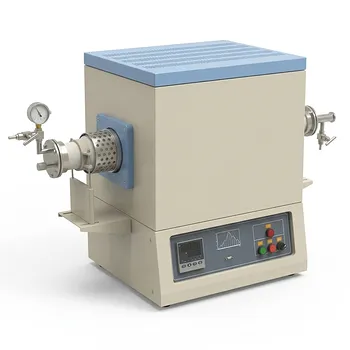
1750°C High Temperature Benchtop Vacuum Atmosphere Tube Furnace with Kanthal Super 1800 Heating Elements and 60mm Alumina Processing Tube
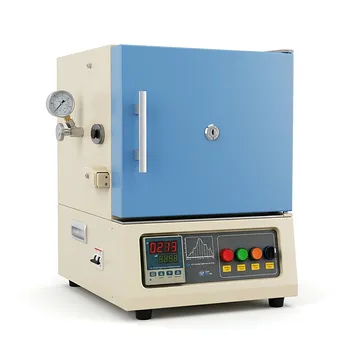
1200C Hybrid Muffle and Tube Furnace for Material Research with Dual Atmosphere Control Quartz Tubes
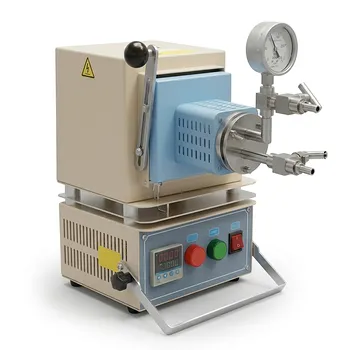
Compact Hybrid Muffle and Tube Furnace for 1000C Controlled Atmosphere Laboratory Material Sintering

Three Zone Tube Furnace with 11 Inch or 15 Inch Quartz Tube and Hinged Flanges for Vacuum Atmosphere Heat Treatment
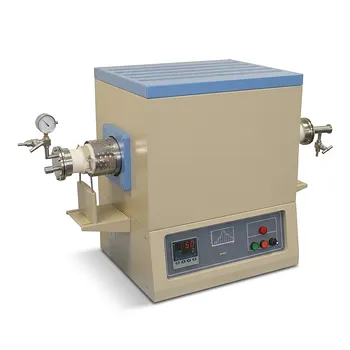
1700C High Temperature Alumina Tube Furnace with 18 Inch Heated Zone and Vacuum Sealing Flanges
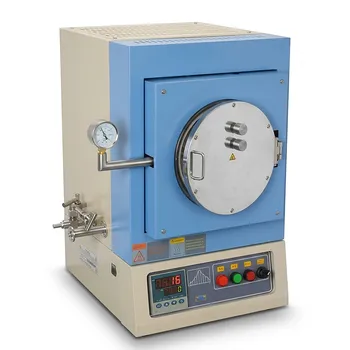
1100°C High Temperature Quartz Chamber Furnace 8 Inch OD with 7.6 Liter Capacity and Vacuum Atmosphere Capability
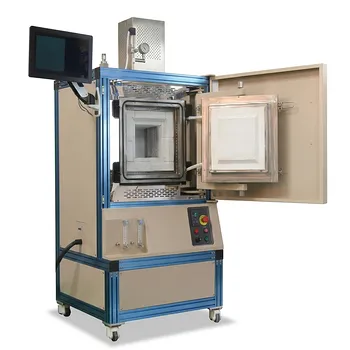
High Temperature Hydrogen Atmosphere Box Furnace 1650C Max Reducing Environment Material Synthesis System 8x8x8 Chamber

1200°C 5 Inch Vertical Quartz Tube Furnace with Stainless Steel Vacuum Flanges
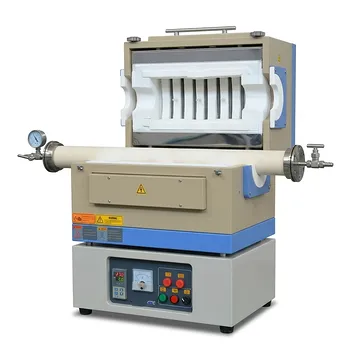
High Temperature 1600C Split Tube Furnace Vacuum Flanges Valves Optional 60mm 80mm Alumina Tube

High Temperature 1700C Tube Furnace with High Vacuum Turbomolecular Pump System and Multi Channel Mass Flow Controller Gas Mixer

1100C Tube Furnace with Vacuum Flange and Programmable Temperature Controller for Material Science and Industrial Heat Treatment

High Temperature 1700C Vertical Tube Furnace for Powder Spherification and Material Sintering

Compact High Temperature 1600C Tube Furnace with 50mm Alumina Tube and Vacuum Flanges for Material Sintering

High Temperature 1700C Six Zone Split Tube Furnace with Alumina Tube and Water Cooled Flanges

1800C High Temperature Compact Vacuum Tube Furnace with 60mm OD Alumina Tube and Kanthal MoSi2 Heating Elements

1700C Hydrogen Gas Tube Furnace with 60mm Alumina Process Tube and Integrated Hydrogen Safety Detector

High Temperature Automated 5 Inch Tube Furnace for Autonomous Material Research and Advanced Laboratory R&D

High Temperature 1700C Benchtop Tube Furnace with 5 Inch Heating Zone High Purity Alumina Tube and Vacuum Sealing Flanges