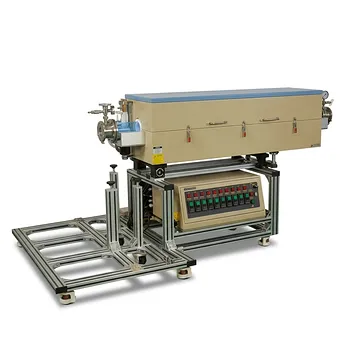
What is the function of an atmosphere tube furnace in carbon activation? Precision 900°C Control for Carbon Spheres
Updated 3 months ago
The atmosphere tube furnace acts as a high-precision chemical reactor for the "etching" of carbon structures. It provides the critical 900 °C thermal environment and steady carbon dioxide ($CO_2$) flow necessary to drive the reverse Boudouard reaction, which systematically carves a microporous network into the carbon skeleton.
Core Takeaway: By precisely balancing temperature and gas flow, the atmosphere tube furnace transforms dense Furfural Resin Carbon Spheres into high-surface-area materials (~1300 $m^2/g$) through controlled local gasification, making them viable for advanced gas separation.
Precision Control of the Activation Environment
Maintaining Thermal Stability at 900 °C
The furnace provides a highly uniform temperature field that is essential for consistent activation across the entire sample batch. Its multi-stage programmable controllers allow for precise ramping and soaking, ensuring the material reaches the 900 °C threshold without thermal shock.
Regulating the $CO_2$ Reactant Stream
Beyond mere heating, the furnace manages the delivery of $CO_2$ as a reactive gas rather than just an inert shield. A stable flow rate ensures that the concentration of the activator remains constant, allowing for a predictable and repeatable rate of carbon gasification.
Facilitating the Reverse Boudouard Reaction
The Mechanism of Local Gasification
The primary function of the furnace is to enable the reaction $C + CO_2 \rightarrow 2CO$. In this environment, the $CO_2$ molecules react with the carbon atoms on the surface and within the interior of the spheres, effectively "eating away" parts of the carbon framework.
Engineering High-Surface-Area Pore Networks
This controlled removal of carbon atoms creates a vast network of micropores, significantly increasing the specific surface area to approximately 1300 $m^2/g$. This structural transformation is what enables the carbon spheres to capture and separate gas molecules effectively.
The Dual Role of the Controlled Atmosphere
Preventing Excessive Thermal Oxidation
In a standard atmospheric environment, heating carbon to 900 °C would lead to rapid, uncontrolled combustion (burning). The tube furnace excludes oxygen, using $CO_2$ to perform a "limited" oxidation that preserves the integrity of the spheres while only removing enough carbon to create pores.
Optimizing Pore Distribution
The furnace environment allows $CO_2$ to act as a physical activator that can work independently or synergistically with chemical agents. This process is critical for fine-tuning the distribution of micropores and mesopores, which determines the final material's selectivity in gas separation applications.
Understanding the Trade-offs
Mass Loss vs. Surface Area
There is a direct trade-off between the duration of the furnace treatment and the final yield of the material. While longer activation times in the $CO_2$ atmosphere increase the surface area, they also result in higher "burn-off" or mass loss, which can eventually weaken the mechanical strength of the spheres.
The Risk of Pore Wall Collapse
If the furnace temperature exceeds the optimal range or if the $CO_2$ flow is too aggressive, the internal walls between pores may be consumed entirely. This lead to a collapse of the microporous structure into larger, less useful macropores, reducing the material's effectiveness for specific gas molecular sieving.
Making the Right Choice for Your Goal
How to Apply This to Your Project
- If your primary focus is Gas Separation: Prioritize a stable 900 °C environment with $CO_2$ to achieve the specific 1300 $m^2/g$ surface area required for molecular sieving.
- If your primary focus is Morphology Retention: Utilize a rotary tube furnace setup to ensure spheres do not agglomerate or deform during the high-temperature activation phase.
- If your primary focus is Electrochemical Storage: Consider increasing activation intensity or duration to push the surface area beyond 3000 $m^2/g$, though this may sacrifice some structural yield.
The atmosphere tube furnace is the indispensable tool that converts raw carbon precursors into sophisticated functional materials by mastering the delicate balance of heat and reactive chemistry.
Summary Table:
| Key Feature | Role in Activation Process | Material Impact |
|---|---|---|
| 900°C Thermal Stability | Provides heat for reverse Boudouard reaction | Ensures consistent pore etching |
| CO2 Atmosphere Control | Acts as a reactive gasification agent | Creates ~1300 m²/g surface area |
| Oxygen Exclusion | Prevents uncontrolled thermal oxidation | Preserves sphere structural integrity |
| Programmable Ramping | Manages heating/soaking cycles | Prevents thermal shock and pore collapse |
Elevate Your Material Research with THERMUNITS Precision Engineering
Achieving the perfect microporous structure in Furfural Resin Carbon Spheres requires the uncompromising thermal precision that THERMUNITS provides. As a global leader in high-temperature laboratory equipment for material science, we empower industrial R&D and academic labs with cutting-edge thermal processing solutions.
Our extensive product lineup is designed to meet the most rigorous experimental demands:
- Atmosphere & Vacuum Tube Furnaces: Perfect for controlled gasification and physical activation processes.
- Advanced Systems: Including CVD/PECVD, Rotary Kilns, Vacuum Induction Melting (VIM), and Hot Press furnaces.
- Specialized Equipment: Muffle, Dental, and Atmosphere furnaces tailored for diverse heat treatment needs.
Unlock Superior Performance Today Maximize your surface area yields and optimize pore distribution with equipment engineered for stability. Contact THERMUNITS now to discuss your specific laboratory requirements and discover how our thermal expertise can accelerate your innovation.
References
- Yaqi Yao, Yanqiang Huang. Tunable internal structure carbon sphere synthesis driven by water-solubility and its application in gas separation. DOI: 10.1039/d3ra08430b
Mentioned Products
- Vertical 1700C Vacuum and Atmosphere Tube Furnace with 80mm Alumina Tube
- 1750°C High Temperature Benchtop Vacuum Atmosphere Tube Furnace with Kanthal Super 1800 Heating Elements and 60mm Alumina Processing Tube
- 1200C Hybrid Muffle and Tube Furnace for Material Research with Dual Atmosphere Control Quartz Tubes
- Compact Hybrid Muffle and Tube Furnace for 1000C Controlled Atmosphere Laboratory Material Sintering
- Three Zone Tube Furnace with 11 Inch or 15 Inch Quartz Tube and Hinged Flanges for Vacuum Atmosphere Heat Treatment
People Also Ask
- How is an industrial-grade vertical tube furnace utilized in smelting leaching residues? Enhance Metal Recovery Efficiency
- What is the function of a laboratory-grade vertical tube furnace in fast pyrolysis? Optimize Composite Research.
- How does a vertical tube furnace facilitate thermoelectric alloy melting? Precision synthesis for material homogeneity.
- Why is a thermocouple sensor indispensable for monitoring the vertical tube furnace during gallium oxide nanowire production? Optimize VLS Growth
- What are the advantages of using a vertical tube furnace for crucible experiments simulating steel-slag interactions?

Tech Team · ThermUnits
Last updated on Jun 03, 2026
Related Products

Vertical 1700C Vacuum and Atmosphere Tube Furnace with 80mm Alumina Tube
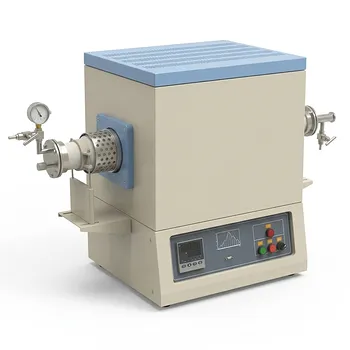
1750°C High Temperature Benchtop Vacuum Atmosphere Tube Furnace with Kanthal Super 1800 Heating Elements and 60mm Alumina Processing Tube
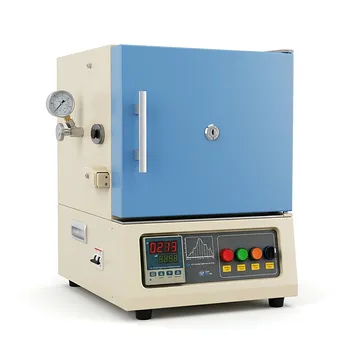
1200C Hybrid Muffle and Tube Furnace for Material Research with Dual Atmosphere Control Quartz Tubes
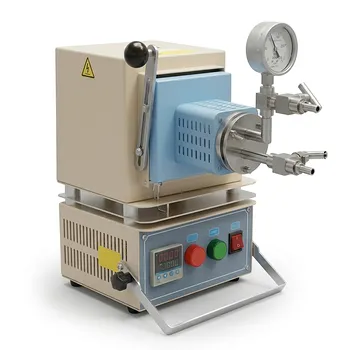
Compact Hybrid Muffle and Tube Furnace for 1000C Controlled Atmosphere Laboratory Material Sintering

Three Zone Tube Furnace with 11 Inch or 15 Inch Quartz Tube and Hinged Flanges for Vacuum Atmosphere Heat Treatment
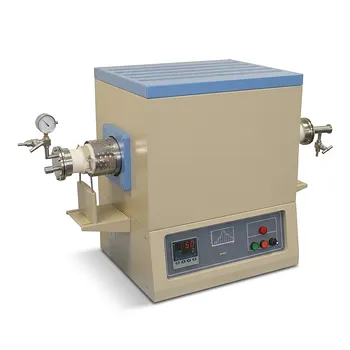
1700C High Temperature Alumina Tube Furnace with 18 Inch Heated Zone and Vacuum Sealing Flanges
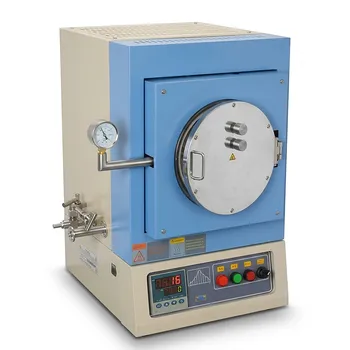
1100°C High Temperature Quartz Chamber Furnace 8 Inch OD with 7.6 Liter Capacity and Vacuum Atmosphere Capability
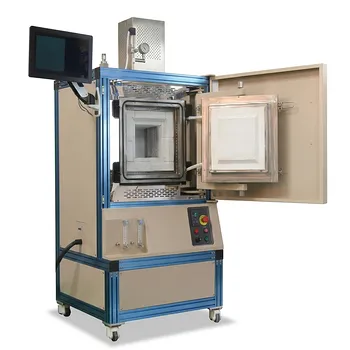
High Temperature Hydrogen Atmosphere Box Furnace 1650C Max Reducing Environment Material Synthesis System 8x8x8 Chamber

1200°C 5 Inch Vertical Quartz Tube Furnace with Stainless Steel Vacuum Flanges
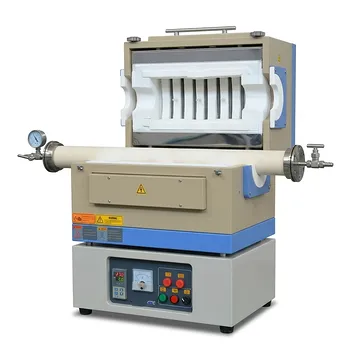
High Temperature 1600C Split Tube Furnace Vacuum Flanges Valves Optional 60mm 80mm Alumina Tube

High Temperature 1700C Tube Furnace with High Vacuum Turbomolecular Pump System and Multi Channel Mass Flow Controller Gas Mixer

1100C Tube Furnace with Vacuum Flange and Programmable Temperature Controller for Material Science and Industrial Heat Treatment

High Temperature 1700C Vertical Tube Furnace for Powder Spherification and Material Sintering

Compact High Temperature 1600C Tube Furnace with 50mm Alumina Tube and Vacuum Flanges for Material Sintering

High Temperature 1700C Six Zone Split Tube Furnace with Alumina Tube and Water Cooled Flanges

1700C Hydrogen Gas Tube Furnace with 60mm Alumina Process Tube and Integrated Hydrogen Safety Detector

1800C High Temperature Compact Vacuum Tube Furnace with 60mm OD Alumina Tube and Kanthal MoSi2 Heating Elements

High Temperature Automated 5 Inch Tube Furnace for Autonomous Material Research and Advanced Laboratory R&D

High Temperature 1700C Benchtop Tube Furnace with 5 Inch Heating Zone High Purity Alumina Tube and Vacuum Sealing Flanges