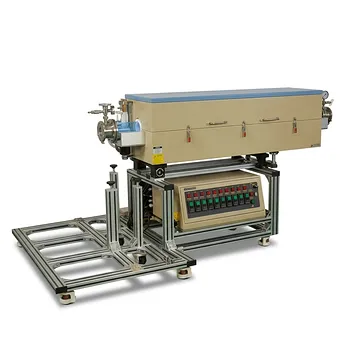
What is the function of an atmosphere tube furnace in the synthesis of 2D-NOC supports? Precise Thermal Control.
Updated 3 months ago
The atmosphere tube furnace serves as the foundational reactor for the synthesis of 2D-nitro-oxygeneous carbon (2D-NOC) by providing a strictly controlled thermal and chemical environment. It regulates the heating program and inert gas flow to facilitate the orderly denitrogenation and carbonization of precursors like dicyandiamide and urea. This precise control is the mechanism that allows for the formation of a stable two-dimensional layered structure and the atomic-level dispersion of transition metals.
Core Takeaway: An atmosphere tube furnace is essential for 2D-NOC synthesis because it enables precise thermal polycondensation while isolating the material from oxygen. This ensures that precursors transform into a specific nitrogen-doped carbon framework without undergoing combustion or structural collapse.
Orchestrating Structural and Chemical Transformation
Controlled Carbonization and Denitrogenation
The primary role of the furnace is to manage the transition of organic precursors into a solid carbon lattice. By maintaining specific temperatures, it ensures orderly denitrogenation, where nitrogen is shed in a controlled manner to leave behind a stable nitrogen-doped framework.
Facilitating Two-Dimensional Layering
Achieving a 2D morphology requires a uniform temperature field that prevents localized overheating. The furnace provides the high-precision environment necessary for thermal polycondensation, a process where precursors link together into thin sheets rather than bulky, three-dimensional clusters.
Atomic-Level Metal Dispersion
In the synthesis of catalyst supports, the furnace allows transition metals to be anchored firmly into the carbon-nitrogen lattice. This atomic-level dispersion is achieved through multi-stage programmable temperature control, which ensures that metal ions do not aggregate into inactive nanoparticles during the heating cycle.
Environmental Isolation and Material Purity
Prevention of Unintended Oxidation
High-temperature processing in the presence of oxygen would lead to the combustion of biomass or precursors. The atmosphere tube furnace uses high-purity inert gas protection (such as nitrogen or argon) to effectively isolate materials from oxygen and moisture.
Regulation of Functional Group Formation
The furnace environment directly influences the chemical signature of the final product. By controlling the gas flow and temperature (e.g., 600°C to 1000°C), the system facilitates the integration of quaternary nitrogen (N-Q) functional groups into the carbon skeleton, which are vital for the support's electrochemical properties.
Removal of Volatile Impurities
As the material reaches the target temperature, the furnace facilitates the thermal degradation of non-carbon components. These volatile impurities are swept away by the continuous gas flow, increasing the elemental carbon content and establishing the material’s preliminary microporous structure.
Understanding the Trade-offs
Balancing Heating Rates and Structural Integrity
If the heating rate is too aggressive, the rapid release of gases during denitrogenation can shatter the delicate 2D structure. Conversely, a rate that is too slow may lead to excessive energy consumption and unintended phase changes in the transition metals.
Inert Gas Flow Dynamics
The flow rate of the protective gas must be precisely calibrated. While high flow rates ensure the rapid removal of impurities, they can also cause temperature fluctuations within the tube or lead to the loss of lightweight precursor fragments before they can react.
Seal Integrity and Contamination
The performance of the furnace is entirely dependent on its sealing performance. Any leak of ambient air at high temperatures will cause oxidative degradation, leading to a significant loss in yield and the destruction of the active nitrogen-doping sites.
How to Apply This to Your Synthesis Project
Making the Right Choice for Your Goal
- If your primary focus is maximizing nitrogen doping: Use a multi-stage heating program with a lower target temperature (around 600°C) to prevent the excessive loss of nitrogen atoms during carbonization.
- If your primary focus is achieving high specific surface area: Prioritize a higher carbonization temperature (near 1000°C) under a steady nitrogen shield to facilitate the full development of the microporous skeleton.
- If your primary focus is single-atom catalyst stability: Ensure the furnace has rigorous sealing and use high-purity argon to create the most stable environment for anchoring metal ions into the lattice.
By mastering the thermal and atmospheric parameters of the tube furnace, researchers can consistently produce high-purity 2D-NOC supports with tailored chemical and structural properties.
Summary Table:
| Key Function | Mechanism | Impact on 2D-NOC |
|---|---|---|
| Thermal Polycondensation | Precise programmable heating | Creates stable 2D layered structures |
| Inert Atmosphere | Nitrogen/Argon gas flow | Prevents oxidation and precursor combustion |
| Atomic Dispersion | Uniform temperature field | Anchors transition metals at the atomic level |
| Impurity Removal | Controlled thermal degradation | Enhances microporosity and elemental purity |
Optimize Your Advanced Material Synthesis with THERMUNITS
Achieving the perfect 2D-nitro-oxygeneous carbon (2D-NOC) support requires absolute control over thermal and chemical environments. THERMUNITS is a leading manufacturer of high-temperature laboratory equipment for material science and industrial R&D. Our specialized Atmosphere Tube Furnaces and CVD/PECVD systems are designed to deliver the precision needed for atomic-level dispersion and specific nitrogen-doping profiles.
We provide a comprehensive range of thermal processing solutions tailored for researchers and industrial innovators, including:
- Muffle, Vacuum, Atmosphere, and Tube Furnaces
- Rotary, Hot Press, and Dental Furnaces
- Electric Rotary Kilns and Vacuum Induction Melting Furnaces (VIM)
- Thermal Elements and Custom Heat Treatment Equipment
Ensure your synthesis projects achieve maximum yield and structural integrity. Contact us today to discuss your thermal processing needs!
References
- Teera Butburee, Lijuan Zhang. General Pyrolysis for High-Loading Transition Metal Single Atoms on 2D-Nitro-Oxygeneous Carbon as Efficient ORR Electrocatalysts. DOI: 10.1021/acsami.3c18548
Mentioned Products
- Vertical 1700C Vacuum and Atmosphere Tube Furnace with 80mm Alumina Tube
- 1750°C High Temperature Benchtop Vacuum Atmosphere Tube Furnace with Kanthal Super 1800 Heating Elements and 60mm Alumina Processing Tube
- 1200C Hybrid Muffle and Tube Furnace for Material Research with Dual Atmosphere Control Quartz Tubes
- Compact Hybrid Muffle and Tube Furnace for 1000C Controlled Atmosphere Laboratory Material Sintering
- Three Zone Tube Furnace with 11 Inch or 15 Inch Quartz Tube and Hinged Flanges for Vacuum Atmosphere Heat Treatment
People Also Ask
- How is an industrial-grade vertical tube furnace utilized in smelting leaching residues? Enhance Metal Recovery Efficiency
- What is the function of a laboratory-grade vertical tube furnace in fast pyrolysis? Optimize Composite Research.
- How does a vertical tube furnace facilitate thermoelectric alloy melting? Precision synthesis for material homogeneity.
- Why is a thermocouple sensor indispensable for monitoring the vertical tube furnace during gallium oxide nanowire production? Optimize VLS Growth
- What are the advantages of using a vertical tube furnace for crucible experiments simulating steel-slag interactions?

Tech Team · ThermUnits
Last updated on Jun 03, 2026
Related Products

Vertical 1700C Vacuum and Atmosphere Tube Furnace with 80mm Alumina Tube
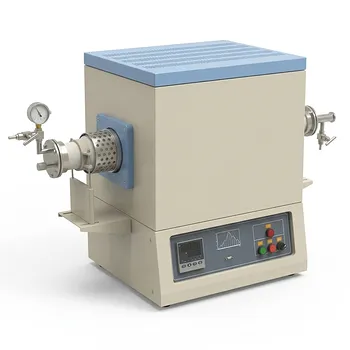
1750°C High Temperature Benchtop Vacuum Atmosphere Tube Furnace with Kanthal Super 1800 Heating Elements and 60mm Alumina Processing Tube
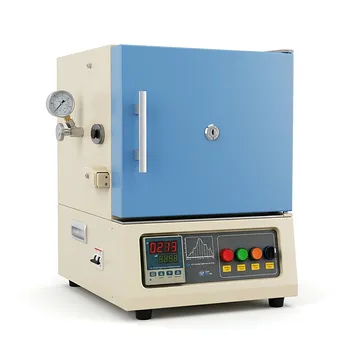
1200C Hybrid Muffle and Tube Furnace for Material Research with Dual Atmosphere Control Quartz Tubes
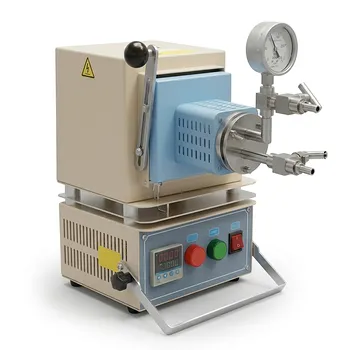
Compact Hybrid Muffle and Tube Furnace for 1000C Controlled Atmosphere Laboratory Material Sintering

Three Zone Tube Furnace with 11 Inch or 15 Inch Quartz Tube and Hinged Flanges for Vacuum Atmosphere Heat Treatment
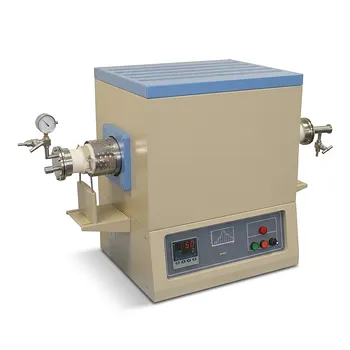
1700C High Temperature Alumina Tube Furnace with 18 Inch Heated Zone and Vacuum Sealing Flanges
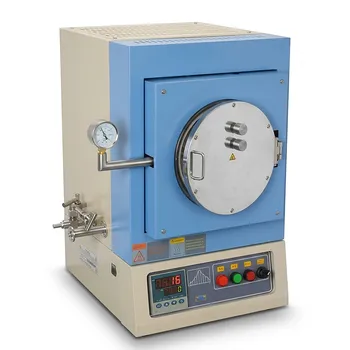
1100°C High Temperature Quartz Chamber Furnace 8 Inch OD with 7.6 Liter Capacity and Vacuum Atmosphere Capability
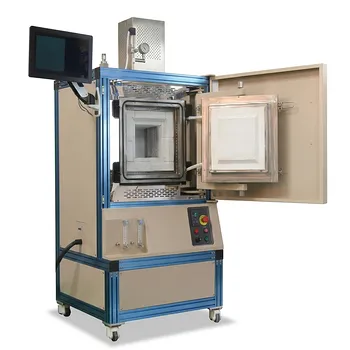
High Temperature Hydrogen Atmosphere Box Furnace 1650C Max Reducing Environment Material Synthesis System 8x8x8 Chamber

1200°C 5 Inch Vertical Quartz Tube Furnace with Stainless Steel Vacuum Flanges
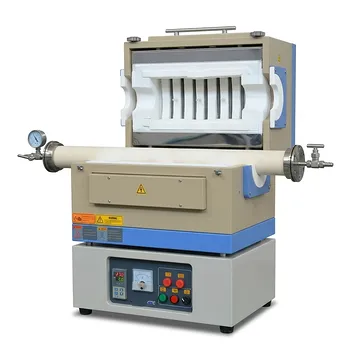
High Temperature 1600C Split Tube Furnace Vacuum Flanges Valves Optional 60mm 80mm Alumina Tube

High Temperature 1700C Tube Furnace with High Vacuum Turbomolecular Pump System and Multi Channel Mass Flow Controller Gas Mixer

1100C Tube Furnace with Vacuum Flange and Programmable Temperature Controller for Material Science and Industrial Heat Treatment

High Temperature 1700C Vertical Tube Furnace for Powder Spherification and Material Sintering

Compact High Temperature 1600C Tube Furnace with 50mm Alumina Tube and Vacuum Flanges for Material Sintering

High Temperature 1700C Six Zone Split Tube Furnace with Alumina Tube and Water Cooled Flanges

1800C High Temperature Compact Vacuum Tube Furnace with 60mm OD Alumina Tube and Kanthal MoSi2 Heating Elements

1700C Hydrogen Gas Tube Furnace with 60mm Alumina Process Tube and Integrated Hydrogen Safety Detector

High Temperature Automated 5 Inch Tube Furnace for Autonomous Material Research and Advanced Laboratory R&D

High Temperature 1700C Benchtop Tube Furnace with 5 Inch Heating Zone High Purity Alumina Tube and Vacuum Sealing Flanges