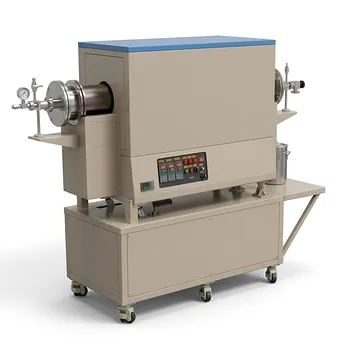
Tube Furnace Function in SiCN/RuO2/TiB2 Thin Film Ceramization: Achieving Superior Thermal Stability
Updated 3 months ago
The industrial-grade high-temperature tube furnace acts as a thermal reactor that facilitates the chemical transformation and structural stabilization of SiCN/RuO2/TiB2 thin films. It provides the precise atmospheric environment required to pyrolyze SiCN precursors into $SiO_2$ glass phases and induce the partial oxidation of $TiB_2$ into $B_2O_3$ and $TiO_2$. These in-situ generated phases encapsulate the $RuO_2$ conductive particles, preventing their volatilization and significantly enhancing the film's thermal stability and substrate adhesion.
The tube furnace serves as the critical catalyst for "in-situ encapsulation," where the controlled thermal breakdown of precursors creates a protective glass matrix. This process is essential for shielding conductive elements from high-temperature degradation, ensuring the long-term reliability of the sensor.
Facilitating Complex Chemical Transformations
Pyrolysis of SiCN Precursors
The primary function of the furnace is to trigger the pyrolysis of SiCN precursors. This thermal decomposition converts the initial material into stable $SiO_2$ glass phases, which serve as the foundation for the film's ceramic matrix.
In-Situ Oxidation of TiB2
Under the furnace's controlled high-temperature atmosphere, $TiB_2$ undergoes partial oxidation. This reaction generates $B_2O_3$ and $TiO_2$, which contribute further to the formation of a complex glass phase within the film structure.
Thermal Debinding and Purification
Similar to its use in other ceramic processes, the furnace facilitates the removal of organic binders and residual fragments. By following a staged heating program, it allows volatile components to exit the film slowly, preventing structural defects.
Enhancing Structural Integrity and Stability
Encapsulation of the Conductive Phase
The glass phases generated during heating flow to fill the micro-pores between $RuO_2$ particles. This effectively encapsulates the conductive phase, creating a dense, composite structure that locks the functional materials in place.
Prevention of RuO2 Volatilization
$RuO_2$ is prone to instability and volatilization when exposed to extreme temperatures. The protective glass shield created by the furnace treatment prevents the loss of these particles, maintaining the electrical continuity of the sensor.
Improving Adhesion and Densification
The high-temperature environment promotes atomic rearrangement and thermal densification. This process eliminates pits and cracks, resulting in a smoother film with significantly improved mechanical adhesion to the underlying substrate.
Understanding the Trade-offs
Atmospheric Precision Requirements
While the furnace enables beneficial oxidation, the balance of the gas environment is delicate. Excessive oxygen can lead to over-oxidation of the components, while insufficient oxygen may prevent the formation of the necessary protective glass phases.
Thermal Gradient and Cracking
Rapid heating or cooling within the tube furnace can introduce thermal stress. If the heating rate is not precisely controlled, the film may experience cracking, bloating, or delamination due to the mismatch in thermal expansion coefficients between the glass phases and the substrate.
Volatile Management
As organic fragments and ligands decompose, they must be effectively removed from the furnace chamber. Failure to maintain a consistent gas flow (such as argon or air) can lead to the redeposition of contaminants, compromising the phase purity of the ceramized film.
Optimizing the Ceramization Process
How to Apply This to Your Project
- If your primary focus is maximizing thermal stability: Ensure the furnace temperature is high enough to complete the pyrolysis of SiCN, as the resulting $SiO_2$ is the primary shield against $RuO_2$ loss.
- If your primary focus is electrical conductivity: Carefully calibrate the partial oxidation of $TiB_2$ to ensure the conductive $RuO_2$ network is encapsulated without being physically disrupted by excessive glass formation.
- If your primary focus is film longevity and adhesion: Utilize a staged heating profile with slow ramp rates to allow for complete debinding and to minimize internal stresses that cause peeling.
By mastering the thermal and atmospheric variables within the tube furnace, you transform a porous precursor into a high-performance, resilient ceramic sensor.
Summary Table:
| Process Phase | Thermal Action | Key Benefit |
|---|---|---|
| Pyrolysis | SiCN precursor to $SiO_2$ | Forms the core ceramic glass matrix |
| Partial Oxidation | $TiB_2$ to $B_2O_3$ and $TiO_2$ | Facilitates in-situ glass phase formation |
| Encapsulation | Micro-pore filling via glass flow | Protects $RuO_2$ from volatilization |
| Densification | Atomic rearrangement | Eliminates defects and improves adhesion |
Elevate Your Material Research with THERMUNITS Precision
As a global leader in high-temperature laboratory equipment for material science and industrial R&D, THERMUNITS provides the advanced thermal processing power needed for complex ceramization and thin-film development. Our precision-engineered systems ensure the exact atmospheric control and temperature uniformity required for SiCN/RuO2/TiB2 processing and beyond.
Our Comprehensive Product Range Includes:
- Tube & Atmosphere Furnaces: Optimized for controlled pyrolysis and oxidation.
- Vacuum & CVD/PECVD Systems: Essential for high-purity thin film deposition.
- Specialized Solutions: Muffle, Rotary, Hot Press, Dental, and Vacuum Induction Melting (VIM) furnaces.
- Components: High-quality Thermal Elements and accessories for demanding R&D environments.
Ready to optimize your heat treatment workflows and achieve superior material stability?
Contact THERMUNITS Today to Request a Quote
References
- Yusen Wang, Qinnan Chen. Direct Ink Writing of SiCN/RuO2/TiB2 Composite Ceramic Ink for High-Temperature Thin-Film Sensors. DOI: 10.3390/ma17153792
Mentioned Products
- High Temperature 1700C Vertical Tube Furnace for Powder Spherification and Material Sintering
- Multi Position Tube Furnace 1100C for Laboratory Material Research and Advanced Industrial Thermal Processing
- High Temperature Tube Furnace 1500C with Sliding Flanges and 50mm OD for Rapid Thermal Processing Fast Heating and Cooling
- 1100C Tube Furnace with Vacuum Flange and Programmable Temperature Controller for Material Science and Industrial Heat Treatment
- Compact High Temperature 1600C Tube Furnace with 50mm Alumina Tube and Vacuum Flanges for Material Sintering
People Also Ask
- What role does a high-temperature vertical tube furnace play in simulating high-carbon ferromanganese slag formation?
- What functions does a vertical high-temperature tube furnace perform? Master Industrial Sintering & R&D Simulation
- What is the primary function of a high-temperature tube furnace in Cu1-N-C synthesis? Precision Thermal Control.
- High-Temp Tube Furnace Role in Converting Microbial Proteins to Iron Single-Atom Sites: Expert Synthesis Guide
- What impact does the heating rate of a tube furnace have on biochar microstructure? Optimize Your Material R&D.

Tech Team · ThermUnits
Last updated on Jun 02, 2026
Related Products

High Temperature 1700C Vertical Tube Furnace for Powder Spherification and Material Sintering
Multi Position Tube Furnace 1100C for Laboratory Material Research and Advanced Industrial Thermal Processing
High Temperature Tube Furnace 1500C with Sliding Flanges and 50mm OD for Rapid Thermal Processing Fast Heating and Cooling

1100C Tube Furnace with Vacuum Flange and Programmable Temperature Controller for Material Science and Industrial Heat Treatment

Compact High Temperature 1600C Tube Furnace with 50mm Alumina Tube and Vacuum Flanges for Material Sintering
High Temperature Dual Zone Rotating Tube Furnace 1500C Silicon Carbide Heating for Advanced Material Synthesis

High Temperature 1700C Tube Furnace with High Vacuum Turbomolecular Pump System and Multi Channel Mass Flow Controller Gas Mixer
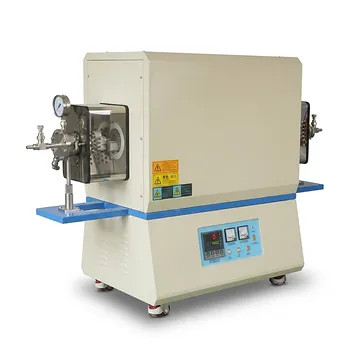
High Temperature 1800C Atmosphere Tube Furnace for CVD Research and Vacuum Sintering Precision Heat Treatment
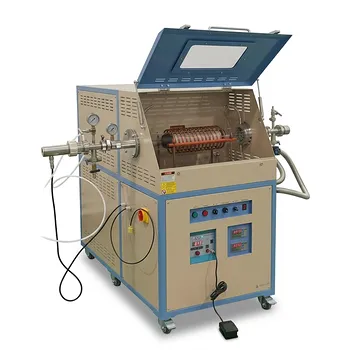
Ultra High Temperature 2300C Induction Heated Graphite Tube Furnace with Infrared Control

High Temperature 1700C Benchtop Tube Furnace with 5 Inch Heating Zone High Purity Alumina Tube and Vacuum Sealing Flanges
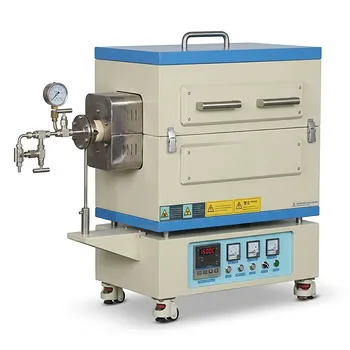
High Temperature Split Tube Furnace 1500C for Material Research Vacuum and Atmosphere Thermal Processing
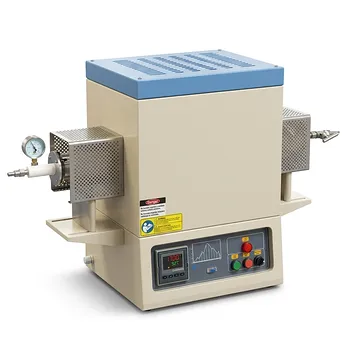
High Temperature Three Zone Tube Furnace 1700C with Alumina Tube and Water Cooled Flanges
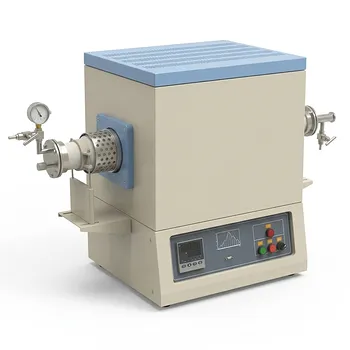
1750°C High Temperature Benchtop Vacuum Atmosphere Tube Furnace with Kanthal Super 1800 Heating Elements and 60mm Alumina Processing Tube
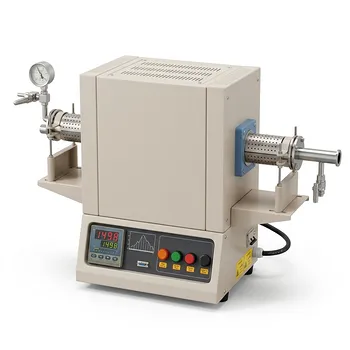
1500C High Temperature Compact Tube Furnace 2 Inch OD with Vacuum Flanges and Complete Accessories
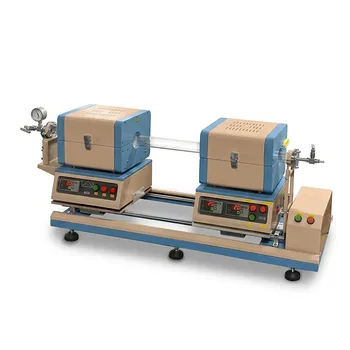
High Temperature 1200C Automatic Sliding Dual Zone Tube Furnace for 2D Transition Metal Dichalcogenides Growth and Material Sublimation Research
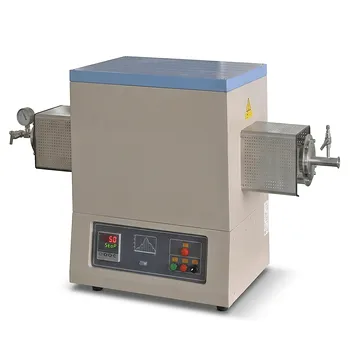
High Temperature 1700C Tube Furnace with 4 Inch OD Alumina Tube and Vacuum Sealing Flanges
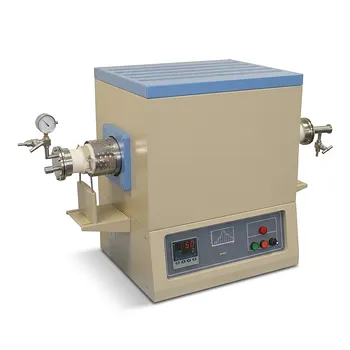
1700C High Temperature Alumina Tube Furnace with 18 Inch Heated Zone and Vacuum Sealing Flanges

1800C High Temperature Compact Vacuum Tube Furnace with 60mm OD Alumina Tube and Kanthal MoSi2 Heating Elements

High Temperature Automated 5 Inch Tube Furnace for Autonomous Material Research and Advanced Laboratory R&D