What is the function of high-purity quartz wool in a tube reactor during OCM? Ensure Catalyst Stability & Pure Data
Updated 3 months ago
High-purity quartz wool acts as a structural stabilizer and fluid-dynamic regulator within an oxidative coupling of methane (OCM) reactor. It is primarily used to immobilize the catalyst bed in the thermal center of the reaction tube and to ensure uniform gas distribution, which prevents "short-circuiting" and optimizes contact between methane/oxygen feeds and the catalyst surface.
Quartz wool is a critical component for maintaining the spatial and chemical integrity of the reaction zone. It provides a thermally stable, chemically inert framework that secures the catalyst against high-velocity gas flows while facilitating the uniform fluid dynamics required for accurate experimental data.
Structural Stabilization and Bed Integrity
Immobilizing the Catalyst Bed
Quartz wool is used to secure the catalyst in the exact center of the reaction tube, which is typically the zone of highest thermal stability and control. This physical anchoring prevents the catalyst bed from shifting or migrating under the impact of high-velocity gas flows.
Preventing Catalyst Entrainment
The fibrous structure of the wool acts as a filter that prevents catalyst powder or small particles from being carried away by the product gas stream. This protects downstream detection equipment, such as gas chromatographs, from contamination or clogging.
Fluid Dynamics and Gas Distribution
Eliminating Gas Short-Circuiting
As a porous filling material, quartz wool assists in the initial distribution of reactant gases as they enter the reaction zone. By breaking up the gas stream, it prevents "short-circuiting," where gases bypass the catalyst particles, ensuring that every molecule has the opportunity for optimal contact with the active sites.
Maintaining Stable Fluid Dynamics
The loose, porous nature of high-purity quartz wool allows it to fix the catalyst position without significantly increasing airflow resistance. This maintains a consistent pressure drop across the reactor, which is vital for the stability of the OCM process and the reproducibility of results.
Chemical and Thermal Resilience
High-Temperature Structural Integrity
OCM processes frequently operate at temperatures exceeding 750°C to 800°C. High-purity quartz wool retains its mechanical strength and structural form in these extreme environments, providing long-term support where other materials might soften or fail.
Ensuring Data Purity Through Inertness
Quartz is highly chemically inert and does not react with process gases or the catalysts under alternating oxidation and reduction cycles. This ensures that the quartz wool remains a "silent" participant, preventing side reactions that could skew experimental data or compromise the safety of the reaction.
Understanding the Trade-offs
Packing Density and Pressure Drops
While quartz wool is designed for low resistance, over-packing the material can lead to an unnecessary increase in backpressure. This can alter the residence time of the methane and oxygen, potentially leading to over-oxidation and reduced selectivity for C2 products.
Potential for Thermal Gradients
In some configurations, excessively thick layers of quartz wool can act as an insulator, creating localized hot spots or thermal gradients within the catalyst bed. Because OCM is an exothermic reaction, managing these gradients is essential to prevent catalyst sintering or thermal runaway.
Applying This to Your Reactor Setup
Recommendations for Implementation
- If your primary focus is experimental accuracy: Ensure you use the highest purity quartz available to prevent trace metal impurities from acting as unintended co-catalysts during the OCM process.
- If your primary focus is equipment longevity: Focus on the density of the wool plugs at the reactor exit to ensure no fine catalyst particles reach your analytical instruments.
- If your primary focus is process efficiency: Carefully calibrate the amount of wool used to balance uniform gas distribution with the need for a minimal pressure drop.
Properly utilized quartz wool transforms a simple tube into a precision chemical environment, ensuring your catalyst performs exactly as intended.
Summary Table:
| Function | Role in OCM Reactor | Key Advantage |
|---|---|---|
| Structural Stabilization | Immobilizes catalyst in the thermal center | Prevents catalyst migration under high gas flow |
| Fluid Dynamics | Eliminates gas short-circuiting | Ensures uniform reactant contact with catalyst |
| Particle Filtration | Traps catalyst powder/fines | Protects downstream analytical equipment (e.g., GC) |
| Thermal Resilience | Maintains integrity at 800°C+ | Provides stable support without softening |
| Chemical Inertness | Remains non-reactive during redox cycles | Ensures high data purity and prevents side reactions |
Optimize Your Research with THERMUNITS High-Temperature Solutions
THERMUNITS is a leading manufacturer of high-performance laboratory equipment tailored for material science and industrial R&D. Our comprehensive range of solutions, including Tube Furnaces, CVD/PECVD systems, Vacuum Induction Melting (VIM), and Hot Press furnaces, is engineered to provide the precise thermal environments required for complex processes like the oxidative coupling of methane.
By choosing THERMUNITS, you benefit from:
- Precision Control: Optimized gas distribution and thermal stability for reactors.
- Versatile Applications: Equipment designed for Muffle, Vacuum, Atmosphere, and Rotary processes.
- Expert Support: Reliable hardware including Thermal Elements and dental furnaces for specialized needs.
Elevate your lab's experimental accuracy and efficiency today. Contact us now to discuss your custom thermal solution!
References
- Keiju Wachi, Kazuya YAMAGUCHI. Oxidative Coupling of Methane under High-pressure Conditions Using a Na<sub>2</sub>WO<sub>4</sub>/SiO<sub>2</sub> Catalyst. DOI: 10.1627/jpi.67.71
Mentioned Products
- 1100°C High Temperature Quartz Chamber Furnace 8 Inch OD with 7.6 Liter Capacity and Vacuum Atmosphere Capability
- High Throughput 1200C Four Channel Tube Furnace with 3 Inch Quartz Tubes for Multi Zone Annealing and Material Research
- High Temperature Rocking Tube Furnace with Quartz Tube and Vacuum Flange for Materials Synthesis
- High Temperature Automated 5 Inch Tube Furnace for Autonomous Material Research and Advanced Laboratory R&D
- 1100°C Three Zone Tube Furnace with 8.5 to 11 Inch OD Quartz Tube and Vacuum Flanges for Large Wafer Processing
People Also Ask
- Why is a quartz tube furnace necessary for phosphorus-doped MoS2/GO preparation? Ensure Purity & Precise Synthesis
- Benefits of high-vacuum quartz tube furnaces with N2 for Co3O4 nanosheets: Purity and Structural Integrity.
- What conditions does a quartz tube furnace provide for AlxCoCrFeNi steam corrosion tests? Achieve Precise R&D Control.
- Why is high-temperature annealing in a quartz tube furnace done after HfO2 deposition? Unlock peak film performance.
- Why is a high-purity quartz tube used for SP-Fe3O4-C? Ensure Chemical Purity & Catalytic Stability

Tech Team · ThermUnits
Last updated on Jun 02, 2026
Related Products
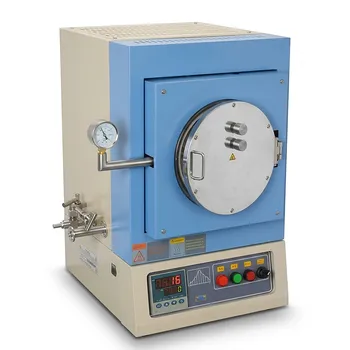
1100°C High Temperature Quartz Chamber Furnace 8 Inch OD with 7.6 Liter Capacity and Vacuum Atmosphere Capability
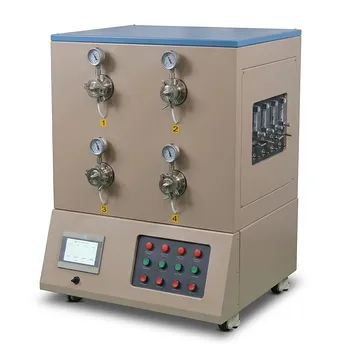
High Throughput 1200C Four Channel Tube Furnace with 3 Inch Quartz Tubes for Multi Zone Annealing and Material Research
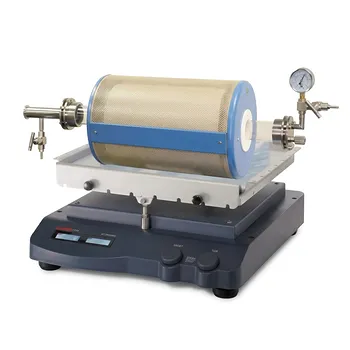
High Temperature Rocking Tube Furnace with Quartz Tube and Vacuum Flange for Materials Synthesis

High Temperature Automated 5 Inch Tube Furnace for Autonomous Material Research and Advanced Laboratory R&D
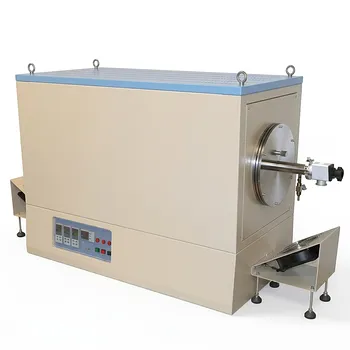
1100°C Three Zone Tube Furnace with 8.5 to 11 Inch OD Quartz Tube and Vacuum Flanges for Large Wafer Processing
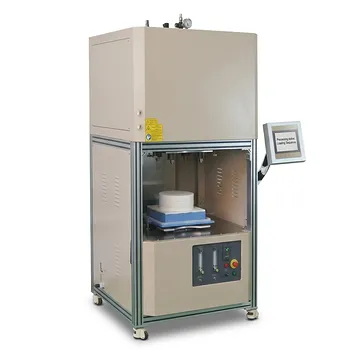
High Temperature Vertical Atmosphere Controlled Furnace with Automatic Bottom Loading and 1700°C Capacity for Advanced Material Research
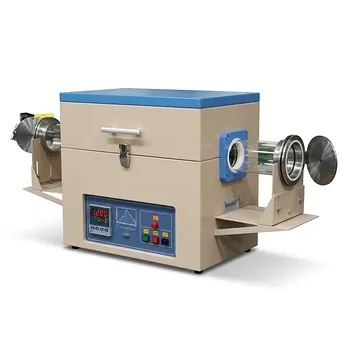
High Temperature 1200C Split Tube Furnace with Hinged Vacuum Flanges and 4 Inch Quartz Tube for Laboratory Research
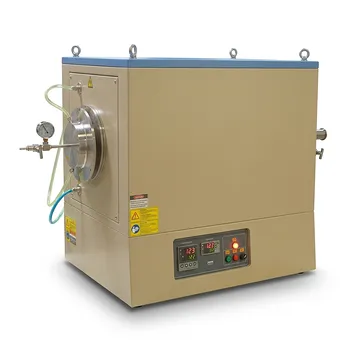
1100°C Large Diameter Quartz Tube Furnace with 24 Inch Heating Zone and Water Cooled Flanges
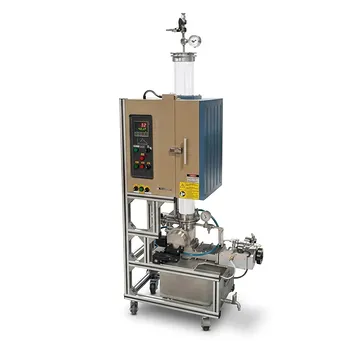
1200C High Temperature Atmosphere Controlled Vertical Quenching Tube Furnace with 4 Inch Quartz Tube
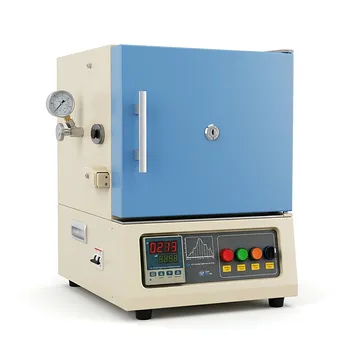
1200C Hybrid Muffle and Tube Furnace for Material Research with Dual Atmosphere Control Quartz Tubes

1200°C 5 Inch Vertical Quartz Tube Furnace with Stainless Steel Vacuum Flanges

Compact Vertical Split Quartz Tube Furnace with Stainless Steel Vacuum Flanges for Rapid Thermal Quenching and Controlled Atmosphere Material Processing
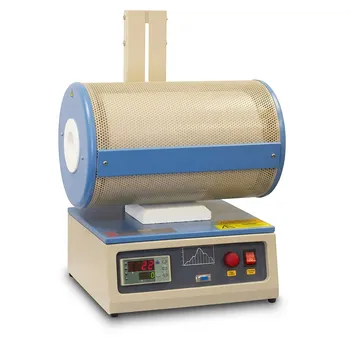
Multi Position Tube Furnace 1100C for Laboratory Material Research and Advanced Industrial Thermal Processing
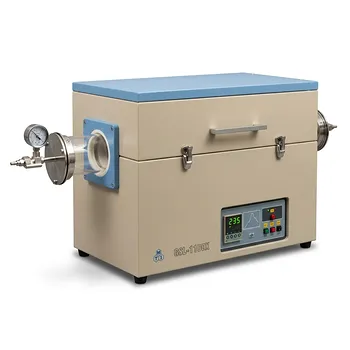
Single Zone Tube Furnace 5 Inch Quartz Tube 36 Inch Heating Zone Vacuum Flanges

Three Zone Tube Furnace with 11 Inch or 15 Inch Quartz Tube and Hinged Flanges for Vacuum Atmosphere Heat Treatment