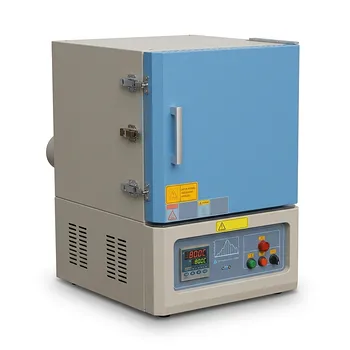
What is the function of high-temperature sintering in BRO and DTO PLD target preparation? Ensure Density and Purity
Updated 3 months ago
The high-temperature sintering process is the critical thermal treatment that transforms loose oxide powders into a dense, chemically uniform ceramic disk suitable for laser ablation. For Bi2Rh2O7 (BRO) and Dy2Ti2O7 (DTO), sintering provides the thermal energy necessary to drive atomic diffusion, ensuring the target achieves the phase purity and mechanical density required to produce high-quality thin films.
High-temperature sintering serves as the kinetic engine for solid-state synthesis, converting mixed precursors into a single-phase ceramic with the chemical homogeneity and structural integrity essential for stable Pulsed Laser Deposition (PLD).
The Role of Atomic Diffusion and Phase Transformation
Facilitating Solid-State Reactions
High-temperature sintering provides the thermal energy required for long-range atomic diffusion between mixed oxide precursors. This kinetic environment allows individual binary oxides to react and transform into the desired single-phase structure, such as the pyrochlore phases of BRO and DTO.
Achieving Chemical Homogeneity
The process ensures that the chemical composition is uniform across the entire volume of the target. Without this uniformity, the laser would encounter varying material concentrations, leading to inconsistent film growth and unpredictable physical properties in the resulting sample.
Ensuring Stoichiometric Accuracy
By driving complete chemical reactions before deposition begins, sintering guarantees that the stoichiometric ratio of the target matches the intended film composition. This is vital for complex oxides where precise cation ratios dictate the material's functional electronic or magnetic characteristics.
Mechanical Integrity and Densification
Eliminating Porosity for Ablation Stability
Sintering facilitates mass migration, which fills the voids between powder particles to reduce porosity and increase density. A high-density target (often exceeding 93% of theoretical density) is necessary to produce a stable plasma plume, preventing the ejection of large "chunks" or particulates that can ruin thin film quality.
Enhancing Structural Strength
The process provides the mechanical strength required for the target to withstand the high-energy impact of pulsed laser beams. A well-sintered ceramic target resists cracking and thermal shock during the ablation process, extending the life of the target and ensuring reproducible results.
Controlling Microstructural Evolution
By managing heating rates and holding times, usually in a controlled thermal environment like a tube furnace, researchers can dictate the final grain size and microstructure. This controlled evolution is essential for producing high-purity targets that behave predictably under vacuum conditions.
Understanding the Trade-offs
Temperature and Time Management
While higher temperatures promote faster diffusion and higher density, excessive heat can lead to volatile element loss, particularly with bismuth-based compounds like BRO. Finding the equilibrium between sufficient sintering for density and avoiding the decomposition of the desired phase is the primary challenge in target preparation.
Density vs. Thermal Shock
Extremely high-density targets are excellent for plasma stability but can be more susceptible to thermal stress fractures if the laser repetition rate is too high. Conversely, a target that is too porous will ablate unevenly, leading to "pitting" and a gradual drift in the deposition rate over time.
How to Apply This to Your Project
Ensuring a successful PLD process requires tailoring your sintering profile to the specific requirements of the BRO or DTO system.
- If your primary focus is Stoichiometric Precision: Prioritize longer holding times at slightly lower temperatures to ensure complete chemical reaction without risking the evaporation of volatile components.
- If your primary focus is Film Surface Smoothness: Focus on maximizing target density through optimized pressure and heat to minimize particulate "splashing" within the plasma plume.
- If your primary focus is Material Purity: Utilize a controlled environment, such as a high-temperature tube furnace, to prevent contamination and ensure a uniform high-entropy or single-phase structure.
A meticulously sintered target is the fundamental prerequisite for translating complex bulk oxide properties into high-performance thin films.
Summary Table:
| Key Function | Role in Target Preparation | Impact on PLD Thin Films |
|---|---|---|
| Atomic Diffusion | Facilitates solid-state reaction to single-phase pyrochlore | Consistent film properties and phase purity |
| Densification | Reduces porosity/voids (achieves >93% density) | Stable plasma plume; prevents particulate splashing |
| Stoichiometry | Maintains precise chemical/cation ratios | Accurate translation of bulk properties to film |
| Mechanical Strength | Enhances resistance to laser-induced thermal shock | Prevents target cracking; extends lifespan |
Optimize Your Material Research with THERMUNITS
Achieving the perfect balance of density and stoichiometric accuracy for Bi2Rh2O7 and Dy2Ti2O7 targets requires precise thermal control. THERMUNITS is a leading manufacturer of high-temperature laboratory equipment for material science and industrial R&D. We offer a comprehensive range of thermal processing solutions, including Muffle, Vacuum, Atmosphere, Tube, Rotary, and Hot Press furnaces, as well as CVD/PECVD systems and Vacuum Induction Melting (VIM) units.
Our specialized equipment ensures the chemical homogeneity and structural integrity essential for high-performance PLD targets. Let our experts help you select the ideal furnace for your specific sintering requirements.
Contact us today to find your thermal solution!
References
- Mizuki Ohno, M. Kawasaki. Proximity effect of emergent field from spin ice in an oxide heterostructure. DOI: 10.1126/sciadv.adk6308
Mentioned Products
- High Temperature 1700C Vertical Tube Furnace for Powder Spherification and Material Sintering
- High Temperature Muffle Furnace with Alloy Chamber for Debinding and Sintering Applications
- Large Bench Top 1700C High Temperature Muffle Furnace with 19L Chamber for Advanced Material Sintering and Annealing
- High Temperature Horizontal Electrical Assisted Sintering Furnace with 3KW Programmable Power Source for Advanced Ceramic Materials
- 1100C High Temperature Vacuum Crucible Furnace with Quartz Chamber for Thermal Processing and Sintering
People Also Ask
- What role does a high-temperature vertical tube furnace play in simulating high-carbon ferromanganese slag formation?
- What functions does a vertical high-temperature tube furnace perform? Master Industrial Sintering & R&D Simulation
- What is the primary function of a high-temperature tube furnace in Cu1-N-C synthesis? Precision Thermal Control.
- High-Temp Tube Furnace Role in Converting Microbial Proteins to Iron Single-Atom Sites: Expert Synthesis Guide
- What impact does the heating rate of a tube furnace have on biochar microstructure? Optimize Your Material R&D.

Tech Team · ThermUnits
Last updated on Jun 02, 2026
Related Products

High Temperature 1700C Vertical Tube Furnace for Powder Spherification and Material Sintering
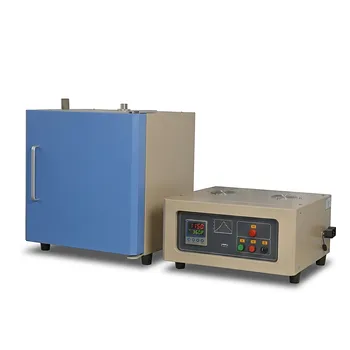
High Temperature Muffle Furnace with Alloy Chamber for Debinding and Sintering Applications
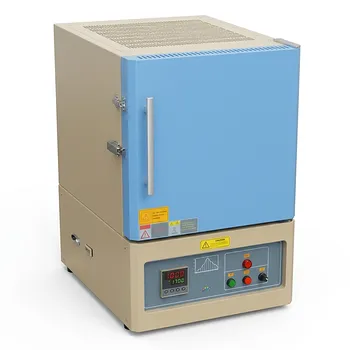
Large Bench Top 1700C High Temperature Muffle Furnace with 19L Chamber for Advanced Material Sintering and Annealing
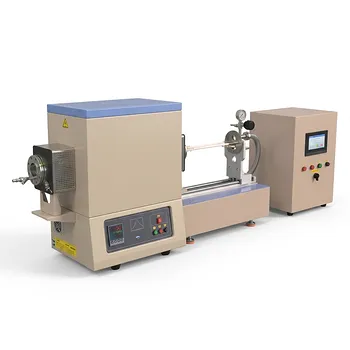
High Temperature Horizontal Electrical Assisted Sintering Furnace with 3KW Programmable Power Source for Advanced Ceramic Materials
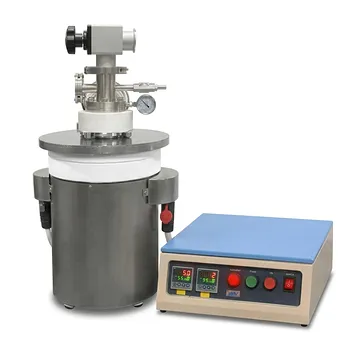
1100C High Temperature Vacuum Crucible Furnace with Quartz Chamber for Thermal Processing and Sintering
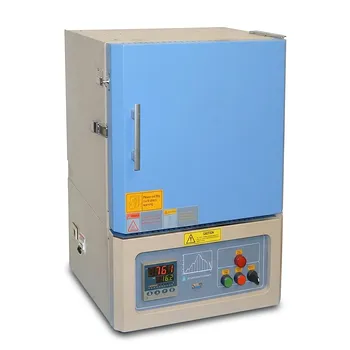
High Temperature 1700C Bench Top Muffle Furnace with Alumina Fiber Insulation and 3.6L Chamber Capacity for Precision Sintering and Heat Treatment
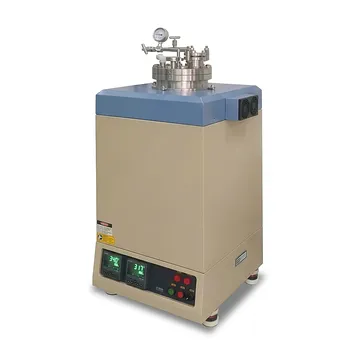
High Temperature 1000C Vacuum Furnace with 8 Inch ID Chamber for Material Sintering and Research Annealing
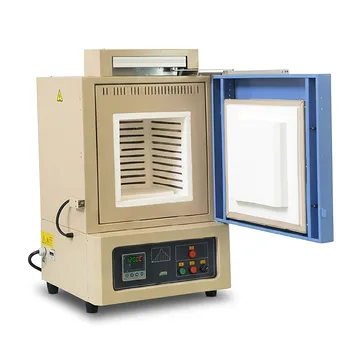
1200C High Temperature Muffle Furnace with Motorized Door and Automated PC Control for Industrial Sintering and Material Processing 27 Liter
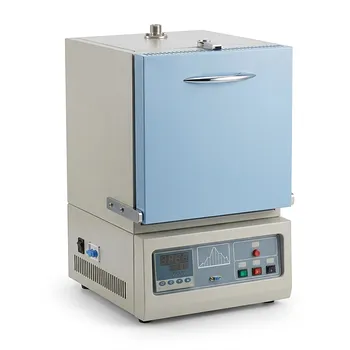
1750C Compact Muffle Furnace 1.7L Ultra High Temperature Laboratory Sintering System for Advanced Ceramics and Material Science Research
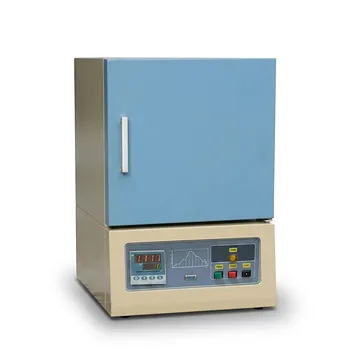
Ultra High Temperature Bench Top Muffle Furnace 1750C Sintering System with Kanthal Super Heating Elements and Precision Digital Control
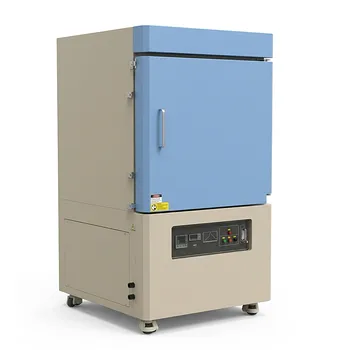
Industrial Large Box Furnace 1700C 216L High Temp Muffle Sintering System
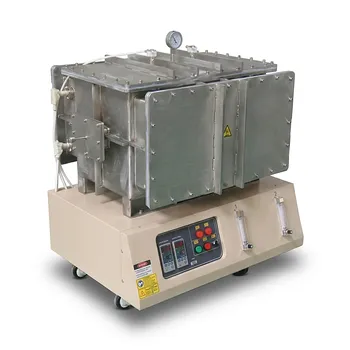
1500°C Atmosphere Controlled Rapid Heating Furnace for Material Science and Battery Powder Sintering
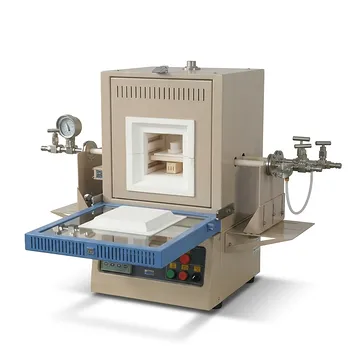
1700C Compact Hybrid Furnace with Dual Layer Box Sintering and Controlled Atmosphere Alumina Tubes
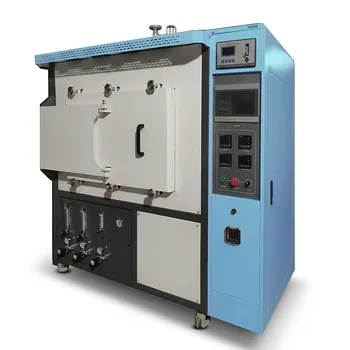
Roller Table Atmosphere Furnace 1500C High Temperature Battery Material Sintering System 112L Capacity
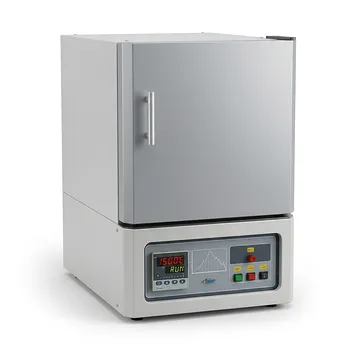
High Temperature 1500C Benchtop Muffle Furnace 3.6L Alumina Fiber Chamber Programmable Controller Sintering Annealing Carbonization Thermal Processing System
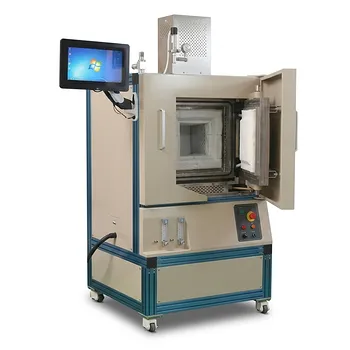
High Temperature Oxygen and Inert Atmosphere Controlled Furnace 8 Liter 1700C Sintering System for Advanced Materials RD
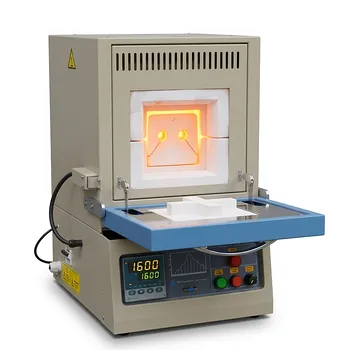
High Temperature Compact Muffle Furnace 1700 C with 30 Segment Programmable Controller and 1.7L Cubic Chamber
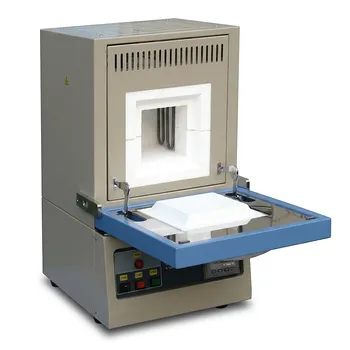
High Temperature 1800C Compact Muffle Furnace with Kanthal Super 1900 Heating Elements and 1.7L Alumina Chamber
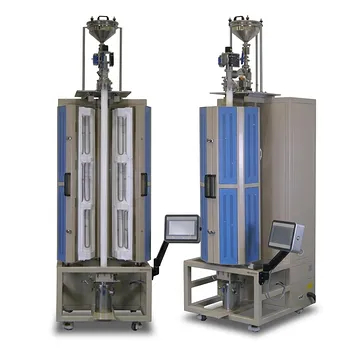
High Temperature Vertical Three Zone Powder Spheroidizing Furnace for Advanced Material Synthesis and Industrial Thermal Processing