What is the function of staggered condensation disks in a tube furnace? Optimize Arsenic Purification & Material Purity
Updated 3 months ago
The primary function of staggered condensation disks is to create a tortuous flow path that selectively removes impurities during the sublimation process. By forcing arsenic vapor into an S-shaped trajectory, these disks increase the likelihood that antimony-containing clusters will collide with and condense on internal surfaces before reaching the collection zone. This physical barrier ensures that the final refined arsenic achieves a significantly higher level of purity by trapping contaminants near the heating source.
Staggered condensation disks act as a kinetic filter by manipulating vapor flow to trap antimony impurities near the heat source. This geometry maximizes surface contact, allowing impurities to deposit early and preventing them from contaminating the purified arsenic product.
The Mechanics of Vapor Path Manipulation
Creating the S-Shaped Flow
In a standard tube furnace, vapor typically moves in a linear fashion, which often allows impurities to travel alongside the target material. Staggered disks disrupt this linear path, forcing the arsenic vapor to navigate a winding, S-shaped route through the furnace.
Increasing Collision Probability
The winding path ensures that antimony-containing clusters frequently impact the disk surfaces and the furnace tube walls. Each collision provides an opportunity for these specific impurity clusters to lose energy and condense prematurely.
Selective Deposition and Impurity Management
Preferential Condensation Near the Heat Source
By forcing collisions early in the process, impurities are encouraged to deposit in or near the heating zone of the furnace. This localization keeps the antimony impurities physically separated from the cooler downstream area where the refined arsenic is ultimately collected.
Blocking Diffusion into the Final Product
Without these disks, antimony vapors could easily diffuse throughout the length of the tube, leading to significant cross-contamination. The disk arrangement serves as a mechanical barrier that effectively "scrubs" the vapor stream of unwanted elements through physical contact.
Understanding the Trade-offs
Impact on Throughput and Pressure
While the S-shaped path significantly increases purity, it also creates flow resistance within the vacuum system. This can result in slower processing times or require more robust vacuum equipment to maintain the necessary pressure levels for sublimation.
Maintenance and Material Accumulation
Over time, the heavy deposition of impurities on the disks can lead to clogging or a decrease in the effective surface area for collisions. Regular maintenance and precise disk spacing are essential to ensure the furnace does not become restricted during long purification runs.
Optimizing Your Sublimation Strategy
Successful arsenic purification requires balancing the mechanical design of the furnace with the specific impurity profile of your crude material.
- If your primary focus is achieving ultra-high purity arsenic: Ensure disk spacing is optimized to maximize the S-curve tightest angles, which increases the collision frequency for antimony clusters.
- If your primary focus is maximizing production volume: Utilize a more gradual staggered arrangement to reduce flow resistance while still providing a baseline level of impurity blocking.
Integrating staggered condensation disks transforms a simple sublimation tube into a high-precision kinetic separator, ensuring the reliable production of refined arsenic.
Summary Table:
| Feature | Mechanism | Benefit |
|---|---|---|
| S-Shaped Path | Forces arsenic vapor into a non-linear trajectory | Increases collision probability for impurity clusters |
| Kinetic Filtering | Traps antimony-containing clusters on disk surfaces | Prevents contaminants from reaching the collection zone |
| Selective Deposition | Encourages condensation near the heating source | Ensures physical separation between impurities and product |
| Mechanical Barrier | Acts as a physical "scrubber" for the vapor stream | Enables the production of ultra-high purity refined arsenic |
Elevate Your Material Research with THERMUNITS Precision Furnaces
Achieving ultra-high purity in materials like arsenic requires expert-grade thermal processing. THERMUNITS is a leading manufacturer of high-temperature laboratory equipment, providing the precision needed for advanced material science and industrial R&D.
Our comprehensive range of solutions includes:
- Tube & Vacuum Furnaces optimized for sublimation and CVD/PECVD systems.
- Muffle, Atmosphere, and Rotary Furnaces for diverse heat treatments.
- Specialized equipment like Vacuum Induction Melting (VIM), Hot Press Furnaces, and Dental Furnaces.
Whether you are refining crude materials or developing new alloys, our thermal elements and systems deliver unmatched temperature control and reliability.
Ready to optimize your lab's performance? Contact THERMUNITS today to find the perfect furnace for your specific application!
References
- Zibin Zuo, Baoqiang Xu. Removal of Antimony from Industrial Crude Arsenic by Vacuum Sublimation: Combination of Thermodynamics and Ab Initio Molecular Dynamics. DOI: 10.3390/met14050490
Mentioned Products
- High Temperature Tube Furnace 1500C with Sliding Flanges and 50mm OD for Rapid Thermal Processing Fast Heating and Cooling
- Vertical 1700C Vacuum and Atmosphere Tube Furnace with 80mm Alumina Tube
- 1100C Tube Furnace with Vacuum Flange and Programmable Temperature Controller for Material Science and Industrial Heat Treatment
- Compact High Temperature 1600C Tube Furnace with 50mm Alumina Tube and Vacuum Flanges for Material Sintering
- 900°C Max Rotary Tube Furnace with 8 Inch 310S Alloy Tube and Optional Multi Zone Heating for Industrial Material Calcination
People Also Ask
- How are high-temperature tube furnaces utilized to repair etching damage? Precision Lattice Restoration Solutions
- What role does a high-temperature tube furnace play in the sulfidation heat treatment of CoS@C/MXene nanocomposites? Guide
- What core conditions does a high-temperature tube furnace provide for rGO aerogels? Mastering Precision Synthesis.
- How does precision tube furnace control influence CoFe nanoparticle formation? Master Your Bimetallic Synthesis.
- What role does a high-temperature tube furnace play in CVD synthesis of silicon nanowires? Master VLS Growth Precision.

Tech Team · ThermUnits
Last updated on Jun 03, 2026
Related Products

High Temperature Tube Furnace 1500C with Sliding Flanges and 50mm OD for Rapid Thermal Processing Fast Heating and Cooling

Vertical 1700C Vacuum and Atmosphere Tube Furnace with 80mm Alumina Tube
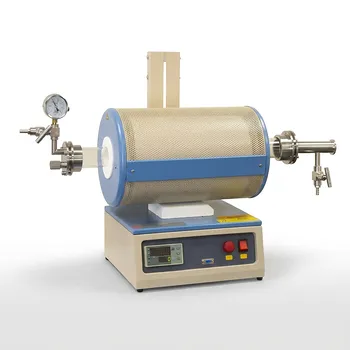
1100C Tube Furnace with Vacuum Flange and Programmable Temperature Controller for Material Science and Industrial Heat Treatment

Compact High Temperature 1600C Tube Furnace with 50mm Alumina Tube and Vacuum Flanges for Material Sintering
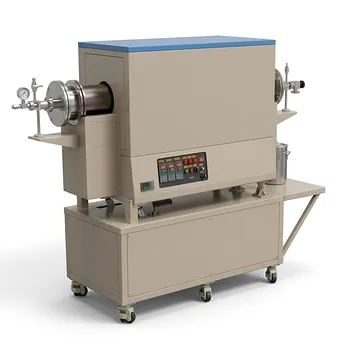
900°C Max Rotary Tube Furnace with 8 Inch 310S Alloy Tube and Optional Multi Zone Heating for Industrial Material Calcination
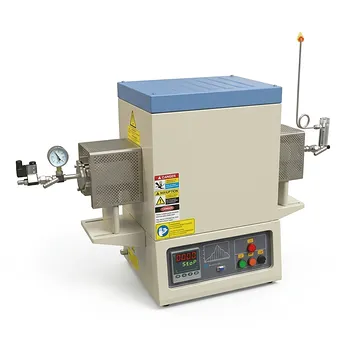
1700C Hydrogen Gas Tube Furnace with 60mm Alumina Process Tube and Integrated Hydrogen Safety Detector

High Temperature 1700C Tube Furnace with High Vacuum Turbomolecular Pump System and Multi Channel Mass Flow Controller Gas Mixer
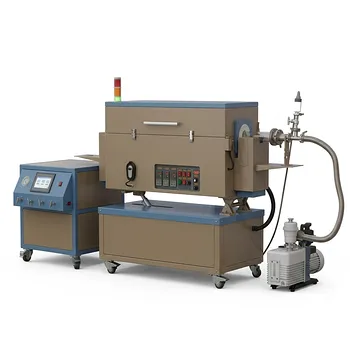
5 Inch Three Zone Rotary Tube Furnace with Integrated Gas Delivery System and 1200C Capability for Advanced Material CVD Processing
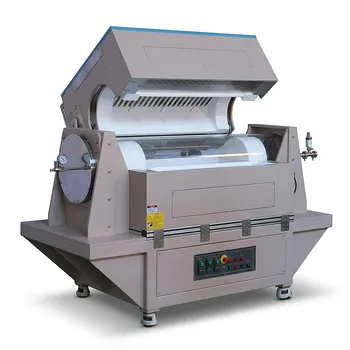
Three Zone Tube Furnace with 11 Inch or 15 Inch Quartz Tube and Hinged Flanges for Vacuum Atmosphere Heat Treatment
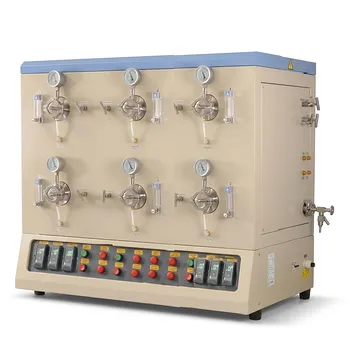
1200C High Throughput Multi Channel Tube Furnace with 50mm Quartz Tubes for Annealing and Material Phase Diagram Research
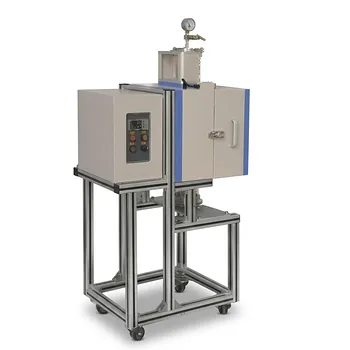
1200°C 5 Inch Vertical Quartz Tube Furnace with Stainless Steel Vacuum Flanges
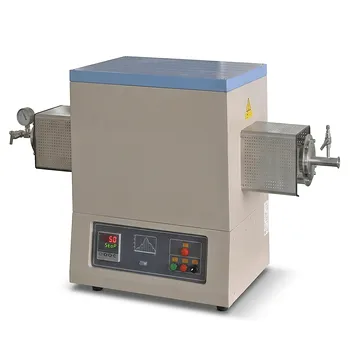
High Temperature 1700C Tube Furnace with 4 Inch OD Alumina Tube and Vacuum Sealing Flanges

High Temperature 1700C Benchtop Tube Furnace with 5 Inch Heating Zone High Purity Alumina Tube and Vacuum Sealing Flanges

High Temperature 1700C Six Zone Split Tube Furnace with Alumina Tube and Water Cooled Flanges

Compact Vertical Split Quartz Tube Furnace with Stainless Steel Vacuum Flanges for Rapid Thermal Quenching and Controlled Atmosphere Material Processing

1800C High Temperature Compact Vacuum Tube Furnace with 60mm OD Alumina Tube and Kanthal MoSi2 Heating Elements
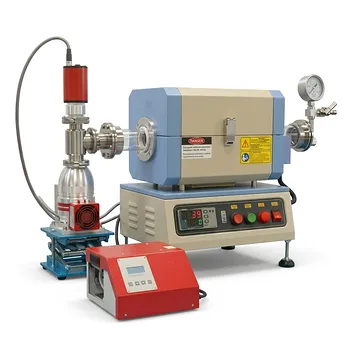
High Vacuum Compact Tube Furnace 1200C with Integrated Turbo Pump System and 8 Inch Heating Zone
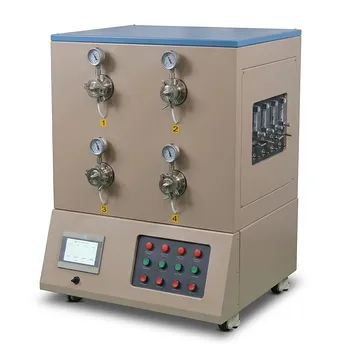
High Throughput 1200C Four Channel Tube Furnace with 3 Inch Quartz Tubes for Multi Zone Annealing and Material Research

High Temperature Automated 5 Inch Tube Furnace for Autonomous Material Research and Advanced Laboratory R&D
