What is the function of using a tube furnace with a flowing oxygen environment? Optimize Cathode Post-Treatment
Updated 3 months ago
The use of a tube furnace with flowing oxygen serves as a critical stabilization and purification step during cathode post-treatment. This process removes organic precursors through thermal decomposition, ensures the oxidation of transition metals, and prevents structural degradation—such as lithium loss or cation mixing—that would otherwise occur at high temperatures.
This controlled thermal treatment transforms a physical coating into a chemically integrated protective layer while simultaneously preserving the layered crystal structure and electrochemical activity of high-nickel cathode materials.
Chemical Purification and Surface Integration
Thermal Decomposition of Organic Precursors
The primary function of the oxygen environment is to drive the thermal decomposition of organic cation precursors or residues (such as oxalates or nitrates) within the coating layer. Removing these organics is essential to prevent them from acting as insulating barriers that would hinder electron and ion transport.
Promoting Interfacial Chemical Bonding
The heat provided by the tube furnace facilitates the formation of stable chemical bonds between the coating nanosheets and the cathode surface. This in-situ reaction ensures that the protective layer is not merely a physical wrap but a chemically anchored shield capable of withstanding the stresses of battery cycling.
Formation of Uniform Protective Layers
By providing a consistent temperature field, the tube furnace allows for the conversion of surface-anchored ions into a thin, uniform metal oxide layer (such as Fe₂O₃). This layer passivates active surface sites, effectively inhibiting the oxidative decomposition of the electrolyte during high-voltage operation.
Structural Stabilization and Phase Integrity
Preventing Lithium Loss and Reduction
High-nickel cathode materials are highly susceptible to reduction or lithium loss when exposed to high temperatures. A continuous flow of oxygen creates an overpressure that suppresses these degradation pathways, ensuring the material retains its full electrochemical potential.
Suppression of Cation Mixing
Precision gas flow within the furnace ensures that transition metal ions, specifically Ni²⁺, are oxidized to the Ni³⁺ state. This is vital for suppressing cation mixing, a defect where nickel ions migrate into lithium layers, which would otherwise collapse the path for lithium-ion diffusion and reduce battery capacity.
Maintenance of the Layered Structure
The oxidizing atmosphere promotes the proper intercalation of lithium ions into the crystal lattice. This results in a well-defined, stable layered structure that is essential for the high-rate performance and longevity of modern lithium-ion batteries.
Understanding the Trade-offs
Atmospheric Precision vs. Operational Cost
Maintaining a continuous flow of high-purity oxygen is significantly more resource-intensive than using ambient air or inert gases. While necessary for high-nickel chemistries, the cost of gas and specialized furnace seals must be weighed against the performance gains of the material.
Temperature Gradient Sensitivity
Tube furnaces must be carefully calibrated to avoid temperature gradients that could cause non-uniformity in the coating. If the temperature is too high, it may trigger unwanted phase transitions; if it is too low, organic precursors may not fully decompose, leading to high internal resistance.
Risk of Over-Oxidation
While oxygen is necessary for nickel stabilization, excessive exposure at specific temperatures for certain materials can lead to surface over-oxidation. This may create a resistive surface layer that, while stable, limits the power density of the resulting battery cell.
How to Apply This to Your Project
Recommendations for Material Optimization
- If your primary focus is high-nickel (Ni >80%) cathodes: Utilize a high-purity oxygen flow throughout the entire heating and cooling cycle to prevent Ni²⁺ migration and maintain structural integrity.
- If your primary focus is coating thickness control: Prioritize the precision of the tube furnace's temperature zones to ensure the organic precursors decompose at a uniform rate across the entire batch.
- If your primary focus is reducing interfacial resistance: Calibrate the oxygen flow rate to ensure complete removal of nitrates and oxalates without inducing excessive growth of the oxide passivation layer.
Properly balancing the oxygen concentration and thermal profile within a tube furnace is the key to engineering high-capacity cathode materials that do not sacrifice cycle life for energy density.
Summary Table:
| Process Step | Primary Function | Impact on Battery Performance |
|---|---|---|
| Thermal Decomposition | Removes organic precursors & residues | Lowers internal resistance & boosts ion transport |
| Chemical Bonding | Anchors coating nanosheets to cathode | Increases structural durability during cycling |
| Oxidation Control | Converts Ni²⁺ to Ni³⁺ ions | Prevents cation mixing & capacity loss |
| Surface Passivation | Forms uniform metal oxide layer | Inhibits electrolyte decomposition at high voltage |
| Structural Support | Prevents lithium loss | Maintains high-rate performance & energy density |
Elevate Your Battery Material Research with THERMUNITS
Precision atmosphere control is the difference between a failing cell and a breakthrough in energy density. THERMUNITS is a leading manufacturer of high-temperature laboratory equipment specifically designed for material science and industrial R&D.
We provide the high-performance thermal solutions you need to master cathode post-treatment, including:
- Tube & Atmosphere Furnaces: Optimized for precise gas flow and oxygen-rich environments.
- CVD/PECVD Systems: For advanced surface coating and layer integration.
- Muffle, Vacuum, & Rotary Furnaces: For versatile heat treatment applications.
- Specialized Equipment: Including Vacuum Induction Melting (VIM), Hot Press, and Dental Furnaces.
Don't let temperature gradients or atmospheric inconsistencies compromise your results. Let our engineering team help you select the perfect system for your high-nickel cathode or solid-state battery projects.
Contact THERMUNITS Today to Request a Quote
References
- Leonhard Karger, Torsten Brezesinski. Protective Nanosheet Coatings for Thiophosphate‐Based All‐Solid‐State Batteries. DOI: 10.1002/admi.202301067
Mentioned Products
- High Temperature Vertical Tube Furnace for Small Solid Oxide Fuel Cell Testing with Four Channel Gas Control
- High Temperature Oxygen and Inert Atmosphere Controlled Furnace 8 Liter 1700C Sintering System for Advanced Materials RD
- 1500C Compact Hydrogen Gas Tube Furnace with 2 Inch Alumina Tube and Hydrogen Detector
- 1700C Hydrogen Gas Tube Furnace with 60mm Alumina Process Tube and Integrated Hydrogen Safety Detector
- Vertical 1700C Vacuum and Atmosphere Tube Furnace with 80mm Alumina Tube
People Also Ask
- What role does a high-temperature tube furnace play in Fe-Mg-ZSM-5 catalyst regeneration? Optimize Catalyst Recovery
- What is the function of a vertical tube furnace in MnOx-SiO2 research? Precision Control & Quenching
- Why is a high-temperature tube furnace with atmosphere control needed for CMS membranes? Ensure Pore Precision & Purity
- What role does a dual-zone tube furnace play in Cr0.83Te crystal growth? Precision Thermal Field Control for CVT
- Why Use High-Temp Tube Furnaces for Carbon Diffusion? Precision Control & Purity Advantages

Tech Team · ThermUnits
Last updated on Jun 03, 2026
Related Products
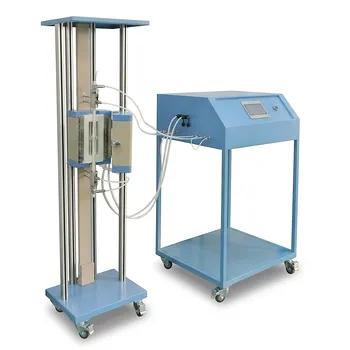
High Temperature Vertical Tube Furnace for Small Solid Oxide Fuel Cell Testing with Four Channel Gas Control
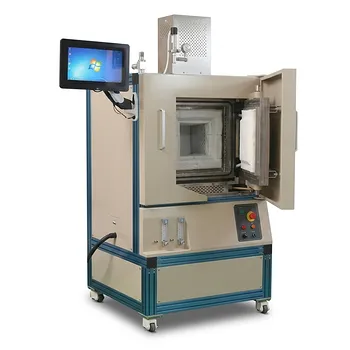
High Temperature Oxygen and Inert Atmosphere Controlled Furnace 8 Liter 1700C Sintering System for Advanced Materials RD
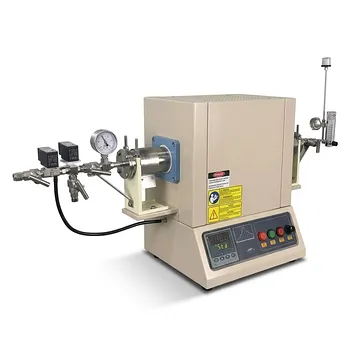
1500C Compact Hydrogen Gas Tube Furnace with 2 Inch Alumina Tube and Hydrogen Detector
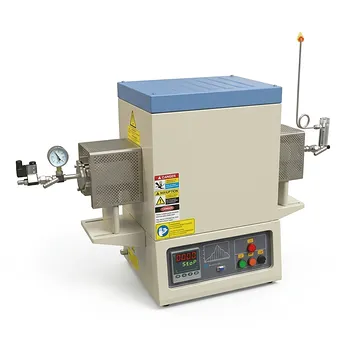
1700C Hydrogen Gas Tube Furnace with 60mm Alumina Process Tube and Integrated Hydrogen Safety Detector
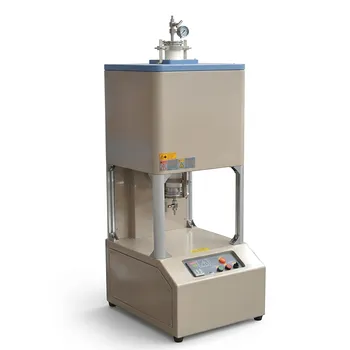
Vertical 1700C Vacuum and Atmosphere Tube Furnace with 80mm Alumina Tube
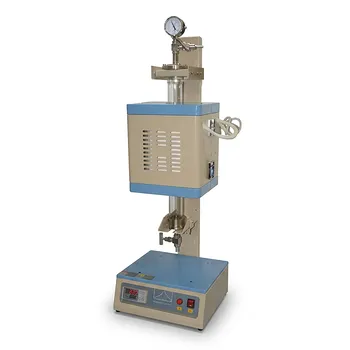
Compact Vertical Split Quartz Tube Furnace with Stainless Steel Vacuum Flanges for Rapid Thermal Quenching and Controlled Atmosphere Material Processing
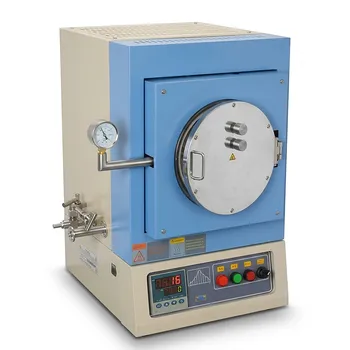
1100°C High Temperature Quartz Chamber Furnace 8 Inch OD with 7.6 Liter Capacity and Vacuum Atmosphere Capability
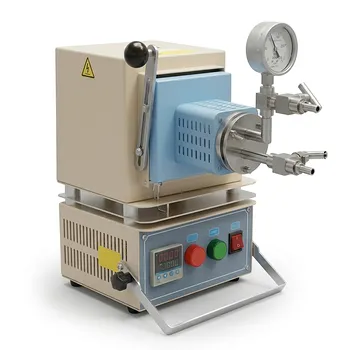
Compact Hybrid Muffle and Tube Furnace for 1000C Controlled Atmosphere Laboratory Material Sintering
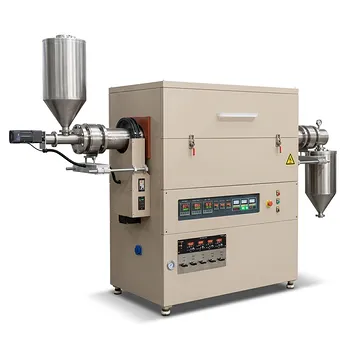
High Temperature Tilting Rotary Tube Furnace with Integrated Mass Flow Control and Multi Zone Heating
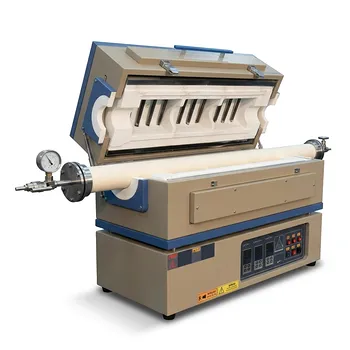
1600C Three Zone Split Tube Furnace with Alumina Tube and Vacuum Flange
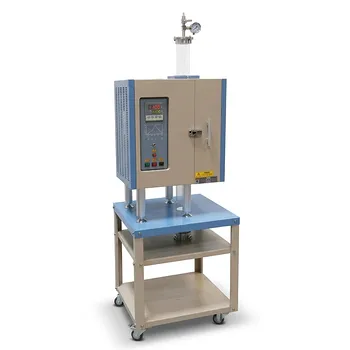
1100°C Split Vertical Tube Furnace with 80mm Quartz Tube and Stainless Steel Vacuum Flanges
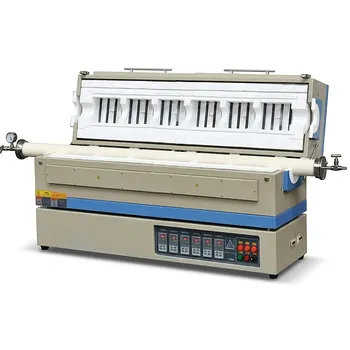
High Temperature 1700C Six Zone Split Tube Furnace with Alumina Tube and Water Cooled Flanges
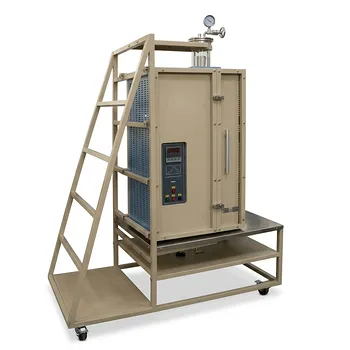
Split Vertical Tube Furnace with 1200C Quartz Tube and Stainless Steel Vacuum Flanges for Rapid Thermal Processing
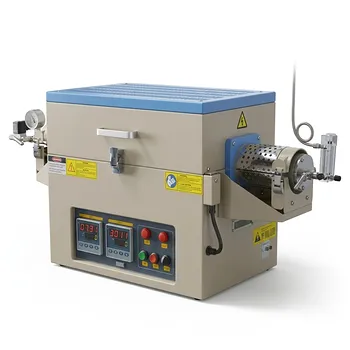
1100C Dual Zone Hydrogen Gas Tube Furnace with Quartz Tube and Integrated H2 Leak Detection System
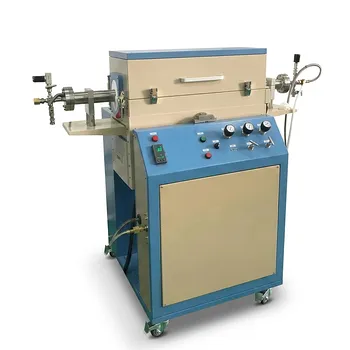
High Temperature Rocking Tube Furnace 1700°C Alumina Processing Tube with Precision Oscillation for Material Synthesis
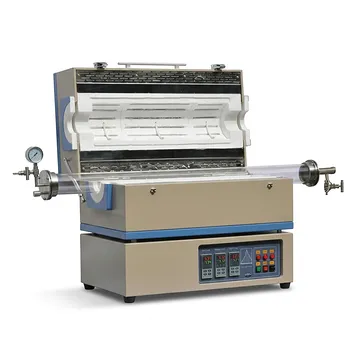
24 Inch Three Zone Split Tube Furnace with Optional Quartz Tube and Vacuum Flange System for High Temperature Material Synthesis
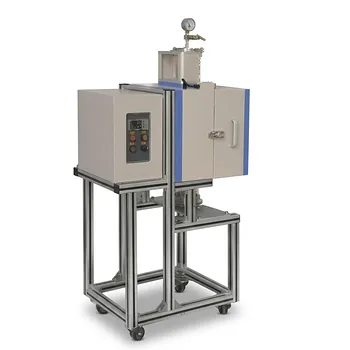
1200°C 5 Inch Vertical Quartz Tube Furnace with Stainless Steel Vacuum Flanges
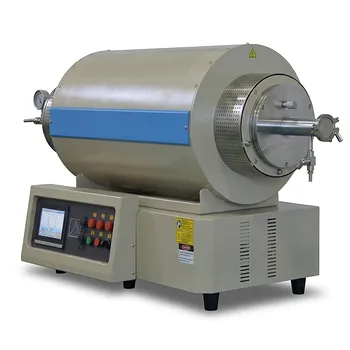
1200C Max Three Zone Tube Furnace 6 Inch OD Max with Tube and Flange
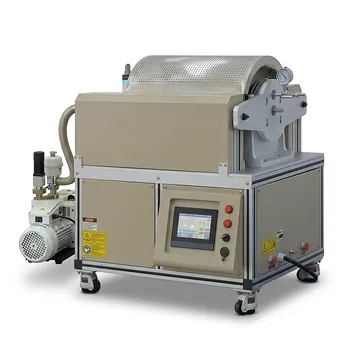
Automated 1200 C Tube Furnace for AI Material Research with 6 Inch OD and Sliding Flange
