What is the importance of precise temp control in Ti-slag smelting? Achieve High Purity and Structural Integrity
Updated 3 months ago
Precise programmed temperature control is the fundamental requirement for successful titanium slag smelting. Integrated with high-precision power units, these systems allow for fine-tuned heating rates—typically between 55–60 °C/min—to prevent the structural failure of titanium-bearing materials during the critical solid-phase reduction stage.
Core Takeaway: Programmed temperature control transforms smelting from a blunt heating process into a controlled chemical sequence. By regulating thermal gradients, operators can prevent premature material collapse and ensure that all physical and chemical reactions reach completion before the final smelting temperature is achieved.
Managing Complex Chemical and Physical Transitions
Preventing Structural Failure
In the early stages of smelting, titanium-bearing materials are highly sensitive to thermal shock and rapid expansion. Using a programmed heating rate of 55–60 °C/min ensures that the material maintains its integrity during the solid-phase reduction stage. Without this precision, rapid temperature spikes can lead to structural failure, causing the furnace charge to collapse prematurely.
Sequencing Chemical Reactions
Smelting is not a single event but a series of overlapping chemical transitions involving fluxes and furnace charges. Precise control ensures that these components fully complete their individual physical and chemical reactions before the target smelting temperature is reached. This sequence is vital for ensuring the final slag has the desired purity and consistency.
Differentiating Reaction Kinetics
High-precision control allows for the clear differentiation of specific reaction stages, such as the melting points of secondary components. By managing the heating rate at specific intervals (e.g., 3°C per minute in research settings), operators can prevent localized overheating. This level of control stops the formation of undesirable by-products that occur when reactions proceed too quickly or at the wrong temperature range.
Maintaining Microstructural and Phase Integrity
Controlling Grain Growth and Recrystallization
The mechanical and chemical properties of titanium alloys and slags are dictated by their microstructure. Precise temperature management, often maintaining levels just below the beta transus temperature, allows for controlled recrystallization. This prevents abnormal grain growth and coarsening, which would otherwise degrade the quality of the final product.
Optimizing Phase Transformations
Specific performance characteristics, such as the superelasticity in titanium alloys or luminescence in phosphors, rely on narrow annealing temperature windows. Programmed control facilitates the induction of specific phase transitions and the dissolution of elements like carbon without "overburning" the material. This ensures the formation of stable, high-performance microstructures, such as fully lamellar or equiaxed grains.
Understanding the Trade-offs
The Cost of Precision vs. Operational Risk
Implementing high-precision programmed control requires a higher initial investment in power control units and sophisticated sensors. However, the alternative—manual or less precise control—increases the risk of "thermal lag" or temperature overshoot. These errors can lead to "overburning," which ruins the furnace charge and can cause significant downtime for cleaning and repair.
Balancing Heating Speed and Material Stability
While faster heating rates improve throughput, they significantly increase the risk of reaction loss of control. If the heating rate is too aggressive, the core of the material may remain in a solid state while the exterior begins to melt, leading to an inconsistent chemical profile. Finding the "sweet spot" requires balancing production speed against the strict kinetic requirements of the titanium reduction process.
Applying These Insights to Your Smelting Process
How to Apply This to Your Project
- If your primary focus is maximizing material purity: Prioritize a programmed sequence that allows fluxes to react completely at lower temperatures before ramping to the final smelting point.
- If your primary focus is preventing structural failure: Utilize high-precision power units to lock in a steady heating rate of 55–60 °C/min, specifically during the solid-phase reduction window.
- If your primary focus is microstructural refinement: Implement a cooling or holding program that stays strictly below the beta transus temperature to induce controlled recrystallization and avoid grain coarsening.
Ultimately, precise thermal programming is the bridge between raw material input and the consistent production of high-quality titanium slag.
Summary Table:
| Key Feature | Impact on Smelting | End Result |
|---|---|---|
| Heating Rate Control | Prevents structural failure during solid-phase reduction | Enhanced Material Integrity |
| Reaction Sequencing | Ensures fluxes and charges react fully before smelting | High Slag Purity |
| Microstructure Management | Regulates grain growth below beta transus temperature | Optimized Mechanical Properties |
Elevate Your Material Research with THERMUNITS Precision
As a leading manufacturer of high-temperature laboratory equipment for material science and industrial R&D, THERMUNITS provides the advanced thermal processing solutions required for complex metallurgical processes like titanium slag smelting. Our comprehensive range, including Muffle, Vacuum, Atmosphere, Tube, and Rotary furnaces, as well as CVD/PECVD systems and Vacuum Induction Melting (VIM) furnaces, is engineered to deliver the precise programmed temperature control your research demands.
Whether you are refining titanium alloys or developing high-performance industrial materials, our equipment ensures stable heating rates, prevents thermal lag, and guarantees consistent microstructural results. Contact us today to learn how our tailored heat treatment solutions can optimize your smelting efficiency and material quality.
References
- Maxat K. Myrzakulov, А И Карлина. Analysis of the Effect of Fluxing Additives in the Production of Titanium Slags in Laboratory Conditions. DOI: 10.3390/met14121320
Mentioned Products
- Large Bench Top 1700C High Temperature Muffle Furnace with 19L Chamber for Advanced Material Sintering and Annealing
- 1200C High Temperature 125L Muffle Furnace 5 Side Heating for Large Batch Sintering with Optional Alloy Debinding Chamber
- High Temperature Muffle Furnace with Alloy Chamber for Debinding and Sintering Applications
- 1100C High Temperature Vacuum Crucible Furnace with Quartz Chamber for Thermal Processing and Sintering
- 1200C Five Side Heating Muffle Furnace with Sliding Door 125L Volume High Temperature Heat Treatment System for Large Scale Sintering and Annealing
People Also Ask
- What is the function of a high-temp muffle furnace in Ni-V oxide synthesis? Optimize your material's performance.
- What is the purpose of using muffle or tube furnaces in glass synthesis? Achieve Precise Melt-Quenching & Homogeneity
- What role does a high-temperature muffle furnace play in evaluating the mineral composition of rock samples? LOI & XRF Guide
- What is the function of a high-temperature muffle furnace in phosphorus-modified zeolite catalyst preparation?
- What is the function of a muffle furnace in aluminoborosilicate glass prep? Stabilize Raw Materials for Superior Purity

Tech Team · ThermUnits
Last updated on Jun 02, 2026
Related Products
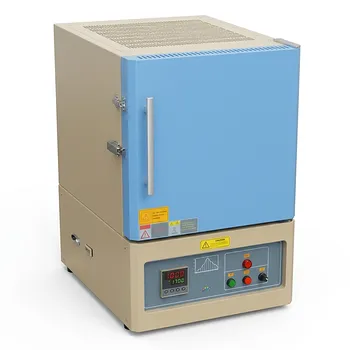
Large Bench Top 1700C High Temperature Muffle Furnace with 19L Chamber for Advanced Material Sintering and Annealing
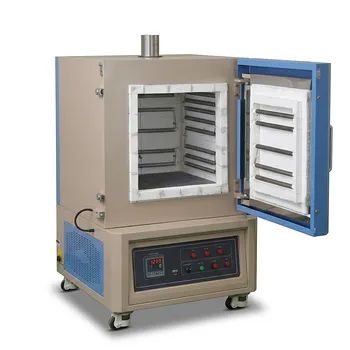
1200C High Temperature 125L Muffle Furnace 5 Side Heating for Large Batch Sintering with Optional Alloy Debinding Chamber
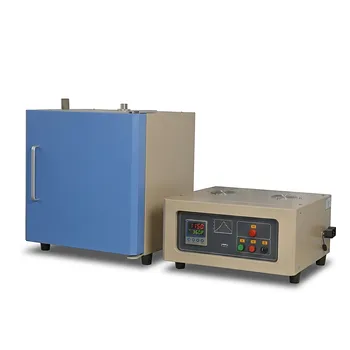
High Temperature Muffle Furnace with Alloy Chamber for Debinding and Sintering Applications
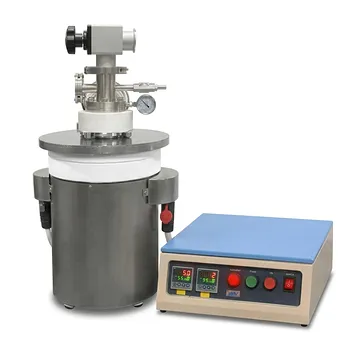
1100C High Temperature Vacuum Crucible Furnace with Quartz Chamber for Thermal Processing and Sintering
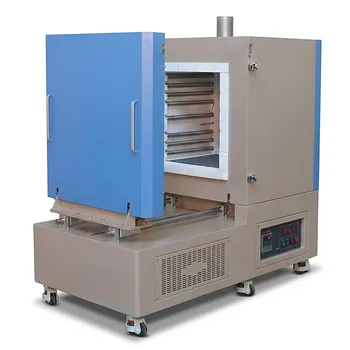
1200C Five Side Heating Muffle Furnace with Sliding Door 125L Volume High Temperature Heat Treatment System for Large Scale Sintering and Annealing
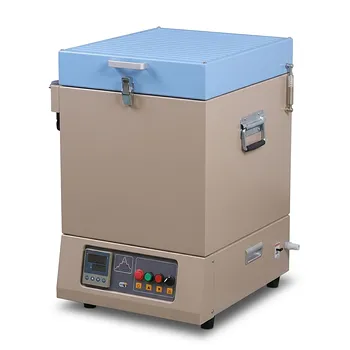
High Temperature Vertical Crucible Furnace with 22L Heating Chamber and 1200C Maximum Temperature
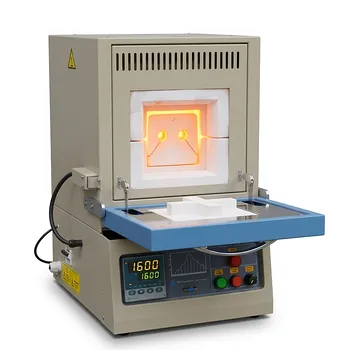
High Temperature Compact Muffle Furnace 1700 C with 30 Segment Programmable Controller and 1.7L Cubic Chamber
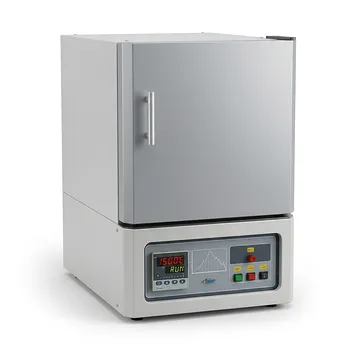
High Temperature 1500C Benchtop Muffle Furnace 3.6L Alumina Fiber Chamber Programmable Controller Sintering Annealing Carbonization Thermal Processing System
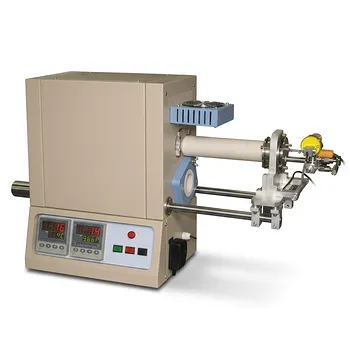
High Temperature Tube Furnace 1500C with Sliding Flanges and 50mm OD for Rapid Thermal Processing Fast Heating and Cooling
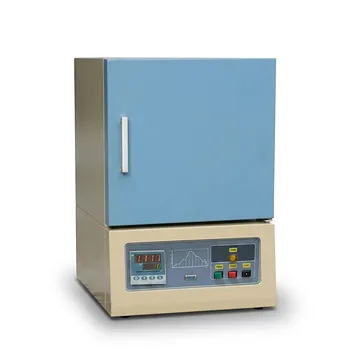
Ultra High Temperature Bench Top Muffle Furnace 1750C Sintering System with Kanthal Super Heating Elements and Precision Digital Control
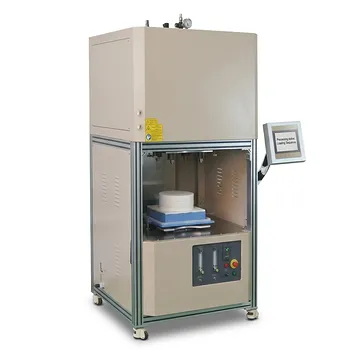
High Temperature Vertical Atmosphere Controlled Furnace with Automatic Bottom Loading and 1700°C Capacity for Advanced Material Research
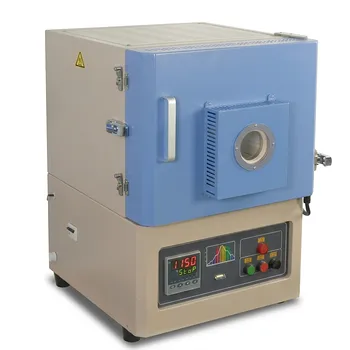
High Temperature Benchtop Muffle Furnace with Quartz Observation Window for Thermal Imaging and Material Analysis
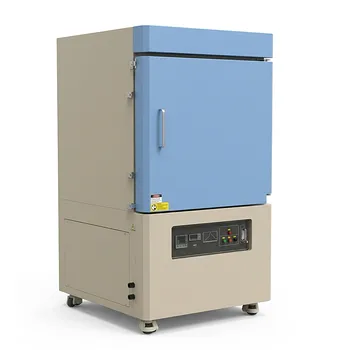
Industrial Large Box Furnace 1700C 216L High Temp Muffle Sintering System
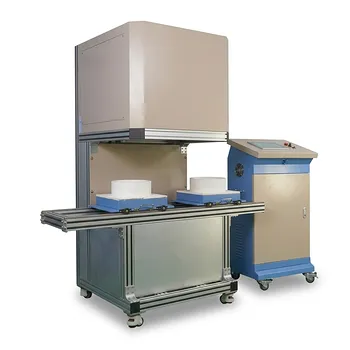
High Temperature Bottom Loading Vertical Furnace 1700C Dual Stage Sample Processing System 18L Large Capacity Thermal Treatment Equipment
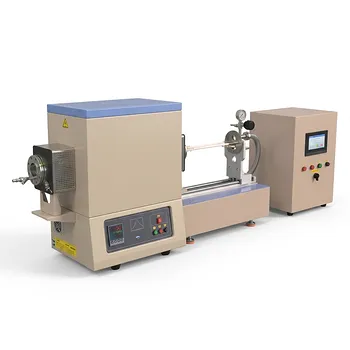
High Temperature Horizontal Electrical Assisted Sintering Furnace with 3KW Programmable Power Source for Advanced Ceramic Materials
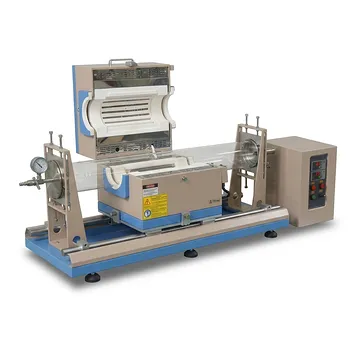
1200C High Temperature 5 Inch Sliding Tube Furnace for Rapid Thermal Processing RTP and Wafer Annealing
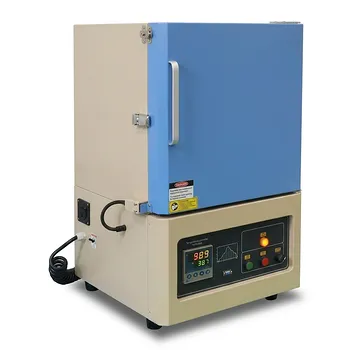
1200°C High Temperature Muffle Furnace 19L Chamber with 50 Segment Programmable Controller

Top Loading Muffle Furnace 1200°C High Temperature Crucible Furnace with 9 Liter Chamber and Programmable PID Controller
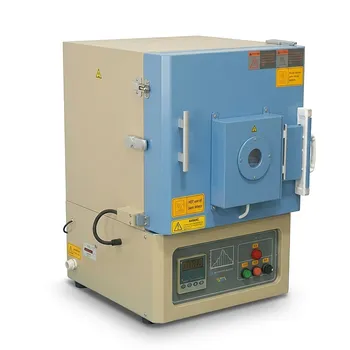
High Temperature Benchtop Muffle Furnace 1500C with 3.6L Chamber and Quartz Observation Window