What is the objective of sintering Bi2S3 nanobelt pellets? Achieve Mechanical Durability & Electrical Stability
Updated 5 months ago
The objective of sintering Bismuth Sulfide ($Bi_2S_3$) nanobelt pellets is to transform a fragile "green" body into a robust, electrically stable sensor component. By applying controlled thermal treatment, the process strengthens inter-particle bonds and removes internal stresses, ensuring the material can withstand the rigors of repeated pressure testing without structural failure.
Core Takeaway: Sintering $Bi_2S_3$ pellets utilizes thermal diffusion to solidify the connection between nanobelts and stabilize the electrical response. This critical step ensures both the mechanical integrity and the long-term reliability of the sensor.
The Mechanism of Thermal Treatment
The sintering process for $Bi_2S_3$ functions as a bridge between a collection of pressed powders and a unified functional material.
Strengthening Bonding Forces
At the atomic level, heat drives thermal diffusion, which allows particles to bond more effectively at their contact points. In nanobelt structures, this increases the contact area between individual belts, creating a more cohesive and durable matrix.
Eliminating Internal Stresses
The physical pressing of nanobelts into pellets creates significant internal mechanical stress within the material. Sintering allows these stresses to "relax" or redistribute, preventing the pellet from cracking or warping once it is removed from the mold or put into service.
Structural and Electrical Stabilization
Beyond physical toughness, sintering is vital for the functional performance of the $Bi_2S_3$ sensor.
Enhancing Electrical Stability
By improving the quality of the junctions between nanobelts, sintering creates more consistent electrical pathways. This reduces noise in the sensor's signal and ensures that the electrical resistance remains stable over time.
Ensuring Durability Under Pressure
Sensors are often subjected to repeated pressure cycle testing, which can cause untreated pellets to collapse or degrade. The structural reinforcement provided by sintering ensures the sensor maintains its shape and performance through thousands of cycles.
Understanding the Trade-offs
While sintering is essential, it requires careful calibration to avoid compromising the unique properties of the nanobelts.
Temperature vs. Material Integrity
If the sintering temperature is too low, the bonding forces will be insufficient, leading to a brittle pellet. Conversely, excessive heat can cause the nanobelts to melt or lose their high-surface-area morphology, which is often the source of their sensing sensitivity.
Time and Cost Considerations
While the primary reference mentions temperatures around 100°C for $Bi_2S_3$, the duration of the bake is equally critical. Longer sintering times may improve densification (similar to ceramic processes), but they also increase production costs and the risk of grain growth that could dull sensor performance.
Applying Sintering to Your Project
To achieve the best results with $Bi_2S_3$ nanobelt pellets, the sintering profile must align with your specific application requirements.
- If your primary focus is mechanical longevity: Prioritize a sintering profile that maximizes thermal diffusion to ensure the structure survives high-pressure environments.
- If your primary focus is signal precision: Focus on eliminating internal stresses and stabilizing electrical contact points to minimize drift and noise in your readings.
- If your primary focus is maintaining nanostructure: Use the lowest effective sintering temperature (e.g., 100°C) to prevent the nanobelts from coarsening or losing their unique shape.
By precisely controlling the sintering environment, you move from a temporary assembly of particles to a high-performance, industrial-grade sensing material.
Summary Table:
| Key Objective | Mechanism Involved | Impact on Sensor Performance |
|---|---|---|
| Mechanical Strengthening | Thermal diffusion & bonding | Transforms fragile pellets into robust, durable components |
| Stress Elimination | Internal stress redistribution | Prevents cracking and warping during use |
| Electrical Stabilization | Improved junction quality | Reduces signal noise and ensures consistent resistance |
| Durability Enhancement | Structural solidification | Withstands repeated pressure cycles without failure |
Elevate Your Material Research with THERMUNITS
Precise thermal control is the difference between a fragile sample and a high-performance sensor. THERMUNITS is a leading manufacturer of high-temperature laboratory equipment, providing the specialized tools necessary for advanced material science and industrial R&D.
Whether you are sintering Bismuth Sulfide (Bi2S3) nanobelts or developing complex semiconductors, our comprehensive range of thermal solutions—including Muffle, Vacuum, Atmosphere, Tube, and Hot Press furnaces, as well as CVD/PECVD systems—ensures the exact temperature uniformity and atmosphere control your project demands.
Ready to optimize your sintering profile? Contact our technical experts today to find the perfect furnace for your laboratory or production line. Let us help you achieve superior heat treatment results.
References
- Shafqat Ali, M. A. Rafiq. Fast, Sensitive, and Selective Hydrogen Sensing of Silver-Doped Bismuth Sulfide Nanobelts. DOI: 10.1007/s11664-024-11036-6
Mentioned Products
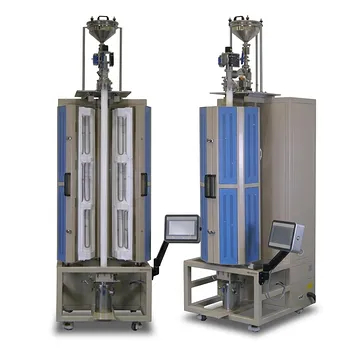
- High Temperature 1700C Vertical Tube Furnace for Powder Spherification and Material Sintering
- High Temperature Muffle Furnace with Alloy Chamber for Debinding and Sintering Applications
- Large Bench Top 1700C High Temperature Muffle Furnace with 19L Chamber for Advanced Material Sintering and Annealing
- 1650C High Temperature Atmosphere Controlled Box Furnace with 65L Chamber for Advanced Material Sintering and Industrial Heat Treatment
- Ultra High Temperature Bench Top Muffle Furnace 1750C Sintering System with Kanthal Super Heating Elements and Precision Digital Control
People Also Ask
- What role does a high-temperature vertical tube furnace play in simulating high-carbon ferromanganese slag formation?
- What functions does a vertical high-temperature tube furnace perform? Master Industrial Sintering & R&D Simulation
- What is the primary function of a high-temperature tube furnace in Cu1-N-C synthesis? Precision Thermal Control.
- High-Temp Tube Furnace Role in Converting Microbial Proteins to Iron Single-Atom Sites: Expert Synthesis Guide
- What impact does the heating rate of a tube furnace have on biochar microstructure? Optimize Your Material R&D.

Tech Team · ThermUnits
Last updated on Apr 14, 2026
Related Products

High Temperature 1700C Vertical Tube Furnace for Powder Spherification and Material Sintering
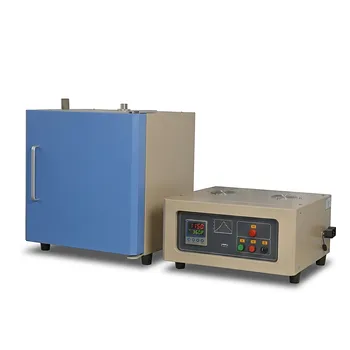
High Temperature Muffle Furnace with Alloy Chamber for Debinding and Sintering Applications
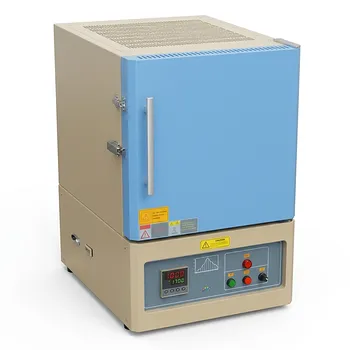
Large Bench Top 1700C High Temperature Muffle Furnace with 19L Chamber for Advanced Material Sintering and Annealing
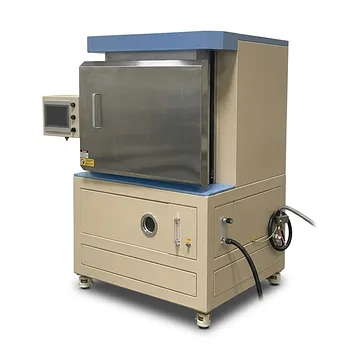
1650C High Temperature Atmosphere Controlled Box Furnace with 65L Chamber for Advanced Material Sintering and Industrial Heat Treatment
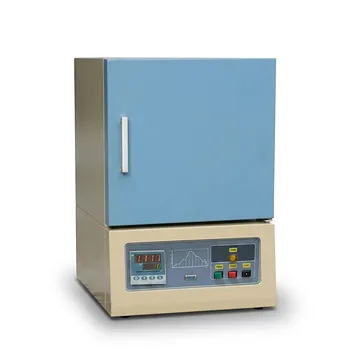
Ultra High Temperature Bench Top Muffle Furnace 1750C Sintering System with Kanthal Super Heating Elements and Precision Digital Control
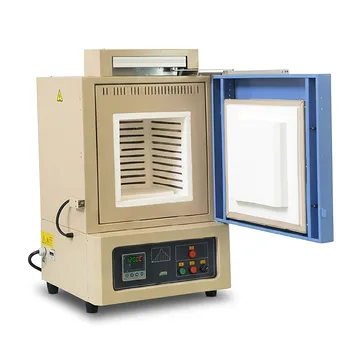
1200C High Temperature Muffle Furnace with Motorized Door and Automated PC Control for Industrial Sintering and Material Processing 27 Liter
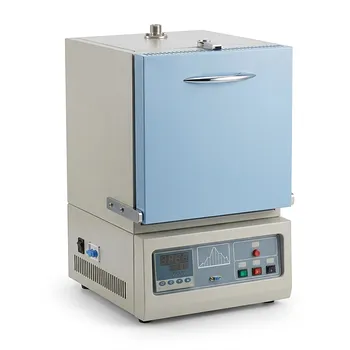
1750C Compact Muffle Furnace 1.7L Ultra High Temperature Laboratory Sintering System for Advanced Ceramics and Material Science Research
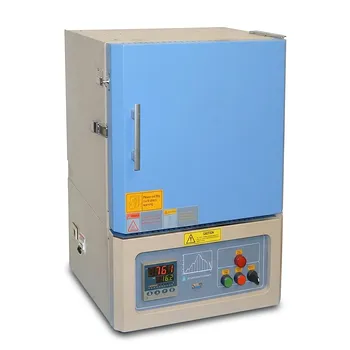
High Temperature 1700C Bench Top Muffle Furnace with Alumina Fiber Insulation and 3.6L Chamber Capacity for Precision Sintering and Heat Treatment
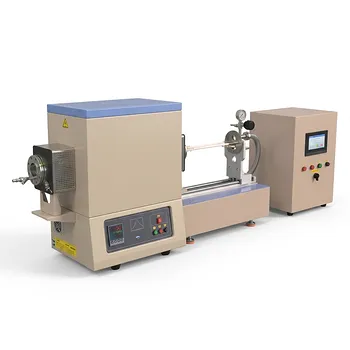
High Temperature Horizontal Electrical Assisted Sintering Furnace with 3KW Programmable Power Source for Advanced Ceramic Materials
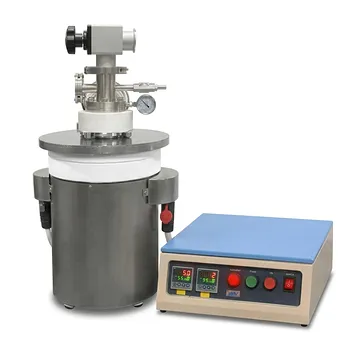
1100C High Temperature Vacuum Crucible Furnace with Quartz Chamber for Thermal Processing and Sintering
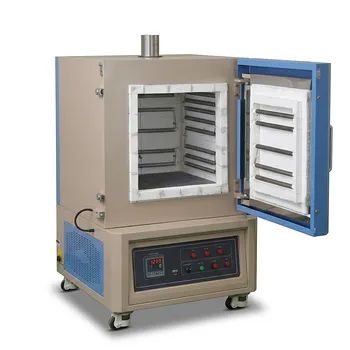
1200C High Temperature 125L Muffle Furnace 5 Side Heating for Large Batch Sintering with Optional Alloy Debinding Chamber
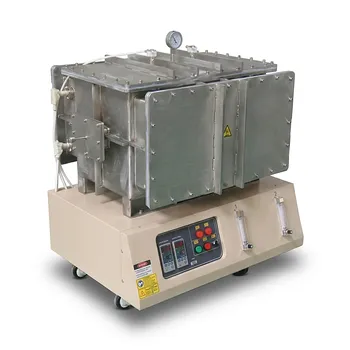
1500°C Atmosphere Controlled Rapid Heating Furnace for Material Science and Battery Powder Sintering
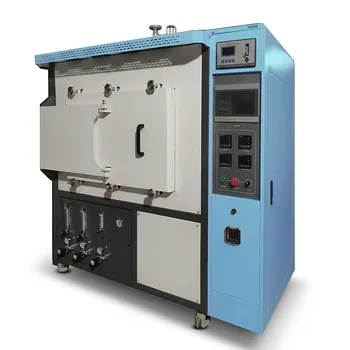
Roller Table Atmosphere Furnace 1500C High Temperature Battery Material Sintering System 112L Capacity
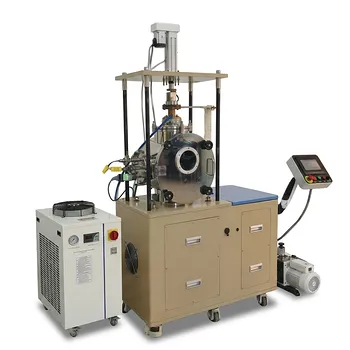
Compact Spark Plasma Sintering SPS Furnace 1200 C Max 100 MPa Pressure High Speed Sintering System for Material Research
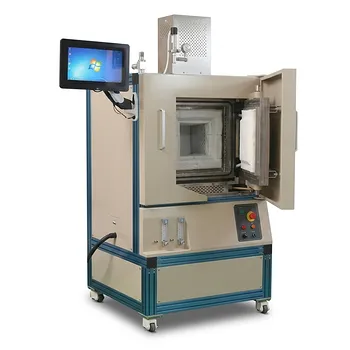
High Temperature Oxygen and Inert Atmosphere Controlled Furnace 8 Liter 1700C Sintering System for Advanced Materials RD
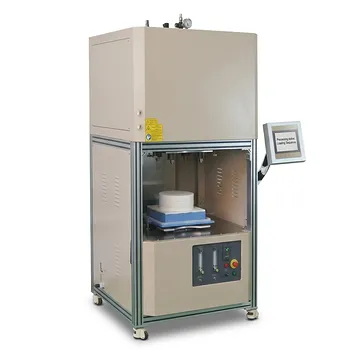
High Temperature Vertical Atmosphere Controlled Furnace with Automatic Bottom Loading and 1700°C Capacity for Advanced Material Research
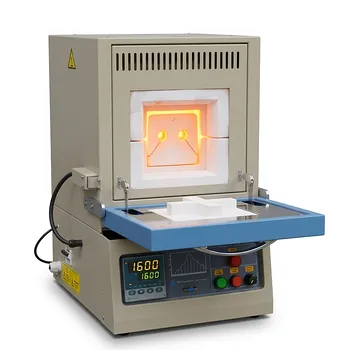
High Temperature Compact Muffle Furnace 1700 C with 30 Segment Programmable Controller and 1.7L Cubic Chamber
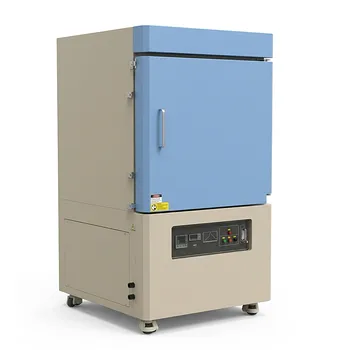
Industrial Large Box Furnace 1700C 216L High Temp Muffle Sintering System
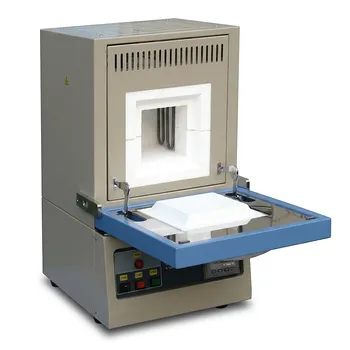
High Temperature 1800C Compact Muffle Furnace with Kanthal Super 1900 Heating Elements and 1.7L Alumina Chamber