What is the physical principle behind the heating mechanism of a tube furnace? Joule Heating & Heat Transfer Explained
Updated 5 months ago
The physical principle behind the heating mechanism of a tube furnace is Joule heating, also known as resistive heating. This process occurs when an electric current passes through a conductor with high electrical resistance, converting electrical energy into thermal energy. This heat is then transferred to the process tube and the sample contained within through radiation, conduction, and convection.
A tube furnace generates heat by forcing electrical current through high-resistance elements, creating a thermal source that surrounds a central work tube. The efficiency and uniformity of this system depend on the transition from conduction-based heating at low temperatures to radiation-dominated heat transfer at high temperatures.
The Physics of Heat Generation
The Principle of Joule Heating
The fundamental driver of a tube furnace is Joule’s First Law, which states that the heat produced is proportional to the square of the current multiplied by the electrical resistance of the circuit ($P = I^2R$).
As electrons collide with the atomic structure of the heating elements, their kinetic energy is converted into thermal energy. This process allows for precise control of energy input by simply modulating the voltage or current supplied to the system.
Material Resistance and Elements
The heating elements are typically embedded within a thermally insulating matrix to prevent heat loss and ensure the energy is directed toward the center.
Common materials for these elements are chosen for their ability to withstand high temperatures without melting or oxidizing, ensuring a stable and consistent resistance profile over long periods.
Mechanisms of Heat Transfer
The Shift to Radiative Dominance
In the lower temperature ranges, heat reaches the process tube via conduction through the furnace atmosphere and solid contact points.
However, at high temperatures, thermal radiation becomes the dominant mode of transfer. The heating elements emit infrared radiation that is absorbed by the outer surface of the process tube, which then reradiates that energy to the sample inside.
Conduction and Convection
Conduction occurs through the physical structure of the furnace, including the insulation and the tube itself.
Convection plays a secondary role, involving the movement of gases within the tube or the furnace cavity. While less significant at extreme temperatures, convection is a key factor in maintaining thermal equilibrium during the initial ramp-up phases.
Precision Control and Regulation
Closed-Loop Feedback Systems
To maintain a stable environment, tube furnaces utilize a thermocouple-based feedback loop. A thermocouple (such as Type K, S, or B) sits near the process tube to monitor real-time temperature fluctuations and report back to a controller.
PID-Based Power Adjustment
The data from the thermocouple is processed by a PID (Proportional-Integral-Derivative) controller. This device uses solid-state relays or thyristors to rapidly pulse power to the heating elements, allowing for temperature stability often within ±1 °C.
Understanding the Trade-offs
Thermal Lag and Inertia
Because the heating elements are separated from the sample by the wall of the process tube and often a layer of insulation, there is an inherent thermal lag. The temperature of the heating elements must lead the sample temperature, which can make rapid cooling or extremely fast ramping difficult to achieve without overshooting.
Longitudinal Temperature Gradients
While radial heating is generally uniform, the ends of the tube are open to the ambient environment, leading to "cold zones" at the furnace extremities. Users must account for these gradients by placing samples in the "center-zone" of the furnace where the temperature profile is most linear.
How to Apply This to Your Project
Selecting the Right Configuration
Depending on your specific application, the heating mechanism can be optimized for speed, uniformity, or stability.
- If your primary focus is extreme thermal uniformity: Utilize a multi-zone furnace where the PID controller manages several independent heating elements to compensate for end-loss gradients.
- If your primary focus is high-speed processing: Ensure your process tube material has high thermal conductivity (like certain ceramics) to minimize the lag between the elements and your sample.
- If your primary focus is preventing contamination: Select a furnace where the heating elements are fully encased in a matrix to prevent resistive element particles from entering the work tube atmosphere.
Understanding the transition from resistive generation to radiative transfer ensures you can design thermal profiles that are both efficient and repeatable.
Summary Table:
| Aspect | Detail |
|---|---|
| Core Principle | Joule Heating (Resistive Heating) |
| Physics Formula | $P = I^2R$ (Energy conversion via resistance) |
| Primary Heat Transfer | Thermal Radiation (Dominant at high temperatures) |
| Control Mechanism | PID Controller with Thermocouple Feedback Loop |
| Temperature Stability | Typically within ±1 °C |
Precision Thermal Solutions for Advanced Research with THERMUNITS
As a leading manufacturer of high-temperature laboratory equipment, THERMUNITS empowers material science and industrial R&D with state-of-the-art thermal processing solutions. Our expert-engineered systems ensure the precise Joule heating and thermal uniformity required for complex experiments.
Our Comprehensive Product Range Includes:
- Furnaces: Muffle, Vacuum, Atmosphere, Tube, Rotary, and Hot Press models.
- Advanced Systems: CVD/PECVD systems, Dental Furnaces, and Vacuum Induction Melting (VIM) furnaces.
- Specialized Equipment: Electric rotary kilns, Thermal Elements, and custom heat treatment tools.
Maximize your lab's potential with reliable, high-performance equipment tailored to your specific research needs. Contact THERMUNITS today to receive a detailed technical consultation!
Mentioned Products
- High Temperature Tube Furnace 1500C with Sliding Flanges and 50mm OD for Rapid Thermal Processing Fast Heating and Cooling
- Vertical 1700C Vacuum and Atmosphere Tube Furnace with 80mm Alumina Tube
- Compact High Temperature 1600C Tube Furnace with 50mm Alumina Tube and Vacuum Flanges for Material Sintering
- 900°C Max Rotary Tube Furnace with 8 Inch 310S Alloy Tube and Optional Multi Zone Heating for Industrial Material Calcination
- 1100C Tube Furnace with Vacuum Flange and Programmable Temperature Controller for Material Science and Industrial Heat Treatment
People Also Ask
- How are high-temperature tube furnaces utilized to repair etching damage? Precision Lattice Restoration Solutions
- What core conditions does a high-temperature tube furnace provide for rGO aerogels? Mastering Precision Synthesis.
- What role does a high-temperature tube furnace play in CVD synthesis of silicon nanowires? Master VLS Growth Precision.
- How does precision tube furnace control influence CoFe nanoparticle formation? Master Your Bimetallic Synthesis.
- What role does a high-temperature tube furnace play in the sulfidation heat treatment of CoS@C/MXene nanocomposites? Guide

Tech Team · ThermUnits
Last updated on Apr 14, 2026
Related Products

High Temperature Tube Furnace 1500C with Sliding Flanges and 50mm OD for Rapid Thermal Processing Fast Heating and Cooling

Vertical 1700C Vacuum and Atmosphere Tube Furnace with 80mm Alumina Tube

Compact High Temperature 1600C Tube Furnace with 50mm Alumina Tube and Vacuum Flanges for Material Sintering
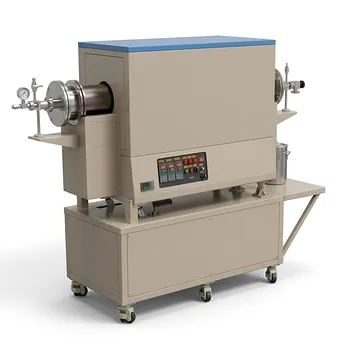
900°C Max Rotary Tube Furnace with 8 Inch 310S Alloy Tube and Optional Multi Zone Heating for Industrial Material Calcination

1100C Tube Furnace with Vacuum Flange and Programmable Temperature Controller for Material Science and Industrial Heat Treatment

High Temperature 1700C Tube Furnace with High Vacuum Turbomolecular Pump System and Multi Channel Mass Flow Controller Gas Mixer
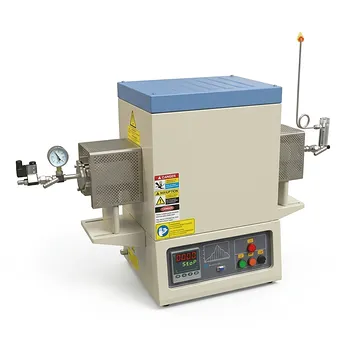
1700C Hydrogen Gas Tube Furnace with 60mm Alumina Process Tube and Integrated Hydrogen Safety Detector
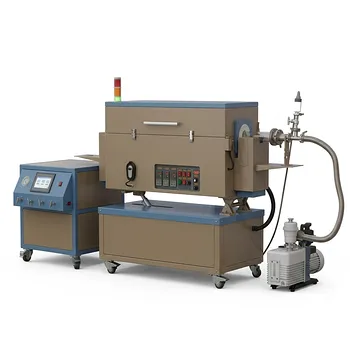
5 Inch Three Zone Rotary Tube Furnace with Integrated Gas Delivery System and 1200C Capability for Advanced Material CVD Processing
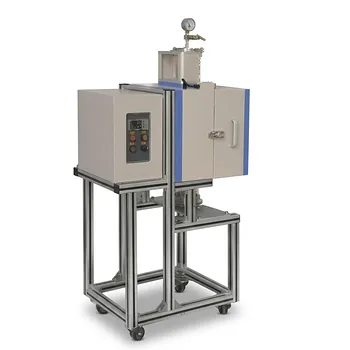
1200°C 5 Inch Vertical Quartz Tube Furnace with Stainless Steel Vacuum Flanges

High Temperature 1700C Six Zone Split Tube Furnace with Alumina Tube and Water Cooled Flanges

Compact Vertical Split Quartz Tube Furnace with Stainless Steel Vacuum Flanges for Rapid Thermal Quenching and Controlled Atmosphere Material Processing
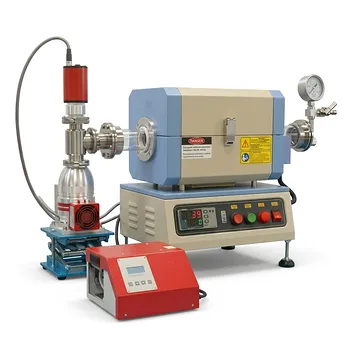
High Vacuum Compact Tube Furnace 1200C with Integrated Turbo Pump System and 8 Inch Heating Zone
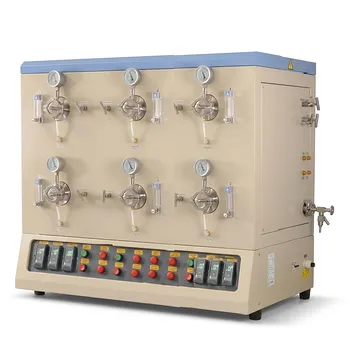
1200C High Throughput Multi Channel Tube Furnace with 50mm Quartz Tubes for Annealing and Material Phase Diagram Research

High Temperature 1700C Benchtop Tube Furnace with 5 Inch Heating Zone High Purity Alumina Tube and Vacuum Sealing Flanges

1800C High Temperature Compact Vacuum Tube Furnace with 60mm OD Alumina Tube and Kanthal MoSi2 Heating Elements
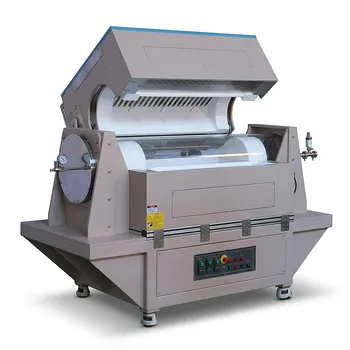
Three Zone Tube Furnace with 11 Inch or 15 Inch Quartz Tube and Hinged Flanges for Vacuum Atmosphere Heat Treatment
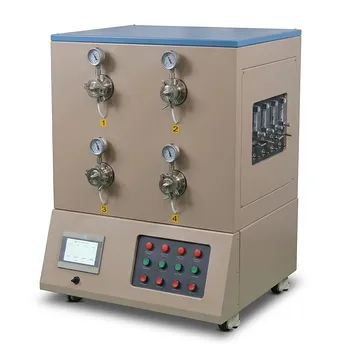
High Throughput 1200C Four Channel Tube Furnace with 3 Inch Quartz Tubes for Multi Zone Annealing and Material Research

High Temperature 1700C Vertical Tube Furnace for Powder Spherification and Material Sintering
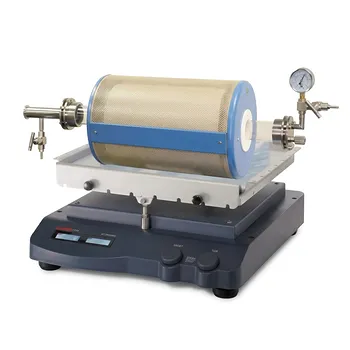
High Temperature Rocking Tube Furnace with Quartz Tube and Vacuum Flange for Materials Synthesis
