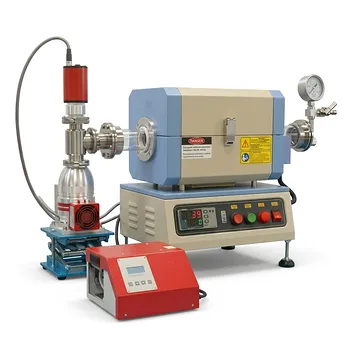
What is the primary purpose of using a vacuum heating furnace for 900°C annealing of Fe-Co-Mo alloys? Ensure Purity.
Updated 3 months ago
A vacuum heating furnace is essential for maintaining the chemical and structural integrity of Fe-Co-Mo alloys during high-temperature processing. Its primary purpose at 900°C is to provide a controlled, low-pressure environment that prevents surface oxidation and decarburization. This environment is critical for eliminating residual internal stresses—typically those generated during Hot Isostatic Pressing (HIP)—and optimizing the alloy's microstructure in preparation for subsequent solution and aging treatments.
Core Takeaway: The vacuum furnace acts as a protective shield and a precision tool; it prevents atmospheric contamination while facilitating the internal thermodynamic stability required to homogenize the alloy and optimize its mechanical and magnetic properties.
Preventing Surface and Chemical Degradation
Eliminating Oxidation of Reactive Elements
At 900°C, elements such as Molybdenum (Mo) are highly susceptible to oxygen, which can lead to the formation of brittle surface scales. A high vacuum (often reaching levels of $1.3 \times 10^{-3}$ Pa) isolates the alloy surface, ensuring that the material remains pure and the surface remains smooth.
Preventing Decarburization
Exposure to atmospheric gases at high temperatures can strip carbon from the alloy's surface layers, a process known as decarburization. The vacuum environment maintains the intended carbon balance, which is vital for the material’s eventual hardness and structural performance.
Maintaining Surface Integrity for Magnetic Performance
For Fe-Co-based alloys, preventing surface oxidation is not just about aesthetics; it is functional. A clean, oxide-free surface allows for the smooth movement of magnetic domain walls, which is required to achieve high saturation magnetic induction and low core loss.
Stress Relief and Microstructural Evolution
Eliminating HIP-Induced Stresses
Hot Isostatic Pressing (HIP) often leaves significant residual internal stresses within the alloy matrix. The 900°C annealing cycle in a vacuum allows these stresses to dissipate without the risk of the material reacting with nitrogen or oxygen.
Facilitating Phase Stability
The vacuum environment provides a stable thermodynamic setting for the evolution of internal phases, such as the precipitation of mu, fcc, or sigma phases. This homogeneity ensures that the micro-hardness is uniform across the entire component.
Preparation for Strengthening Treatments
By optimizing the grain structure and phase distribution at 900°C, the vacuum furnace prepares the alloy for solution and aging treatments. This "homogenization" is critical for ensuring that subsequent hardening processes produce predictable and reliable results.
Understanding the Trade-offs
Equipment and Operational Costs
Vacuum furnaces are significantly more expensive to operate and maintain than atmospheric or sacrificial gas furnaces. The need for specialized pumps to maintain low back pressures (typically $10^{-3}$ mbar) adds a layer of technical complexity and energy consumption.
Cooling Rate Limitations
In a vacuum, heat transfer occurs primarily through radiation rather than convection. This can make cooling rates difficult to control unless the furnace is equipped with sophisticated gas-quenching systems, potentially leading to unintended phase transformations if not managed carefully.
Sensitivity to Contaminants
Even minor leaks in the vacuum seal or impurities in the workload can lead to localized oxidation. For Fe-Co-Mo alloys, which contain highly reactive elements, the "purity" of the vacuum must be monitored constantly to avoid compromising the entire batch.
How to Apply Vacuum Annealing to Your Goal
The specific parameters of your vacuum heat treatment should align with the end-use of the Fe-Co-Mo alloy.
- If your primary focus is Magnetic Performance: Prioritize maintaining a high vacuum level ($10^{-3}$ bar or better) to ensure a pristine surface for domain wall movement and lower coercivity.
- If your primary focus is Mechanical Hardness: Focus on the precise control of the 900°C soak time to ensure the complete dissolution of stresses and the uniform nucleation of strengthening phases.
- If your primary focus is Dimensional Stability: Ensure the cooling cycle is strictly programmed to prevent thermal gradients that could re-introduce stresses after the annealing is complete.
By strictly controlling the atmosphere and temperature, the vacuum heating furnace ensures that Fe-Co-Mo alloys achieve their full potential in high-performance applications.
Summary Table:
| Key Objective | Main Benefit | Critical Parameter |
|---|---|---|
| Oxidation Prevention | Maintains chemical purity & surface integrity | Vacuum level ≤ 1.3 × 10⁻³ Pa |
| Stress Relief | Eliminates residual stresses from HIP process | Precise 900°C Soak Time |
| Phase Stability | Homogenizes microstructure for future aging | Stable Thermodynamic Environment |
| Magnetic Performance | Enhances domain wall movement and saturation | Oxide-free surface finish |
Elevate Your Advanced Material Research with THERMUNITS
Precision in thermal processing is non-negotiable for high-performance Fe-Co-Mo alloys. THERMUNITS is a leading manufacturer of high-temperature laboratory equipment, providing state-of-the-art Vacuum, Atmosphere, and Tube furnaces specifically designed for material science and industrial R&D.
Our comprehensive range of thermal processing solutions—including CVD/PECVD systems, Vacuum Induction Melting (VIM) furnaces, and Electric Rotary Kilns—offers the high vacuum levels and temperature stability required to eliminate atmospheric contamination and optimize your material's mechanical and magnetic properties.
Ready to achieve superior heat treatment results? Contact our technical experts at THERMUNITS today to find the perfect furnace solution for your application.
References
- Shiteng Lu, Lei Lü. Precipitation and Age-Hardening in Fe-25Co-15Mo Carbon-Free High-Speed Steel via Hot Isostatic Pressing. DOI: 10.3390/met14121400
Mentioned Products
- High Temperature Cold Wall Vacuum Furnace for Advanced Material Sintering and Annealing 1600C Heating Area 200x200x300mm
- High Temperature 1000C Vacuum Furnace with 8 Inch ID Chamber for Material Sintering and Research Annealing
- Ultra High Temperature Induction Heated Vacuum Furnace with Molten Salt Electrolysis Capability and 3000 Degree Precision Control
- 1800C High Temperature Compact Vacuum Tube Furnace with 60mm OD Alumina Tube and Kanthal MoSi2 Heating Elements
- High Temperature 1800C Atmosphere Tube Furnace for CVD Research and Vacuum Sintering Precision Heat Treatment
People Also Ask
- What is the purpose of coating ceramic sheets with platinum paste? Achieve Stable High-Temp Ohmic Contacts
- What is the function of high-vacuum furnaces in (Mo2/3V1/3)n+1AlCn MAX phase synthesis? Ensure Purity & Diffusion.
- Why is high-vacuum annealing treatment essential in the preparation of multilayer composite separation membranes such as Pd/Ti?
- What Role Does a Vacuum Sintering Furnace Play in Ni-Mn-Ga Alloy Fabrication? Optimizing Porous Structures
- How does a vacuum or atmosphere sintering furnace contribute to the congener-welding process of carbon nitride membranes?

Tech Team · ThermUnits
Last updated on Jun 02, 2026
Related Products
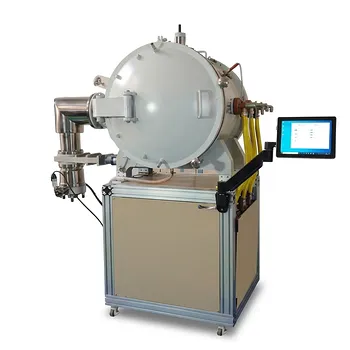
High Temperature Cold Wall Vacuum Furnace for Advanced Material Sintering and Annealing 1600C Heating Area 200x200x300mm
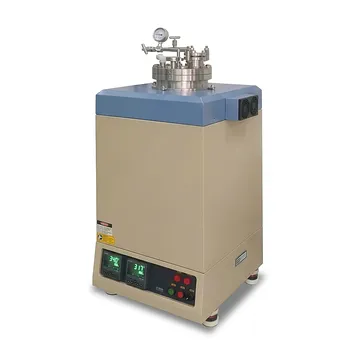
High Temperature 1000C Vacuum Furnace with 8 Inch ID Chamber for Material Sintering and Research Annealing
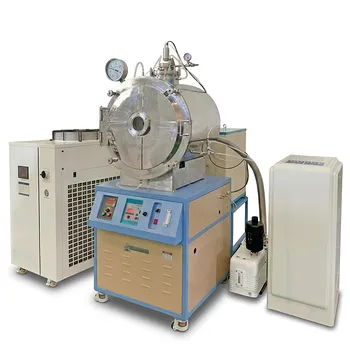
Ultra High Temperature Induction Heated Vacuum Furnace with Molten Salt Electrolysis Capability and 3000 Degree Precision Control

1800C High Temperature Compact Vacuum Tube Furnace with 60mm OD Alumina Tube and Kanthal MoSi2 Heating Elements
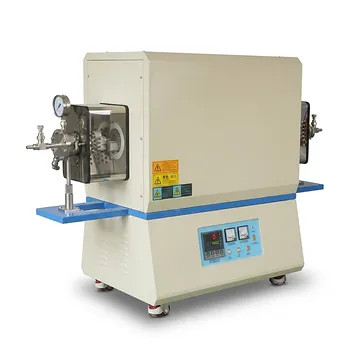
High Temperature 1800C Atmosphere Tube Furnace for CVD Research and Vacuum Sintering Precision Heat Treatment
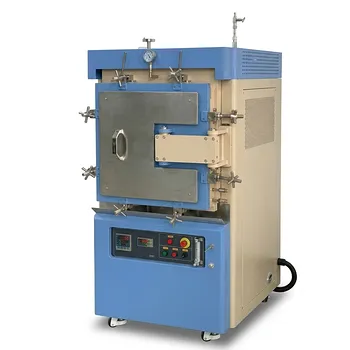
High Temperature Economic Hydrogen Gas Box Furnace 1600C Atmosphere Controlled Thermal Processing System 65L Capacity
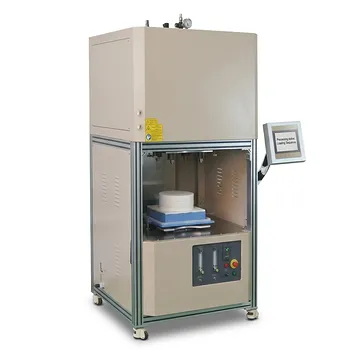
High Temperature Vertical Atmosphere Controlled Furnace with Automatic Bottom Loading and 1700°C Capacity for Advanced Material Research
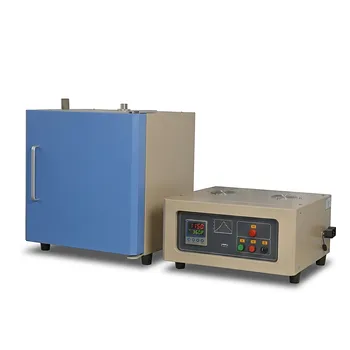
High Temperature Muffle Furnace with Alloy Chamber for Debinding and Sintering Applications
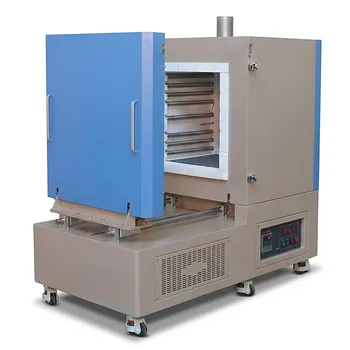
1200C Five Side Heating Muffle Furnace with Sliding Door 125L Volume High Temperature Heat Treatment System for Large Scale Sintering and Annealing
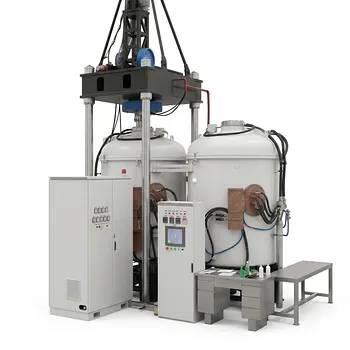
High Pressure 600T Vacuum Induction Hot Press Furnace for Advanced Material Heat Treatment and Sintering
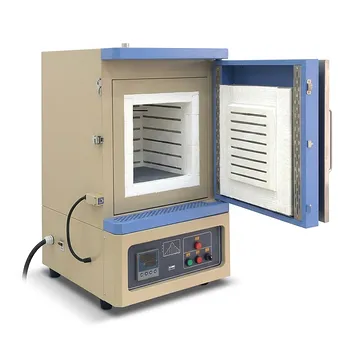
Five Side Heating Muffle Furnace High Purity Alumina Fiber 27L Chamber 1200C High Temperature Thermal Processing System for Sintering Annealing and Materials Research
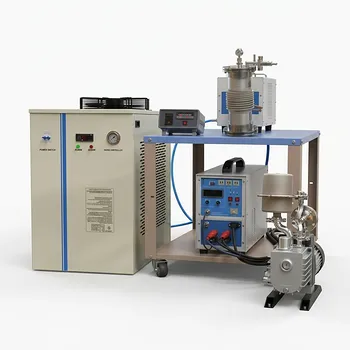
Induction Heating System with Temperature Control for High Temperature Vacuum Sintering and Melting
Large Bench Top 1700C High Temperature Muffle Furnace with 19L Chamber for Advanced Material Sintering and Annealing
Vertical Openable Tube Furnace 0-1700c High Temperature Laboratory System for CVD and Vacuum Heat Treatment
1600°C Cold Wall High Vacuum Chamber Furnace with Molybdenum Heating and 400mm Cube Work Zone
1100C High Temperature Vacuum Crucible Furnace with Quartz Chamber for Thermal Processing and Sintering
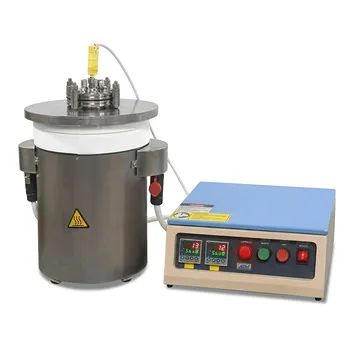
600°C Vertical Crucible Furnace with SS316 Alloy Reactor and 6 Port Vacuum Flange

1750°C High Temperature Benchtop Vacuum Atmosphere Tube Furnace with Kanthal Super 1800 Heating Elements and 60mm Alumina Processing Tube

High Temperature 1700C Benchtop Tube Furnace with 5 Inch Heating Zone High Purity Alumina Tube and Vacuum Sealing Flanges