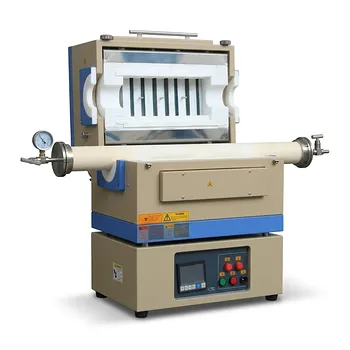
What is the primary purpose of using Atmosphere Control Tube Furnaces in UOC reduction? Ensuring Precision & Purity
Updated 3 months ago
The primary purpose of Atmosphere Control Tube Furnaces in the reduction of Uranium Ore Concentrate (UOC) is to provide a strictly regulated high-temperature environment and a specific chemical reducing atmosphere. These furnaces facilitate the critical transformation of UOC into Uranium Oxide (UOx) by enabling de-fluorination, dehydration, and the reduction of high-valence oxides under controlled conditions. This precise thermal treatment is essential for tailoring the phase composition, grain morphology, and isotopic characteristics of the final nuclear fuel products.
Atmosphere Control Tube Furnaces act as a precision reaction chamber where gas chemistry and thermal energy are synchronized to drive the reduction of uranium precursors. By eliminating oxygen and impurities in a controlled manner, these systems ensure the production of high-purity uranium dioxide suitable for nuclear applications.
Achieving Precise Chemical Transformation
Creating a Targeted Reducing Atmosphere
The furnace allows for the introduction of specific gas mixtures, such as hydrogen/nitrogen (H2/N2) or hydrogen/argon (H2/Ar). This atmosphere is critical for stripping oxygen from high-valence uranium oxides and reducing them to a stable metallic or lower-oxide state.
Managing De-fluorination and Dehydration
During the conversion of UOC, the furnace provides the heat necessary to drive off moisture and fluoride components found in uranyl fluoride or diuranates. Without this precise control, residual impurities would compromise the integrity of the resulting nuclear fuel.
Ensuring Stoichiometric Accuracy
The ability to regulate gas composition ensures that chemical reactions occur at specific stoichiometric ratios. This precision is vital for creating complex inorganic materials where the exact ratio of elements determines the material's functional performance.
Maintaining Material Structure and Morphology
Controlling Grain Growth and Sphericity
Precise temperature control prevents excessive grain growth or the morphological collapse of the uranium particles. This results in uranium dioxide microparticles that possess excellent sphericity and uniform size distributions.
Inducing Microporous Structures
As the material undergoes reduction, volume contraction occurs within the furnace environment. This process can be used to introduce microporous structures and maintain specific surface roughness, which are critical for the physical performance of the fuel.
Uniformity and Repeatability
The design of the tube furnace ensures uniform gas flow over the samples and a consistent temperature field. This high level of uniformity is necessary for the highly repeatable preparation of materials that must meet stringent nuclear safety and performance standards.
Understanding the Trade-offs
Operational Complexity and Safety
The use of hydrogen-rich atmospheres at high temperatures introduces significant safety risks, requiring robust sealing and gas-monitoring systems. Any leak can lead to oxidation of the sample or, in extreme cases, explosive hazards.
Throughput vs. Precision
While tube furnaces offer unmatched control over the environment, they are often limited in batch size compared to larger industrial kilns. Achieving high-purity, specialized morphology typically requires sacrificing high-volume production speeds.
Equipment Wear and Contamination
Operating at the high temperatures required for uranium reduction (often exceeding 800-900°C) can lead to the degradation of the furnace tube over time. If the tube material is not carefully selected, it can introduce trace contaminants into the high-purity uranium oxide.
Making the Right Choice for Your Goal
How to Apply This to Your Process
The selection and configuration of an atmosphere control tube furnace should be driven by the specific requirements of the final uranium oxide product.
- If your primary focus is Isotopic and Phase Purity: Prioritize a furnace with multi-stage programmable temperature control and high-precision gas mass flow controllers to ensure exact stoichiometric reactions.
- If your primary focus is Particle Morphology and Sphericity: Focus on a system that guarantees high temperature field uniformity and controlled cooling rates to prevent morphological collapse.
- If your primary focus is Catalyst or Surface Activity: Select a configuration that allows for precise humidity levels and specific reducing gas ratios to induce surface features like metallic nanoparticle exsolution.
By mastering the intersection of thermal precision and atmospheric chemistry, these furnaces transform raw uranium concentrates into highly engineered nuclear fuel precursors.
Summary Table:
| Key Function | Benefit to Process | Critical Parameter |
|---|---|---|
| Atmosphere Control | Strips oxygen & impurities via reduction | Gas Mixture (H2, N2, Ar) |
| Thermal Precision | Controls grain growth & particle sphericity | Temperature Uniformity |
| Impurity Removal | Ensures de-fluorination & dehydration | Flow Rate & Sealing |
| Stoichiometry | Achieves exact chemical ratios for fuel | Programmable Control |
Elevate Your Material Research with THERMUNITS
As a leading manufacturer of high-temperature laboratory equipment, THERMUNITS provides the precision and reliability required for critical material science and industrial R&D. Whether you are optimizing the reduction of uranium concentrates or developing advanced ceramics, our comprehensive thermal processing solutions—including Atmosphere Control Tube Furnaces, Vacuum & Muffle Furnaces, CVD/PECVD systems, Rotary Kilns, and Vacuum Induction Melting (VIM) furnaces—ensure superior results.
Ready to achieve unmatched purity and stoichiometric accuracy in your heat treatment processes? Contact our expert team today to find the perfect solution for your laboratory's needs.
References
- Aaron M. Chalifoux, Luther W. McDonald. Oxygen Isotope and Fluorine Impurity Signatures during the Conversion of Uranium Ore Concentrates to Nuclear Fuel. DOI: 10.1021/acsomega.3c10481
Mentioned Products
- 1200C High Temperature Atmosphere Controlled Vertical Quenching Tube Furnace with 4 Inch Quartz Tube
- 1700C Compact Hybrid Furnace with Dual Layer Box Sintering and Controlled Atmosphere Alumina Tubes
- 1200°C Atmosphere Controlled Automatic Bottom Loading Furnace with 6 Inch Quartz Tube
- Compact Vertical Split Quartz Tube Furnace with Stainless Steel Vacuum Flanges for Rapid Thermal Quenching and Controlled Atmosphere Material Processing
- Compact Hybrid Muffle and Tube Furnace for 1000C Controlled Atmosphere Laboratory Material Sintering
People Also Ask
- Why is a quartz tube furnace necessary for phosphorus-doped MoS2/GO preparation? Ensure Purity & Precise Synthesis
- What are the advantages of using a quartz tube atmosphere furnace for Pt-MFI catalysts? Optimize Precision H2 Reduction
- Significance of Atmosphere Control Tube Furnaces in Hard Carbon Annealing? Enhance Battery Material Performance
- What essential conditions does an atmosphere control tube furnace provide for biomass carbonization? Expert Insights
- How does an atmosphere control tube furnace contribute to the preparation of MOF-derived TiO2 heterojunctions? Expert Guide

Tech Team · ThermUnits
Last updated on Jun 02, 2026
Related Products
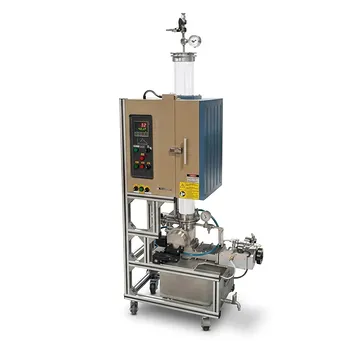
1200C High Temperature Atmosphere Controlled Vertical Quenching Tube Furnace with 4 Inch Quartz Tube
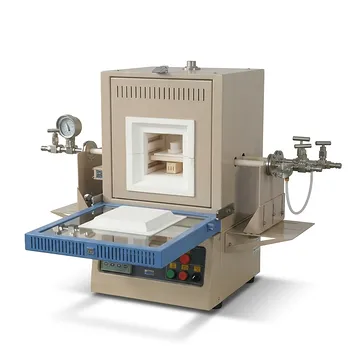
1700C Compact Hybrid Furnace with Dual Layer Box Sintering and Controlled Atmosphere Alumina Tubes
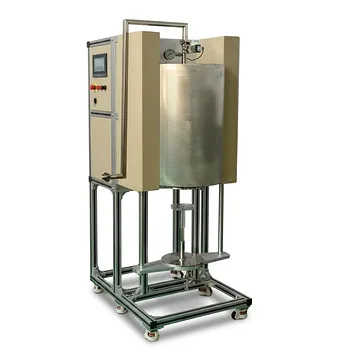
1200°C Atmosphere Controlled Automatic Bottom Loading Furnace with 6 Inch Quartz Tube

Compact Vertical Split Quartz Tube Furnace with Stainless Steel Vacuum Flanges for Rapid Thermal Quenching and Controlled Atmosphere Material Processing
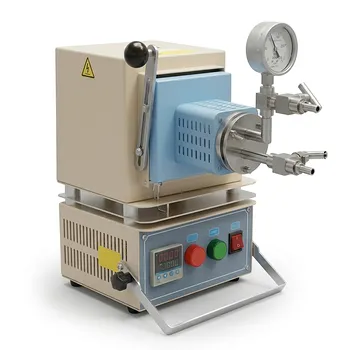
Compact Hybrid Muffle and Tube Furnace for 1000C Controlled Atmosphere Laboratory Material Sintering
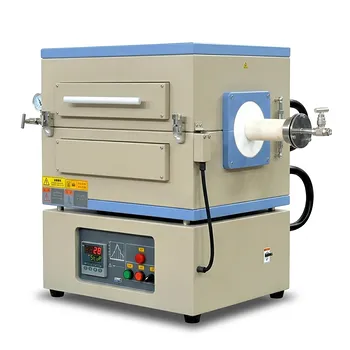
1500°C Split Tube Furnace with Alumina Tube and Vacuum Sealing Flanges for Material Research
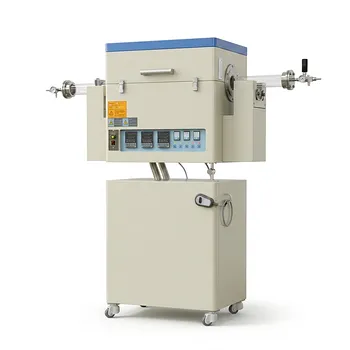
Three Temperature Zone Rotating Tube Furnace for Material Sintering and Controlled Atmospheric Heat Treatment
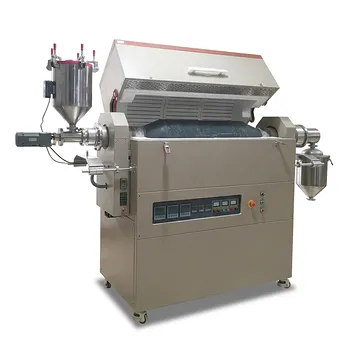
High Temperature Tilting Rotary Tubular Furnace for Continuous Powder Thermal Processing and Controlled Atmosphere Sintering

Vertical 1700C Vacuum and Atmosphere Tube Furnace with 80mm Alumina Tube
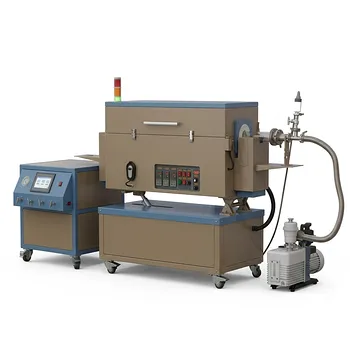
5 Inch Three Zone Rotary Tube Furnace with Integrated Gas Delivery System and 1200C Capability for Advanced Material CVD Processing
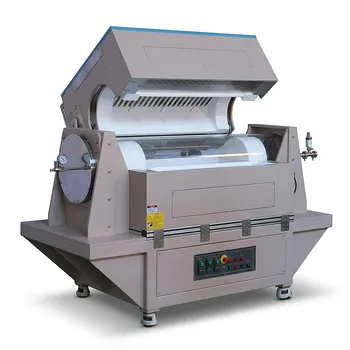
Three Zone Tube Furnace with 11 Inch or 15 Inch Quartz Tube and Hinged Flanges for Vacuum Atmosphere Heat Treatment
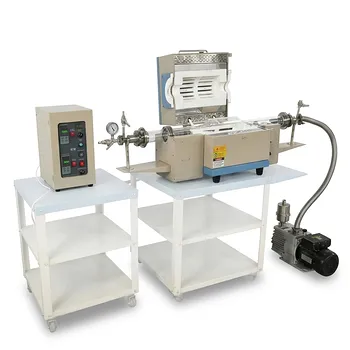
Two Zone Rotary Tube Furnace for Powder CVD Coating and Core Shell Material Synthesis 1100C
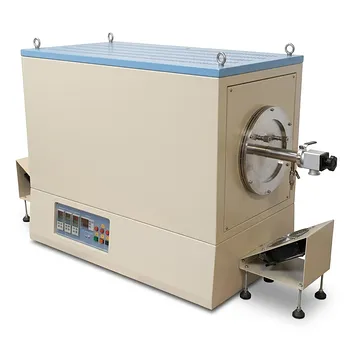
Four Zone Tube Furnace 1100C with 600mm Large Diameter Quartz Tube and Vacuum Flanges
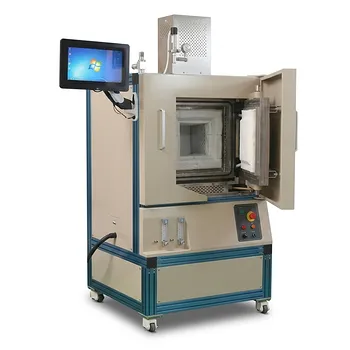
High Temperature Oxygen and Inert Atmosphere Controlled Furnace 8 Liter 1700C Sintering System for Advanced Materials RD
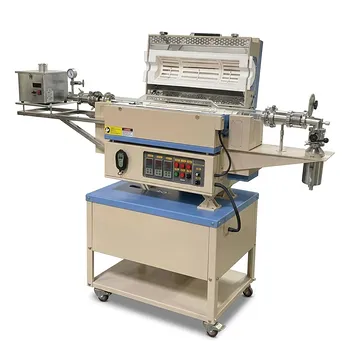
5 Inch Rotary Tube Furnace with Automatic Feeding and Receiving System 1200C Three Zone CVD Powder Processing
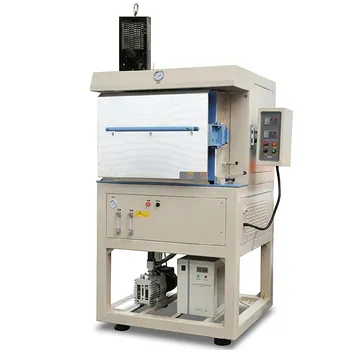
1200C Hydrogen Atmosphere Box Furnace with 5 Heated Sides and 64L Chamber

High Temperature 1700C Vertical Tube Furnace for Powder Spherification and Material Sintering

Compact High Temperature 1600C Tube Furnace with 50mm Alumina Tube and Vacuum Flanges for Material Sintering
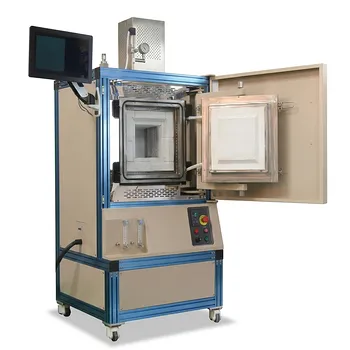
High Temperature Hydrogen Atmosphere Box Furnace 1650C Max Reducing Environment Material Synthesis System 8x8x8 Chamber