Significance of Atmosphere Control Tube Furnaces in Hard Carbon Annealing? Enhance Battery Material Performance
Updated 3 months ago
Atmosphere control tube furnaces are the primary instrument for hard carbon synthesis because they provide an oxygen-free environment and precise thermal regulation. By utilizing inert gases like Argon or Nitrogen, these furnaces prevent the oxidative combustion of precursors while facilitating the deep dehydrogenation and atomic rearrangement necessary for high-performance materials. This controlled thermal processing—particularly in the 1000°C to 1400°C range—is the decisive factor in establishing the carbon layer spacing and pore structures required for advanced battery applications.
The central takeaway is that atmosphere control tube furnaces allow for the "structural engineering" of hard carbon by isolating thermal reactions from oxygen. This isolation ensures that heat is used to reorganize carbon atoms and regulate layer spacing rather than consuming the material through combustion, directly determining the final sodium-ion storage capacity.
Preventing Material Degradation and Combustion
Eliminating Oxidative Reactions
At temperatures exceeding 500°C, biomass and coal-based precursors become highly reactive to oxygen. Atmosphere control tube furnaces replace ambient air with high-purity inert gases to ensure that the carbon material does not undergo oxidative combustion. This protection preserves the carbon skeleton, ensuring the yield and chemical stability of the final product.
Safeguarding Chemical Etching Processes
During the high-temperature activation stage (often around 700°C), chemical agents like potassium hydroxide (KOH) are used to create porosity. The furnace's inert environment ensures these agents act precisely on the carbon framework to form specific microporous and mesoporous structures. Without strict atmosphere control, the interaction between oxygen and the etching agents would result in uncontrolled material loss.
Stabilizing Template Decomposition
In processes using templates like basic zinc carbonate, the furnace manages the controlled decomposition of the template within a stable inert matrix. This allows for the in-situ generation of zinc oxide, which supports the primary pore structure. The furnace prevents the oxidation of these temporary structures, ensuring the precursor forms a robust foundation before the template is removed.
Structural Engineering of Hard Carbon
Regulating Carbon Layer Spacing
The most critical phase of hard carbon synthesis occurs between 1000°C and 1400°C, where the furnace guides the orderly rearrangement of carbon atoms. By precisely managing heating rates and holding times, the furnace regulates the interlayer spacing of the carbon. This spacing is essential for accommodating ions with large radii, such as sodium or potassium, which are central to modern battery technology.
Facilitating Aromatization and Dehydrogenation
High-temperature annealing facilitates the deep dehydrogenation and aromatization of organic components. The furnace’s ability to maintain a stable temperature field ensures that non-carbon elements are eliminated uniformly. This process transforms raw precursors into a hard carbon structure with a high degree of crystallinity and specialized pore architecture.
Enabling Heteroatom Doping
For advanced applications, carbon networks are often "doped" with nitrogen, phosphorus, or oxygen to enhance conductivity. The precise argon or nitrogen atmosphere isolates the precursor during sintering, ensuring these heteroatoms are successfully incorporated into the carbon network. This creates distinct pore structures and improves the material's electrical conductivity and electrochemical reactivity.
Understanding the Trade-offs
Inert Gas Consumption vs. Purity
Maintaining a strictly inert environment requires a continuous flow of high-purity gas, which increases operational costs. While Nitrogen is often more cost-effective, certain high-temperature reactions or specific precursors may require Argon to ensure complete chemical neutrality. Choosing the wrong gas or a lower purity grade can lead to trace oxidation, which compromises the material’s storage capacity.
Heating Rate vs. Structural Uniformity
While rapid heating can increase throughput, it often leads to thermal gradients within the tube. If the heating rate is not carefully managed, the carbon layer spacing may become non-uniform, leading to inconsistent battery performance across different batches. Precise control systems are required to balance production speed with the need for structural homogeneity.
How to Apply This to Your Project
Optimizing Your Synthesis Process
To achieve the best results with an atmosphere control tube furnace, you should tailor your parameters based on your specific electrochemical goals.
- If your primary focus is Sodium-Ion Storage Capacity: Prioritize the 1000°C to 1400°C temperature range to maximize the regulation of carbon layer spacing.
- If your primary focus is High Surface Area/Porosity: Focus on the 500°C to 700°C activation stage, ensuring a high-purity Nitrogen flow to protect the chemical etching process.
- If your primary focus is Electrical Conductivity: Utilize higher temperatures (900°C+) and longer holding times to promote complete carbonization and skeletal rearrangement.
By mastering the balance between atmosphere purity and thermal precision, you can transform simple biomass or coal precursors into highly specialized hard carbon materials.
Summary Table:
| Key Process Stage | Function of Atmosphere Control Tube Furnace | Critical Outcome |
|---|---|---|
| Pre-carbonization | Eliminates oxygen using inert gases (Argon/Nitrogen) | Prevents material combustion and preserves carbon skeleton |
| Activation (700°C) | Safeguards chemical etching (KOH) in a stable environment | Creates precise microporous and mesoporous structures |
| Annealing (1000-1400°C) | Facilitates deep dehydrogenation and atomic rearrangement | Regulates carbon layer spacing for sodium-ion storage |
| Heteroatom Doping | Isolates precursors during sintering | Enhances electrical conductivity and electrochemical reactivity |
Optimize Your Hard Carbon Synthesis with THERMUNITS
Precision in thermal processing is the difference between average and industry-leading battery materials. THERMUNITS is a premier manufacturer of high-temperature laboratory equipment specifically designed for material science and industrial R&D.
Our advanced Atmosphere Control Tube Furnaces provide the oxygen-free precision and thermal stability required for the structural engineering of hard carbon. Beyond tube furnaces, we offer a comprehensive range of solutions including:
- Furnaces: Muffle, Vacuum, Atmosphere, Rotary, Hot Press, and Dental Furnaces.
- Advanced Systems: CVD/PECVD systems, electric rotary kilns, and vacuum induction melting furnaces (VIM).
- Components: High-quality Thermal Elements and specialized heat treatment tools.
Whether you are scaling up production or refining your R&D process, our team is ready to provide the technical expertise and equipment reliability you need.
Contact THERMUNITS today to discuss your project requirements!
References
- Liying Liu, Yang Xu. Hard carbon derived from <i>Physalis alkekengi</i> L. husks as a stable anode for sodium-ion batteries. DOI: 10.1039/d4me00007b
Mentioned Products
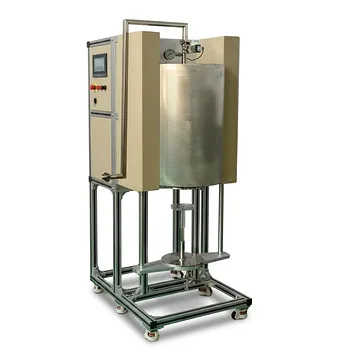
- 1200°C Atmosphere Controlled Automatic Bottom Loading Furnace with 6 Inch Quartz Tube
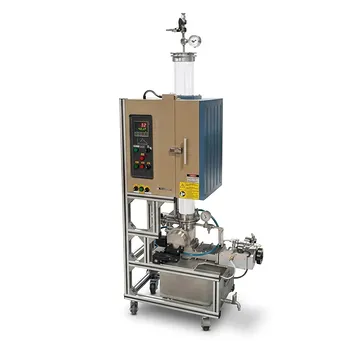
- 1200C High Temperature Atmosphere Controlled Vertical Quenching Tube Furnace with 4 Inch Quartz Tube
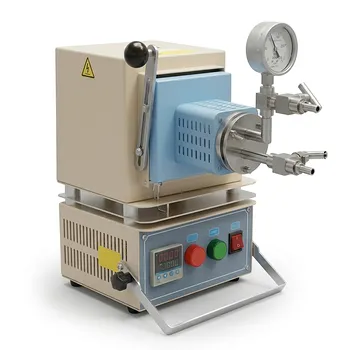
- Compact Hybrid Muffle and Tube Furnace for 1000C Controlled Atmosphere Laboratory Material Sintering
- Compact Vertical Split Quartz Tube Furnace with Stainless Steel Vacuum Flanges for Rapid Thermal Quenching and Controlled Atmosphere Material Processing
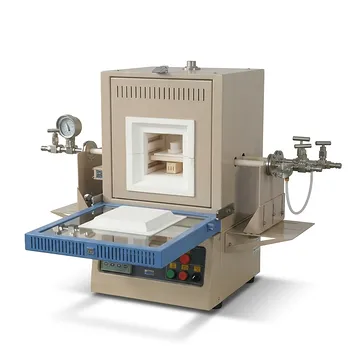
- 1700C Compact Hybrid Furnace with Dual Layer Box Sintering and Controlled Atmosphere Alumina Tubes
People Also Ask
- Why is a tube furnace required for FGM-PhG structural color ceramics? Key to Carbon Preservation & Vibrant Color
- Why is an atmosphere-controlled tube furnace required for the pre-sulfidation of NiMo/gamma-Al2O3 catalysts?
- Why is an atmosphere-controlled tube furnace required for 800 °C CNF annealing? Essential for Oxidative Protection.
- Why is an atmosphere-controlled tube furnace required for [email protected]/C preparation? Key for Purity & Structure
- Why is an atmosphere-controlled tube furnace required for single-atom sensor calcination? Ensure Atomic Dispersion.

Tech Team · ThermUnits
Last updated on Jun 02, 2026
Related Products
1200°C Atmosphere Controlled Automatic Bottom Loading Furnace with 6 Inch Quartz Tube
1200C High Temperature Atmosphere Controlled Vertical Quenching Tube Furnace with 4 Inch Quartz Tube
Compact Hybrid Muffle and Tube Furnace for 1000C Controlled Atmosphere Laboratory Material Sintering

Compact Vertical Split Quartz Tube Furnace with Stainless Steel Vacuum Flanges for Rapid Thermal Quenching and Controlled Atmosphere Material Processing
1700C Compact Hybrid Furnace with Dual Layer Box Sintering and Controlled Atmosphere Alumina Tubes
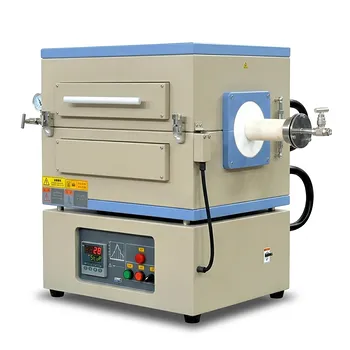
1500°C Split Tube Furnace with Alumina Tube and Vacuum Sealing Flanges for Material Research

Vertical 1700C Vacuum and Atmosphere Tube Furnace with 80mm Alumina Tube
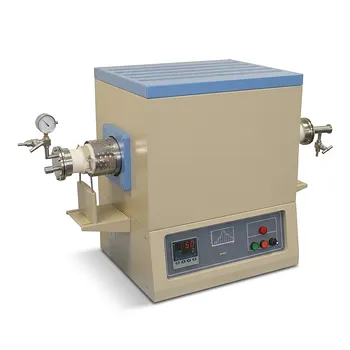
1700C High Temperature Alumina Tube Furnace with 18 Inch Heated Zone and Vacuum Sealing Flanges
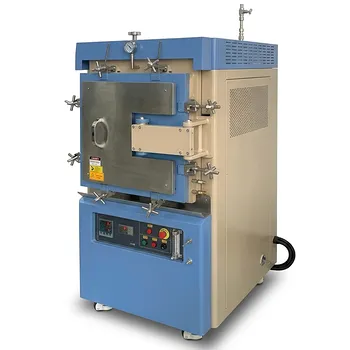
Atmosphere Controlled Muffle Furnace 1700C Maximum Temperature 80L High Capacity Vacuum Inert Gas Box Furnace
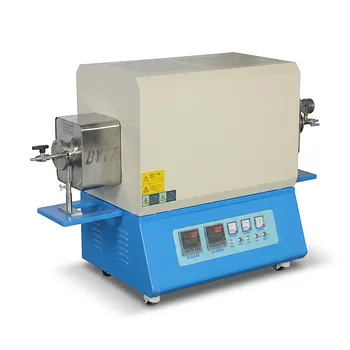
High Temperature Dual Zone Split Tube Furnace for Advanced Atmosphere Sintering and Vacuum CVD Applications

Three Zone Tube Furnace with 11 Inch or 15 Inch Quartz Tube and Hinged Flanges for Vacuum Atmosphere Heat Treatment
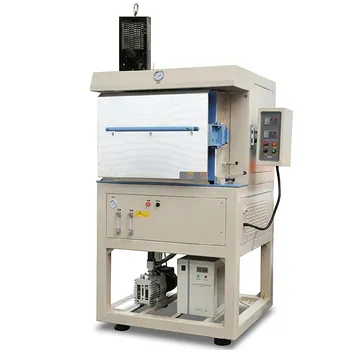
1200C Hydrogen Atmosphere Box Furnace with 5 Heated Sides and 64L Chamber
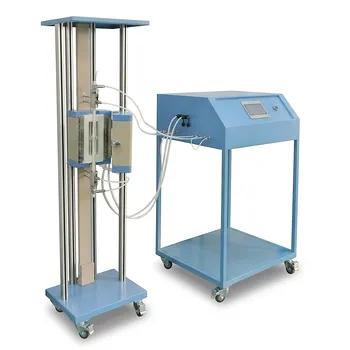
High Temperature Vertical Tube Furnace for Small Solid Oxide Fuel Cell Testing with Four Channel Gas Control
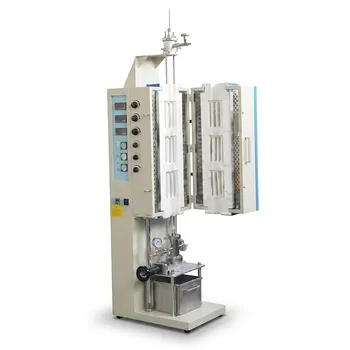
High Temperature Dual Zone Tube Furnace for Material Science Research and Professional Thermal Processing

High Temperature 1700C Tube Furnace with High Vacuum Turbomolecular Pump System and Multi Channel Mass Flow Controller Gas Mixer
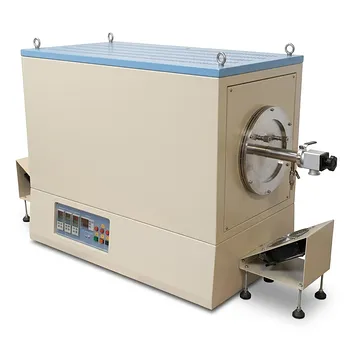
Four Zone Tube Furnace 1100C with 600mm Large Diameter Quartz Tube and Vacuum Flanges

1200°C 5 Inch Vertical Quartz Tube Furnace with Stainless Steel Vacuum Flanges
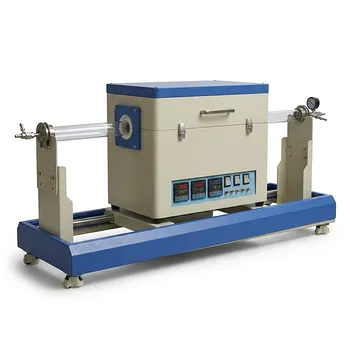
Double Temperature Zone Double Cover Tube Furnace for High Temperature CVD and Vacuum Annealing

High Temperature Automated 5 Inch Tube Furnace for Autonomous Material Research and Advanced Laboratory R&D
