Why is an atmosphere control tube furnace required for IrSA-Mo2C/C treatment at 900°C? Master Catalyst Synthesis.
Updated 3 months ago
The atmosphere control tube furnace is the critical reactor for synthesizing IrSA-Mo2C/C because it enables high-temperature carbothermal reduction under a strictly oxygen-free environment. At 900°C, the furnace facilitates the diffusion of carbon atoms into the metal oxide lattice to form molybdenum carbide nanoparticles. This precise thermal and atmospheric control is what allows iridium to remain atomically dispersed ($IrSA$) on the resulting carbide substrate rather than aggregating into inactive clusters.
The tube furnace serves as a controlled chemical environment that balances extreme thermal energy with protective inert gases. This synergy is essential to drive the formation of the molybdenum carbide phase while shielding the catalyst's delicate atomic structure from destructive oxidation.
Driving the Carbothermal Reduction Process
Carbon Diffusion at 900°C
The synthesis of $Mo_2C$ requires temperatures high enough to trigger carbothermal reduction, where carbon from the support reacts with molybdenum precursors. At 900°C, the thermal energy is sufficient to allow carbon atoms to migrate into the metal oxide lattice, effectively transforming it into a carbide.
Formation of the Carbide Lattice
The tube furnace provides the stable environment necessary for these nanoparticles to crystallize into the specific molybdenum carbide phase. Without this precise high-temperature treatment, the catalyst would fail to achieve the required conductivity and chemical stability provided by the carbide structure.
Maintaining Atomic Dispersion of Iridium
Thermodynamic Anchoring of Single Atoms
A primary challenge at 900°C is the tendency of noble metals like iridium to "sinter" or clump together into large particles. The stable thermal gradient of the tube furnace allows iridium atoms to find stable, low-energy sites on the carbide substrate where they can be "anchored."
Prevention of Metal Sintering
By maintaining a continuous flow of inert gas, the furnace prevents external chemical interactions that might destabilize these single atoms. This ensures the iridium remains atomically dispersed, maximizing the number of active sites available for catalytic reactions.
The Role of Inert Atmosphere Protection
Excluding Oxygen Interference
At 900°C, any trace of oxygen would cause the carbon substrate to undergo combustion and the molybdenum to revert to an oxide state. The atmosphere control system uses high-purity gases like Argon or Nitrogen to displace air, ensuring a completely inert or reductive environment.
Protecting the Carbon Substrate
High-temperature treatment can easily destroy the porous framework of the carbon support if the atmosphere is not strictly controlled. The furnace maintains the structural integrity of the carbon, which is vital for providing a high surface area for the active $IrSA-Mo_2C$ sites.
Understanding the Trade-offs
Temperature Precision vs. Phase Purity
If the temperature is too low, the carbothermal reduction will be incomplete, leaving behind inactive oxides. Conversely, exceeding the 900°C threshold significantly increases the risk of iridium aggregation, which reduces the catalyst's efficiency and wastes expensive noble metals.
Gas Flow Dynamics
The rate of inert gas flow is a critical variable; a flow that is too slow may fail to remove byproduct gases (like $CO$ or $CO_2$) effectively, potentially stalling the reaction. However, excessively high flow rates can cause thermal instability within the tube, leading to an uneven catalyst quality across the batch.
Applying This to Your Catalyst Synthesis
Specific Recommendations Based on Goals
- If your primary focus is maximizing active sites: Ensure the furnace maintains a highly stable temperature at exactly 900°C to promote the anchoring of single atoms without sintering.
- If your primary focus is phase purity of the carbide: Use high-purity inert gas and a pre-treatment purge cycle to ensure no residual oxygen interferes with the carbothermal reduction.
- If your primary focus is structural durability: Optimize the cooling rate within the furnace to prevent the carbon substrate from becoming brittle or collapsing after the high-temperature phase.
The atmosphere control tube furnace is not merely a heater, but a sophisticated chemical reactor that defines the final atomic architecture of the IrSA-Mo2C/C catalyst.
Summary Table:
| Key Feature | Role at 900°C | Impact on IrSA-Mo2C/C Catalyst |
|---|---|---|
| Carbothermal Reduction | Triggers carbon diffusion into Mo lattice | Forms the stable molybdenum carbide substrate |
| Inert Atmosphere | Displaces oxygen using Argon/Nitrogen | Prevents oxidation and protects carbon framework |
| Thermal Precision | Maintains stable 900°C gradient | Anchors Ir single atoms and prevents aggregation |
| Gas Flow Control | Removes reaction byproducts (CO/CO2) | Ensures high phase purity and structural integrity |
Elevate Your Catalyst Research with THERMUNITS Precision Systems
Successful synthesis of IrSA-Mo2C/C requires the absolute thermal and atmospheric control found only in professional-grade equipment. THERMUNITS is a leading manufacturer of high-temperature laboratory equipment specifically designed for material science and industrial R&D.
Our advanced Atmosphere Tube Furnaces and CVD/PECVD systems provide the stable oxygen-free environments and precise temperature gradients necessary to prevent iridium sintering and ensure perfect carbothermal reduction.
Whether your project requires Muffle, Vacuum, Rotary, or High-Pressure furnaces, THERMUNITS delivers the reliability your research deserves. Contact us today to optimize your heat treatment process!
References
- Jinjie Fang, Zhongbin Zhuang. Atomically dispersed Iridium on Mo2C as an efficient and stable alkaline hydrogen oxidation reaction catalyst. DOI: 10.1038/s41467-024-48672-9
Mentioned Products
- 1200°C Atmosphere Controlled Automatic Bottom Loading Furnace with 6 Inch Quartz Tube
- 1200C High Temperature Atmosphere Controlled Vertical Quenching Tube Furnace with 4 Inch Quartz Tube
- Compact Hybrid Muffle and Tube Furnace for 1000C Controlled Atmosphere Laboratory Material Sintering
- Compact Vertical Split Quartz Tube Furnace with Stainless Steel Vacuum Flanges for Rapid Thermal Quenching and Controlled Atmosphere Material Processing
- 1700C Compact Hybrid Furnace with Dual Layer Box Sintering and Controlled Atmosphere Alumina Tubes
People Also Ask
- Why is a tube furnace required for FGM-PhG structural color ceramics? Key to Carbon Preservation & Vibrant Color
- Why is an atmosphere-controlled tube furnace required for the pre-sulfidation of NiMo/gamma-Al2O3 catalysts?
- Why is an atmosphere-controlled tube furnace required for 800 °C CNF annealing? Essential for Oxidative Protection.
- Why is an atmosphere-controlled tube furnace required for [email protected]/C preparation? Key for Purity & Structure
- Why is an atmosphere-controlled tube furnace required for single-atom sensor calcination? Ensure Atomic Dispersion.

Tech Team · ThermUnits
Last updated on Jun 02, 2026
Related Products
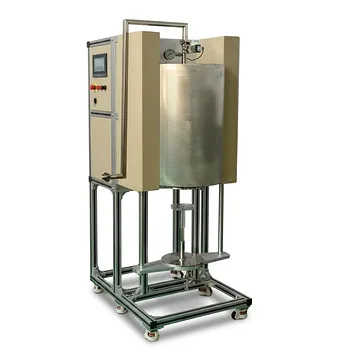
1200°C Atmosphere Controlled Automatic Bottom Loading Furnace with 6 Inch Quartz Tube
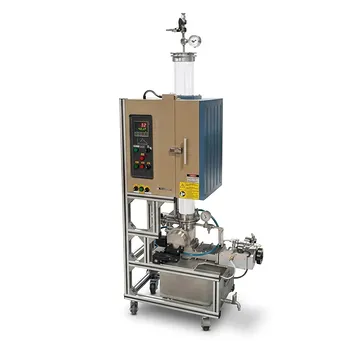
1200C High Temperature Atmosphere Controlled Vertical Quenching Tube Furnace with 4 Inch Quartz Tube
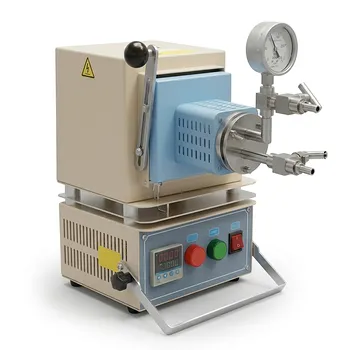
Compact Hybrid Muffle and Tube Furnace for 1000C Controlled Atmosphere Laboratory Material Sintering

Compact Vertical Split Quartz Tube Furnace with Stainless Steel Vacuum Flanges for Rapid Thermal Quenching and Controlled Atmosphere Material Processing
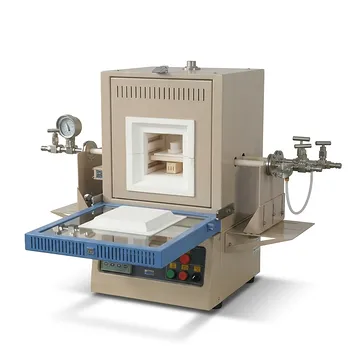
1700C Compact Hybrid Furnace with Dual Layer Box Sintering and Controlled Atmosphere Alumina Tubes
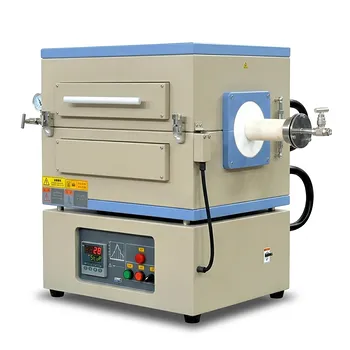
1500°C Split Tube Furnace with Alumina Tube and Vacuum Sealing Flanges for Material Research

Vertical 1700C Vacuum and Atmosphere Tube Furnace with 80mm Alumina Tube
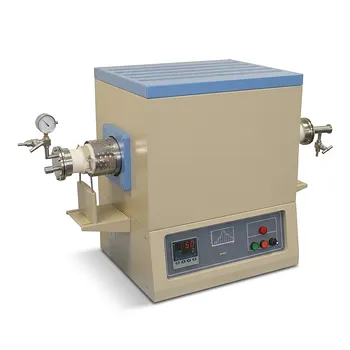
1700C High Temperature Alumina Tube Furnace with 18 Inch Heated Zone and Vacuum Sealing Flanges
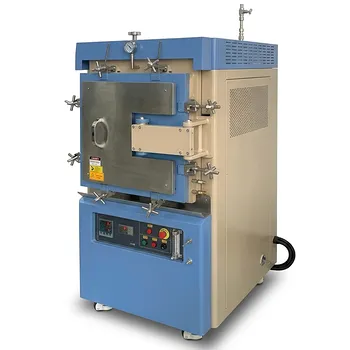
Atmosphere Controlled Muffle Furnace 1700C Maximum Temperature 80L High Capacity Vacuum Inert Gas Box Furnace
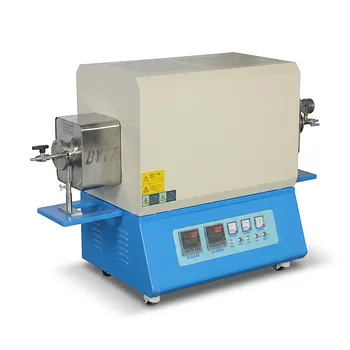
High Temperature Dual Zone Split Tube Furnace for Advanced Atmosphere Sintering and Vacuum CVD Applications

Three Zone Tube Furnace with 11 Inch or 15 Inch Quartz Tube and Hinged Flanges for Vacuum Atmosphere Heat Treatment
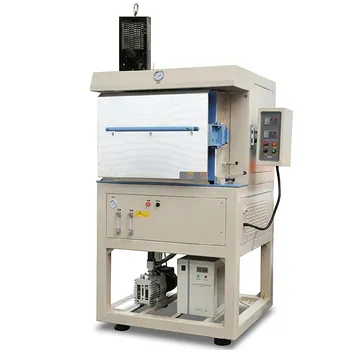
1200C Hydrogen Atmosphere Box Furnace with 5 Heated Sides and 64L Chamber
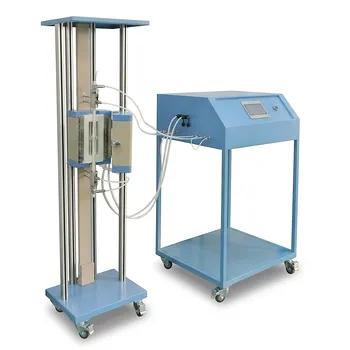
High Temperature Vertical Tube Furnace for Small Solid Oxide Fuel Cell Testing with Four Channel Gas Control
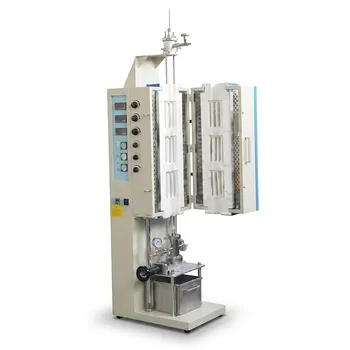
High Temperature Dual Zone Tube Furnace for Material Science Research and Professional Thermal Processing

High Temperature 1700C Tube Furnace with High Vacuum Turbomolecular Pump System and Multi Channel Mass Flow Controller Gas Mixer
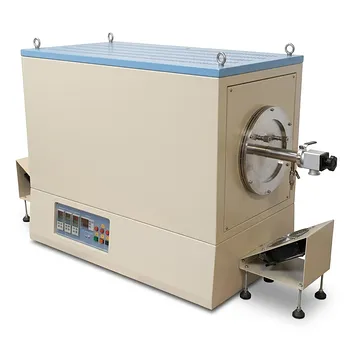
Four Zone Tube Furnace 1100C with 600mm Large Diameter Quartz Tube and Vacuum Flanges

1200°C 5 Inch Vertical Quartz Tube Furnace with Stainless Steel Vacuum Flanges
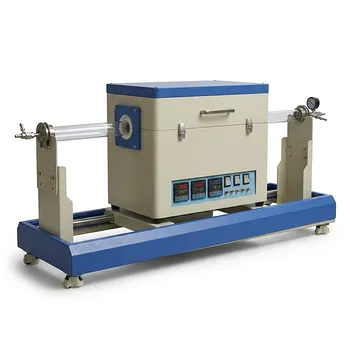
Double Temperature Zone Double Cover Tube Furnace for High Temperature CVD and Vacuum Annealing

High Temperature Automated 5 Inch Tube Furnace for Autonomous Material Research and Advanced Laboratory R&D
