What essential conditions does an atmosphere control tube furnace provide for biomass carbonization? Expert Insights
Updated 3 months ago
An atmosphere control tube furnace provides a strictly inert, oxygen-free environment and precise thermal regulation required to convert biomass into high-quality carbon structures. By utilizing high-purity nitrogen or argon and controlling heating rates, the furnace facilitates pyrolysis—the thermal decomposition of organic matter—without allowing the material to combust. This process is essential for removing volatile impurities while preserving the carbon skeleton and initiating the formation of the porous architecture required for activated carbon or energy storage materials.
An atmosphere control tube furnace acts as a hermetically sealed reactor that prevents carbon oxidation while enabling the precise thermal degradation of biomass. Its primary role is to maximize carbon yield and dictate the final structural properties of the material through exact atmosphere and temperature management.
Oxygen Exclusion and Atmosphere Integrity
Prevention of Oxidative Material Loss
The most critical condition provided by the furnace is a hermetically sealed environment that excludes oxygen. By injecting high-purity nitrogen or argon, the furnace prevents the carbon material from reacting with oxygen and burning away at high temperatures.
Facilitation of Pyrolysis
In the absence of oxygen, biomass undergoes pyrolysis rather than combustion. This allows the organic components to decompose into a carbon-rich char precursor, ensuring that the maximum amount of elemental carbon is retained from the original waste material.
Removal of Volatile Impurities
The continuous flow of inert gas acts as a carrier to sweep away volatile organic compounds (VOCs), moisture, and non-carbon elements. This "cleaning" effect is vital for increasing the purity of the carbon skeleton and preparing the material for subsequent chemical or physical activation.
Precise Thermal Profile Management
Controlled Heating Rates
The furnace allows for specific, programmed temperature increases, often ranging from 200°C to 450°C for initial carbonization. Maintaining a slow, steady heating rate is essential for the initial formation of a porous structure and preventing the collapse of the internal carbon framework.
Temperature Stability for Structural Evolution
Consistency in the carbonization temperature—typically maintained below 700°C for standard bio-char—is necessary to produce a uniform product. For specialized applications like sodium-ion batteries, the furnace can reach temperatures up to 1600°C to facilitate deep dehydrogenation and deoxygenation.
Management of Interlayer Spacing
Precise temperature control directly influences the graphitization degree and the spacing between graphene layers. This level of control allows researchers to fine-tune the material's density of storage sites and its overall electrical conductivity.
Understanding the Trade-offs
Atmosphere Purity vs. Operational Complexity
While high-purity nitrogen is standard, certain specialized biomasses may require argon to ensure total chemical inertness. However, argon is significantly more expensive, requiring a balance between the sensitivity of the carbon precursor and the cost of the operation.
Carbon Yield vs. Pore Development
Higher temperatures (above 700°C) generally increase the carbon purity and graphitization but may cause the micropores to shrink or collapse. Operators must often choose between maximizing the surface area for filtration or maximizing the structural density for conductivity.
Sealing Integrity and Safety
Maintaining a strictly airtight environment is difficult at extreme temperatures due to the thermal expansion of seals. Any minor oxygen leak can lead to "ash formation," where the carbonized material is lost to combustion, ruining the entire batch of precursor.
Optimizing Your Carbonization Process
How to Apply This to Your Project
To achieve the best results with an atmosphere control tube furnace, you must align your furnace settings with your final material requirements.
- If your primary focus is high-porosity activated carbon: Prioritize lower carbonization temperatures (350°C-450°C) and slow heating rates to preserve the initial skeletal structure for later activation.
- If your primary focus is hard carbon for battery electrodes: Utilize higher temperature ranges (up to 1600°C) under continuous nitrogen flow to ensure deep deoxygenation and optimal graphene layer spacing.
- If your primary focus is maximizing total carbon yield: Ensure a high flow rate of nitrogen at the start of the process to rapidly purge oxygen and sweep away volatiles before they can re-deposit on the sample.
The atmosphere control tube furnace is the fundamental tool for transforming raw biomass into a high-value carbon resource through the rigorous exclusion of oxygen and precise thermal guidance.
Summary Table:
| Essential Condition | Role in Carbonization | Impact on Material |
|---|---|---|
| Oxygen Exclusion | Prevents combustion via inert gas purging | Protects carbon skeleton and maximizes yield |
| Precise Thermal Profile | Controls heating rates and dwell times | Dictates porosity and interlayer spacing |
| Volatile Management | Sweeps away VOCs and impurities | Increases purity of the final carbon product |
| Temperature Stability | Ensures uniform heat distribution | Produces high-consistency bio-char or hard carbon |
Elevate Your Carbon Research with THERMUNITS
Transforming biomass into high-performance carbon materials requires absolute precision. As a leading manufacturer of high-temperature laboratory equipment, THERMUNITS provides the advanced thermal processing solutions needed for cutting-edge material science and industrial R&D.
Whether you are optimizing activated carbon for filtration or developing hard carbon for next-generation batteries, our comprehensive range of Atmosphere, Tube, Vacuum, and Rotary furnaces ensures a strictly inert environment and unparalleled temperature stability.
Why partner with THERMUNITS?
- Comprehensive Range: We offer everything from Muffle and Tube furnaces to CVD/PECVD systems, Dental furnaces, and Vacuum Induction Melting (VIM) furnaces.
- Precision Control: Achieve exact graphitization degrees and structural properties with our industry-leading thermal regulation.
- Expert Engineering: Equipment designed specifically for the rigorous demands of biomass pyrolysis and material synthesis.
Ready to optimize your heat treatment process? Contact us today to find the perfect thermal solution for your laboratory or industrial facility.
References
- Mohamed Helally, Noora Al‐Qahtani. Sustainable Hydrogen from Activated Carbon Derived from Fennel Waste. DOI: 10.3390/materproc2024018004
Mentioned Products
- 1200°C Atmosphere Controlled Automatic Bottom Loading Furnace with 6 Inch Quartz Tube
- 1200C High Temperature Atmosphere Controlled Vertical Quenching Tube Furnace with 4 Inch Quartz Tube
- Compact Hybrid Muffle and Tube Furnace for 1000C Controlled Atmosphere Laboratory Material Sintering
- Compact Vertical Split Quartz Tube Furnace with Stainless Steel Vacuum Flanges for Rapid Thermal Quenching and Controlled Atmosphere Material Processing
- 1700C Compact Hybrid Furnace with Dual Layer Box Sintering and Controlled Atmosphere Alumina Tubes
People Also Ask
- Why is a tube furnace required for FGM-PhG structural color ceramics? Key to Carbon Preservation & Vibrant Color
- Why is an atmosphere-controlled tube furnace required for the pre-sulfidation of NiMo/gamma-Al2O3 catalysts?
- Why is an atmosphere-controlled tube furnace required for 800 °C CNF annealing? Essential for Oxidative Protection.
- Why is an atmosphere-controlled tube furnace required for [email protected]/C preparation? Key for Purity & Structure
- Why is an atmosphere-controlled tube furnace required for single-atom sensor calcination? Ensure Atomic Dispersion.

Tech Team · ThermUnits
Last updated on Jun 03, 2026
Related Products
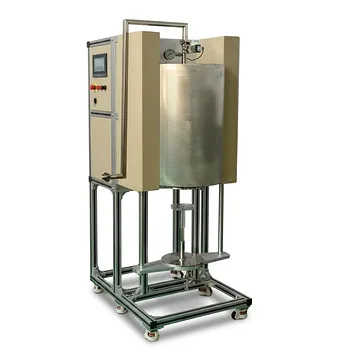
1200°C Atmosphere Controlled Automatic Bottom Loading Furnace with 6 Inch Quartz Tube
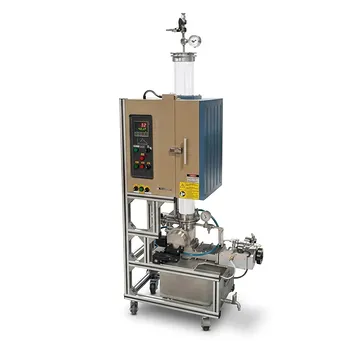
1200C High Temperature Atmosphere Controlled Vertical Quenching Tube Furnace with 4 Inch Quartz Tube
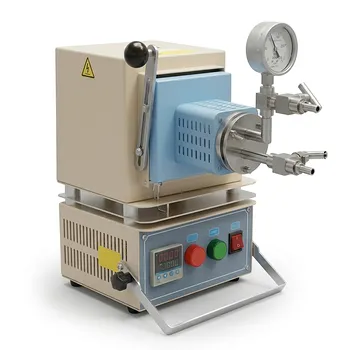
Compact Hybrid Muffle and Tube Furnace for 1000C Controlled Atmosphere Laboratory Material Sintering

Compact Vertical Split Quartz Tube Furnace with Stainless Steel Vacuum Flanges for Rapid Thermal Quenching and Controlled Atmosphere Material Processing
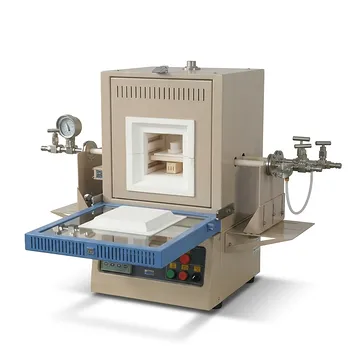
1700C Compact Hybrid Furnace with Dual Layer Box Sintering and Controlled Atmosphere Alumina Tubes
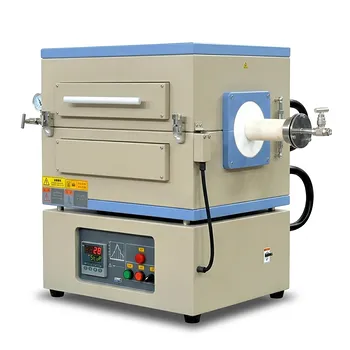
1500°C Split Tube Furnace with Alumina Tube and Vacuum Sealing Flanges for Material Research

Vertical 1700C Vacuum and Atmosphere Tube Furnace with 80mm Alumina Tube

1700C High Temperature Alumina Tube Furnace with 18 Inch Heated Zone and Vacuum Sealing Flanges
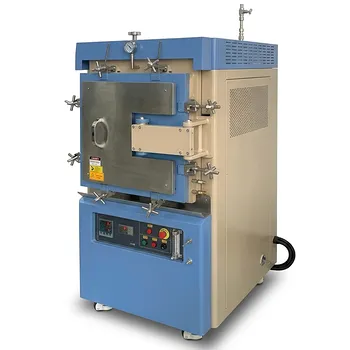
Atmosphere Controlled Muffle Furnace 1700C Maximum Temperature 80L High Capacity Vacuum Inert Gas Box Furnace
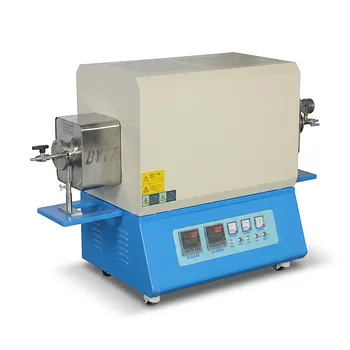
High Temperature Dual Zone Split Tube Furnace for Advanced Atmosphere Sintering and Vacuum CVD Applications

Three Zone Tube Furnace with 11 Inch or 15 Inch Quartz Tube and Hinged Flanges for Vacuum Atmosphere Heat Treatment
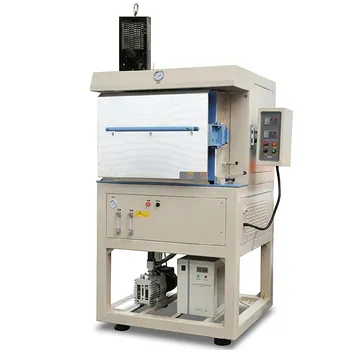
1200C Hydrogen Atmosphere Box Furnace with 5 Heated Sides and 64L Chamber
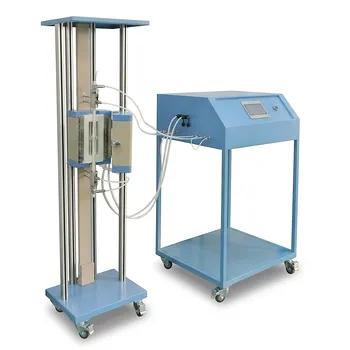
High Temperature Vertical Tube Furnace for Small Solid Oxide Fuel Cell Testing with Four Channel Gas Control
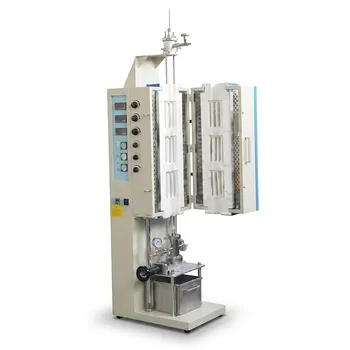
High Temperature Dual Zone Tube Furnace for Material Science Research and Professional Thermal Processing

High Temperature 1700C Tube Furnace with High Vacuum Turbomolecular Pump System and Multi Channel Mass Flow Controller Gas Mixer
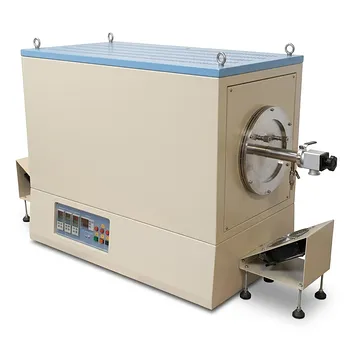
Four Zone Tube Furnace 1100C with 600mm Large Diameter Quartz Tube and Vacuum Flanges

1200°C 5 Inch Vertical Quartz Tube Furnace with Stainless Steel Vacuum Flanges
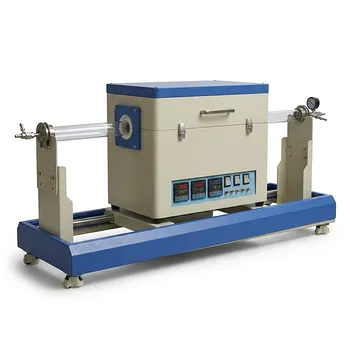
Double Temperature Zone Double Cover Tube Furnace for High Temperature CVD and Vacuum Annealing

High Temperature Automated 5 Inch Tube Furnace for Autonomous Material Research and Advanced Laboratory R&D
