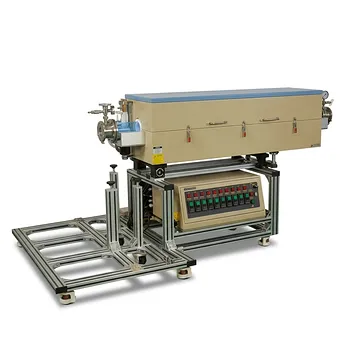
What is the role of tube furnaces in nanocarbonitride synthesis? Enhance Catalyst Support Stability & Conductivity.
Updated 3 months ago
The high-temperature atmosphere tube furnace is the indispensable reactor for the precise synthesis of nanocarbonitride supports. By providing a strictly controlled thermal range (typically 850 °C to 1200 °C) and a specific gaseous environment, it facilitates the solid-state reactions required to transform precursors into niobium-based or titanium-based nanocarbonitrides. This equipment ensures the formation of specific crystalline phases and nanostructures that are fundamental to achieving high electrical conductivity and long-term chemical stability in electrocatalytic applications.
Core Takeaway: The primary role of the tube furnace is to provide a stable, anaerobic, and high-heat environment that dictates the phase purity, crystallinity, and nanostructural morphology of the catalyst support. This precision is what ultimately determines the support's ability to conduct electrons and resist degradation.
Facilitating Phase Transformation and Crystallinity
The Mechanism of Solid-State Reactions
The furnace serves as the medium for high-energy solid-state reactions, where precursors are thermally decomposed and reorganized. At temperatures between 850 °C and 1200 °C, the furnace provides the activation energy necessary to break molecular bonds and form the carbonitride lattice.
Ensuring Structural Uniformity
Maintaining a constant thermal environment is critical for the uniform growth of nanostructures. Fluctuations in temperature during the calcination process can lead to heterogeneous phases, which compromise the consistency of the support’s catalytic properties.
Defining the Nanostructure
The precise heating profiles allowed by the tube furnace facilitate the formation of specific nanocarbonitride phases. These nanostructures are engineered to maximize surface area while providing a robust framework for anchoring active catalyst particles.
Atmosphere Control and Chemical Integrity
Preventing Oxidative Degradation
The "atmosphere" aspect of the furnace is vital for maintaining an inert or reducing environment using gases like nitrogen, argon, or hydrogen blends. This prevents the niobium or titanium precursors from reacting with oxygen, which would result in non-conductive oxides rather than the desired carbonitrides.
Promoting In-Situ Carbonization and Doping
The furnace environment supports the pyrolytic carbonization of organic components within the precursor mix. This process often involves the simultaneous reduction of metal salts and the formation of nitrogen-doped carbon skeletons, which are essential for high-performance supports.
Facilitating Gaseous Precursor Interaction
In many synthesis routes, the furnace allows for the introduction of reactive gases that participate directly in the formation of the support. This ensures that the nitridation and carbonization occur deeply and evenly throughout the material's bulk, not just on the surface.
Impact on Catalyst Support Performance
Optimizing Electrical Conductivity
High-temperature treatment in the tube furnace promotes a high degree of graphitization and crystalline order. This structural refinement is the primary driver behind the support's ability to facilitate efficient electron transfer during electrochemical reactions.
Enhancing Chemical and Thermal Stability
By reaching the specific transition temperatures of niobium and titanium, the furnace helps create chemically inert supports. These materials must withstand the corrosive environments found in fuel cells or electrolyzers, a trait developed through proper high-heat curing.
Anchoring Active Components
The thermal process within the furnace is often used to in-situ encapsulate or anchor metal nanoparticles within the support matrix. This prevents the agglomeration of active sites, ensuring the catalyst remains effective over thousands of operational cycles.
Understanding the Trade-offs
Thermal Agglomeration Risks
While high temperatures are necessary for crystallinity, excessive heat can cause nanoparticles to sinter or agglomerate. This reduces the specific surface area and can lead to a significant loss in catalytic activity.
Atmosphere Purity and Contamination
Any leak in the furnace's atmosphere control can introduce trace oxygen or moisture, leading to unwanted oxide phases. These impurities can act as insulators, drastically reducing the overall conductivity of the niobium or titanium-based support.
Energy Intensity and Cooling Rates
The high energy requirement of maintaining 1200 °C is a significant operational cost. Furthermore, if the cooling rate is not strictly controlled, internal stresses can develop in the nanocarbonitride structure, leading to physical fractures or instability.
Making the Right Choice for Your Goal
How to Apply This to Your Project
- If your primary focus is maximizing electrical conductivity: Prioritize higher temperatures (near 1100 °C - 1200 °C) and longer dwell times to ensure a high degree of crystallinity and graphitization.
- If your primary focus is maintaining a high specific surface area: Utilize the lower end of the temperature range (850 °C - 950 °C) and rapid quenching to prevent the sintering and growth of nanostructures.
- If your primary focus is preventing phase impurities: Ensure a strict anaerobic environment by using ultra-high purity argon and verifying the furnace's seal integrity before beginning the thermal cycle.
The high-temperature atmosphere tube furnace is the fundamental tool that bridges the gap between raw chemical precursors and a high-performance, durable electrocatalyst support.
Summary Table:
| Key Feature | Role in Synthesis | Impact on Electrocatalyst |
|---|---|---|
| Thermal Precision | 850°C - 1200°C heat control | Ensures high crystallinity and graphitization |
| Atmosphere Control | Inert/Reducing environment | Prevents oxidation; enables nitrogen doping |
| Uniform Heating | Consistent thermal profiles | Prevents phase heterogeneity and sintering |
| Structural Definition | Controlled cooling rates | Manages nanostructural morphology and stability |
Elevate Your Material Research with THERMUNITS
Precision thermal processing is the key to developing high-performance niobium and titanium-based nanocarbonitride supports. THERMUNITS is a leading manufacturer of high-temperature laboratory equipment, providing the advanced solutions material science researchers and industrial R&D teams need to succeed.
Our comprehensive range of thermal systems includes:
- Atmosphere & Tube Furnaces for precise nanostructural control.
- Vacuum & CVD/PECVD Systems for high-purity synthesis.
- Muffle, Rotary, & Hot Press Furnaces for diverse heat treatments.
- VIM & Dental Furnaces for specialized material processing.
Contact us today to discover how THERMUNITS can optimize your laboratory's heat treatment capabilities and enhance the conductivity and stability of your catalyst supports.
References
- Lucy K. McLeod, Richard I. Walton. Nanostructured Niobium and Titanium Carbonitrides as Electrocatalyst Supports. DOI: 10.1021/acsanm.4c00503
Mentioned Products
- Vertical 1700C Vacuum and Atmosphere Tube Furnace with 80mm Alumina Tube
- 1750°C High Temperature Benchtop Vacuum Atmosphere Tube Furnace with Kanthal Super 1800 Heating Elements and 60mm Alumina Processing Tube
- 1200C Hybrid Muffle and Tube Furnace for Material Research with Dual Atmosphere Control Quartz Tubes
- Compact Hybrid Muffle and Tube Furnace for 1000C Controlled Atmosphere Laboratory Material Sintering
- Three Zone Tube Furnace with 11 Inch or 15 Inch Quartz Tube and Hinged Flanges for Vacuum Atmosphere Heat Treatment
People Also Ask
- How is an industrial-grade vertical tube furnace utilized in smelting leaching residues? Enhance Metal Recovery Efficiency
- What is the function of a laboratory-grade vertical tube furnace in fast pyrolysis? Optimize Composite Research.
- How does a vertical tube furnace facilitate thermoelectric alloy melting? Precision synthesis for material homogeneity.
- Why is a thermocouple sensor indispensable for monitoring the vertical tube furnace during gallium oxide nanowire production? Optimize VLS Growth
- What are the advantages of using a vertical tube furnace for crucible experiments simulating steel-slag interactions?

Tech Team · ThermUnits
Last updated on Jun 02, 2026
Related Products

Vertical 1700C Vacuum and Atmosphere Tube Furnace with 80mm Alumina Tube

1750°C High Temperature Benchtop Vacuum Atmosphere Tube Furnace with Kanthal Super 1800 Heating Elements and 60mm Alumina Processing Tube
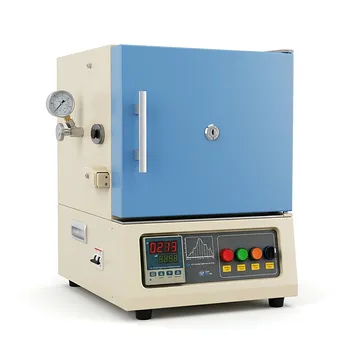
1200C Hybrid Muffle and Tube Furnace for Material Research with Dual Atmosphere Control Quartz Tubes
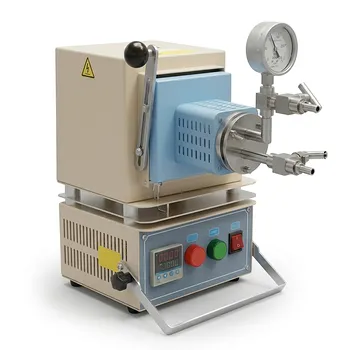
Compact Hybrid Muffle and Tube Furnace for 1000C Controlled Atmosphere Laboratory Material Sintering
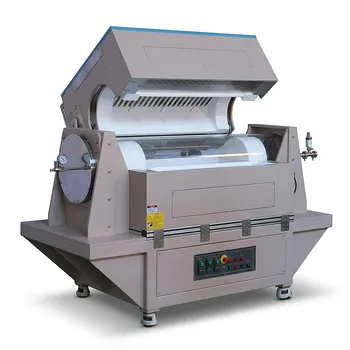
Three Zone Tube Furnace with 11 Inch or 15 Inch Quartz Tube and Hinged Flanges for Vacuum Atmosphere Heat Treatment

1700C High Temperature Alumina Tube Furnace with 18 Inch Heated Zone and Vacuum Sealing Flanges

1100°C High Temperature Quartz Chamber Furnace 8 Inch OD with 7.6 Liter Capacity and Vacuum Atmosphere Capability
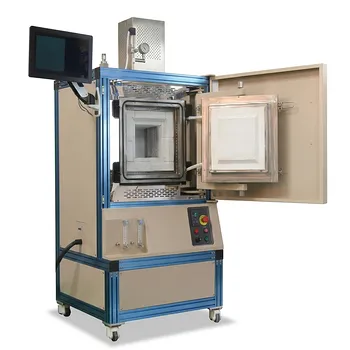
High Temperature Hydrogen Atmosphere Box Furnace 1650C Max Reducing Environment Material Synthesis System 8x8x8 Chamber
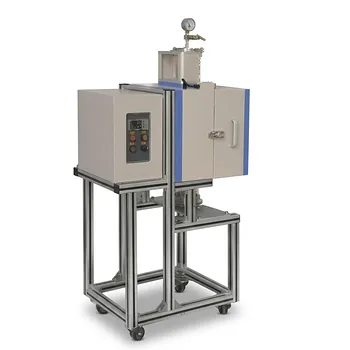
1200°C 5 Inch Vertical Quartz Tube Furnace with Stainless Steel Vacuum Flanges
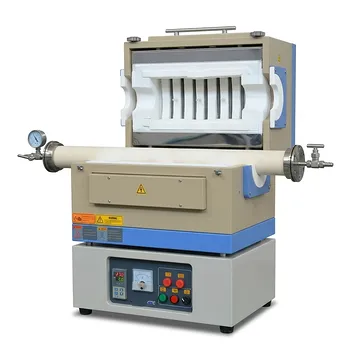
High Temperature 1600C Split Tube Furnace Vacuum Flanges Valves Optional 60mm 80mm Alumina Tube

High Temperature 1700C Tube Furnace with High Vacuum Turbomolecular Pump System and Multi Channel Mass Flow Controller Gas Mixer

1100C Tube Furnace with Vacuum Flange and Programmable Temperature Controller for Material Science and Industrial Heat Treatment

High Temperature 1700C Vertical Tube Furnace for Powder Spherification and Material Sintering

Compact High Temperature 1600C Tube Furnace with 50mm Alumina Tube and Vacuum Flanges for Material Sintering

High Temperature 1700C Six Zone Split Tube Furnace with Alumina Tube and Water Cooled Flanges

1800C High Temperature Compact Vacuum Tube Furnace with 60mm OD Alumina Tube and Kanthal MoSi2 Heating Elements
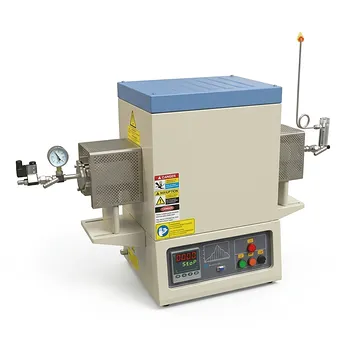
1700C Hydrogen Gas Tube Furnace with 60mm Alumina Process Tube and Integrated Hydrogen Safety Detector

High Temperature Automated 5 Inch Tube Furnace for Autonomous Material Research and Advanced Laboratory R&D

High Temperature 1700C Benchtop Tube Furnace with 5 Inch Heating Zone High Purity Alumina Tube and Vacuum Sealing Flanges