What is the purpose of H2 annealing for hBN on Ge? Achieve a clean substrate for superior crystal growth.
Updated 3 months ago
Achieving a pristine substrate interface is critical. High-temperature hydrogen (H2) annealing serves as a fundamental surface-conditioning step that removes the native germanium oxide layer and organic residues. This process restores the underlying germanium (Ge) crystal lattice, creating an atomically clean template that is essential for the high-quality heteroepitaxial growth of hexagonal boron nitride (hBN).
The primary purpose of high-temperature H2 annealing is to eliminate surface barriers—specifically oxides and contaminants—to expose a clean germanium crystal structure. This ensures that subsequent hBN growth can achieve high crystallinity and precise orientation.
The Mechanisms of Surface Restoration
Eliminating the Native Oxide Layer
Germanium naturally forms a thin oxide layer when exposed to the atmosphere, which acts as a physical barrier to epitaxy. High-temperature annealing in a reducing H2 atmosphere chemically reacts with these oxides, effectively stripping them away to reveal the raw germanium surface.
Removal of Organic Contaminants
Substrates often harbor microscopic organic residues from handling, storage, or prior processing steps. The thermal energy provided during annealing, combined with the presence of hydrogen, breaks down these carbon-based impurities, ensuring they do not interfere with the hBN nucleation process.
Optimizing the Template for hBN Growth
Restoring the Germanium Crystal Surface
By removing the amorphous oxide layer, the annealing process exposes the periodic arrangement of the germanium atoms. This "restored" surface acts as a geometric guide, or template, allowing the hBN atoms to align themselves correctly with the substrate’s lattice.
Facilitating Oriented Nano-Islands
The quality of the initial hBN "islands" determines the quality of the final continuous film. A clean, annealed Ge surface promotes the formation of highly oriented hBN nano-islands, which can eventually coalesce into a large-area, single-crystal-like layer with fewer grain boundaries.
Improving Catalytic Activity
Similar to processes used with copper substrates, high-temperature treatment can optimize the surface energy and catalytic properties of the germanium. This optimization is vital for controlling the rate and uniformity of hBN growth during chemical vapor deposition.
Understanding the Trade-offs
Risk of Surface Roughening
While high temperatures are necessary for cleaning, excessive heat or prolonged annealing can lead to surface mass transport. This may result in unwanted surface roughening or the formation of "steps" on the germanium surface that could disrupt the uniformity of the hBN layer.
Material Thermal Limits
Germanium has a lower melting point (approximately 938°C) compared to other common substrates like copper. Engineers must precisely calibrate the "high-temperature" range to ensure the oxide is removed without reaching temperatures that could compromise the structural integrity of the Ge wafer.
How to Apply This to Your Project
Refining Your Substrate Preparation
- If your primary focus is maximum crystallinity: Prioritize the duration of the H2 annealing to ensure every trace of native oxide is removed before starting the growth cycle.
- If your primary focus is surface smoothness: Carefully balance the annealing temperature to find the "sweet spot" where oxides are reduced but germanium atom migration remains minimal.
- If your primary focus is reducing defects: Ensure the hydrogen gas used is of ultra-high purity to prevent the introduction of new contaminants during the high-temperature phase.
A meticulously controlled H2 annealing phase transforms a contaminated germanium substrate into a high-performance foundation for advanced 2D material synthesis.
Summary Table:
| Function | Mechanism | Impact on hBN Growth |
|---|---|---|
| Oxide Removal | Chemical reduction of native $GeO_x$ | Eliminates physical barriers to epitaxy |
| Surface Cleaning | Thermal decomposition of organic residues | Prevents carbon-based defects/impurities |
| Lattice Restoration | Exposing periodic Ge atomic arrangement | Provides geometric template for alignment |
| Catalytic Control | Optimization of surface energy | Promotes oriented nano-islands and uniformity |
Elevate Your Material Research with THERMUNITS
Achieving the perfect substrate interface requires precision thermal control. THERMUNITS is a leading manufacturer of high-temperature laboratory equipment dedicated to supporting material science and industrial R&D.
We offer a comprehensive suite of thermal processing solutions tailored for advanced applications like H2 annealing and CVD growth, including:
- CVD/PECVD Systems & Tube Furnaces for precise gas and temperature control.
- Vacuum, Atmosphere, and Muffle Furnaces for diverse heat treatments.
- Rotary, Hot Press, and Vacuum Induction Melting (VIM) Furnaces for specialized processing.
- Dental Furnaces, Electric Rotary Kilns, and high-quality Thermal Elements.
Whether you are synthesizing 2D materials like hBN or developing new alloys, our equipment provides the reliability and purity your research demands. Contact THERMUNITS today to discuss your specific requirements and discover how our laboratory solutions can accelerate your breakthroughs.
References
- Katherine A. Su, Michael S. Arnold. Chemical vapor deposition of hexagonal boron nitride on germanium from borazine. DOI: 10.1039/d4ra03704a
Mentioned Products
- High Temperature Cold Wall Vacuum Furnace for Advanced Material Sintering and Annealing 1600C Heating Area 200x200x300mm
- Large Bench Top 1700C High Temperature Muffle Furnace with 19L Chamber for Advanced Material Sintering and Annealing
- High Temperature 1000C Vacuum Furnace with 8 Inch ID Chamber for Material Sintering and Research Annealing
- High Temperature 1500C Benchtop Muffle Furnace 3.6L Alumina Fiber Chamber Programmable Controller Sintering Annealing Carbonization Thermal Processing System
- 1200C Five Side Heating Muffle Furnace with Sliding Door 125L Volume High Temperature Heat Treatment System for Large Scale Sintering and Annealing
People Also Ask
- What is the purpose of coating ceramic sheets with platinum paste? Achieve Stable High-Temp Ohmic Contacts
- What is the function of high-vacuum furnaces in (Mo2/3V1/3)n+1AlCn MAX phase synthesis? Ensure Purity & Diffusion.
- Why is high-vacuum annealing treatment essential in the preparation of multilayer composite separation membranes such as Pd/Ti?
- What Role Does a Vacuum Sintering Furnace Play in Ni-Mn-Ga Alloy Fabrication? Optimizing Porous Structures
- How does a vacuum or atmosphere sintering furnace contribute to the congener-welding process of carbon nitride membranes?

Tech Team · ThermUnits
Last updated on Jun 03, 2026
Related Products
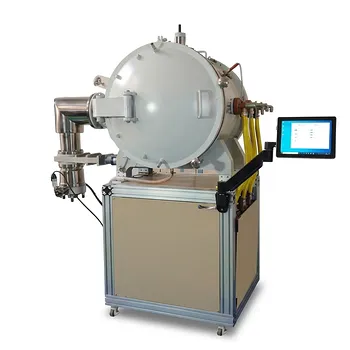
High Temperature Cold Wall Vacuum Furnace for Advanced Material Sintering and Annealing 1600C Heating Area 200x200x300mm
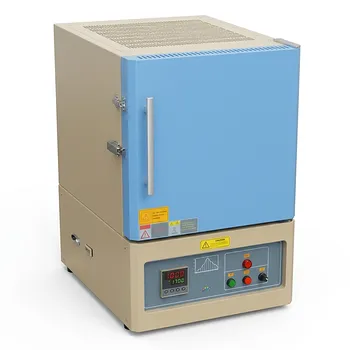
Large Bench Top 1700C High Temperature Muffle Furnace with 19L Chamber for Advanced Material Sintering and Annealing
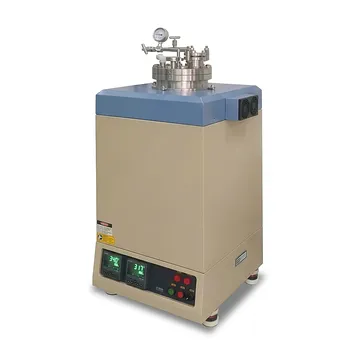
High Temperature 1000C Vacuum Furnace with 8 Inch ID Chamber for Material Sintering and Research Annealing

High Temperature 1500C Benchtop Muffle Furnace 3.6L Alumina Fiber Chamber Programmable Controller Sintering Annealing Carbonization Thermal Processing System
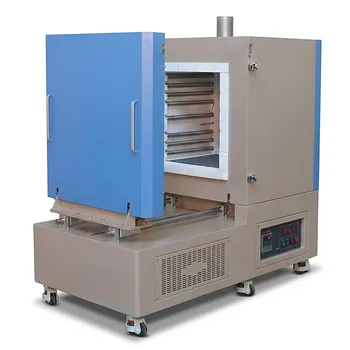
1200C Five Side Heating Muffle Furnace with Sliding Door 125L Volume High Temperature Heat Treatment System for Large Scale Sintering and Annealing
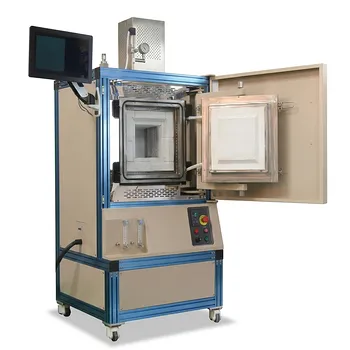
High Temperature Hydrogen Atmosphere Box Furnace 1650C Max Reducing Environment Material Synthesis System 8x8x8 Chamber
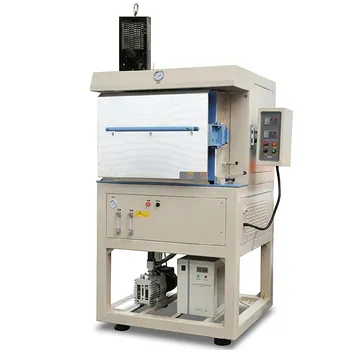
1200C Hydrogen Atmosphere Box Furnace with 5 Heated Sides and 64L Chamber
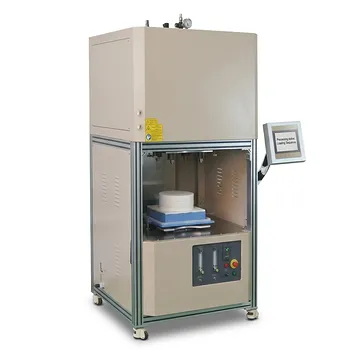
High Temperature Vertical Atmosphere Controlled Furnace with Automatic Bottom Loading and 1700°C Capacity for Advanced Material Research
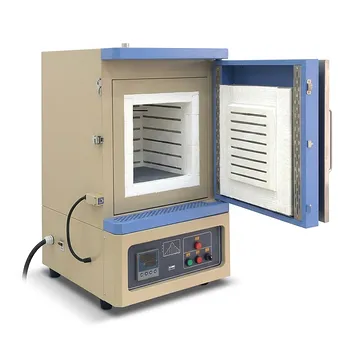
Five Side Heating Muffle Furnace High Purity Alumina Fiber 27L Chamber 1200C High Temperature Thermal Processing System for Sintering Annealing and Materials Research
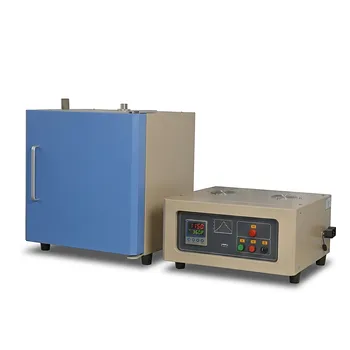
High Temperature Muffle Furnace with Alloy Chamber for Debinding and Sintering Applications

1200C High Throughput Multi Channel Tube Furnace with 50mm Quartz Tubes for Annealing and Material Phase Diagram Research

High Temperature Tube Furnace 1500C with Sliding Flanges and 50mm OD for Rapid Thermal Processing Fast Heating and Cooling
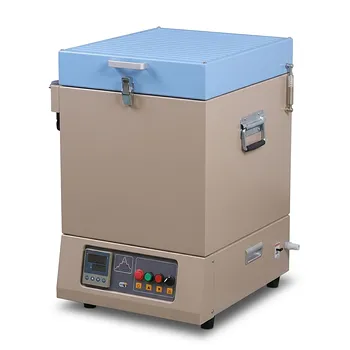
High Temperature Vertical Crucible Furnace with 22L Heating Chamber and 1200C Maximum Temperature

High Temperature 1700C Tube Furnace with High Vacuum Turbomolecular Pump System and Multi Channel Mass Flow Controller Gas Mixer
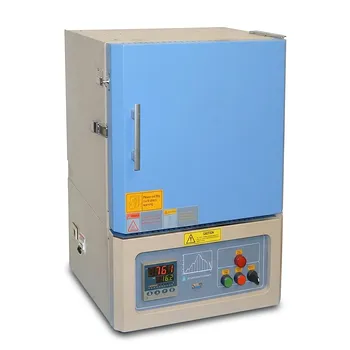
High Temperature 1700C Bench Top Muffle Furnace with Alumina Fiber Insulation and 3.6L Chamber Capacity for Precision Sintering and Heat Treatment

High Temperature 1700C Benchtop Tube Furnace with 5 Inch Heating Zone High Purity Alumina Tube and Vacuum Sealing Flanges

1750°C High Temperature Benchtop Vacuum Atmosphere Tube Furnace with Kanthal Super 1800 Heating Elements and 60mm Alumina Processing Tube
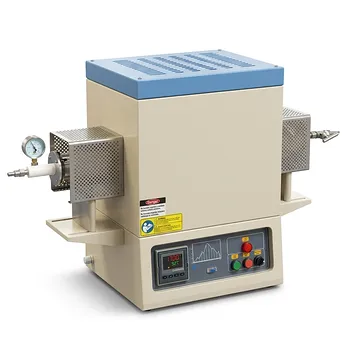
High Temperature Three Zone Tube Furnace 1700C with Alumina Tube and Water Cooled Flanges
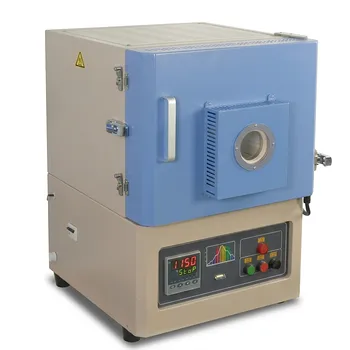
High Temperature Benchtop Muffle Furnace with Quartz Observation Window for Thermal Imaging and Material Analysis