Why use high-purity nitrogen and flow rates in tube furnace smelting? Optimize Your Metal Yield and Purity
Updated 3 months ago
The introduction of high-purity nitrogen serves as a critical atmospheric control mechanism during smelting. By displacing oxygen, it establishes an inert environment that prevents the secondary oxidation of reducing agents like coke and newly reduced metals such as antimony and lead. Furthermore, a specific flow rate is essential to drive the chemical equilibrium toward metallic formation and to physically transport volatile elements like zinc to downstream collection systems.
Core Takeaway: High-purity nitrogen acts as both a chemical shield and a mechanical carrier, preventing the combustion of raw materials while ensuring that volatile reaction products are efficiently recovered without re-oxidizing.
Preventing Chemical Degradation and Oxidation
Protection of Reducing Agents
In high-temperature smelting, coke serves as the primary reducing agent responsible for stripping oxygen from metal oxides. If oxygen is present in the furnace, the coke will undergo combustion, burning away as carbon dioxide before it can react with the ore, thereby stalling the reduction process.
Safeguarding Reduced Metals
Once metals like antimony and lead are successfully reduced to their metallic states, they remain highly reactive at elevated temperatures. The nitrogen atmosphere prevents secondary oxidation, which would otherwise convert these finished metals back into oxides, compromising the purity and yield of the final product.
Maintaining Structural Integrity
In processes involving carbonaceous materials, nitrogen prevents "ashing" or the total destruction of the carbon framework. This is vital for maintaining the specific pore structure and surface area required when the end goal involves activated carbon or specific metallic morphologies.
The Strategic Importance of Flow Rate
Driving Reaction Equilibrium
Maintaining a specific flow rate ensures that the concentration of gaseous by-products remains low within the reaction zone. By continuously removing these gases, the system shifts the chemical equilibrium in favor of the forward reaction, promoting the continuous formation of metallic elements.
Transport of Volatile Vapors
Certain metals, specifically zinc, transition into a vapor phase during high-temperature smelting. A consistent nitrogen flow acts as a carrier gas, physically sweeping these volatile vapors out of the hot zone and into downstream collection systems where they can be cooled and recovered.
Heat Distribution and Consistency
A stable flow rate contributes to a uniform atmosphere within the tube furnace, ensuring that the chemical environment is consistent across the entire sample surface. This prevents localized pockets of oxidation and ensures that the resulting material has a homogeneous morphology.
Understanding the Trade-offs
Thermal Gradients and Cooling
While a high flow rate is excellent for removing volatiles, it can introduce a cooling effect on the furnace. If the nitrogen flow is too aggressive, it may create thermal gradients that prevent the core of the sample from reaching the required smelting temperature.
Gas Consumption vs. Purity
Using high-purity nitrogen (typically 99.99% or higher) is expensive, and high flow rates increase operational costs. However, a flow rate that is too low may fail to create enough positive pressure, allowing ambient oxygen to leak back into the tube furnace through seals or inlets.
Volatile Capture Efficiency
If the flow rate is too fast, volatile vapors like zinc may pass through the downstream collection system too quickly to be effectively condensed. Conversely, a flow rate that is too slow may cause vapors to condense prematurely on the cooler parts of the furnace tube, leading to clogging or equipment damage.
How to Apply This to Your Project
Selecting the Right Parameters
- If your primary focus is maximizing metal yield: Prioritize a strict anaerobic environment with a moderate flow rate to prevent the re-oxidation of lead and antimony.
- If your primary focus is the recovery of volatile zinc: Use a calculated, higher flow rate to ensure vapors are carried swiftly to the condenser before they can deposit on the furnace walls.
- If your primary focus is developing carbon pore structures: Ensure a continuous, low-velocity nitrogen purge to prevent combustion while allowing the carbon skeleton to reconstruct slowly.
Precise atmospheric control is the difference between a successful metallurgical reduction and the unintended combustion of your raw materials.
Summary Table:
| Function | Mechanism | Impact on Process |
|---|---|---|
| Atmospheric Control | Displaces Oxygen | Prevents oxidation of coke and reduced metals (Lead, Antimony). |
| Chemical Equilibrium | Constant gas removal | Shifts reaction forward to promote continuous metallic formation. |
| Carrier Mechanism | Gas flow transport | Efficiently sweeps volatile vapors (Zinc) to collection systems. |
| Structural Protection | Inert environment | Prevents "ashing" and maintains carbon pore structures. |
| Thermal Uniformity | Stable gas flow | Ensures consistent morphology and heat distribution across samples. |
Maximize Your Smelting Precision with THERMUNITS
Precise atmospheric control is the cornerstone of successful metallurgical R&D. THERMUNITS is a leading manufacturer of high-temperature laboratory equipment dedicated to material science and industrial innovation. Whether you are refining volatile metals or developing advanced carbon structures, our thermal processing solutions provide the stability and control you need.
Our comprehensive product range includes:
- Tube & Atmosphere Furnaces: Optimized for precise gas flow and inert environments.
- Vacuum & CVD/PECVD Systems: For advanced thin-film and material synthesis.
- Muffle, Rotary, & Hot Press Furnaces: Built for durability and thermal uniformity.
- Specialized Equipment: Dental furnaces, VIM systems, and high-quality thermal elements.
Don't let secondary oxidation or poor flow control compromise your results. Contact our technical experts today to discuss a customized solution for your laboratory’s heat treatment requirements!
References
- Zhengqiang Dong, Sen Wang. Sb recovery from an As pre-removed lead anode slime using a ZnS-Na2CO3 smelting reduction. DOI: 10.2298/jmmb231230017d
Mentioned Products
- High Temperature Tube Furnace 1500C with Sliding Flanges and 50mm OD for Rapid Thermal Processing Fast Heating and Cooling
- Vertical 1700C Vacuum and Atmosphere Tube Furnace with 80mm Alumina Tube
- Compact High Temperature 1600C Tube Furnace with 50mm Alumina Tube and Vacuum Flanges for Material Sintering
- 900°C Max Rotary Tube Furnace with 8 Inch 310S Alloy Tube and Optional Multi Zone Heating for Industrial Material Calcination
- 1100C Tube Furnace with Vacuum Flange and Programmable Temperature Controller for Material Science and Industrial Heat Treatment
People Also Ask
- How are high-temperature tube furnaces utilized to repair etching damage? Precision Lattice Restoration Solutions
- What role does a high-temperature tube furnace play in CVD synthesis of silicon nanowires? Master VLS Growth Precision.
- What core conditions does a high-temperature tube furnace provide for rGO aerogels? Mastering Precision Synthesis.
- What role does a high-temperature tube furnace play in the sulfidation heat treatment of CoS@C/MXene nanocomposites? Guide
- How does precision tube furnace control influence CoFe nanoparticle formation? Master Your Bimetallic Synthesis.

Tech Team · ThermUnits
Last updated on Jun 02, 2026
Related Products

High Temperature Tube Furnace 1500C with Sliding Flanges and 50mm OD for Rapid Thermal Processing Fast Heating and Cooling

Vertical 1700C Vacuum and Atmosphere Tube Furnace with 80mm Alumina Tube

Compact High Temperature 1600C Tube Furnace with 50mm Alumina Tube and Vacuum Flanges for Material Sintering
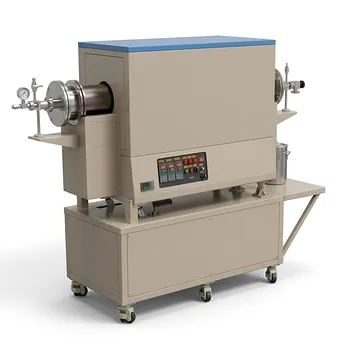
900°C Max Rotary Tube Furnace with 8 Inch 310S Alloy Tube and Optional Multi Zone Heating for Industrial Material Calcination

1100C Tube Furnace with Vacuum Flange and Programmable Temperature Controller for Material Science and Industrial Heat Treatment

High Temperature 1700C Tube Furnace with High Vacuum Turbomolecular Pump System and Multi Channel Mass Flow Controller Gas Mixer

1700C Hydrogen Gas Tube Furnace with 60mm Alumina Process Tube and Integrated Hydrogen Safety Detector

5 Inch Three Zone Rotary Tube Furnace with Integrated Gas Delivery System and 1200C Capability for Advanced Material CVD Processing

High Temperature 1700C Six Zone Split Tube Furnace with Alumina Tube and Water Cooled Flanges
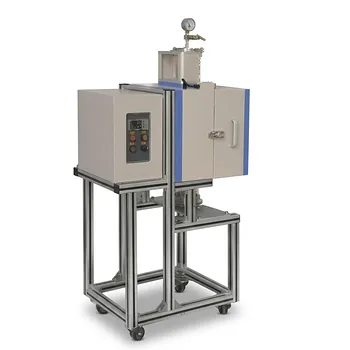
1200°C 5 Inch Vertical Quartz Tube Furnace with Stainless Steel Vacuum Flanges

Compact Vertical Split Quartz Tube Furnace with Stainless Steel Vacuum Flanges for Rapid Thermal Quenching and Controlled Atmosphere Material Processing

1200C High Throughput Multi Channel Tube Furnace with 50mm Quartz Tubes for Annealing and Material Phase Diagram Research

High Temperature 1700C Benchtop Tube Furnace with 5 Inch Heating Zone High Purity Alumina Tube and Vacuum Sealing Flanges
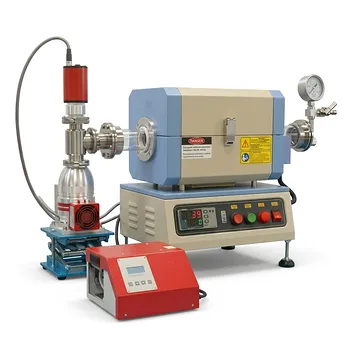
High Vacuum Compact Tube Furnace 1200C with Integrated Turbo Pump System and 8 Inch Heating Zone

Three Zone Tube Furnace with 11 Inch or 15 Inch Quartz Tube and Hinged Flanges for Vacuum Atmosphere Heat Treatment

1800C High Temperature Compact Vacuum Tube Furnace with 60mm OD Alumina Tube and Kanthal MoSi2 Heating Elements
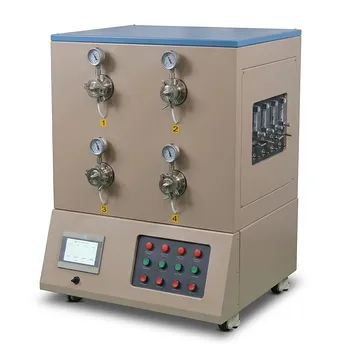
High Throughput 1200C Four Channel Tube Furnace with 3 Inch Quartz Tubes for Multi Zone Annealing and Material Research

High Temperature 1700C Vertical Tube Furnace for Powder Spherification and Material Sintering
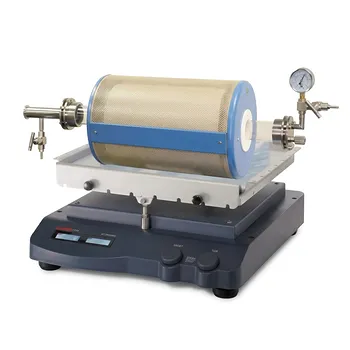
High Temperature Rocking Tube Furnace with Quartz Tube and Vacuum Flange for Materials Synthesis
