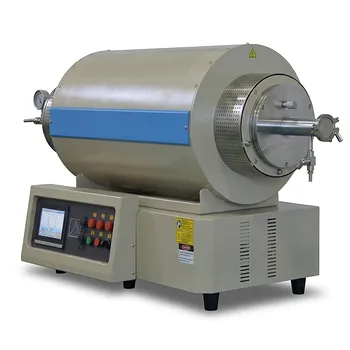
What is the purpose of using a tube atmosphere furnace with Argon gas for 3DBT@C? Key for 1100°C In-situ Carbonization
Updated 3 months ago
Establishing a controlled Argon atmosphere is the critical factor in transforming a sacrificial template into a functional, conductive carbon network. At 1100°C, the Argon gas creates an inert environment that prevents the oxidation of the dust-free wipe template. Instead of burning away, the template undergoes in-situ carbonization, forming an amorphous carbon layer that coats Barium Titanate grains to ensure superior electrical conductivity.
The primary purpose of using a tube atmosphere furnace with Argon for 3DBT@C is to facilitate in-situ carbonization while preventing oxidative combustion. By excluding oxygen, the process converts a structural template into a permanent, conductive amorphous carbon coating that defines the material's final electrical properties.
The Mechanism of In-Situ Carbonization
Preventing Complete Oxidation
In a standard air-filled furnace, a dust-free wipe template would oxidize completely and turn into ash long before reaching 1100°C. Argon gas acts as a protective shield, displacing oxygen and nitrogen that would otherwise react with the organic fibers. This allows the template to remain physically present as it transitions through high temperatures.
Facilitating the Carbon Coating
Because the environment is inert, the organic components of the template undergo a chemical breakdown known as carbonization. This process results in amorphous carbon that deposits directly onto the Barium Titanate (BT) grains. This "in-situ" formation ensures an intimate contact between the carbon and the ceramic grains, which is essential for the 3DBT@C framework.
Enhancing Electrical Conductivity
The resulting carbon network acts as a conductive bridge across the ceramic structure. Without the Argon-protected carbonization phase, the 3DBT@C framework would lack the continuous conductive pathways required for its intended technical applications.
Structural and Chemical Preservation
Maintaining Micro-Morphology
The use of a tube furnace allows for a stable, continuous flow of Argon that preserves the microscopic morphology of the network. This stability prevents the "burning off" of fine nanofibers and ensures that the resulting pore structure and grain distribution remain consistent with the design requirements.
Purging Residual Contaminants
High-purity Argon is used to pre-purge the furnace chamber before the heating cycle begins. This step is vital to exclude residual oxygen and moisture, which could cause premature oxidation or introduce impurities that degrade the chemical purity of the Barium Titanate.
Managing Reaction Byproducts
During the reaction phase, the Argon flow serves as a carrier gas. It effectively sweeps away gaseous byproducts such as CO and CO2 that are generated during the carbonization process. Removing these gases helps maintain a stable chemical equilibrium within the furnace tube.
Understanding the Trade-offs
The Risk of Insufficient Flow
If the Argon flow rate is too low, residual oxygen may not be fully displaced, leading to the partial oxidation of the carbon skeleton. This results in a lower yield of carbon and significantly reduced electrical conductivity in the final 3DBT@C network.
Argon Purity vs. Material Quality
Using lower-purity Argon can introduce trace amounts of oxygen or nitrogen. At 1100°C, even trace oxygen can lead to secondary oxidation reactions, while nitrogen might cause unwanted nitridation of the ceramic or carbon components, altering the intended biological or electrical performance.
Temperature Precision
While Argon provides the atmosphere, the high-temperature capability (1100°C) of the tube furnace is what drives the carbonization. If the temperature is too low, the carbonization may be incomplete; if too high, the Barium Titanate grains might undergo excessive grain growth, damaging the 3D network structure.
How to Apply This to Your Project
When utilizing a tube atmosphere furnace for 3DBT@C synthesis, the following goals should dictate your operational parameters:
- If your primary focus is Maximum Conductivity: Ensure a high-purity Argon flow and a precise 1100°C hold time to maximize the density and continuity of the amorphous carbon coating.
- If your primary focus is Pore Structure Control: Maintain a steady, low-turbulence Argon flow to preserve the delicate micro-morphology of the carbonized template without mechanical disruption.
- If your primary focus is Material Purity: Implement a rigorous pre-purge cycle (at least 3-5 chamber volumes) before initiating the heating phase to guarantee an oxygen-free environment.
By strictly controlling the inert Argon environment, you ensure that the 3DBT@C network achieves the precise balance of structural integrity and electrical performance required for advanced technical applications.
Summary Table:
| Key Factor | Role in Process | Impact on 3DBT@C Material |
|---|---|---|
| Argon Atmosphere | Displaces Oxygen/Nitrogen | Prevents template combustion; ensures carbonization. |
| 1100°C Heating | High-Temp Thermal Drive | Converts organic fibers into conductive amorphous carbon. |
| Tube Design | Stable Atmosphere Flow | Preserves micro-morphology and pore structure. |
| Pre-Purging | Removal of Contaminants | Guarantees chemical purity and avoids secondary oxidation. |
| Carrier Gas | Byproduct Removal | Sweeps away CO/CO2 to maintain chemical equilibrium. |
Elevate Your Material Research with THERMUNITS Precision
Achieving the perfect in-situ carbonization for 3DBT@C networks requires more than just heat—it requires absolute atmospheric control. THERMUNITS is a leading manufacturer of high-performance thermal processing solutions designed specifically for material science and industrial R&D.
Whether you are performing complex CVD/PECVD synthesis or high-purity carbonization, our equipment delivers the stability your research demands. Our comprehensive range includes:
- Atmosphere & Vacuum Tube Furnaces (Perfect for Argon-controlled processing)
- Muffle, Rotary, and Hot Press Furnaces
- Vacuum Induction Melting (VIM) & Dental Furnaces
- Advanced Thermal Elements
Ready to optimize your heat treatment results? Contact us today to discuss your specific lab requirements and discover how THERMUNITS can provide the reliability and precision your innovation deserves.
References
- Dongmei Zhang, Chengzhu Liao. One step synthesis of 3D BaTiO<sub>3</sub>@C for novel electromagnetic shielding of epoxy composites. DOI: 10.1051/e3sconf/202453603019
Mentioned Products
- Vertical 1700C Vacuum and Atmosphere Tube Furnace with 80mm Alumina Tube
- 1200C Hybrid Muffle and Tube Furnace for Material Research with Dual Atmosphere Control Quartz Tubes
- Compact Vertical Split Quartz Tube Furnace with Stainless Steel Vacuum Flanges for Rapid Thermal Quenching and Controlled Atmosphere Material Processing
- Compact Hybrid Muffle and Tube Furnace for 1000C Controlled Atmosphere Laboratory Material Sintering
- 1200°C Atmosphere Controlled Automatic Bottom Loading Furnace with 6 Inch Quartz Tube
People Also Ask
- How is an industrial-grade vertical tube furnace utilized in smelting leaching residues? Enhance Metal Recovery Efficiency
- What is the function of a laboratory-grade vertical tube furnace in fast pyrolysis? Optimize Composite Research.
- How does a vertical tube furnace facilitate thermoelectric alloy melting? Precision synthesis for material homogeneity.
- Why is a thermocouple sensor indispensable for monitoring the vertical tube furnace during gallium oxide nanowire production? Optimize VLS Growth
- What are the advantages of a Vertical Tube Furnace for iron coke testing? | Achieve High-Precision CRI Analysis

Tech Team · ThermUnits
Last updated on Jun 02, 2026
Related Products

Vertical 1700C Vacuum and Atmosphere Tube Furnace with 80mm Alumina Tube
1200C Hybrid Muffle and Tube Furnace for Material Research with Dual Atmosphere Control Quartz Tubes

Compact Vertical Split Quartz Tube Furnace with Stainless Steel Vacuum Flanges for Rapid Thermal Quenching and Controlled Atmosphere Material Processing
Compact Hybrid Muffle and Tube Furnace for 1000C Controlled Atmosphere Laboratory Material Sintering
1200°C Atmosphere Controlled Automatic Bottom Loading Furnace with 6 Inch Quartz Tube

Three Zone Tube Furnace with 11 Inch or 15 Inch Quartz Tube and Hinged Flanges for Vacuum Atmosphere Heat Treatment

1200°C 5 Inch Vertical Quartz Tube Furnace with Stainless Steel Vacuum Flanges
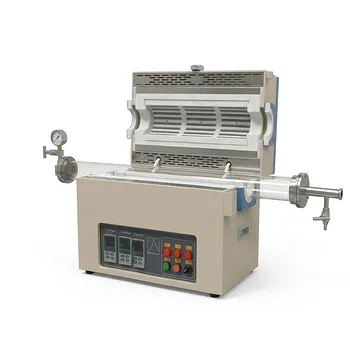
1200°C Three Zone Split Tube Furnace with 18 Inch Heating Length and Vacuum Flanges
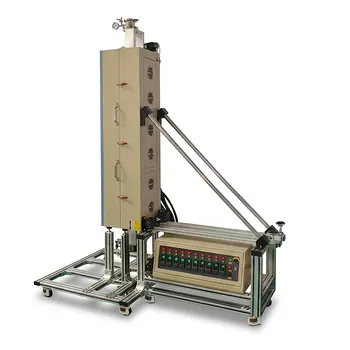
1200°C 10-Zone Split Tube Furnace with Horizontal and Vertical Mounting for Multi-Zone Thermal Gradients and Large Diameter Material Processing
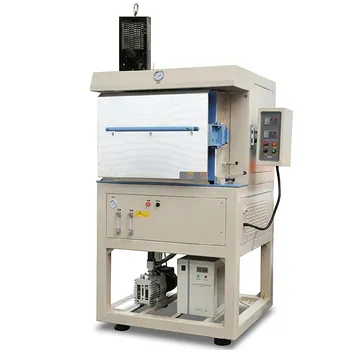
1200C Hydrogen Atmosphere Box Furnace with 5 Heated Sides and 64L Chamber

High Temperature 1700C Tube Furnace with High Vacuum Turbomolecular Pump System and Multi Channel Mass Flow Controller Gas Mixer

1700C Hydrogen Gas Tube Furnace with 60mm Alumina Process Tube and Integrated Hydrogen Safety Detector

High Temperature 1700C Vertical Tube Furnace for Powder Spherification and Material Sintering

High Temperature 1700C Six Zone Split Tube Furnace with Alumina Tube and Water Cooled Flanges
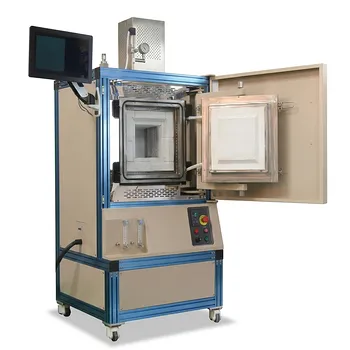
High Temperature Hydrogen Atmosphere Box Furnace 1650C Max Reducing Environment Material Synthesis System 8x8x8 Chamber
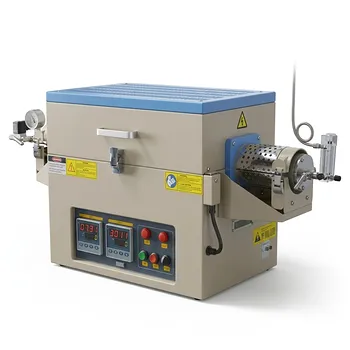
1100C Dual Zone Hydrogen Gas Tube Furnace with Quartz Tube and Integrated H2 Leak Detection System

1800C High Temperature Compact Vacuum Tube Furnace with 60mm OD Alumina Tube and Kanthal MoSi2 Heating Elements

High Temperature 1700C Benchtop Tube Furnace with 5 Inch Heating Zone High Purity Alumina Tube and Vacuum Sealing Flanges

High Temperature Automated 5 Inch Tube Furnace for Autonomous Material Research and Advanced Laboratory R&D