What is the purpose of using a tube furnace for low-temperature passivation of Cu-Mo2C nanocatalysts? Preserve Activity.
Updated 6 months ago
The primary purpose of using a tube furnace for low-temperature passivation is to prevent the uncontrolled oxidation and deactivation of $Cu-Mo_2C$ nanocatalysts. By introducing a precise, low-concentration oxygen flow ($1% O_2$ in $N_2$) at room temperature, the furnace facilitates the growth of a thin, dense protective oxide layer. This layer stabilizes the reactive catalyst for safe storage and transfer while ensuring its catalytic activity can be easily recovered through in-situ reduction before use.
Core Takeaway: Low-temperature passivation in a tube furnace creates a controlled "sacrificial" oxide skin that protects highly reactive nanocatalysts from atmospheric degradation without permanently compromising their performance.
Preserving Highly Reactive Catalyst Surfaces
The Vulnerability of $Cu-Mo_2C$
$Cu-Mo_2C$ nanocatalysts synthesized via carbothermal reduction possess high surface energy and reactivity. When exposed to ambient air, these materials are susceptible to rapid, exothermic oxidation, which can irreversibly destroy the active sites and the structural integrity of the catalyst.
The Role of Controlled Oxidation
Rather than allowing spontaneous combustion in air, the tube furnace allows for intentional, slow-growth oxidation. By regulating the oxygen concentration to a mere $1%$, the furnace ensures that the resulting oxide layer is thin and uniform rather than thick and porous.
Maintaining Structural Integrity
This passivation step is critical for maintaining the nanoscale distribution of active components. Without this controlled environment, the heat generated by rapid oxidation could lead to sintering or agglomeration, reducing the available surface area for future reactions.
The Advantage of Tube Furnace Precision
Precise Atmosphere Control
A tube furnace provides a sealed environment that is essential for switching between inert, reducing, and oxidative gases. This allows researchers to transition from the high-temperature synthesis phase to the room-temperature passivation phase without exposing the sample to contaminants.
Uniformity of the Protective Layer
Because the furnace provides a stable temperature zone and consistent gas flow, the passivation layer forms evenly across the entire catalyst batch. This uniformity is vital for ensuring that the catalyst performs predictably when it is eventually reactivated.
Facilitating Easy Recovery
The oxide layer formed under these specific conditions is designed to be reversible. In-situ reduction within the same tube furnace—or another reactor—can easily remove this "skin," restoring the catalyst to its active metallic or carbide state just before the reaction begins.
Understanding the Trade-offs
The Risk of Excessive Passivation
If the oxygen concentration is too high or the exposure time is too long, the oxide layer can become too thick or chemically stable. This makes the subsequent recovery of catalytic activity through reduction more difficult and energy-intensive.
Balancing Stability and Activity
While passivation ensures storage stability, it introduces an additional step in the catalyst lifecycle. Users must carefully calibrate the reduction parameters (temperature and time) post-storage to ensure they do not cause metal sintering while trying to remove the oxide layer.
Technical Limitations
Tube furnaces are ideal for precise, small-to-medium scale batches, but achieving the same level of atmosphere uniformity can be challenging in larger industrial-scale reactors. Maintaining a strictly leak-proof environment is essential to prevent accidental high-concentration oxygen exposure.
How to Apply Passivation to Your Workflow
Making the Right Choice for Your Goal
- If your primary focus is long-term storage: Utilize a tube furnace to apply a $1% O_2/N_2$ passivation layer at room temperature to ensure the catalyst remains stable for weeks or months.
- If your primary focus is maximum initial activity: Perform the catalytic reaction immediately after synthesis via in-situ methods, bypassing passivation to avoid the potential for incomplete reduction later.
- If your primary focus is material characterization: Use a tube furnace for passivation to allow for the safe transfer of the nanocatalysts to external analysis tools like TEM or XPS without the sample burning or changing state during transit.
The tube furnace serves as the definitive tool for managing the delicate transition between the highly reactive synthetic state and the stable, transportable state of advanced nanocatalysts.
Summary Table:
| Feature | Benefit | Outcome |
|---|---|---|
| Precise Gas Regulation | Controlled 1% $O_2$ in $N_2$ flow | Prevents spontaneous combustion and deactivation |
| Sealed Environment | Inert/oxidative gas switching | Maintains structural integrity and purity |
| Uniform Atmosphere | Even growth of protective oxide layer | Ensures predictable and easy in-situ reactivation |
| Thermal Stability | Consistent room-temperature processing | Avoids sintering or agglomeration of nanocatalysts |
Optimize Your Catalyst Research with THERMUNITS
As a leading manufacturer of high-temperature laboratory equipment for material science and industrial R&D, THERMUNITS offers the precision you need for delicate processes like low-temperature passivation.
Our comprehensive range of thermal processing solutions—including Tube, Vacuum, Atmosphere, and Muffle furnaces, CVD/PECVD systems, and Rotary Kilns—is designed to deliver the exact atmosphere and temperature control required for advanced nanocatalyst synthesis and protection. Whether you are working on VIM (Vacuum Induction Melting) or precision dental applications, our equipment ensures your materials maintain peak performance.
Ready to enhance your lab's thermal processing capabilities? Contact our expert team today to find the perfect solution!
References
- Xueyuan Pan, Jianchun Jiang. Preparation of nano Cu-Mo2C interface supported on ordered mesoporous biochar of ultrahigh surface area for reverse water gas shift reaction. DOI: 10.1007/s42773-024-00392-5
Mentioned Products
- 1200C Max Compact Auto-Sliding PECVD Furnace with 2 Inch Tube and Vacuum Pump
- Two Zone Rotary Tube Furnace for Powder CVD Coating and Core Shell Material Synthesis 1100C
- Vertical Openable Tube Furnace 0-1700c High Temperature Laboratory System for CVD and Vacuum Heat Treatment
- 1200C Dual Temperature Zone Slidable Tube Furnace for 2D Material Growth and TCVD Synthesis
- 5 Inch Three Zone Rotary Tube Furnace with Integrated Gas Delivery System and 1200C Capability for Advanced Material CVD Processing
People Also Ask
- How do CVD furnace cooling rates influence graphene-platinum residual stress? Optimize Material Quality
- What role does hydrogen play in PECVD films for solar? Enhancing Passivation and Efficiency
- How PECVD Creates Oxygen Vacancies in Co3O4 Nanosheets: A Guide to Precision Defect Engineering
- What is the primary technical difference between PECVD and conventional thermal CVD? Understanding Energy & Temperature
- What are the specific advantages of using PECVD compared to thermal CVD? Low-Temp Solutions for Thin-Film Growth

Tech Team · ThermUnits
Last updated on Apr 14, 2026
Related Products
1200C Max Compact Auto-Sliding PECVD Furnace with 2 Inch Tube and Vacuum Pump
Two Zone Rotary Tube Furnace for Powder CVD Coating and Core Shell Material Synthesis 1100C
Vertical Openable Tube Furnace 0-1700c High Temperature Laboratory System for CVD and Vacuum Heat Treatment
1200C Dual Temperature Zone Slidable Tube Furnace for 2D Material Growth and TCVD Synthesis
5 Inch Three Zone Rotary Tube Furnace with Integrated Gas Delivery System and 1200C Capability for Advanced Material CVD Processing
5 Inch Rotary Tube Furnace with Automatic Feeding and Receiving System 1200C Three Zone CVD Powder Processing
High Temperature 1800C Atmosphere Tube Furnace for CVD Research and Vacuum Sintering Precision Heat Treatment
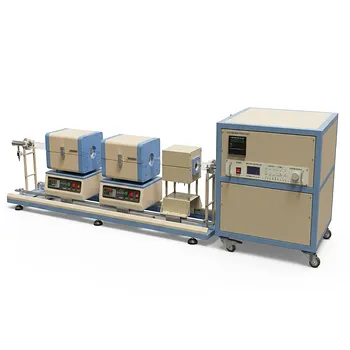
1200C Dual Sliding Tube Furnace with Dual Tubes and Flanges for PECVD Processes
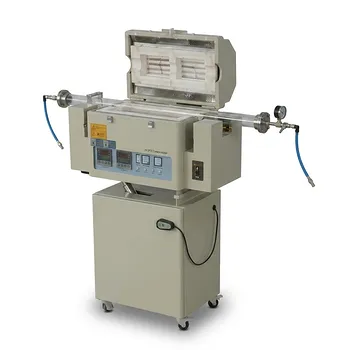
Double Temperature Revolving Tube Furnace with Precision Rotation and Adjustable Inclination for Advanced Material Research
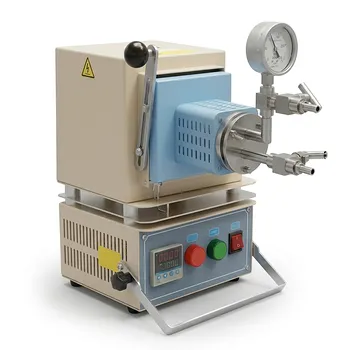
Compact Hybrid Muffle and Tube Furnace for 1000C Controlled Atmosphere Laboratory Material Sintering
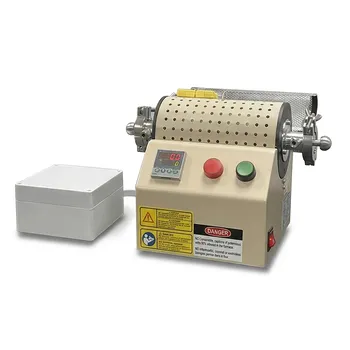
1000C Mini Tube Furnace with 20mm Quartz Tube and Vacuum Flanges for Material Science Research and Controlled Atmosphere Small Sample Processing
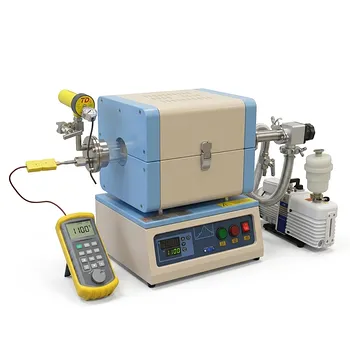
Compact Split Tube Furnace with Insertable Temperature Calibrator and Integrated Vacuum System
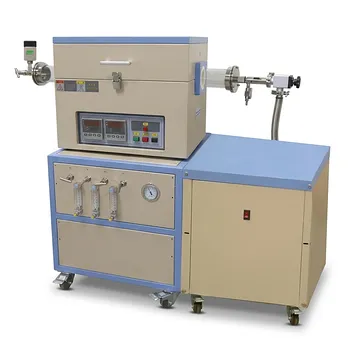
Dual Zone Quartz Tube Furnace with 80mm Diameter 1200C Max Temperature 3 Channel Gas Mixer and Vacuum Pump System
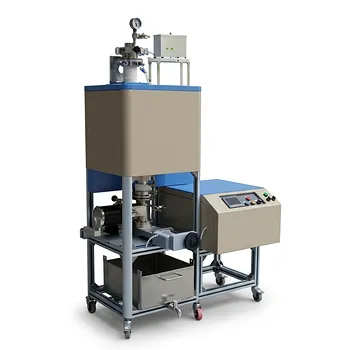
High Temperature 1700C Vertical Tube Furnace for Powder Spherification and Material Sintering
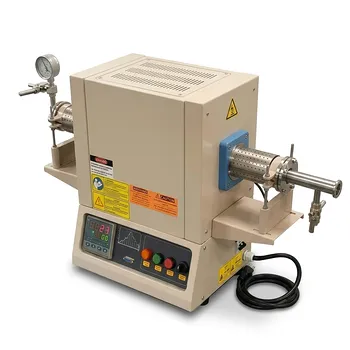
Compact High Temperature 1600C Tube Furnace with 50mm Alumina Tube and Vacuum Flanges for Material Sintering
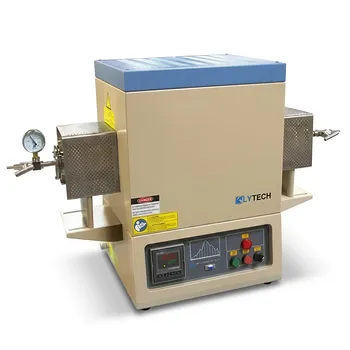
1800C High Temperature Compact Vacuum Tube Furnace with 60mm OD Alumina Tube and Kanthal MoSi2 Heating Elements
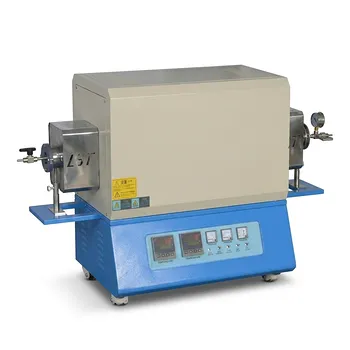
High Temperature Dual Zone Vacuum Tube Furnace for Material Research and CVD Processing
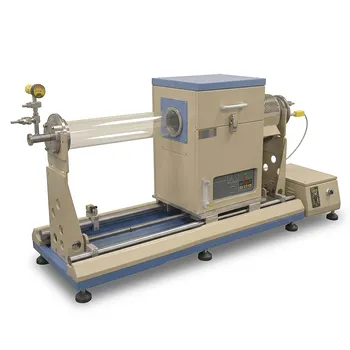
Rapid Thermal Processing Sliding Tube Furnace with 4 Inch OD Quartz Tube and 900C IR Heating
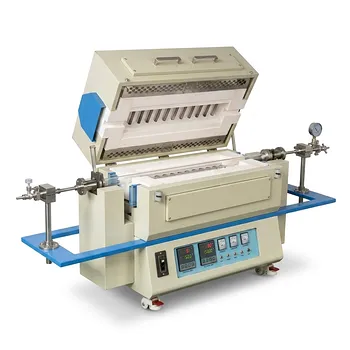
High Temperature Dual Zone Rotating Tube Furnace 1500C Silicon Carbide Heating for Advanced Material Synthesis