How do CVD furnace cooling rates influence graphene-platinum residual stress? Optimize Material Quality
Updated 3 months ago
The cooling rate of a Chemical Vapor Deposition (CVD) furnace is a decisive factor in determining the mechanical integrity and residual stress of graphene-coated platinum. Fast cooling traps the material in a high-energy state of compressive stress, whereas slow cooling facilitates stress relaxation through thermal annealing. This choice directly dictates whether the resulting film is prone to structural defects or remains stable and uniform.
Core Takeaway: The transition from growth temperature to room temperature governs the final stress state; fast cooling induces high compressive stress and material pileup, while slow cooling promotes stress release and prevents abnormal deformation by allowing the material to reach equilibrium.
The Mechanics of Stress Development
Thermal Expansion Coefficient (CTE) Mismatch
Graphene and metallic substrates, such as platinum or copper, possess vastly different coefficients of thermal expansion. As the furnace cools, the metal substrate contracts significantly more than the graphene lattice.
The Induction of Compressive Stress
Because the graphene is anchored to the substrate, the substrate's contraction forces the graphene into a state of lateral compression. Without an adequate cooling strategy, this stress remains "locked" within the interface, compromising the film's stability.
Carbon Segregation Dynamics
In platinum-based CVD, carbon atoms segregate to the surface during the cooling phase. Slow cooling, combined with a reduced carbon supply, limits the thickness of these layers, resulting in a more controlled and uniform surface morphology.
Fast Cooling: The "Freeze" Effect
Trapping Residual Stress
Fast cooling is often achieved by rapidly moving the sample rod out of the heating zone. This process "freezes" the segregated carbon layers before they can reach a low-energy state, resulting in intense residual compressive stress.
Physical Manifestation: Material Pileup
A high-stress state manifests physically during mechanical characterization. When subjected to indentation, the trapped compressive energy causes material pileup—an abnormal accumulation of material around the indentation site that indicates structural instability.
Increased Defect Density
Rapid temperature drops prevent the lattice from adjusting to the shrinking substrate. This often leads to an increase in cracks and wrinkles, which can degrade the electrical performance of the graphene after it is transferred to a final device.
Slow Cooling: The Annealing Advantage
Facilitating In-Situ Annealing
Allowing the sample to cool gradually within the furnace environment acts as an in-situ annealing process. This provides the thermal energy and time necessary for the carbon atoms to reorganize and release accumulated stress.
Achieving Stress Equilibrium
A controlled cooling rate—often optimized at approximately 50°C per minute—allows the graphene to accommodate the substrate's contraction. This significantly reduces the likelihood of "abnormal pileup" and ensures a thinner, more stable surface layer.
Enhancing Film Integrity
By mitigating thermal stress, slow cooling preserves the structural integrity of the film. This results in fewer wrinkles and a more continuous layer, which is critical for maintaining high electron mobility in electronic applications.
Understanding the Trade-offs
Throughput vs. Material Quality
Fast cooling is frequently used to increase production throughput in laboratory settings. However, the trade-off is a high-stress film that may fail during subsequent processing or transfer steps.
Precision in Carbon Management
Slow cooling requires meticulous control of the carbon source supply. If the carbon flow is not properly reduced during the cooling phase, it can lead to uncontrolled multi-layer growth or undesired thickness variations.
Substrate-Specific Responses
While the principle of CTE mismatch applies broadly, different substrates (like platinum vs. copper) have different carbon solubilities. The cooling rate must be specifically tuned to the solubility profile of the substrate to avoid excessive segregation.
How to Apply This to Your Process
When designing your CVD cooling protocol, align your cooling rate with your primary objective for the graphene film.
- If your primary focus is mechanical stability and indentation resistance: Utilize a slow cooling rate within the furnace to allow for total stress relaxation and the elimination of material pileup.
- If your primary focus is minimizing structural defects like wrinkles: Maintain a controlled cooling trajectory of approximately 50°C per minute to balance substrate contraction with graphene lattice adjustment.
- If your primary focus is high-throughput production: Be prepared to manage high levels of residual compressive stress and potential surface deformations that may arise from fast cooling.
Mastering the cooling trajectory is essential for transforming a raw CVD growth into a high-performance, low-stress functional material.
Summary Table:
| Feature | Fast Cooling | Slow Cooling (Recommended) |
|---|---|---|
| Stress State | High Compressive Stress | Stress Relaxation / Equilibrium |
| Physical Effect | Material Pileup & Deformity | Smooth, Uniform Surface |
| Microstructure | High Defect/Wrinkle Density | Enhanced Structural Integrity |
| Process Benefit | Higher Throughput | In-situ Annealing Effect |
| Cooling Rate | Rapid (Sample Removal) | Optimized (~50°C/min) |
Elevate Your Material Research with THERMUNITS Precision Cooling
Achieving the perfect balance between cooling rates and residual stress is critical for high-performance graphene and material science R&D. As a leading manufacturer of high-temperature laboratory equipment, THERMUNITS offers specialized CVD/PECVD systems, tube furnaces, and vacuum furnaces designed for precise thermal trajectory control.
From Muffle and Atmosphere furnaces to advanced Vacuum Induction Melting (VIM) and Hot Press furnaces, our thermal processing solutions ensure your heat treatment is stable, repeatable, and optimized for superior film integrity.
Ready to minimize defects and master your CVD process?
Contact our technical experts today to discuss your specific laboratory requirements!
References
- Jad Yaacoub, Sameh Tawfick. Graphene‐Induced Surface Softening and Nanostructure Evolution of Platinum Foils. DOI: 10.1002/adem.202401053
Mentioned Products
- Split Chamber CVD Tube Furnace with Vacuum Station Chemical Vapor Deposition System Machine
- High Temperature 1700C Tube Furnace with High Vacuum Turbomolecular Pump System and Multi Channel Mass Flow Controller Gas Mixer
- Vertical Openable Tube Furnace 0-1700c High Temperature Laboratory System for CVD and Vacuum Heat Treatment
- 1200C Max Dual Sliding Tube Furnace with 50 mm Tube Flanges for CVD
- 5 Inch Rotary Tube Furnace with Automatic Feeding and Receiving System 1200C Three Zone CVD Powder Processing
People Also Ask
- Why is a Tube Furnace typically utilized for CVD? Achieve Precision in Graphene and 2D Material Synthesis
- What is the function of CVD furnaces in graphene prep? Enhancing Photodetector Charge Transport
- Why use CVD and a tube furnace for Pd3P0.95/NC catalyst phosphidation? Ensure high phase purity and performance.
- CVD Tube Furnace Advantages for Pd-P Catalyst Durability: Precision Control for 40,000+ Cycles
- How does a Chemical Vapor Deposition (CVD) tube furnace facilitate synchronized nitridation? Precision Nano-Engineering.

Tech Team · ThermUnits
Last updated on Jun 02, 2026
Related Products
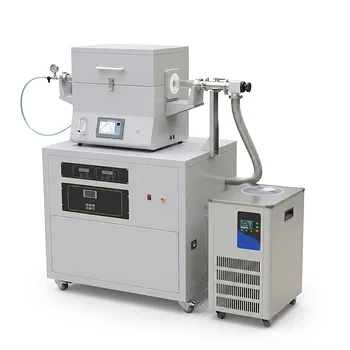
Split Chamber CVD Tube Furnace with Vacuum Station Chemical Vapor Deposition System Machine

High Temperature 1700C Tube Furnace with High Vacuum Turbomolecular Pump System and Multi Channel Mass Flow Controller Gas Mixer
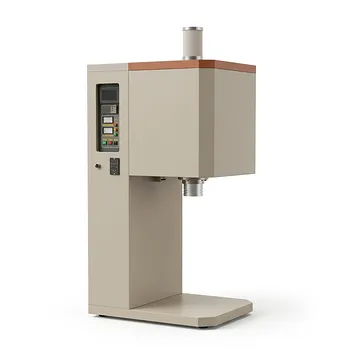
Vertical Openable Tube Furnace 0-1700c High Temperature Laboratory System for CVD and Vacuum Heat Treatment
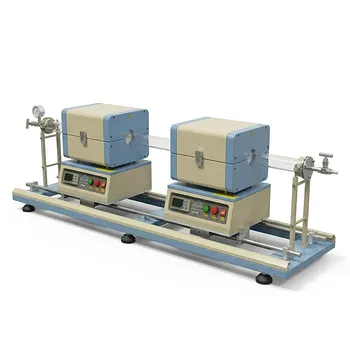
1200C Max Dual Sliding Tube Furnace with 50 mm Tube Flanges for CVD
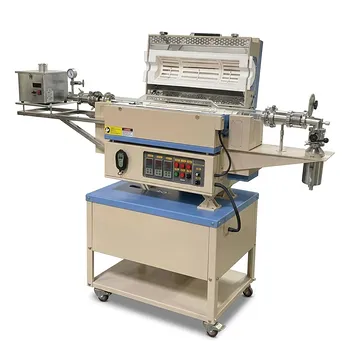
5 Inch Rotary Tube Furnace with Automatic Feeding and Receiving System 1200C Three Zone CVD Powder Processing
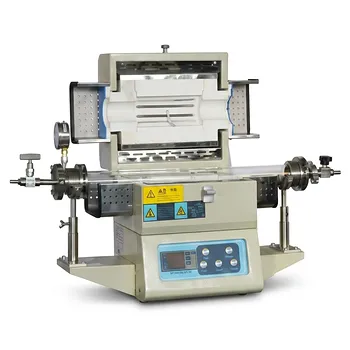
High Temperature 1200C Split Tube Furnace for CVD Research and Vacuum Atmosphere Heat Treatment
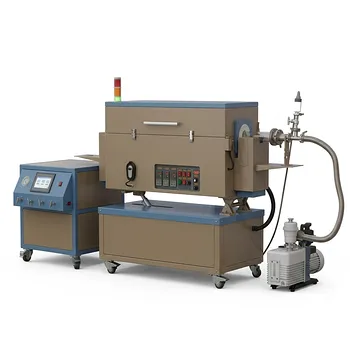
5 Inch Three Zone Rotary Tube Furnace with Integrated Gas Delivery System and 1200C Capability for Advanced Material CVD Processing
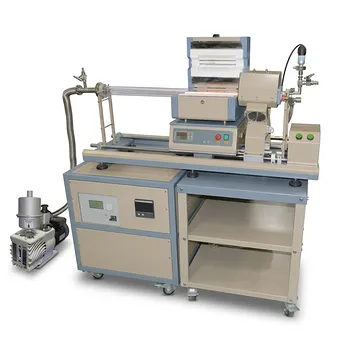
1200C Max Compact Auto-Sliding PECVD Furnace with 2 Inch Tube and Vacuum Pump
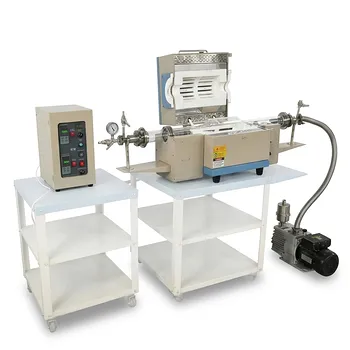
Two Zone Rotary Tube Furnace for Powder CVD Coating and Core Shell Material Synthesis 1100C
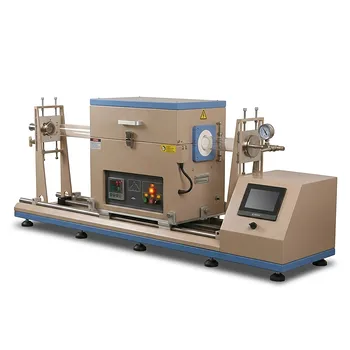
1200C Sliding Tube Furnace for Rapid Thermal Processing and CVD Graphene Growth with 100mm OD Capacity
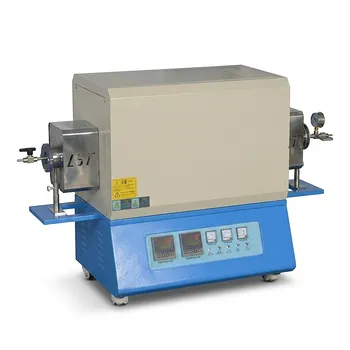
High Temperature Dual Zone Vacuum Tube Furnace for Material Research and CVD Processing
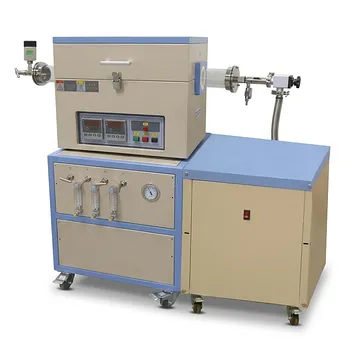
Dual Zone Quartz Tube Furnace with 80mm Diameter 1200C Max Temperature 3 Channel Gas Mixer and Vacuum Pump System
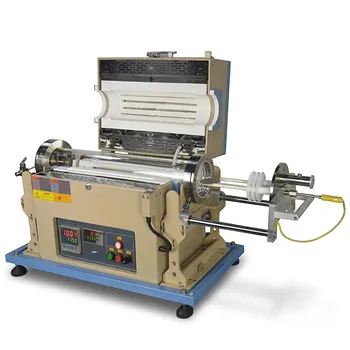
1200°C High Temperature 4 Inch Tube Furnace with Sliding Flange for CVD Systems
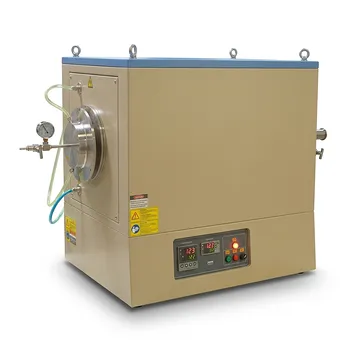
1100°C Large Diameter Quartz Tube Furnace with 24 Inch Heating Zone and Water Cooled Flanges

High Temperature 1700C Benchtop Tube Furnace with 5 Inch Heating Zone High Purity Alumina Tube and Vacuum Sealing Flanges
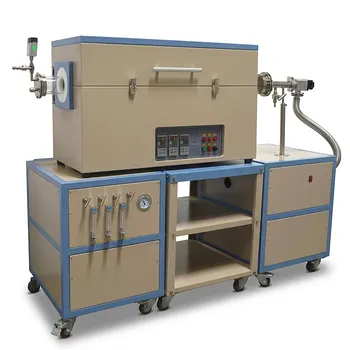
Three Zone Quartz Tube Furnace with 3 Channel Gas Mixer Vacuum Pump and Anti Corrosive Vacuum Gauge
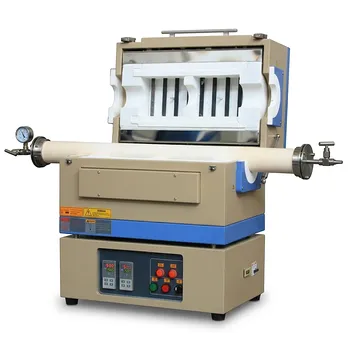
1500C Two Zone Split Tube Furnace with Vacuum Flange and 80mm Alumina Tube
Four Zone Tube Furnace 1100C with 600mm Large Diameter Quartz Tube and Vacuum Flanges
1000C Mini Tube Furnace with 20mm Quartz Tube and Vacuum Flanges for Material Science Research and Controlled Atmosphere Small Sample Processing