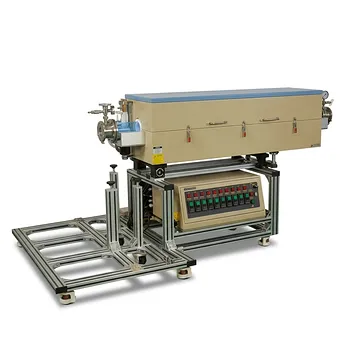
What is the purpose of using an atmosphere tube furnace for the carbonization treatment of cathode sheets? Expert Guide
Updated 3 months ago
The atmosphere tube furnace is the critical vessel for transforming non-conductive binders into a high-performance electrical network while simultaneously engineering catalytic interfaces. It provides the strictly inert environment necessary for the thermal decomposition of the PVP binder at 500°C to form a conductive carbon network and facilitates an in-situ reaction between sodium sulfide and the copper foil's oxide layer to create cuprous sulfide catalytic sites.
The primary role of the atmosphere tube furnace in cathode carbonization is to provide a controlled, oxygen-free environment that enables both the pyrolysis of organic binders into conductive carbon and the chemical modification of the current collector interface. This dual-function process is essential for establishing stable electrical pathways and activating self-refining mechanisms within the electrode.
Structural Transformation of the Electrode
Thermal Decomposition of the PVP Binder
Cathode sheets often utilize Polyvinylpyrrolidone (PVP) as a binder to hold active materials in place during fabrication. Within the tube furnace, the material is heated to 500°C, causing the PVP to undergo thermal decomposition. This process strips away non-carbon components, leaving behind a stable carbon residue.
Establishing a Continuous Conductive Network
As the binder decomposes, it transforms into a continuous conductive carbon network. This network acts as a bridge between active material particles, significantly lowering the internal resistance of the cathode. Without this carbonization step, the binder remains an electrical insulator, hindering battery performance.
Increasing Elemental Carbon Content
The furnace environment facilitates the removal of volatile impurities and oxygen-containing functional groups. This increases the elemental carbon content of the electrode structure. The resulting carbon skeleton provides the necessary surface area and structural integrity for long-term cycling.
Engineering the Current Collector Interface
Facilitating In-Situ Chemical Reactions
The atmosphere tube furnace enables precise in-situ chemical reactions between the electrode's chemical components and the current collector. Specifically, it allows sodium sulfide to react directly with the native oxide layer found on copper foil. This reaction is only possible when the environment is strictly controlled to prevent competing oxidation from the air.
Generation of Cuprous Sulfide Catalytic Sites
A key outcome of this thermal treatment is the generation of cuprous sulfide ($Cu_2S$). These sites are formed at the interface of the copper foil and the active material. They serve as central catalytic points for the self-refining mechanism of sodium sulfide, which is critical for the chemical stability of the battery.
Protection of the Current Collector
By maintaining an inert atmosphere (typically using high-purity nitrogen or argon), the furnace prevents the copper foil from oxidizing further. Uncontrolled oxidation at high temperatures would create a resistive layer of copper oxide. This would degrade the electrical contact between the current collector and the active material.
The Necessity of Precise Atmosphere Control
Preventing Oxidative Combustion
In a standard air environment, carbon materials and organic binders would undergo oxidative combustion at 500°C, effectively turning the cathode components into ash. The tube furnace uses continuous gas purging to ensure an oxygen-free zone. This ensures the material undergoes pyrolysis (thermal breakdown without oxygen) rather than burning.
Achieving Temperature Uniformity
The design of a tube furnace ensures a uniform temperature field across the length of the cathode sheet. This uniformity is vital for ensuring that the entire electrode has consistent conductive properties. Variations in temperature would lead to "hot spots" or areas of poorly carbonized binder, resulting in uneven current distribution.
Multi-Stage Heating and PID Control
Modern tube furnaces utilize PID control systems to manage heating rates and dwell times precisely. This prevents thermal overshoot, which could damage the delicate microporous structure of the carbon or the thin copper current collector. Controlled cooling is equally important to prevent structural cracking due to thermal shock.
Understanding the Trade-offs
Equipment Complexity vs. Material Quality
While a standard muffle furnace is simpler, it cannot offer the hermetic sealing required for high-purity inert environments. The tube furnace's superior sealing is necessary for high-performance cathodes, but it limits the volume of material that can be processed at once.
Gas Flow Rate Sensitivity
The rate of inert gas flow (e.g., 0.5 L/min) must be carefully balanced. If the flow is too low, evolved gases from the decomposing binder may linger and cause unintended side reactions. If the flow is too high, it may cause temperature fluctuations across the tube, leading to inconsistent carbonization.
Temperature Constraints
Processing at 500°C is a balance between sufficient carbonization and the thermal stability of the current collector. While higher temperatures (e.g., 900°C) might improve graphitization, they risk melting or weakening the copper foil, which has a melting point of approximately 1085°C but softens much earlier.
How to Apply This to Your Project
Recommendations Based on Goals
- If your primary focus is maximizing electrical conductivity: Ensure the furnace maintains a strictly inert atmosphere with high-purity nitrogen to allow the PVP binder to fully transform into a carbon network without oxidation.
- If your primary focus is enhancing catalytic activity: Monitor the interface reaction between the sulfide and the copper foil oxide layer closely, as the formation of $Cu_2S$ sites is highly dependent on achieving the 500°C threshold.
- If your primary focus is structural integrity of the current collector: Use a multi-stage heating program with a PID controller to avoid temperature spikes that could warp or embrittle the thin copper foil.
The atmosphere tube furnace is an indispensable tool that converts a mixture of precursors into a functionally integrated, electrochemically active electrode.
Summary Table:
| Key Objective | Mechanism | Performance Impact |
|---|---|---|
| Binder Carbonization | Pyrolysis of PVP at 500°C | Forms continuous conductive carbon network |
| Interface Engineering | In-situ reaction with Cu foil | Generates $Cu_2S$ catalytic sites for stability |
| Oxidation Control | High-purity N2/Ar purging | Prevents copper degradation and material combustion |
| Structural Integrity | PID-controlled heating | Ensures temperature uniformity and avoids cracking |
Advance Your Battery Research with THERMUNITS
As a leading manufacturer of high-temperature laboratory equipment for material science and industrial R&D, THERMUNITS provides the precision tools needed for advanced electrode processing. Our comprehensive range includes high-performance Atmosphere and Tube Furnaces, Vacuum, Muffle, Rotary, and Hot Press furnaces, as well as CVD/PECVD systems, Dental Furnaces, electric rotary kilns, vacuum induction melting furnaces (VIM), and Thermal Elements.
Whether you are carbonizing cathode sheets, engineering catalytic interfaces, or developing next-generation energy storage, our equipment ensures the exact thermal uniformity and oxygen-free environments required for breakthroughs.
Ready to optimize your heat treatment process?
Contact THERMUNITS Today for a Custom Solution
References
- Suwan Lu, Xiaodong Wu. Design towards recyclable micron-sized Na2S cathode with self-refinement mechanism. DOI: 10.1038/s41467-024-54316-9
Mentioned Products
- Vertical 1700C Vacuum and Atmosphere Tube Furnace with 80mm Alumina Tube
- 1750°C High Temperature Benchtop Vacuum Atmosphere Tube Furnace with Kanthal Super 1800 Heating Elements and 60mm Alumina Processing Tube
- 1200C Hybrid Muffle and Tube Furnace for Material Research with Dual Atmosphere Control Quartz Tubes
- Compact Hybrid Muffle and Tube Furnace for 1000C Controlled Atmosphere Laboratory Material Sintering
- Three Zone Tube Furnace with 11 Inch or 15 Inch Quartz Tube and Hinged Flanges for Vacuum Atmosphere Heat Treatment
People Also Ask
- How is an industrial-grade vertical tube furnace utilized in smelting leaching residues? Enhance Metal Recovery Efficiency
- What is the function of a laboratory-grade vertical tube furnace in fast pyrolysis? Optimize Composite Research.
- How does a vertical tube furnace facilitate thermoelectric alloy melting? Precision synthesis for material homogeneity.
- Why is a thermocouple sensor indispensable for monitoring the vertical tube furnace during gallium oxide nanowire production? Optimize VLS Growth
- What are the advantages of a Vertical Tube Furnace for iron coke testing? | Achieve High-Precision CRI Analysis

Tech Team · ThermUnits
Last updated on Jun 03, 2026
Related Products

Vertical 1700C Vacuum and Atmosphere Tube Furnace with 80mm Alumina Tube
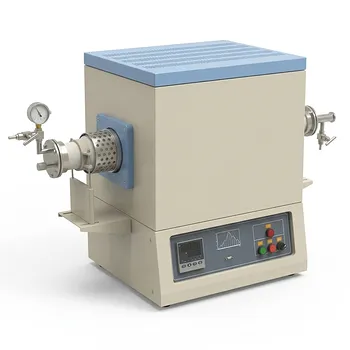
1750°C High Temperature Benchtop Vacuum Atmosphere Tube Furnace with Kanthal Super 1800 Heating Elements and 60mm Alumina Processing Tube
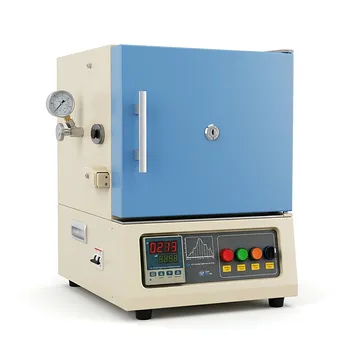
1200C Hybrid Muffle and Tube Furnace for Material Research with Dual Atmosphere Control Quartz Tubes
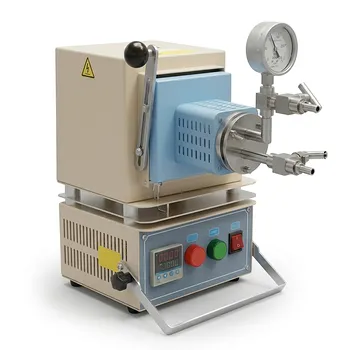
Compact Hybrid Muffle and Tube Furnace for 1000C Controlled Atmosphere Laboratory Material Sintering
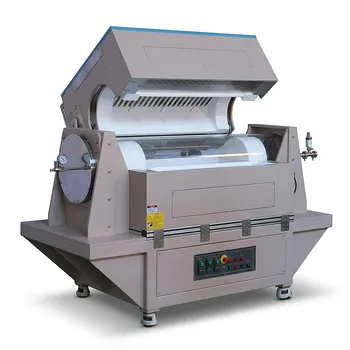
Three Zone Tube Furnace with 11 Inch or 15 Inch Quartz Tube and Hinged Flanges for Vacuum Atmosphere Heat Treatment
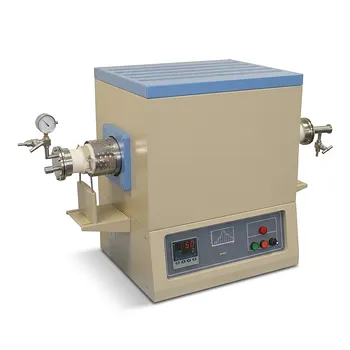
1700C High Temperature Alumina Tube Furnace with 18 Inch Heated Zone and Vacuum Sealing Flanges
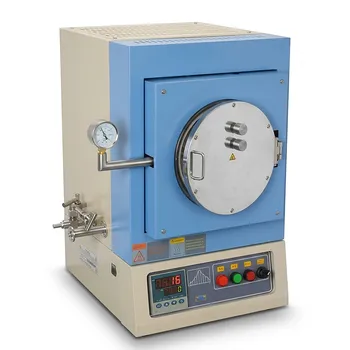
1100°C High Temperature Quartz Chamber Furnace 8 Inch OD with 7.6 Liter Capacity and Vacuum Atmosphere Capability
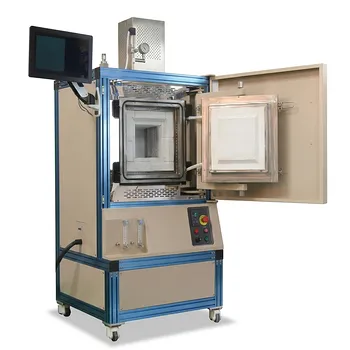
High Temperature Hydrogen Atmosphere Box Furnace 1650C Max Reducing Environment Material Synthesis System 8x8x8 Chamber
1200°C 5 Inch Vertical Quartz Tube Furnace with Stainless Steel Vacuum Flanges
High Temperature 1600C Split Tube Furnace Vacuum Flanges Valves Optional 60mm 80mm Alumina Tube

High Temperature 1700C Tube Furnace with High Vacuum Turbomolecular Pump System and Multi Channel Mass Flow Controller Gas Mixer
1100C Tube Furnace with Vacuum Flange and Programmable Temperature Controller for Material Science and Industrial Heat Treatment

High Temperature 1700C Vertical Tube Furnace for Powder Spherification and Material Sintering

Compact High Temperature 1600C Tube Furnace with 50mm Alumina Tube and Vacuum Flanges for Material Sintering
High Temperature 1700C Six Zone Split Tube Furnace with Alumina Tube and Water Cooled Flanges

1800C High Temperature Compact Vacuum Tube Furnace with 60mm OD Alumina Tube and Kanthal MoSi2 Heating Elements
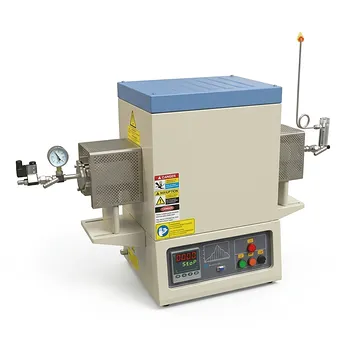
1700C Hydrogen Gas Tube Furnace with 60mm Alumina Process Tube and Integrated Hydrogen Safety Detector

High Temperature 1700C Benchtop Tube Furnace with 5 Inch Heating Zone High Purity Alumina Tube and Vacuum Sealing Flanges
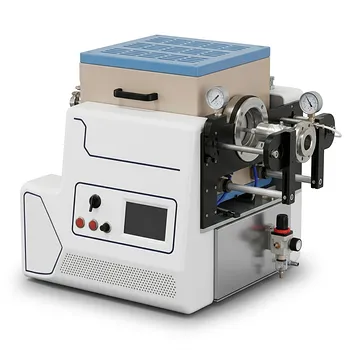
High Temperature Automated 5 Inch Tube Furnace for Autonomous Material Research and Advanced Laboratory R&D