What is the role of a high-temperature atmosphere furnace in Co/Co0.85Se@NC synthesis? Optimize Catalyst Performance
Updated 3 months ago
The high-temperature atmosphere furnace serves as the foundational reactor for the synthesis of Co/Co0.85Se@NC catalysts. It provides the strictly controlled thermal and chemical environment necessary to convert Zn/Co-MOF precursors into a structured, functional material. By managing both heat and gas flow, the furnace facilitates the simultaneous carbonization of organic ligands and the selenization of cobalt species into active polar sites.
Core Takeaway: The atmosphere furnace is the critical tool that dictates the catalyst's final morphology, ensuring that metal-organic precursors are transformed into a highly conductive, nitrogen-doped carbon matrix embedded with uniformly distributed cobalt selenide clusters.
The Transformation of Precursors into Carbon Frameworks
Pyrolysis of MOF Templates
The furnace provides the high-energy environment required to trigger the pyrolysis of Zn/Co-MOF precursors. During this process, organic ligands undergo thermal decomposition, stripping away non-carbon elements and leaving behind a stable carbon skeleton.
Engineering Nitrogen-Doped Porosity
By maintaining specific temperatures—often ranging from 800°C to over 1000°C—the furnace facilitates the integration of nitrogen into the carbon lattice. This results in a nitrogen-doped carbon (NC) framework, which is essential for increasing the specific surface area and improving the catalyst's overall electrical conductivity.
Achieving Atomic and Nanoscale Dispersion
The furnace's ability to maintain a constant temperature allows for the steady pyrolysis of organic components. This steady-state thermal treatment is vital for anchoring cobalt ions within the carbon matrix, preventing them from migrating and forming large, inactive clumps during the transition.
Driving the Selenization Process
Formation of Cobalt Selenide (Co0.85Se)
The atmosphere furnace enables the chemical reaction between cobalt species and selenium sources. Under high temperatures, the furnace facilitates the reduction and selenization of cobalt, transforming it into Co0.85Se polar sites which serve as the active dual-terminal binding sites in the final catalyst.
Maintaining an Oxygen-Free Environment
A primary role of the atmosphere furnace is the exclusion of oxygen through the use of high-purity inert gases like nitrogen (N2) or argon (Ar). This protective atmosphere prevents the oxidation of the carbon framework and the cobalt species, which would otherwise degrade the catalyst's performance and structural integrity.
Precise Control of Reaction Kinetics
By regulating the heating rate (e.g., 5°C/min) and the duration of the "soak" time at peak temperature, the furnace ensures the thorough transformation of precursors. This precision is necessary to reach the exact chemical state of Co/Co0.85Se, balancing the ratio of metallic cobalt to cobalt selenide.
Understanding the Trade-offs
Temperature vs. Surface Area
Higher temperatures generally improve the conductivity and crystallinity of the nitrogen-doped carbon. However, excessive heat can lead to the collapse of the porous structure, reducing the available surface area for catalytic reactions and potentially leading to the sintering of metal sites.
Atmosphere Purity and Oxidation Risks
The effectiveness of the furnace is heavily dependent on its sealing performance. Any leak that introduces trace amounts of oxygen at high temperatures can lead to the formation of unwanted metal oxides or the partial combustion of the carbon support, significantly lowering the catalyst's efficiency.
Selenium Vapor Management
During selenization, managing the flow of selenium vapor is a technical challenge. If the furnace temperature or gas flow is not perfectly synchronized, the selenization may be incomplete, or the selenium may deposit unevenly, resulting in a non-homogeneous distribution of active sites.
Strategic Recommendations for Catalyst Development
How to Apply This to Your Project
- If your primary focus is maximizing electrical conductivity: Prioritize higher carbonization temperatures (900°C–1000°C) to increase the graphitization of the nitrogen-doped carbon framework.
- If your primary focus is high active site density: Use a slower heating ramp rate and precise temperature "soaks" to ensure cobalt selenide clusters remain small and uniformly distributed without sintering.
- If your primary focus is structural stability: Ensure the furnace atmosphere is strictly inert (high-purity Argon is often preferred over Nitrogen for sensitive reductions) to prevent any oxidative degradation of the NC interface.
Mastering the thermal and atmospheric parameters of the furnace is the definitive factor in successfully bridging the gap between a MOF precursor and a high-performance Co/Co0.85Se@NC catalyst.
Summary Table:
| Process Phase | Furnace Role | Key Outcome |
|---|---|---|
| Carbonization | High-energy pyrolysis of MOF templates | Stable, nitrogen-doped carbon skeleton |
| Selenization | Thermal reduction and chemical reaction | Formation of active Co0.85Se polar sites |
| Atmosphere Control | Maintenance of inert environment (Ar/N2) | Prevention of oxidation and carbon degradation |
| Thermal Kinetics | Precise ramp rates and temperature soak | Uniform dispersion of active nanoparticles |
Elevate Your Catalyst Synthesis with THERMUNITS Precision
As a leading manufacturer of high-temperature laboratory equipment for material science and industrial R&D, THERMUNITS understands that the success of your Co/Co0.85Se@NC catalyst depends on flawless thermal control. We provide researchers with the tools necessary to bridge the gap between experimental precursors and high-performance materials.
Our comprehensive range of thermal processing solutions includes:
- Atmosphere and Vacuum Furnaces for oxygen-free processing.
- Tube and Rotary Furnaces for precise gas-flow dynamics.
- CVD/PECVD Systems for advanced thin-film and carbon growth.
- Hot Press and Muffle Furnaces for robust material densification.
- Induction Melting and Dental Furnaces for specialized applications.
Whether you are scaling up carbonization or mastering complex selenization, our equipment ensures uniform heating and reliable atmosphere integrity to prevent sintering and oxidation.
Ready to achieve superior heat treatment results in your laboratory? Contact THERMUNITS today to discuss your project requirements!
References
- Huifang Xu, Kwun Nam Hui. Interfacial “Double-Terminal Binding Sites” Catalysts Synergistically Boosting the Electrocatalytic Li<sub>2</sub>S Redox for Durable Lithium–Sulfur Batteries. DOI: 10.1021/acsnano.3c11903
Mentioned Products
- 1650C High Temperature Atmosphere Controlled Box Furnace with 65L Chamber for Advanced Material Sintering and Industrial Heat Treatment
- High Temperature Vertical Atmosphere Controlled Furnace with Automatic Bottom Loading and 1700°C Capacity for Advanced Material Research
- High Temperature Oxygen and Inert Atmosphere Controlled Furnace 8 Liter 1700C Sintering System for Advanced Materials RD
- 1750°C High Temperature Benchtop Vacuum Atmosphere Tube Furnace with Kanthal Super 1800 Heating Elements and 60mm Alumina Processing Tube
- High Temperature Hydrogen Atmosphere Box Furnace 1650C Max Reducing Environment Material Synthesis System 8x8x8 Chamber
People Also Ask
- What role does atmosphere control play in technical ceramics and glass? Master Material Purity and Precision
- What role does a high-temperature atmosphere furnace play in the direct electrochemical reduction of CO2? - Key Insights
- What is the role of a high-temperature box furnace in the solid-state synthesis of Europium-doped M3MgSi2O8 phosphors?
- What is the role of a high-temperature box furnace in Na3MnZr(PO4)3 synthesis? Engineering High-Performance NASICON.
- What physical conditions does a high-temperature atmosphere furnace provide for MXene exfoliation? Process Guide

Tech Team · ThermUnits
Last updated on Jun 03, 2026
Related Products
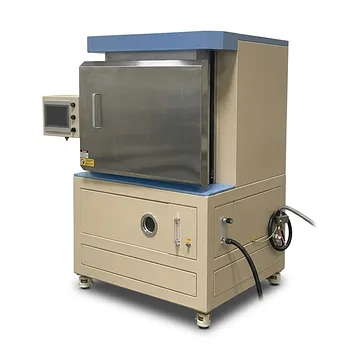
1650C High Temperature Atmosphere Controlled Box Furnace with 65L Chamber for Advanced Material Sintering and Industrial Heat Treatment
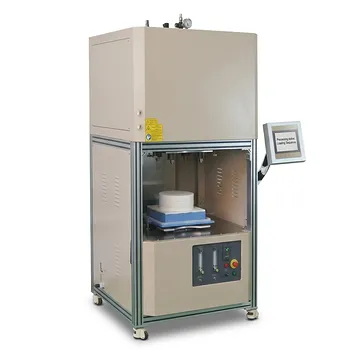
High Temperature Vertical Atmosphere Controlled Furnace with Automatic Bottom Loading and 1700°C Capacity for Advanced Material Research
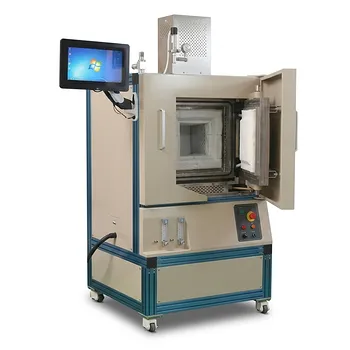
High Temperature Oxygen and Inert Atmosphere Controlled Furnace 8 Liter 1700C Sintering System for Advanced Materials RD

1750°C High Temperature Benchtop Vacuum Atmosphere Tube Furnace with Kanthal Super 1800 Heating Elements and 60mm Alumina Processing Tube
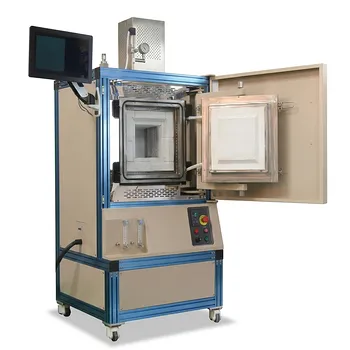
High Temperature Hydrogen Atmosphere Box Furnace 1650C Max Reducing Environment Material Synthesis System 8x8x8 Chamber
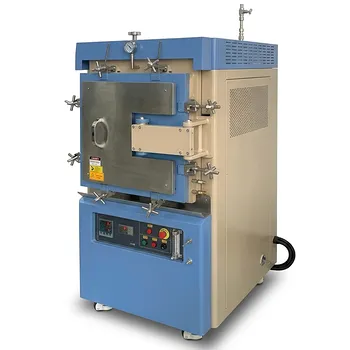
Atmosphere Controlled Muffle Furnace 1700C Maximum Temperature 80L High Capacity Vacuum Inert Gas Box Furnace
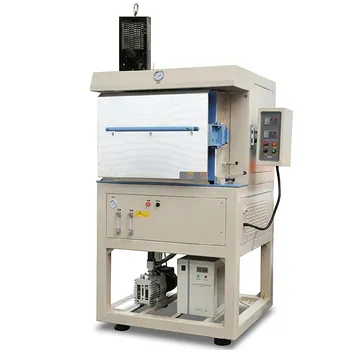
1200C Hydrogen Atmosphere Box Furnace with 5 Heated Sides and 64L Chamber
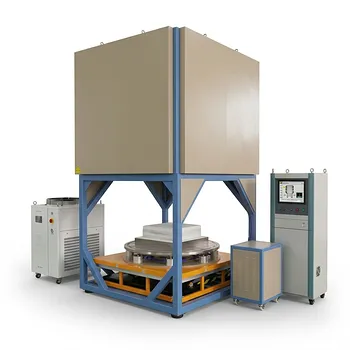
Bottom Loaded Inert Gas Atmosphere Box Furnace 1700C 1300C 216L Large Capacity Industrial Thermal Processing System
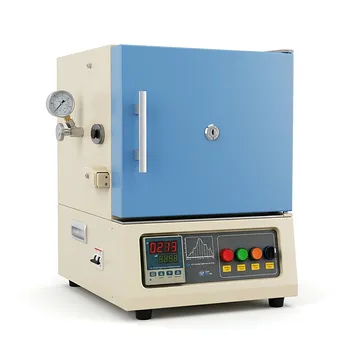
1200C Hybrid Muffle and Tube Furnace for Material Research with Dual Atmosphere Control Quartz Tubes
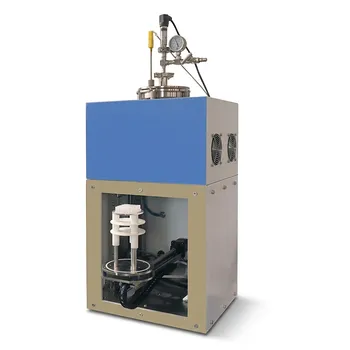
Rapid Thermal Processing RTP Atmosphere Controlled Bottom Loading Furnace 1100C High Throughput 50C per Second Heating Rate

Vertical 1700C Vacuum and Atmosphere Tube Furnace with 80mm Alumina Tube
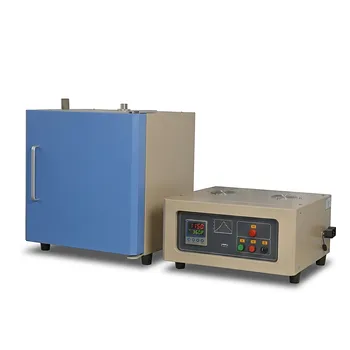
High Temperature Muffle Furnace with Alloy Chamber for Debinding and Sintering Applications
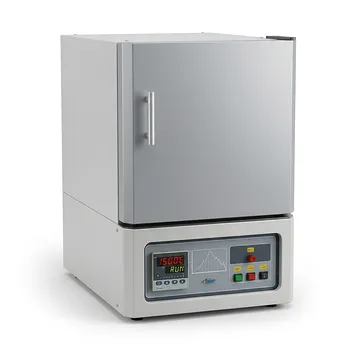
High Temperature 1500C Benchtop Muffle Furnace 3.6L Alumina Fiber Chamber Programmable Controller Sintering Annealing Carbonization Thermal Processing System
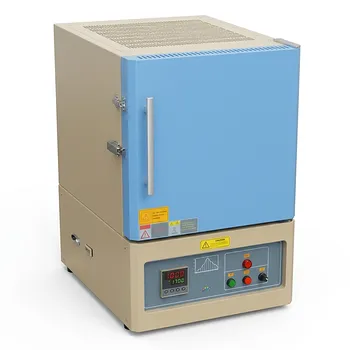
Large Bench Top 1700C High Temperature Muffle Furnace with 19L Chamber for Advanced Material Sintering and Annealing
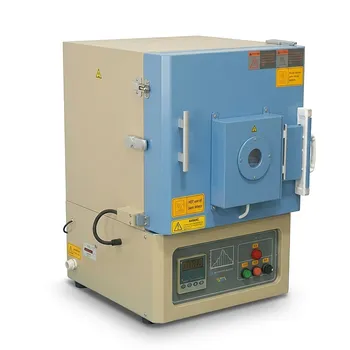
High Temperature Benchtop Muffle Furnace 1500C with 3.6L Chamber and Quartz Observation Window

High Temperature 1700C Tube Furnace with High Vacuum Turbomolecular Pump System and Multi Channel Mass Flow Controller Gas Mixer
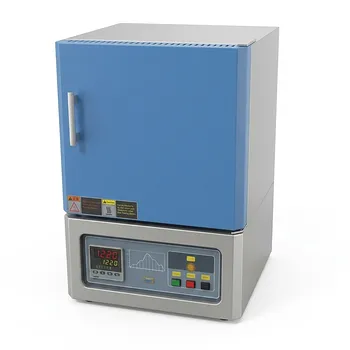
High Temperature Benchtop Muffle Furnace 1700C 10L Chamber Alumina Fiber Insulation MoSi2 Heating Elements
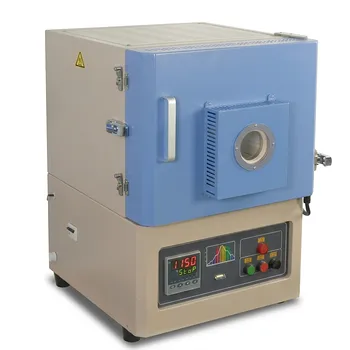
High Temperature Benchtop Muffle Furnace with Quartz Observation Window for Thermal Imaging and Material Analysis
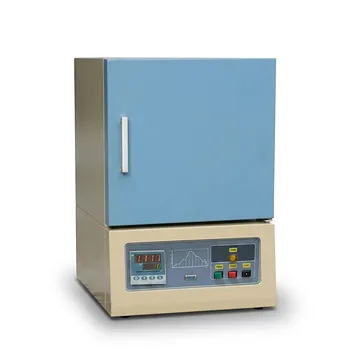
Ultra High Temperature Bench Top Muffle Furnace 1750C Sintering System with Kanthal Super Heating Elements and Precision Digital Control
