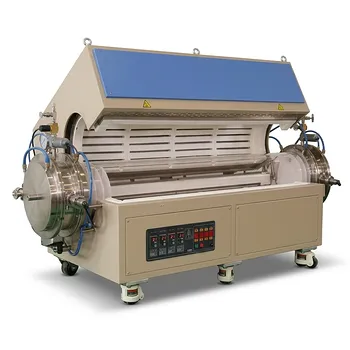
What is the role of a high-temperature tube furnace in the sintering process of lithium-ion battery cathode materials? Precision Synthesis for Better Storage
Updated 3 months ago
The high-temperature tube furnace is the fundamental reactor for cathode synthesis. It provides a hermetically sealed, precisely controlled thermal environment necessary to facilitate solid-state reactions between lithium salts and precursors. By managing heat and atmosphere, the furnace dictates the final crystal structure, phase purity, and electrochemical properties of the battery material.
A high-temperature tube furnace serves as a precision tool for engineering the atomic structure of cathode materials through controlled calcination and sintering. Its ability to regulate temperature gradients and gaseous environments ensures the transition from raw precursors to high-performance, layered, or spinel crystal phases.
Facilitating Complex Chemical Transformations
Driving Solid-State Reactions
The primary role of the furnace is to provide the thermal energy required for lithium salts and hydroxide precursors to react. It facilitates prolonged calcination at specific temperatures, such as 710 °C, to ensure precursors are fully converted into active cathode materials.
Executing Multi-Stage Thermal Synthesis
Tube furnaces are designed to handle complex heating profiles, including initial synthesis at lower temperatures like 550 °C and subsequent thermal decomposition at higher ranges from 725 °C to 900 °C. This staged heating is critical for converting lithium-rich precursors into stable compounds like LiNiO2.
Enabling Phase Transformations
The furnace provides the specific environment needed for structural evolution, such as the transformation from a monoclinic phase to a layered hexagonal phase. Precise temperature control ensures the material achieves the desired crystal symmetry, which is vital for lithium-ion mobility.
Engineering the Material Microstructure
Managing Atomic Diffusion
By regulating sintering duration, the tube furnace controls the diffusion depth of dopants like aluminum within the particles. This allows researchers to fine-tune the element concentration gradient, which can improve the structural stability of the cathode during cycling.
Optimizing Crystal Facets and Morphology
In materials like LNMO (LiNi0.5Mn1.5O4), the furnace facilitates the rearrangement of nickel and manganese atoms into specific spinel structures. This process develops beneficial crystal facets, such as octahedral structures, which optimize lithium-ion diffusion paths and enhance high-rate performance.
Reducing Internal Lattice Defects
High-precision thermal induction within the furnace promotes grain growth and significantly reduces the density of internal point defects. A more perfect crystal lattice minimizes energy losses and improves the long-term cycle life of the battery.
Controlling the Chemical Environment
Regulating Atmospheric Conditions
Unlike standard ovens, tube furnaces act as a gas path hub, allowing for a controlled flow of oxygen or air. This is essential for maintaining the correct oxidation states of transition metals like nickel and manganese during the lithiation process.
Supporting Recycling and Recovery
Tube furnaces also play a role in the circular economy by facilitating the thermal decomposition of organic binders like PVDF. By heating cathode scrap to between 350 °C and 600 °C, the furnace weakens the adhesion between active materials and the aluminum foil, allowing for efficient material recovery.
Understanding the Trade-offs
Atmosphere Precision vs. Throughput
Tube furnaces offer superior atmosphere control compared to muffle furnaces, but they typically have a smaller internal volume. This makes them ideal for high-purity research and specialized doping but less efficient for high-volume industrial mass production.
Heating Rates and Thermal Stress
While fast heating can increase efficiency, it may induce thermal gradients across the material bed. If the temperature is not uniform, it can lead to inhomogeneous grain growth or localized secondary phase formation, which compromises the cathode's performance.
Temperature Accuracy vs. System Complexity
Maintaining a highly uniform thermal field requires sophisticated multi-zone heating and precise sensor placement. Increasing this accuracy adds to the complexity and cost of the equipment, requiring a balance between the required material performance and operational budget.
How to Apply This to Your Project
Depending on your specific research or production objectives, the way you utilize a tube furnace will vary significantly.
- If your primary focus is phase purity and crystallinity: Prioritize a furnace with high-precision temperature stability and long soaking times (e.g., 15 hours at 950°C) to ensure metal ions migrate into the correct layered structures.
- If your primary focus is rate performance and power density: Focus on the atmosphere control system to facilitate the development of specific crystal facets and optimized atomic arrangements.
- If your primary focus is cathode recycling: Utilize lower temperature settings (350°C to 450°C) to specifically target the decomposition of organic binders without causing excessive oxidation of the current collector.
The high-temperature tube furnace is the decisive factor in transforming raw chemical precursors into a sophisticated, high-performance crystal lattice capable of efficient energy storage.
Summary Table:
| Key Role | Impact on Cathode Material | Typical Temperature Range |
|---|---|---|
| Solid-State Reaction | Facilitates precursor conversion to active cathode | 550°C - 900°C |
| Phase Transformation | Ensures correct layered/spinel crystal symmetry | 710°C - 950°C |
| Atmosphere Control | Regulates oxidation states via oxygen/air flow | Process Dependent |
| Microstructure Engineering | Manages atomic diffusion and reduces lattice defects | 725°C - 900°C |
| Material Recycling | Decomposes organic binders for material recovery | 350°C - 600°C |
Elevate Your Battery Research with THERMUNITS Precision
As a global leader in high-temperature laboratory equipment for material science, THERMUNITS empowers researchers and industrial R&D teams with cutting-edge thermal processing solutions. Our comprehensive range includes high-precision Tube Furnaces, Vacuum and Atmosphere Furnaces, CVD/PECVD systems, and Rotary Kilns designed specifically to meet the rigorous demands of lithium-ion battery synthesis.
Whether you are optimizing crystal facets or scaling up cathode recycling, our equipment provides the uniform thermal fields and atmosphere control necessary for breakthrough performance.
Ready to refine your sintering process? Contact our technical experts today for a tailored solution!
References
- Xinwei Jiao, Jung‐Hyun Kim. Development of diverse aluminium concentration gradient profiles in Ni-rich layered cathodes for enhanced electrochemical and thermal performances. DOI: 10.1039/d4ta00433g
Mentioned Products
- High Temperature 1700C Vertical Tube Furnace for Powder Spherification and Material Sintering
- Compact High Temperature 1600C Tube Furnace with 50mm Alumina Tube and Vacuum Flanges for Material Sintering
- 1500°C Atmosphere Controlled Rapid Heating Furnace for Material Science and Battery Powder Sintering
- Roller Table Atmosphere Furnace 1500C High Temperature Battery Material Sintering System 112L Capacity
- High Temperature Tube Furnace 1500C with Sliding Flanges and 50mm OD for Rapid Thermal Processing Fast Heating and Cooling
People Also Ask
- What role does a high-temperature vertical tube furnace play in simulating high-carbon ferromanganese slag formation?
- What functions does a vertical high-temperature tube furnace perform? Master Industrial Sintering & R&D Simulation
- What is the primary function of a high-temperature tube furnace in Cu1-N-C synthesis? Precision Thermal Control.
- High-Temp Tube Furnace Role in Converting Microbial Proteins to Iron Single-Atom Sites: Expert Synthesis Guide
- What impact does the heating rate of a tube furnace have on biochar microstructure? Optimize Your Material R&D.

Tech Team · ThermUnits
Last updated on Jun 02, 2026
Related Products

High Temperature 1700C Vertical Tube Furnace for Powder Spherification and Material Sintering

Compact High Temperature 1600C Tube Furnace with 50mm Alumina Tube and Vacuum Flanges for Material Sintering
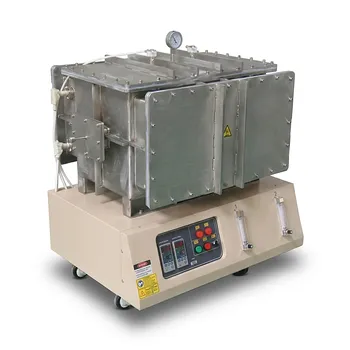
1500°C Atmosphere Controlled Rapid Heating Furnace for Material Science and Battery Powder Sintering
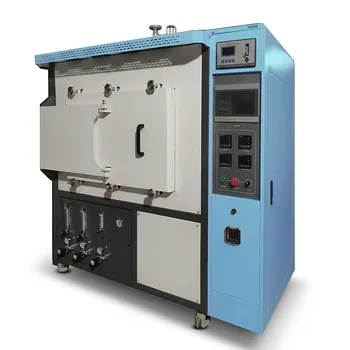
Roller Table Atmosphere Furnace 1500C High Temperature Battery Material Sintering System 112L Capacity

High Temperature Tube Furnace 1500C with Sliding Flanges and 50mm OD for Rapid Thermal Processing Fast Heating and Cooling
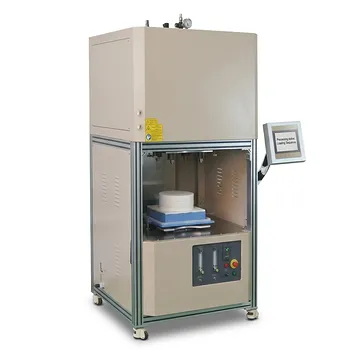
High Temperature Vertical Atmosphere Controlled Furnace with Automatic Bottom Loading and 1700°C Capacity for Advanced Material Research
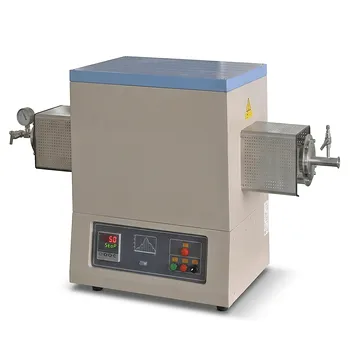
High Temperature 1700C Tube Furnace with 4 Inch OD Alumina Tube and Vacuum Sealing Flanges
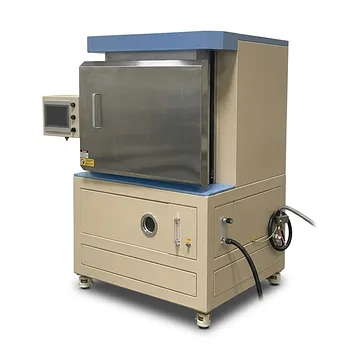
1650C High Temperature Atmosphere Controlled Box Furnace with 65L Chamber for Advanced Material Sintering and Industrial Heat Treatment
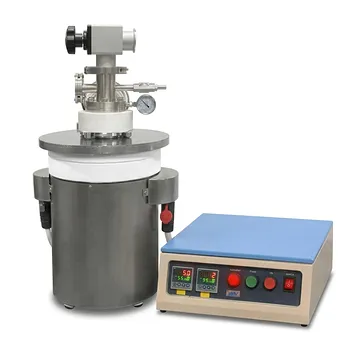
1100C High Temperature Vacuum Crucible Furnace with Quartz Chamber for Thermal Processing and Sintering

High Temperature 1700C Benchtop Tube Furnace with 5 Inch Heating Zone High Purity Alumina Tube and Vacuum Sealing Flanges
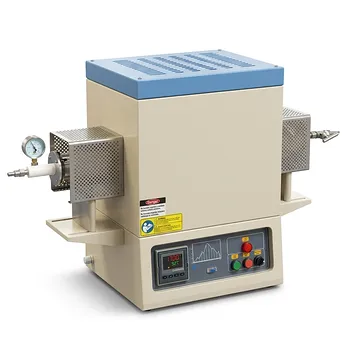
High Temperature Three Zone Tube Furnace 1700C with Alumina Tube and Water Cooled Flanges
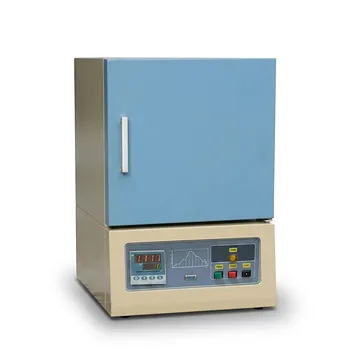
Ultra High Temperature Bench Top Muffle Furnace 1750C Sintering System with Kanthal Super Heating Elements and Precision Digital Control
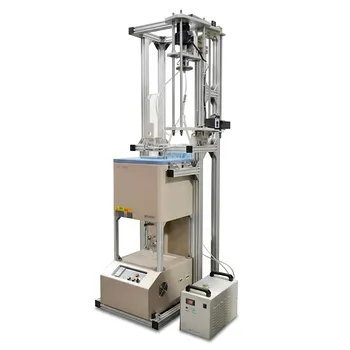
500C Vacuum Vertical Tube Furnace 84mm OD Sample Rotation Lifting System
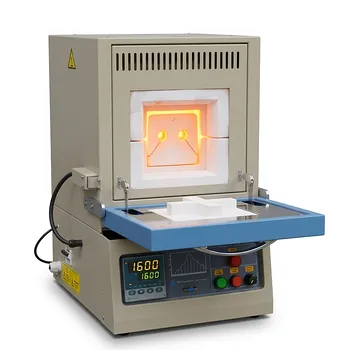
High Temperature Compact Muffle Furnace 1700 C with 30 Segment Programmable Controller and 1.7L Cubic Chamber
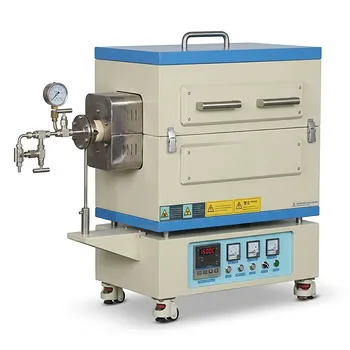
High Temperature Split Tube Furnace 1500C for Material Research Vacuum and Atmosphere Thermal Processing

1750°C High Temperature Benchtop Vacuum Atmosphere Tube Furnace with Kanthal Super 1800 Heating Elements and 60mm Alumina Processing Tube
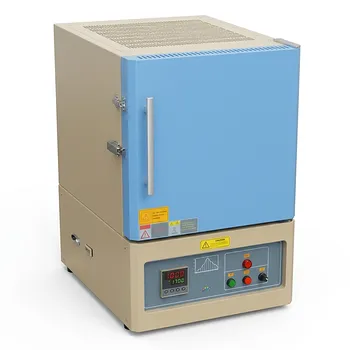
Large Bench Top 1700C High Temperature Muffle Furnace with 19L Chamber for Advanced Material Sintering and Annealing

1800C High Temperature Compact Vacuum Tube Furnace with 60mm OD Alumina Tube and Kanthal MoSi2 Heating Elements
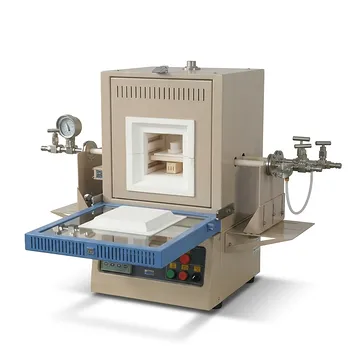
1700C Compact Hybrid Furnace with Dual Layer Box Sintering and Controlled Atmosphere Alumina Tubes