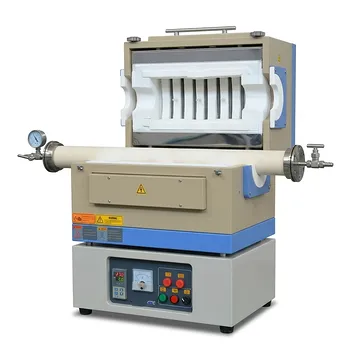
What is the role of an industrial-grade horizontal tube furnace in fluorination salt corrosion? Expert Research Guide
Updated 3 months ago
The industrial-grade horizontal tube furnace serves as the primary controlled environment for simulating the synergistic effects of molten salts and high-temperature oxidation. By providing a stable, isothermal zone, this equipment allows researchers to expose alloy samples to fluorination salts like lithium fluoride (LiF) under precise atmospheric conditions. This setup is specifically designed to facilitate the study of accelerated corrosion mechanisms, such as the formation of lithium chromate and the depletion of chromium from the alloy matrix.
The core role of the horizontal tube furnace is to provide a uniform thermal field and oxygen-accessible environment that enables the accurate measurement of salt-induced oxidation kinetics. It allows for the isolation of specific chemical reactions, such as the transition to Cr(VI) ions, which are critical for predicting the degradation of superalloys in extreme service conditions.
Establishing a Precise Thermal Environment
Maintaining Uniform Thermal Fields
The horizontal configuration is engineered to provide a long constant-temperature zone, ensuring that multiple alloy samples experience an identical thermal environment. This uniformity is essential for comparative studies, as it eliminates temperature gradients that could skew corrosion rate data.
Minimizing Transient Oxidation
By implementing strict heating rates, such as 10 K/min, the furnace minimizes the time samples spend in non-steady-state temperature ranges. This precision allows researchers to focus on isothermal behavior and accurately calculate parabolic rate constants (kc) without interference from initial heating fluctuations.
Supporting Long-Duration Stability
Industrial-grade furnaces are capable of maintaining exceptional thermal stability over extended periods, often exceeding 1,000 hours. This reliability is vital for simulating the real-world service life of components like gas turbine parts, where slow-acting corrosion mechanisms only become apparent over time.
Facilitating Complex Chemical Interactions
Controlling Oxygen Penetration
The horizontal tube furnace allows for a specific experimental setup where samples are placed in short alumina crucibles with a thin salt layer. This geometry enables oxygen from the air to easily penetrate the salt powder and reach the alloy surface, facilitating the study of accelerated oxidation mechanisms.
Inducing Phase Transitions
Under these oxygen-rich conditions, the furnace environment drives the reaction between the salt and the alloy's protective elements. This process often leads to the formation of Cr(VI) ions and lithium chromate (Li2CrO4), allowing researchers to observe how molten salts break down the material's natural defenses.
Regulating Microstructure and Phases
Beyond surface corrosion, the furnace is used to manage the microstructure of the alloy itself through solution and aging treatments. Precise temperature regulation can dissolve brittle phases or induce the fine dispersion of strengthening phases (γ' and γ''), which directly influences how the material resists corrosive attack.
Understanding the Trade-offs
Static vs. Dynamic Atmospheres
While the furnace is excellent for simulating static air or specific gas concentrations, it may not perfectly replicate the high-velocity gas flows found in actual turbines. Researchers must balance the simplicity of the tube furnace's controlled environment with the need for high-fidelity kinetic modeling.
Crucible and Tube Material Interference
At extremely high temperatures, potential interactions between the alumina or quartz tubes and the volatile fluoride salts can occur. It is critical to monitor for cross-contamination or tube degradation, which can introduce impurities into the salt chemistry and affect the accuracy of the corrosion study.
Optimizing Your Furnace Setup for Research Goals
How to Apply This to Your Project
To maximize the value of an industrial-grade horizontal tube furnace in corrosion studies, you must align the equipment parameters with your specific analytical objectives.
- If your primary focus is Kinetic Modeling: Use high-precision heating rates (e.g., 10 K/min) and long constant-temperature zones to ensure the data is suitable for calculating parabolic rate constants.
- If your primary focus is Accelerated Oxidation Mechanisms: Utilize short crucibles and thin salt layers to ensure maximum oxygen access to the salt-alloy interface.
- If your primary focus is Microstructural Resilience: Coordinate the corrosion exposure with specific solution and aging heat treatments to observe how different precipitation states affect salt resistance.
The industrial-grade horizontal tube furnace remains the gold standard for isolating and analyzing the complex chemical and thermal variables that drive high-temperature alloy degradation.
Summary Table:
| Feature | Research Benefit | Key Outcome |
|---|---|---|
| Constant Temp Zone | Eliminates temperature gradients | Accurate parabolic rate constants (kc) |
| Precise Heating Rates | Minimizes transient oxidation | Isothermal behavior focus (e.g., 10 K/min) |
| Atmosphere Control | Regulated oxygen penetration | Simulated accelerated salt-induced oxidation |
| Long-term Stability | Reliable 1,000h+ operation | Realistic simulation of component service life |
Empower Your Material Research with THERMUNITS
Achieving precision in high-temperature corrosion studies requires equipment that offers absolute control. THERMUNITS is a premier manufacturer specializing in advanced thermal processing solutions for material science and industrial R&D. Our high-performance Horizontal Tube Furnaces and atmosphere-controlled systems are designed to meet the rigorous demands of modern laboratory heat treatment.
Why partner with us?
- Precision Technology: Stable isothermal zones and precise heating rates for accurate kinetic data.
- Comprehensive Range: Solutions including Muffle, Vacuum, Atmosphere, Tube, Rotary, and Hot Press furnaces, as well as CVD/PECVD systems and VIM furnaces.
- Industrial Reliability: Expertise in building durable equipment for everything from dental labs to industrial rotary kilns.
Ready to optimize your alloy testing or thermal processing workflow? Contact our experts today to discuss your laboratory requirements!
References
- Aida Nikbakht, Christine Geers. Deep Intergranular Fluoride Attack by High-Temperature Corrosion on Alloy 625 by LiF in Air at 600 °C. DOI: 10.1007/s11085-024-10259-6
Mentioned Products
- Multi Position Tube Furnace 1100C for Laboratory Material Research and Advanced Industrial Thermal Processing
- High Temperature 1700C Vertical Tube Furnace for Powder Spherification and Material Sintering
- High Temperature 1200C Split Tube Furnace with Optional Quartz Tube Sizes and Vacuum Sealing Flanges for Material Science Research
- High Temperature Automated 5 Inch Tube Furnace for Autonomous Material Research and Advanced Laboratory R&D
- Vertical Hybrid High Temperature Furnace 1500C Alumina Tube SOFC Fuel Cell Testing Laboratory Heat Treatment Research Equipment
People Also Ask
- Why use a tube furnace for oxygen annealing LaCrO3/LaMnO3? Optimize Phase Transition & Magnetic Performance.
- What key role does a laboratory high-temperature tube furnace play in the production of carbon nanofibers? Guide
- How is a laboratory high-temperature tube furnace utilized to research the products of aluminothermic reduction? Advanced Metallurgical Solutions
- What is the role of a laboratory tube furnace in the carbonization process of porous carbon foam (PCF)? Master 3D Synthesis
- What role does a laboratory tube furnace play in the pyrolysis and carbonization of biomass? Optimize Thermal Research.

Tech Team · ThermUnits
Last updated on Jun 03, 2026
Related Products
Multi Position Tube Furnace 1100C for Laboratory Material Research and Advanced Industrial Thermal Processing

High Temperature 1700C Vertical Tube Furnace for Powder Spherification and Material Sintering
High Temperature 1200C Split Tube Furnace with Optional Quartz Tube Sizes and Vacuum Sealing Flanges for Material Science Research

High Temperature Automated 5 Inch Tube Furnace for Autonomous Material Research and Advanced Laboratory R&D
Vertical Hybrid High Temperature Furnace 1500C Alumina Tube SOFC Fuel Cell Testing Laboratory Heat Treatment Research Equipment
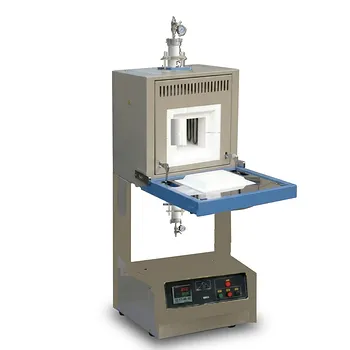
High Temperature Vertical Hybrid Furnace with Alumina Tube and SiC Heating for SOFC Coin Cell Testing and Atmosphere Processing
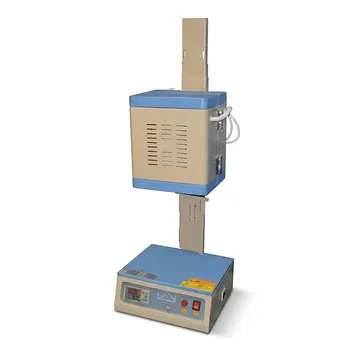
High Temperature Vertical Split Tube Furnace with PID Temperature Controller for 1 and 2 Inch Processing Tubes

Compact High Temperature 1600C Tube Furnace with 50mm Alumina Tube and Vacuum Flanges for Material Sintering
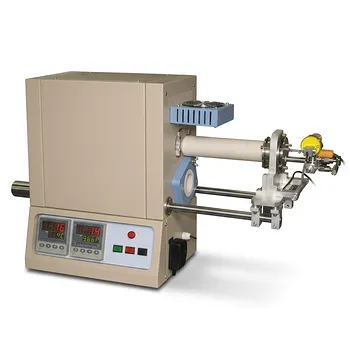
High Temperature Tube Furnace 1500C with Sliding Flanges and 50mm OD for Rapid Thermal Processing Fast Heating and Cooling
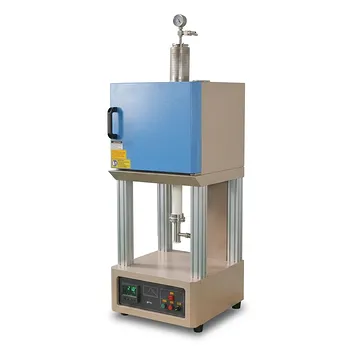
Hybrid High Temperature Tube and Box Furnace 1700C with 2 Inch Alumina Tube for Material Research
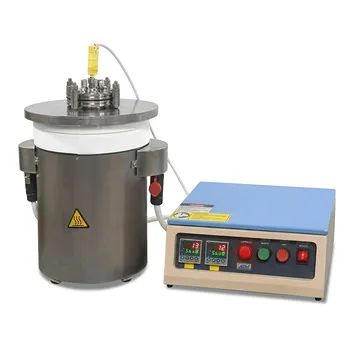
600°C Vertical Crucible Furnace with SS316 Alloy Reactor and 6 Port Vacuum Flange
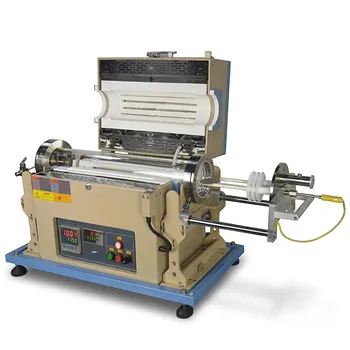
1200°C High Temperature 4 Inch Tube Furnace with Sliding Flange for CVD Systems
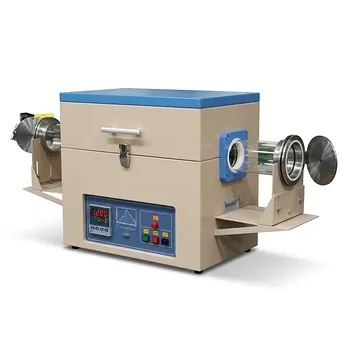
High Temperature 1200C Split Tube Furnace with Hinged Vacuum Flanges and 4 Inch Quartz Tube for Laboratory Research

High Temperature 1700C Benchtop Tube Furnace with 5 Inch Heating Zone High Purity Alumina Tube and Vacuum Sealing Flanges
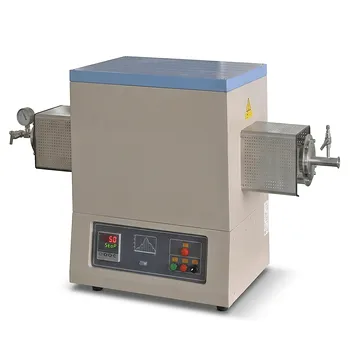
High Temperature 1700C Tube Furnace with 4 Inch OD Alumina Tube and Vacuum Sealing Flanges
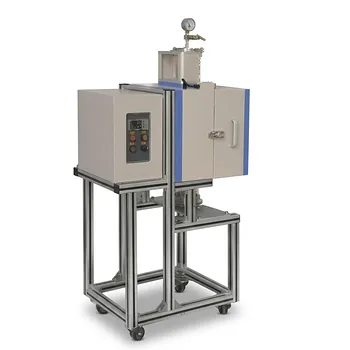
1200°C 5 Inch Vertical Quartz Tube Furnace with Stainless Steel Vacuum Flanges
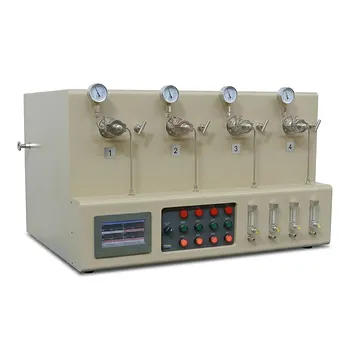
High Temperature 1700C 4 Channel Tube Furnace 1 Inch Alumina Tube for Hi-Throughput Annealing
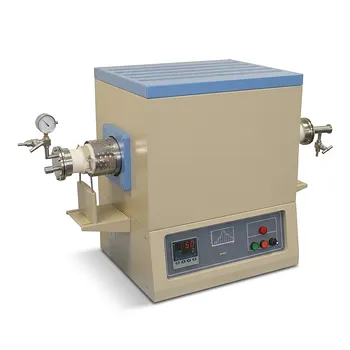
1700C High Temperature Alumina Tube Furnace with 18 Inch Heated Zone and Vacuum Sealing Flanges

Vertical 1700C Vacuum and Atmosphere Tube Furnace with 80mm Alumina Tube