Role of Tube & Muffle Furnaces in Niobium Oxide Calcination: Achieve High-Precision Hierarchical Macroporous Structures
Updated 5 months ago
Precise thermal regulation is the cornerstone of the segmented calcination process. Tube and muffle furnaces provide the high-precision temperature control required to synthesize hierarchical periodic macroporous niobium oxide, typically operating within a critical window of 300°C to 600°C. These instruments manage specific heating rates and holding times to ensure the complete removal of polymer templates and the successful phase transformation of precursors into a stable, crystalline state.
The primary role of these furnaces is to balance the aggressive thermal decomposition of organic templates with the delicate crystallization of the niobium oxide framework. This controlled environment is what allows for the creation of a stable, multi-level macroporous architecture with high periodicity.
Precision Control of Segmented Heating
Executing Complex Thermal Profiles
Segmented calcination requires the furnace to follow a non-linear heating path, alternating between rapid ramps and steady "dwell" periods. Tube and muffle furnaces are designed to maintain these profiles with minimal deviation, ensuring that the niobium oxide precursor reaches specific energy thresholds at the right moment.
Managing Heating Rates and Dwell Times
Controlling the rate of temperature increase is vital to prevent internal pressures from built-up gases. By carefully managing these rates, the furnaces allow the material to stabilize at intermediate temperatures, which is essential for uniform crystal growth across the macroporous structure.
Facilitating Template Removal and Decomposition
Thermal Decomposition of Polymer Templates
The hierarchical structure of niobium oxide relies on polymer templates that must be removed to create the "pores." Furnaces provide the sustained heat necessary to thermally decompose these templates, leaving behind a hollow but rigid oxide framework.
Efficient Removal of Volatile By-products
As precursors like oxalates or nitrates break down, they release volatile gases that must be evacuated to prevent structural defects. Muffle furnaces, in particular, provide the oxidizing atmosphere needed to ensure these organic components are completely burned off and removed.
Achieving Crystallinity and Structural Integrity
Transformation from Amorphous to Crystalline
Niobium oxide must transition from a liquid-phase or amorphous precursor into a solid, crystalline phase to achieve its functional properties. The stable thermal field provided by these furnaces facilitates this phase transformation, ensuring the final material is chemically active and mechanically sound.
Preserving Hierarchical Periodicity
The "hierarchical" nature of the material refers to its multi-scale pore structure, which is highly susceptible to collapse if heated unevenly. High-precision furnaces ensure that the structural framework sinters and strengthens at a pace that preserves the periodic arrangement of the pores.
Understanding the Trade-offs and Pitfalls
Atmosphere Limitations and Gas Flow
While muffle furnaces are excellent for simple oxidation in air, they often lack the sophisticated atmosphere control found in tube furnaces. If your synthesis requires an inert nitrogen or reducing hydrogen atmosphere to prevent over-oxidation, a tube furnace is the superior, albeit more complex, choice.
The Danger of Rapid Heating
Increasing temperatures too quickly can cause "thermal shock" or a rapid evolution of gases that shatters the delicate macroporous walls. This results in a loss of periodicity and a transition from a hierarchical structure to a disordered, bulk powder.
Thermal Gradients and Uniformity
In larger muffle furnaces, "cold spots" can lead to incomplete calcination in portions of the sample. Tube furnaces generally offer better thermal uniformity along the center of the tube, but they have smaller volume capacities, which can limit the batch size of the synthesized niobium oxide.
Applying Furnace Selection to Your Synthesis Goals
To achieve the best results in synthesizing hierarchical periodic macroporous niobium oxide, your choice of equipment should align with your specific structural requirements.
- If your primary focus is high structural periodicity: Use a tube furnace with a programmable controller to strictly manage slow heating rates and ensure uniform thermal exposure across the sample.
- If your primary focus is high-throughput template removal: Utilize a high-temperature muffle furnace to provide a stable, oxygen-rich environment that facilitates the rapid oxidation of organic components.
- If your primary focus is multi-phase synthesis (reduction/oxidation): Select a vertical or horizontal tube furnace that allows for gas switching, enabling you to decompose precursors in inert gas before finalizing crystallinity in an oxidizing atmosphere.
The success of hierarchical niobium oxide synthesis depends entirely on the furnace’s ability to act as a precision chemical reactor through controlled thermal energy.
Summary Table:
| Feature | Tube Furnace Role | Muffle Furnace Role |
|---|---|---|
| Atmosphere Control | Superior; ideal for inert or reducing gases. | Primarily oxidizing (air) environments. |
| Thermal Uniformity | High precision along the tube center. | Potential for thermal gradients/cold spots. |
| Target Goal | High structural periodicity and gas control. | High-throughput template removal (oxidation). |
| Temperature Range | 300°C to 600°C (Precise Ramping). | 300°C to 600°C (Stable Dwell). |
| Ideal Application | Multi-phase synthesis (CVD/PECVD). | Bulk calcination and organic burn-off. |
Elevate Your Material Synthesis with THERMUNITS
Achieving the delicate balance of hierarchical periodicity in niobium oxide requires more than just heat—it requires precision thermal engineering. As a leading manufacturer of high-temperature laboratory equipment, THERMUNITS provides the advanced thermal processing solutions essential for cutting-edge material science and industrial R&D.
Whether your research demands the controlled atmosphere of a Tube Furnace, the high-throughput capacity of a Muffle Furnace, or complex systems like CVD/PECVD and Vacuum Induction Melting (VIM), our equipment is designed to deliver uniform heating and rigorous temperature accuracy. From Rotary Kilns to Hot Press Furnaces and high-quality Thermal Elements, we empower researchers to transform amorphous precursors into high-performance crystalline frameworks.
Ready to optimize your segmented calcination process? Contact our expert team today to find the perfect thermal solution for your lab!
References
- Lang Guo, Xuewen Wang. Hierarchically Periodic Macroporous Niobium Oxide Architecture for Enhanced Hydrogen Evolution. DOI: 10.1002/smll.202310753
Mentioned Products
- 900°C Max Rotary Tube Furnace with 8 Inch 310S Alloy Tube and Optional Multi Zone Heating for Industrial Material Calcination
- 5 Inch Rotary Tube Furnace with Automatic Feeding and Receiving System 1200C Three Zone CVD Powder Processing
- 1200C High Throughput Multi Channel Tube Furnace with 50mm Quartz Tubes for Annealing and Material Phase Diagram Research
- High Temperature Vertical Hybrid Furnace with Alumina Tube and SiC Heating for SOFC Coin Cell Testing and Atmosphere Processing
- High Temperature 1700C Vertical Tube Furnace for Powder Spherification and Material Sintering
People Also Ask
- How does a rotary tube furnace improve the processing of granular materials? Enhance Uniformity and Reaction Kinetics
- Why use a rotary tube furnace for FACS carbonization? Ensure uniform morphology and prevent sphere agglomeration.
- Why is the precise optimization of residence time essential in the catalyst calcination process? Maximize Your Yields.
- In what ways do rotary tube furnaces enhance chemical and specialty mineral processing? Drive Precision and Uniformity.
- What parameters must operators control to maintain product quality in a rotary furnace? Master Your Heat Treatment.

Tech Team · ThermUnits
Last updated on Apr 14, 2026
Related Products
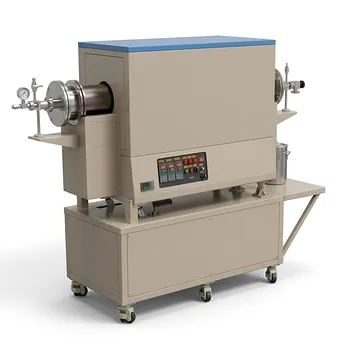
900°C Max Rotary Tube Furnace with 8 Inch 310S Alloy Tube and Optional Multi Zone Heating for Industrial Material Calcination
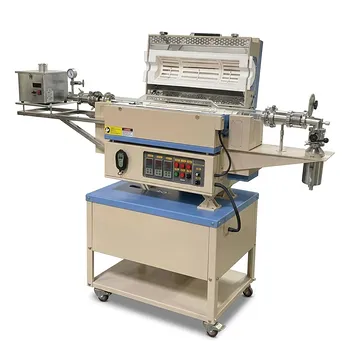
5 Inch Rotary Tube Furnace with Automatic Feeding and Receiving System 1200C Three Zone CVD Powder Processing
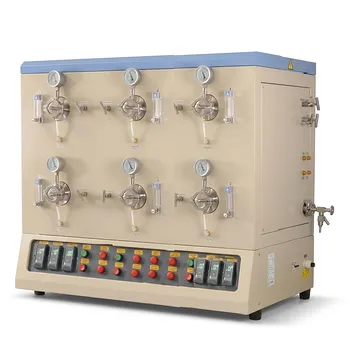
1200C High Throughput Multi Channel Tube Furnace with 50mm Quartz Tubes for Annealing and Material Phase Diagram Research
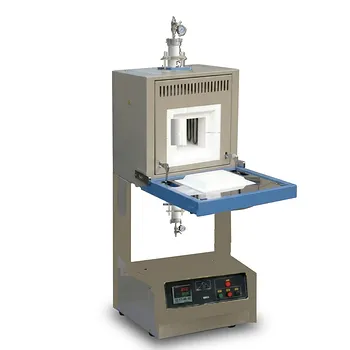
High Temperature Vertical Hybrid Furnace with Alumina Tube and SiC Heating for SOFC Coin Cell Testing and Atmosphere Processing

High Temperature 1700C Vertical Tube Furnace for Powder Spherification and Material Sintering

1800C High Temperature Compact Vacuum Tube Furnace with 60mm OD Alumina Tube and Kanthal MoSi2 Heating Elements

High Temperature Automated 5 Inch Tube Furnace for Autonomous Material Research and Advanced Laboratory R&D
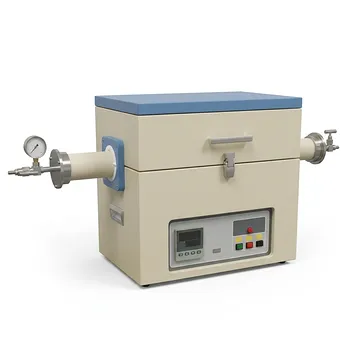
1250C Split Tube Furnace with 3 Inch Mullite Tube and Vacuum Sealing Flanges for Precision Thermal Processing
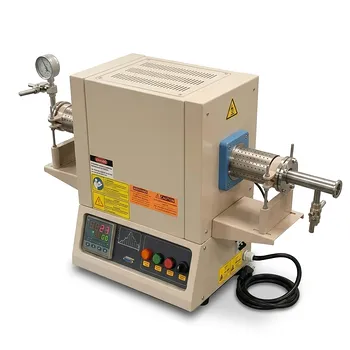
Compact High Temperature 1600C Tube Furnace with 50mm Alumina Tube and Vacuum Flanges for Material Sintering
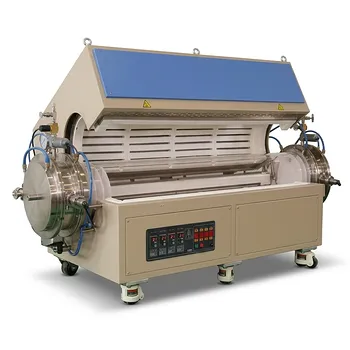
1200C Max Four Zone Split Tube Furnace with Optional Large Diameter Quartz Tubes

High Temperature 1700C Benchtop Tube Furnace with 5 Inch Heating Zone High Purity Alumina Tube and Vacuum Sealing Flanges
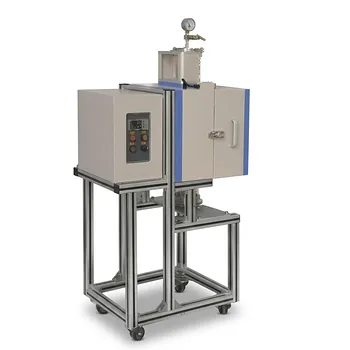
1200°C 5 Inch Vertical Quartz Tube Furnace with Stainless Steel Vacuum Flanges
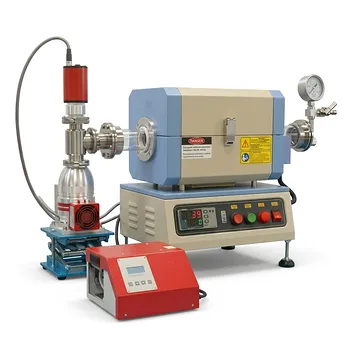
High Vacuum Compact Tube Furnace 1200C with Integrated Turbo Pump System and 8 Inch Heating Zone
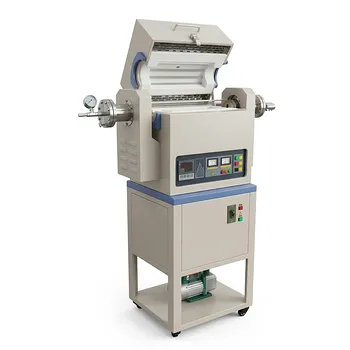
High Temperature Rotary Tilt Tubular Furnaces for Advanced Powder Sintering and Material Processing
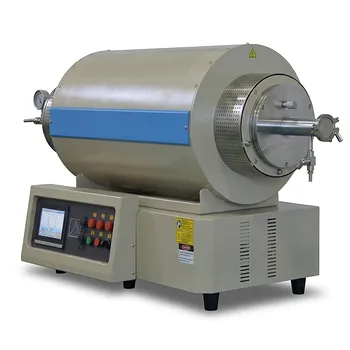
1200C Max Three Zone Tube Furnace 6 Inch OD Max with Tube and Flange
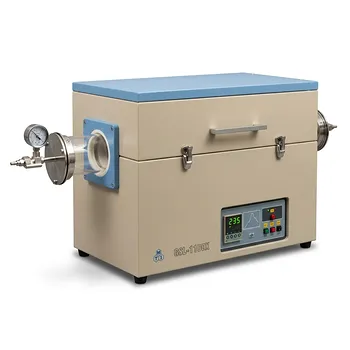
Single Zone Tube Furnace 5 Inch Quartz Tube 36 Inch Heating Zone Vacuum Flanges
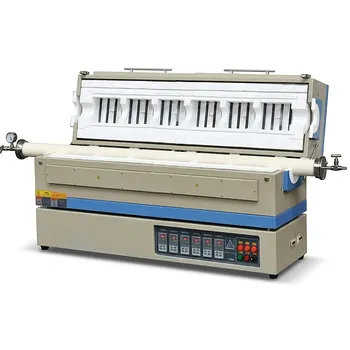
High Temperature 1700C Six Zone Split Tube Furnace with Alumina Tube and Water Cooled Flanges
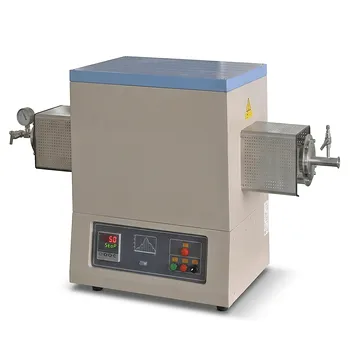
High Temperature 1700C Tube Furnace with 4 Inch OD Alumina Tube and Vacuum Sealing Flanges
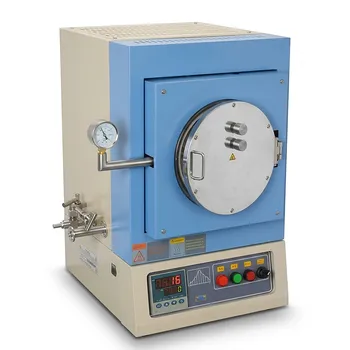
1100°C High Temperature Quartz Chamber Furnace 8 Inch OD with 7.6 Liter Capacity and Vacuum Atmosphere Capability