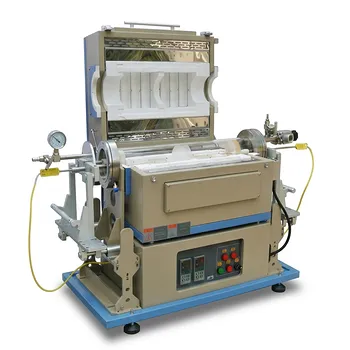
What is the significance of precise temperature curve control in a tube furnace for Alpha-Nb2O5 synthesis?
Updated 3 months ago
Precise temperature curve control is the fundamental mechanism that dictates the evaporation rate and supersaturation levels during the synthesis of $\alpha$-Nb$_2$O$_5$ nanosheets. By meticulously managing the thermal gradients within a tube furnace—specifically within constant temperature zones such as 800°C or 850°C—operators can accurately regulate the transport kinetics of gas-phase components. This level of control is what allows for the intentional engineering of the nanosheets' morphology, thickness, and crystalline integrity.
The core significance of temperature curve control lies in its ability to balance the rate of precursor sublimation with the kinetics of nucleation on the substrate. Mastering this thermal field ensures that the synthesis stays within the narrow window required to produce high-quality, non-layered 2D structures rather than bulk crystals or impure phases.
Regulating Precursor Kinetics and Supersaturation
Management of Evaporation Rates
The temperature curve directly determines how quickly the niobium precursors transition into the gas phase. If the temperature in the evaporation zone is too low, the concentration of precursors remains insufficient for growth; if it is too high, the resulting high flux can lead to uncontrollable deposition and excessive thickness.
Control of Gas-Phase Transport
By adjusting the temperature gradients across different sections of the tube furnace, operators can influence how gas-phase components move from the source to the growth zone. Precise control ensures that the transport kinetics are synchronized with the desired growth rate, preventing premature deposition or loss of material.
Achieving Optimal Supersaturation
The "supersaturation level" in the growth zone is the driving force behind the formation of 2-dimensional nanosheets. Precise thermal management allows for the maintenance of a specific supersaturation environment that favors the lateral growth of $\alpha$-Nb$_2$O$_5$ over vertical stacking or random aggregation.
Influencing Morphology and Crystalline Quality
Defining Thickness and Uniformity
The thickness of non-layered nanosheets is highly sensitive to the thermal environment. Accurate control over the heating ramp and the stability of the constant temperature zone ensures that the nanosheets grow uniformly across the substrate, preventing the formation of thick, non-uniform clusters.
Overcoming Thermodynamic Barriers
The synthesis of the $\alpha$ phase of Niobium Pentoxide requires overcoming specific thermodynamic barriers that are only accessible within narrow temperature ranges. Precise control ensures the furnace reaches and maintains the exact energy levels needed to trigger the transition to the desired monoclinic or orthorhombic structures while avoiding intermediate impurities.
Preservation of Structural Integrity
Programmed heating rates (such as 2.5°C or 5°C per minute) are critical to prevent thermal stress during the crystalline growth phase. Slow, controlled heating ensures that the internal structure of the nanosheet develops without collapsing or forming defects that would compromise its chemical or physical properties.
Understanding the Trade-offs and Pitfalls
The Risk of Thermal Instability
Small fluctuations in the thermal field can have disproportionate effects on the final product. An unstable temperature curve often leads to "local hotspots" where temperatures exceed the target range, causing the nanosheets to shrink, aggregate, or increase in thickness significantly.
Balancing Reaction Time and Temperature
There is a critical trade-off between the temperature level and the duration of the reaction. While higher temperatures can speed up the synthesis, they also increase the risk of driving the material toward a bulk 3D state; conversely, lower temperatures may fail to remove template agents or complete the oxidation of the precursors.
Consequences of Improper Gradients
If the gradient between the evaporation and deposition zones is too steep or too shallow, the resulting transport kinetics will be misaligned. This often results in low yield, where the majority of the precursor either remains in the boat or is swept through the furnace without depositing on the substrate.
Making the Right Choice for Your Goal
How to Apply This to Your Synthesis
- If your primary focus is achieving minimum nanosheet thickness: Prioritize the stability of the deposition zone temperature and use a lower precursor evaporation rate to maintain low supersaturation.
- If your primary focus is phase purity and crystallinity: Use a highly precise programmed heating curve with specific plateaus (e.g., 800°C–850°C) to ensure the material remains at the optimal transformation temperature long enough to eliminate sub-oxides.
- If your primary focus is high surface area and open structures: Implement a slow ramp rate (2.5°C/min) during calcination to prevent structural collapse caused by rapid thermal expansion or the quick release of template gases.
The precision of the tube furnace's thermal curve is the primary lever for transforming a bulk chemical reaction into the delicate, controlled growth required for 2D nanotechnology.
Summary Table:
| Key Factor | Role in Alpha-Nb2O5 Synthesis | Impact on Material Quality |
|---|---|---|
| Evaporation Rate | Controls precursor transition to gas phase | Prevents excessive thickness or insufficient growth |
| Supersaturation | Drives lateral growth of 2D structures | Favors nanosheet formation over bulk crystals |
| Heating Ramp | Manages thermal stress (e.g., 2.5°C/min) | Prevents structural collapse and defects |
| Thermal Stability | Maintains constant temperature zones | Ensures uniform thickness and crystalline purity |
Elevate Your Material Research with THERMUNITS Precision
Achieving the perfect 2D nanosheet structure requires uncompromising thermal accuracy. THERMUNITS is a leading manufacturer of high-temperature laboratory equipment specifically designed for material science and industrial R&D.
Our advanced Tube Furnaces, CVD/PECVD systems, and Vacuum Atmosphere furnaces provide the precise temperature curve control essential for regulating evaporation rates and achieving optimal supersaturation in delicate syntheses like $\alpha$-Nb$_2$O$_5$.
Whether you are working on nanosheet morphology or complex phase transitions, our comprehensive range—including Muffle, Rotary, and Hot Press furnaces—offers the reliability your research demands.
Ready to optimize your heat treatment process?
Contact our technical experts today to discuss a customized solution for your laboratory.
References
- Bo Zhang, Hongyan Zhang. Synthesis of 2D Nonlayered α‐Nb<sub>2</sub>O<sub>5</sub> Nanosheets by the Growth Promoter of Sulfur and Alkali Halides. DOI: 10.1002/pssr.202400054
Mentioned Products
- 1200C Dual Temperature Zone Slidable Tube Furnace for 2D Material Growth and TCVD Synthesis
- High Temperature 1200C Automatic Sliding Dual Zone Tube Furnace for 2D Transition Metal Dichalcogenides Growth and Material Sublimation Research
- 5 Inch Two Zone Rotary Tube Furnace 1100C for Powder CVD and Material Synthesis
- Two Zone Rotary Tube Furnace for Powder CVD Coating and Core Shell Material Synthesis 1100C
- High Temperature Dual Zone Rotating Tube Furnace 1500C Silicon Carbide Heating for Advanced Material Synthesis
People Also Ask
- How is a dual-temperature zone tube furnace configured for MXene-based metal phosphides? Expert Synthesis Guide
- What is the function of a dual-zone tube furnace in CVD for 2D perovskites? Optimize Precision & Film Uniformity
- What are the technical advantages of a dual-zone tube furnace for phosphidation? Optimize Cobalt Nanowall Synthesis.
- What is the function of a high-precision dual-zone tube furnace in MAPbI3 deposition? Expert Perovskite Synthesis.
- Why is a double-temperature zone tube furnace utilized for the preparation of monolayer MoS2? Precision CVD Explained

Tech Team · ThermUnits
Last updated on Jun 03, 2026
Related Products
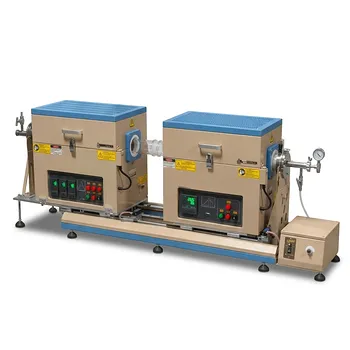
1200C Dual Temperature Zone Slidable Tube Furnace for 2D Material Growth and TCVD Synthesis
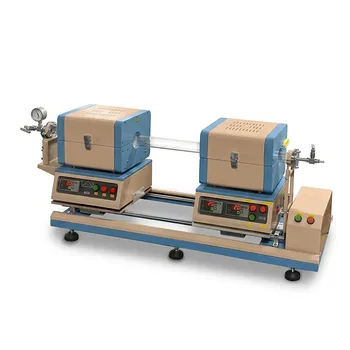
High Temperature 1200C Automatic Sliding Dual Zone Tube Furnace for 2D Transition Metal Dichalcogenides Growth and Material Sublimation Research
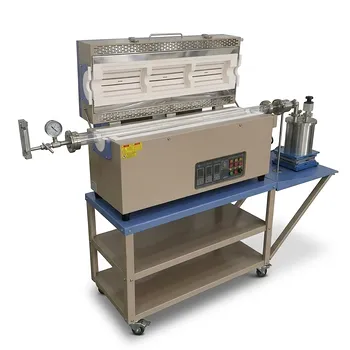
5 Inch Two Zone Rotary Tube Furnace 1100C for Powder CVD and Material Synthesis
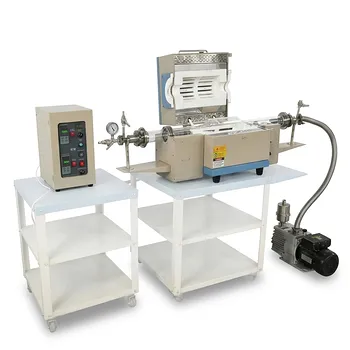
Two Zone Rotary Tube Furnace for Powder CVD Coating and Core Shell Material Synthesis 1100C
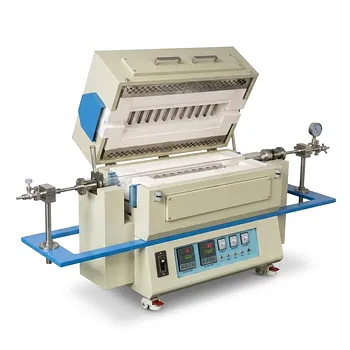
High Temperature Dual Zone Rotating Tube Furnace 1500C Silicon Carbide Heating for Advanced Material Synthesis
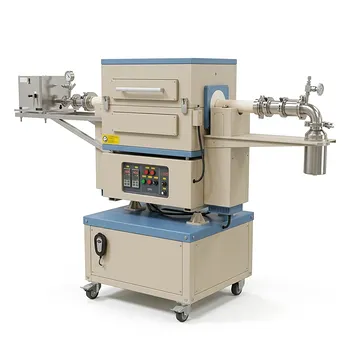
1500C Max Dual Zone Rotary Tube Furnace with 60 mm OD Alumina Tube for High Temperature Material Synthesis
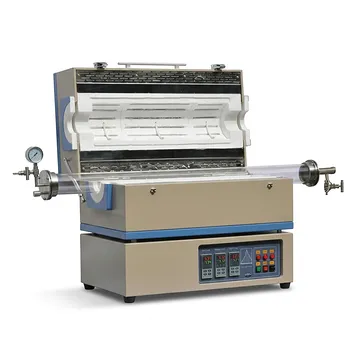
24 Inch Three Zone Split Tube Furnace with Optional Quartz Tube and Vacuum Flange System for High Temperature Material Synthesis

High Temperature 1700C Vertical Tube Furnace for Powder Spherification and Material Sintering
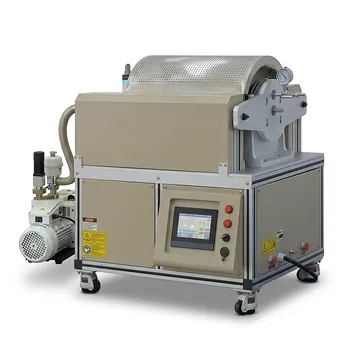
Automated 1200 C Tube Furnace for AI Material Research with 6 Inch OD and Sliding Flange
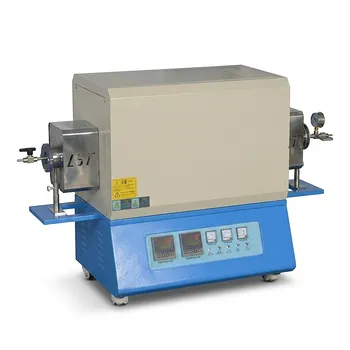
High Temperature Dual Zone Vacuum Tube Furnace for Material Research and CVD Processing
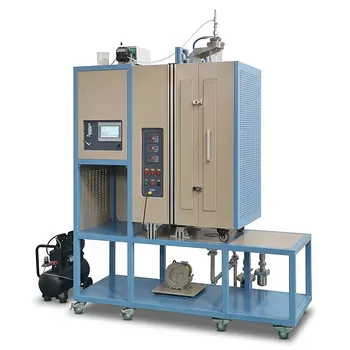
1500C Three Zone Vertical Pyrolysis Furnace for Nanoparticle Synthesis and Advanced Oxide Coating
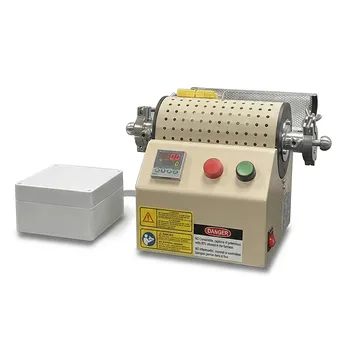
1000C Mini Tube Furnace with 20mm Quartz Tube and Vacuum Flanges for Material Science Research and Controlled Atmosphere Small Sample Processing
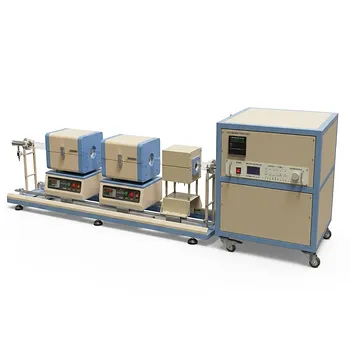
1200C Dual Sliding Tube Furnace with Dual Tubes and Flanges for PECVD Processes
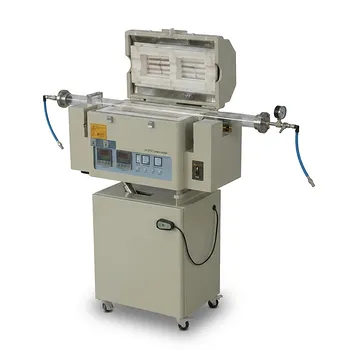
Double Temperature Revolving Tube Furnace with Precision Rotation and Adjustable Inclination for Advanced Material Research
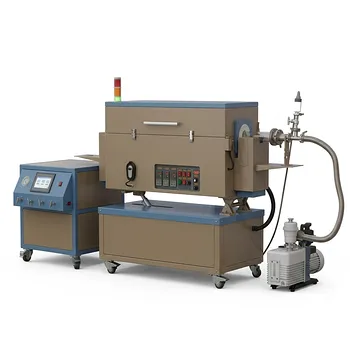
5 Inch Three Zone Rotary Tube Furnace with Integrated Gas Delivery System and 1200C Capability for Advanced Material CVD Processing
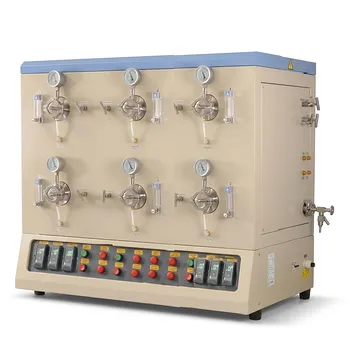
1200C High Throughput Multi Channel Tube Furnace with 50mm Quartz Tubes for Annealing and Material Phase Diagram Research
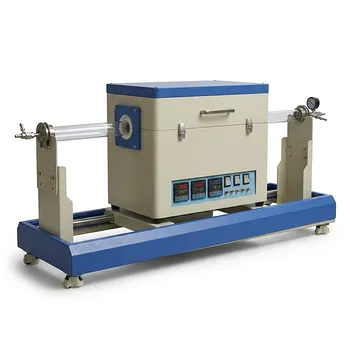
Double Temperature Zone Double Cover Tube Furnace for High Temperature CVD and Vacuum Annealing

High Temperature Automated 5 Inch Tube Furnace for Autonomous Material Research and Advanced Laboratory R&D
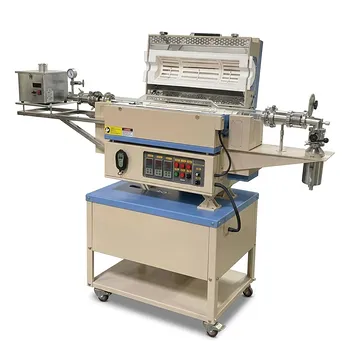
5 Inch Rotary Tube Furnace with Automatic Feeding and Receiving System 1200C Three Zone CVD Powder Processing